Nov 16, 20267 min readBy Aditya Singh
You have a product idea and want to sell it under your own brand. But should you develop the product yourself, ask a manufacturer to customize an existing design, or choose a ready-made product? This is where OEM, ODM, and private label manufacturing enter the picture.
These models offer different ways to work with manufacturers, depending on how much control you want over product design, specifications, customization, and branding. Your choice can also affect development expenses, production timelines, and the level of involvement required from your team.
If these manufacturing terms sound similar, you're not alone. This blog explains what OEM, ODM, and private label manufacturing involve, how they differ, and what to consider before selecting one for your business.
Quick Answer: OEM Vs ODM Vs Private Label: Key Differences
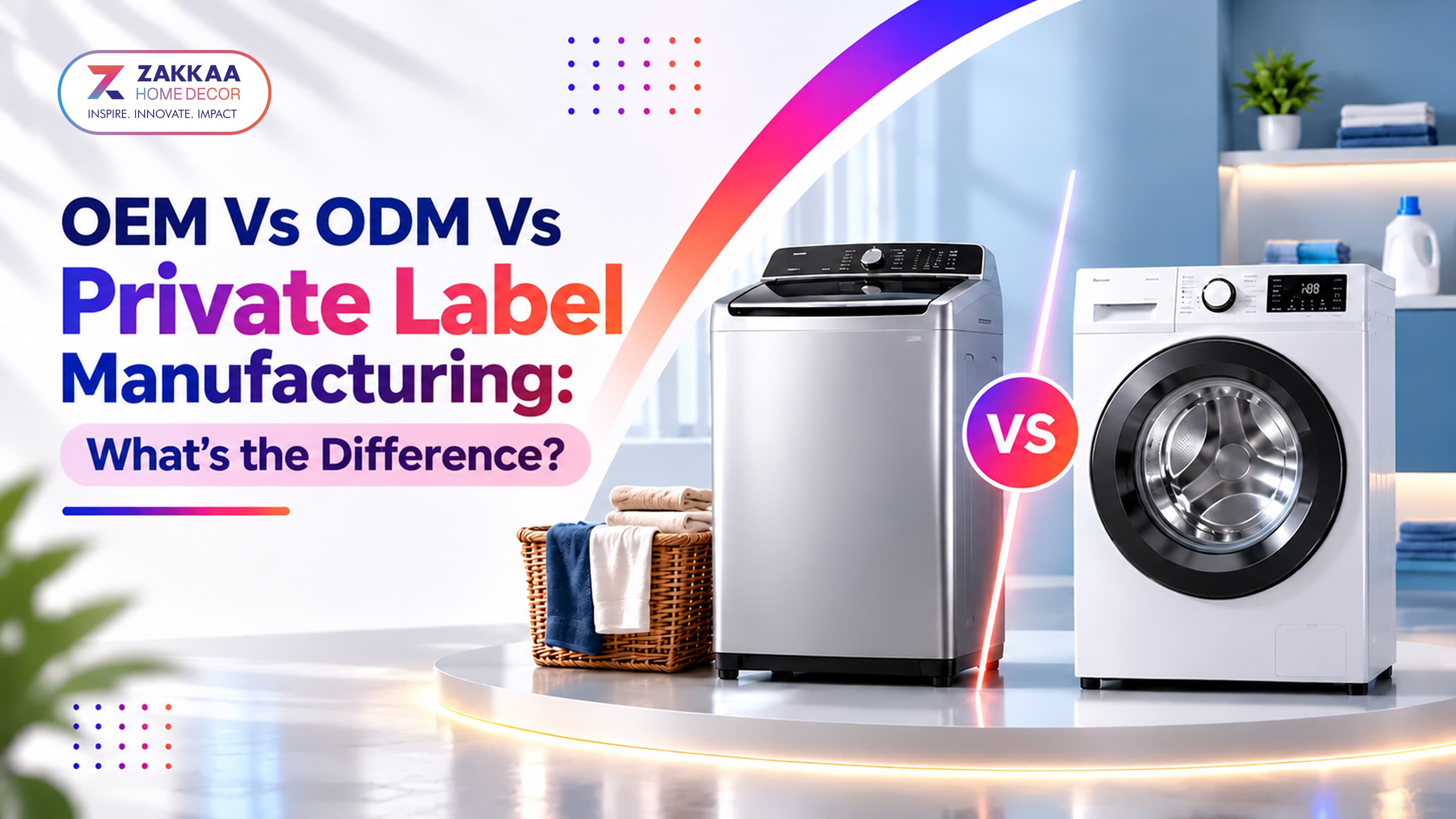
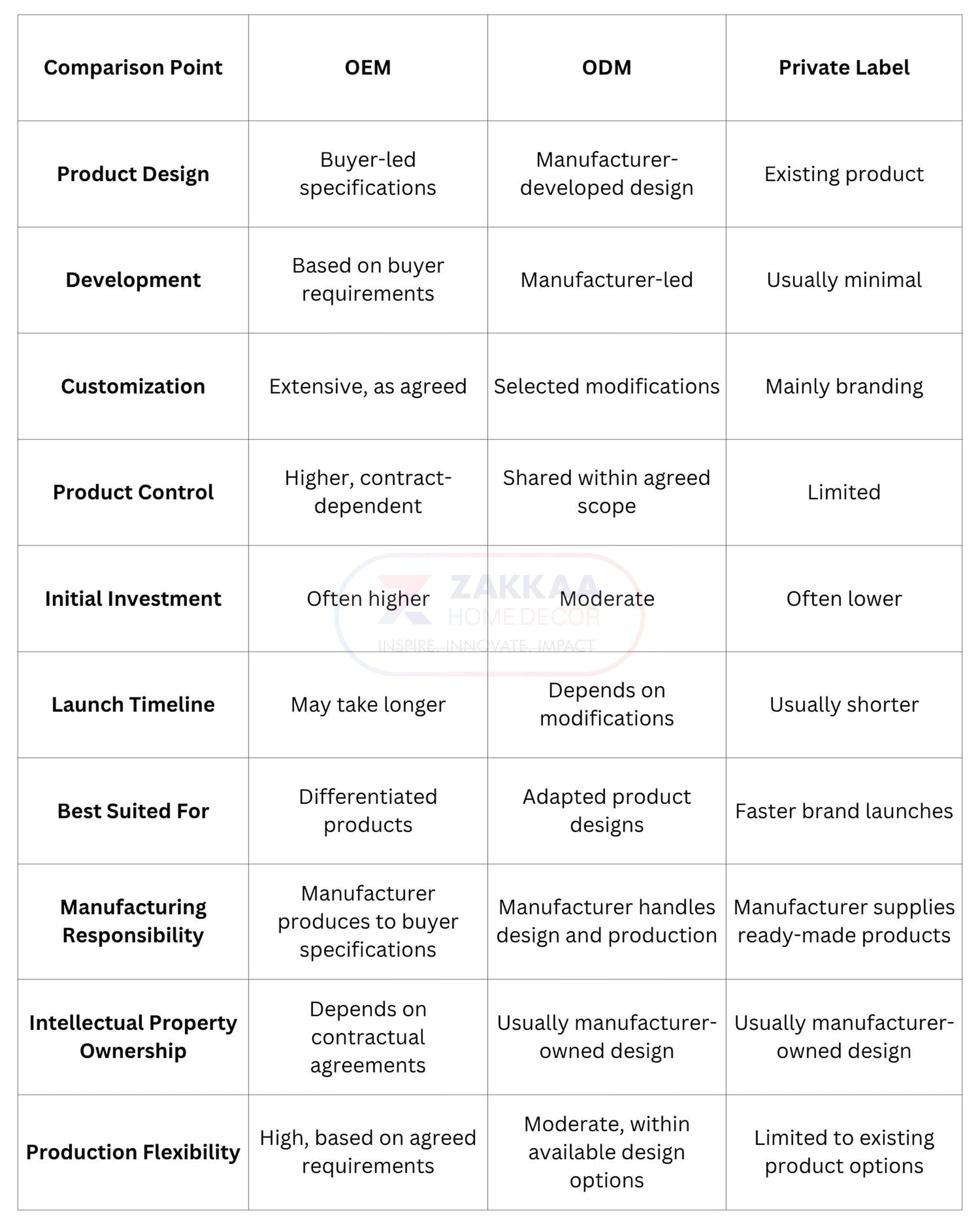
The difference between OEM, ODM, and private label manufacturing lies in who designs the product, who controls its development, and how much customization a buyer can request.
Let’s understand the comparison of OEM, ODM, and private label manufacturing in simple language.
Suppose you are ordering a birthday cake.
In OEM (Original Equipment Manufacturer), you tell the baker exactly how you want the cake, including its flavor, shape, and decoration.
In ODM (Original Design Manufacturer), the baker already has a cake design and recipe, but you can request a few changes, such as different toppings or colors.
In private labeling, you simply pick a ready-made cake and put your own brand name on its packaging without changing the cake itself.
What Is OEM Manufacturing?
Original Equipment Manufacturer (OEM) manufacturing involves producing goods according to specifications, designs, or requirements provided by the buyer. The manufacturer handles the agreed production activities, while the brand manages product positioning and sales.
For example, an appliance company may provide specifications for an air cooler, including its dimensions, motor requirements, materials, and design. The OEM manufacturing partner creates the product according to the approved requirements.
OEM manufacturing is suitable for:
Brands with a defined product concept.
Businesses seeking greater product customization.
Companies developing differentiated product ranges.
Buyers with technical development resources.
The ownership of designs, tooling, and newly developed components should be clearly documented. Supplying a design does not automatically settle every intellectual property right.
What Is ODM Manufacturing?
Original Design Manufacturer (ODM) manufacturing starts with a product or design developed by the manufacturer. A brand selects an available model and may request modifications based on the supplier's capabilities.
Imagine a business planning to sell kitchen appliances, like a refrigerator. Instead of developing an entirely new product, it selects an existing manufacturer-developed model and requests changes to its appearance, branding, or selected specifications.
ODM manufacturing works well when:
You need manufacturer-led product development.
Your team has limited engineering resources.
Existing designs meet most requirements.
You want selected product modifications.
The important consideration is design ownership. Clarify which elements belong to the manufacturer, which modifications are exclusive, and whether the same base product can be supplied to competing brands.
What Is Private Label Manufacturing?
Private label manufacturing allows a business to sell an existing or agreed product under its own brand name. The manufacturer handles production, while the business focuses on branding, marketing, distribution, and sales.
A retailer, for instance, may select an existing appliance model, add its logo, finalize packaging, and introduce it under a new brand identity.
Common private-label requirements include:
Brand logos and product labels.
Customized retail packaging and manuals.
Available color and accessory choices.
Product presentation and brand identity.
This approach can reduce product development requirements, but the level of product differentiation may be limited. Confirm whether the selected model is exclusive or available to other buyers.
Read Too: How to Choose a Washing Machine OEM Manufacturer for Your Brand
Where Does Contract Manufacturing Fit In?
Contract manufacturing refers to outsourcing production to an external manufacturing company under agreed commercial and technical terms. It is not necessarily a separate alternative to OEM or ODM.
For example, a brand may provide its product specifications and hire a factory to manufacture the units. Another business may outsource assembly, testing, or selected production activities while managing product development internally.
The agreement defines the manufacturer's responsibilities, which may include:
Component sourcing and procurement.
Product assembly and fabrication.
Quality inspection and testing.
Packaging and order dispatch.
In short, OEM and ODM describe product development and manufacturing arrangements, while contract manufacturing describes the outsourced production relationship.
Read More: Air Cooler Manufacturing: Materials, Production Process & Quality Checks
White Label Vs Private Label: Are They The Same?
The terms are sometimes used interchangeably, but many manufacturers distinguish them by the level of customization.
White label manufacturing generally involves selling a standard product under different brands with little or no product modification.
Private label manufacturing may allow selected changes to product specifications, packaging, appearance, or other agreed details.
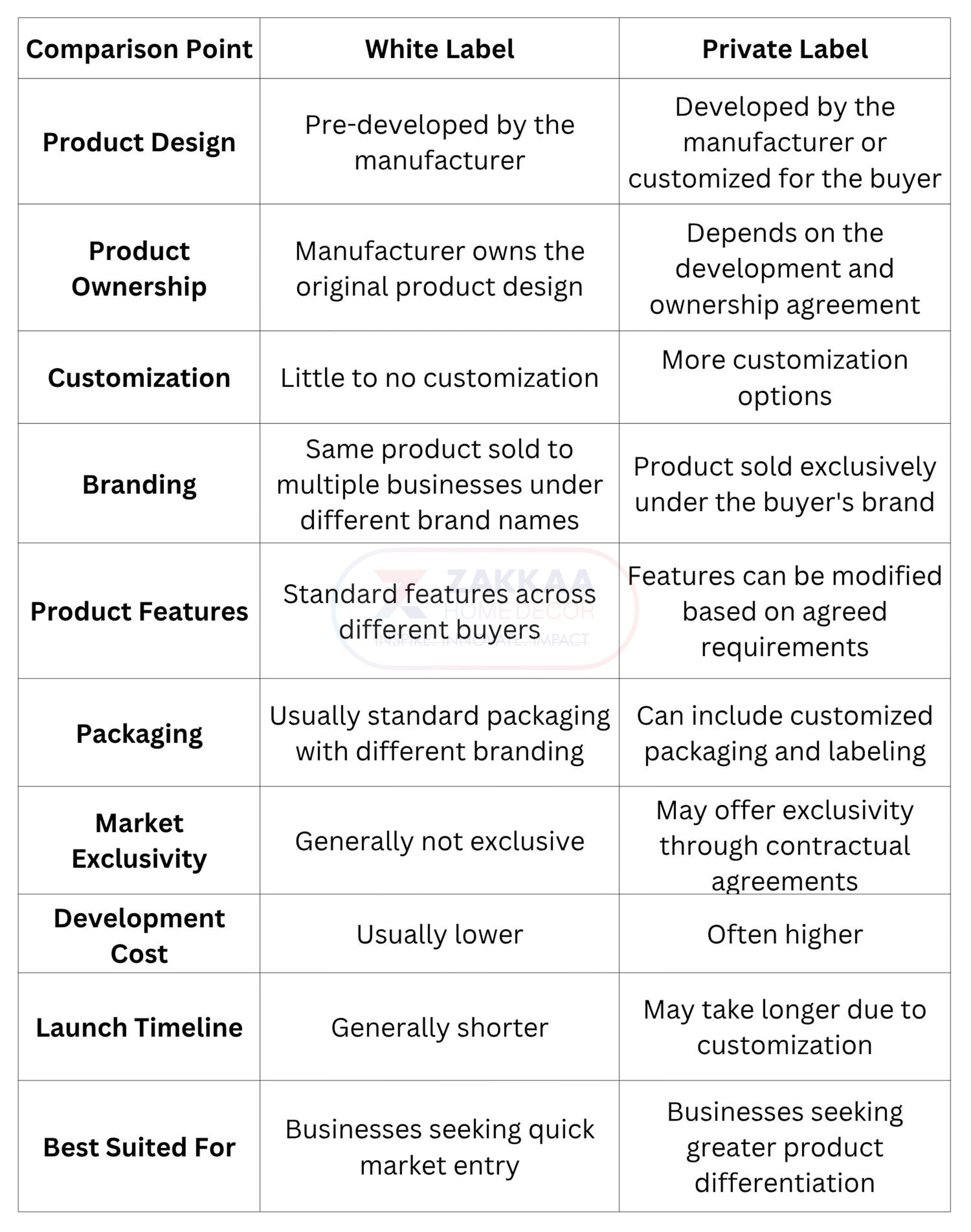
The distinction is not universal across industries. Before placing an order, ask what modifications are included and whether the same product can be supplied to other brands.
Explore More: Google TV Manufacturing & OEM: Technology, Components & Production Process
Which Manufacturing Model Should Your Business Choose?
The right model depends on what you already have and what you want to achieve.
Choose OEM manufacturing when you have defined product specifications and need greater control over the final product.
Choose ODM when you want to build on an existing manufacturer-developed design.
Choose Private Label when branding an available product is enough to enter the market.
Choose Contract Manufacturing when you need an external production partner for an agreed manufacturing scope.
Before deciding, consider your development budget, launch schedule, expected order volume, customization needs, and internal technical capabilities.
Quick Read: Semi-Automatic Washing Machine Manufacturing: Design, Motor & Assembly
Why Choose Zakkaa For OEM And Private Label Manufacturing?
A manufacturing partnership should cover more than putting a brand name on a finished product. Zakkaa brings together OEM, private-label, and contract manufacturing services for businesses across appliances like washing machines, motors, air coolers, LED TVs, refrigerators, furniture, and related product categories. Its manufacturing ecosystem includes tooling, component production, assembly, testing, and packaging to support different production requirements.
Integrated facilities support end-to-end OEM production.
Private-label branding includes packaging and labeling.
Tooling and moulding support product development.
Assembly, testing and dispatch within one ecosystem.
Appliance manufacturing serves multiple product categories.
In-house team of expert engineers and management
Final Thoughts
To summarize, OEM, ODM, and private label manufacturing differ in how product design, customization, and production responsibilities are divided. Your choice should reflect your available resources, desired product differentiation, and launch requirements. Review the agreement carefully before selecting a manufacturing partner. You can contact a recognized OEM manufacturer in India like Zakkaa to discuss your manufacturing requirements for your business.
Frequently Asked Questions (FAQs)
Is Private Label Manufacturing Cheaper Than OEM?
It can involve lower initial development expenses because the product already exists. Actual costs depend on order quantity, branding, customization, and supplier pricing.
Can A Startup Use OEM Manufacturing?
Yes. Startups can work with OEM manufacturers if they have suitable product requirements, development resources, and budgets for production.
Does ODM Manufacturing Allow Product Customization?
Yes. Manufacturers may offer changes to product appearance, components, features, or packaging, depending on their capabilities and the agreement.
Is Contract Manufacturing The Same As OEM?
No. Contract manufacturing describes outsourced production, while OEM commonly refers to manufacturing based on buyer-defined product specifications. An OEM project can use a contract manufacturing arrangement.
Who Owns The Product Design In OEM And ODM?
Ownership depends on the original design, development contributions, and contractual terms. Buyers should document design rights, tooling ownership, and exclusivity before production.
Which Manufacturing Model Is Best For New Brands?
Private label may suit brands seeking a faster launch, ODM can offer selected customization, and OEM may fit businesses requiring greater product control.