Nov 25, 20266 min readBy Aditya Singh
Are you buying 30, 50, or even 100 commercial cabinets at once? A low quotation can look tempting when you're purchasing commercial cabinets in bulk.
But what happens when the cabinets arrive with uneven finishes, unsuitable dimensions, or storage that doesn't meet your requirements? Saving money on the bulk cabinet order may end up costing more later.
This is why bulk buyers need to look beyond the per-unit price. The cabinet's construction, material thickness, fittings, customization options, and expected usage all matter when comparing cabinet manufacturers in India.
Whether you're furnishing an office, school, hospital, or industrial facility, a few careful checks can make purchasing much easier. Here's what to consider before choosing your commercial cabinets.
Commercial Cabinet Buying: Key Steps For Bulk Procurement Buyers
If your next purchase involves dozens of commercial cabinets, a little planning can save you from costly mistakes. From deciding what type of cabinets you need to checking samples and negotiating order terms, every stage matters. Let's look at how to approach bulk procurement step by step.
Step 1: Identify Where And How The Cabinets Will Be Used
Start by understanding the purpose of the cabinets rather than selecting products based only on appearance. Different workplaces require different storage arrangements, access methods, and construction.
For example, an office may need filing cabinets for documents, while a factory requires storage for tools, equipment, and employee belongings.
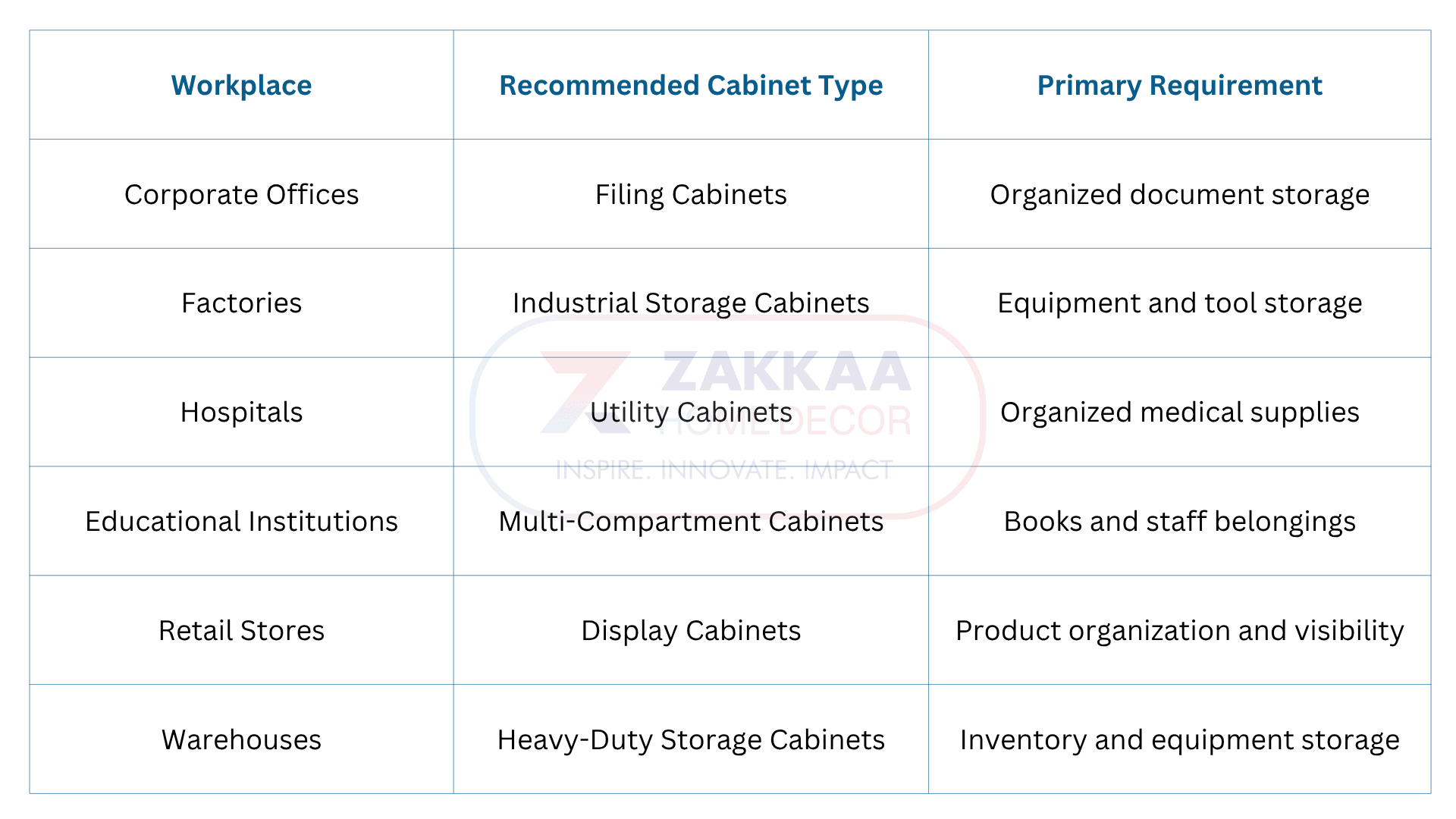
Prepare a list of intended locations before requesting quotations. This helps determine which cabinet configurations are actually necessary.
2. Prepare A Standard Cabinet Specification Sheet
When purchasing hundreds of cabinets, small differences between product specifications can create inconsistencies across departments or locations. A common specification sheet helps procurement teams communicate requirements clearly.
Include these details:
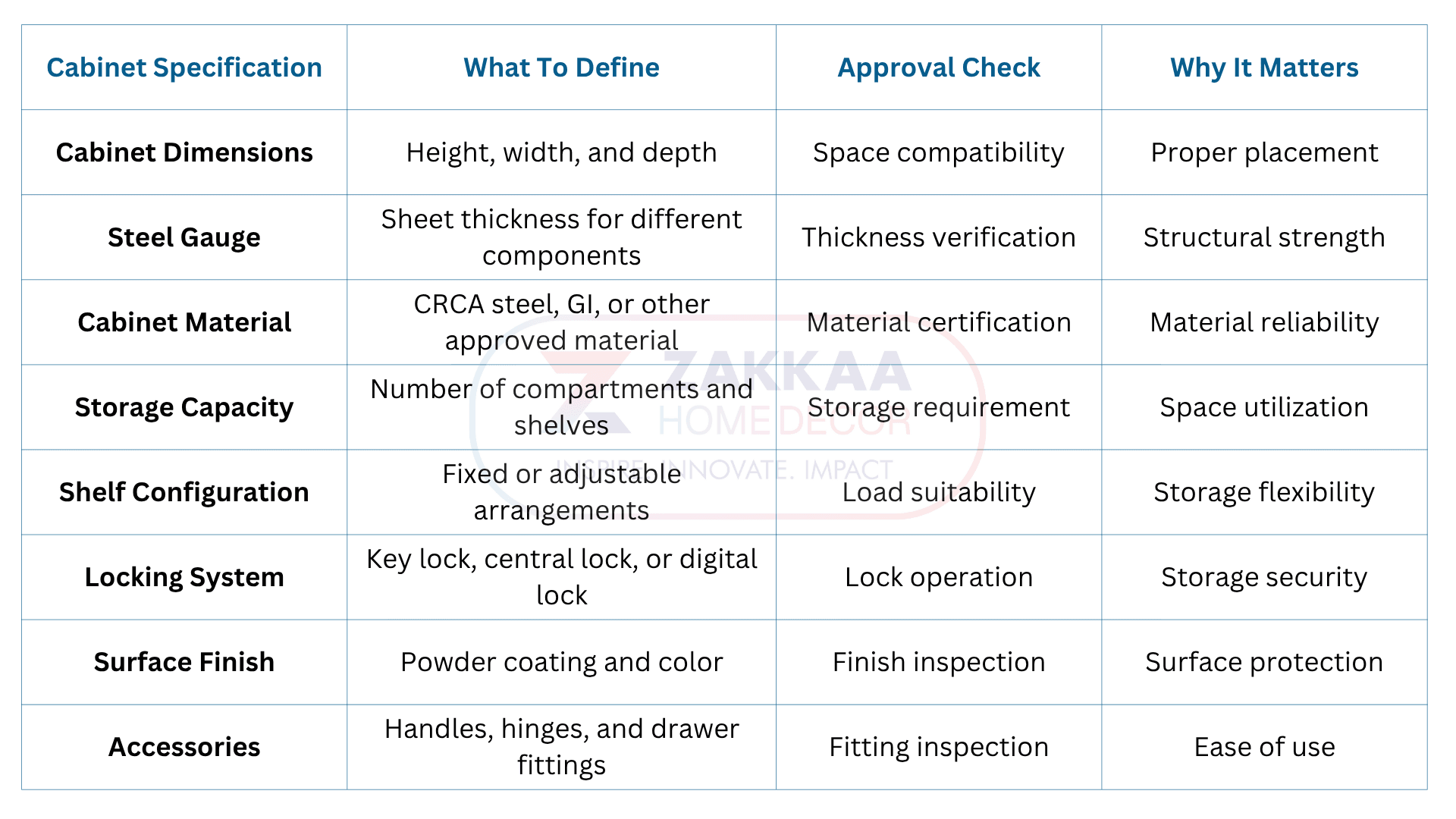
Avoid specifying only the overall cabinet dimensions. Internal measurements, shelf spacing, and door clearance also affect everyday usability.
3. Match Cabinet Capacity With Actual Storage Requirements
A cabinet's external dimensions do not always represent its usable storage capacity. Internal partitions, shelf depth, drawer arrangements, and door mechanisms determine how much space remains available.
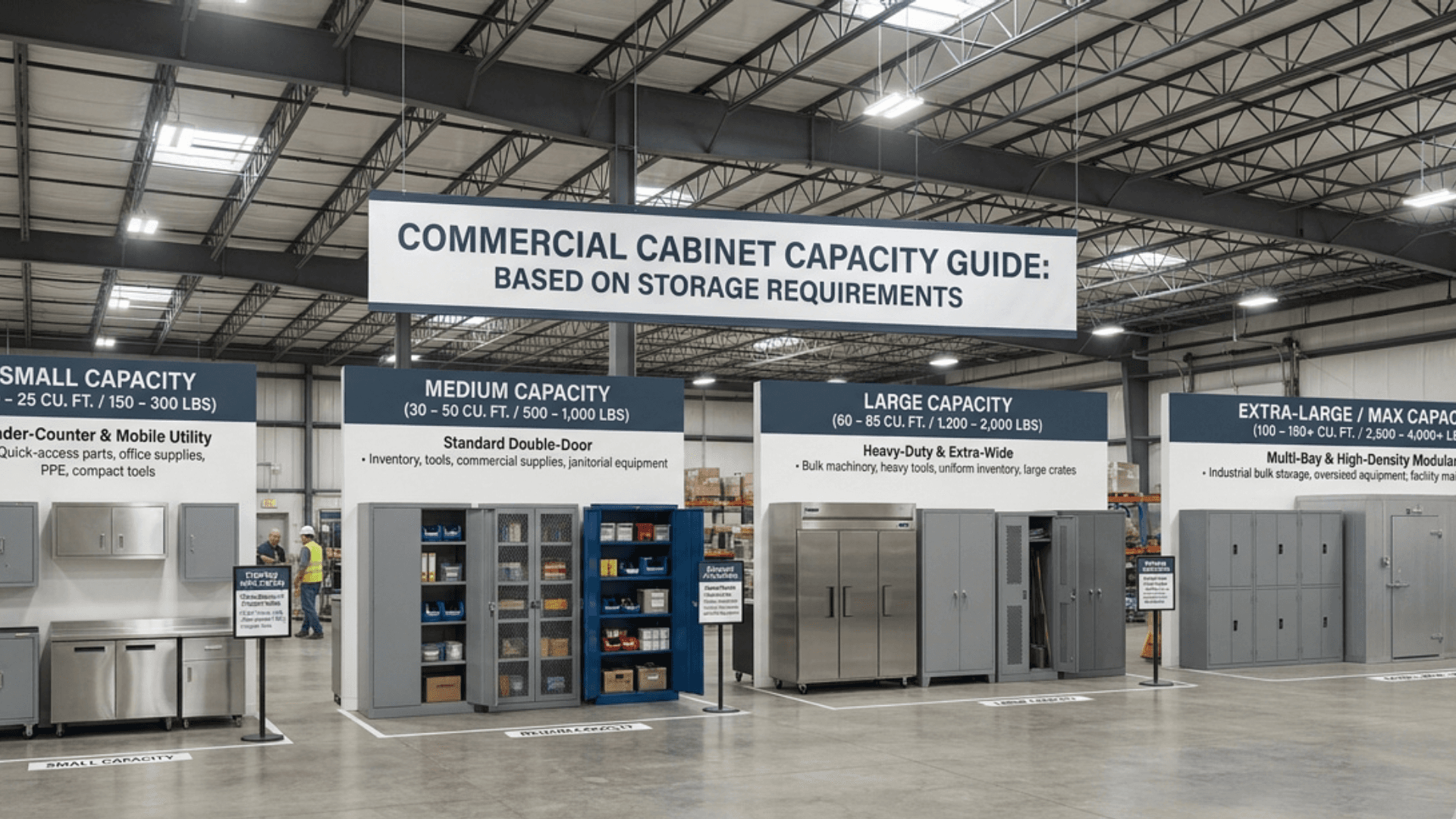
Consider the items employees will store and their approximate sizes. Documents require different compartment arrangements from uniforms, tools, stationery, or equipment.
For multi-location procurement, prepare a separate capacity requirement for each department. This prevents purchasing identical cabinets for spaces with different storage needs.
4. Evaluate Cabinet Manufacturer's Customization Capabilities
Bulk orders often involve more than selecting standard catalogue products. Businesses may need specific dimensions, additional shelves, different locking arrangements, or a combination of cabinet configurations.
Before finalizing a manufacturer, clarify:
Whether non-standard dimensions can be manufactured.
Whether internal layouts can be modified.
Whether different locking systems are available.
Whether branding and color customization are supported.
Whether multiple cabinet models can be supplied together.
Also confirm which modifications affect pricing, production timelines, or minimum order quantities.
5. Compare Quotations Beyond The Per-Unit Price
A lower quotation does not necessarily represent better procurement value. Differences in material thickness, accessories, finishing, transportation, and warranty coverage can change the actual purchase cost.
Compare cabinet supplier quotations using a common evaluation structure.
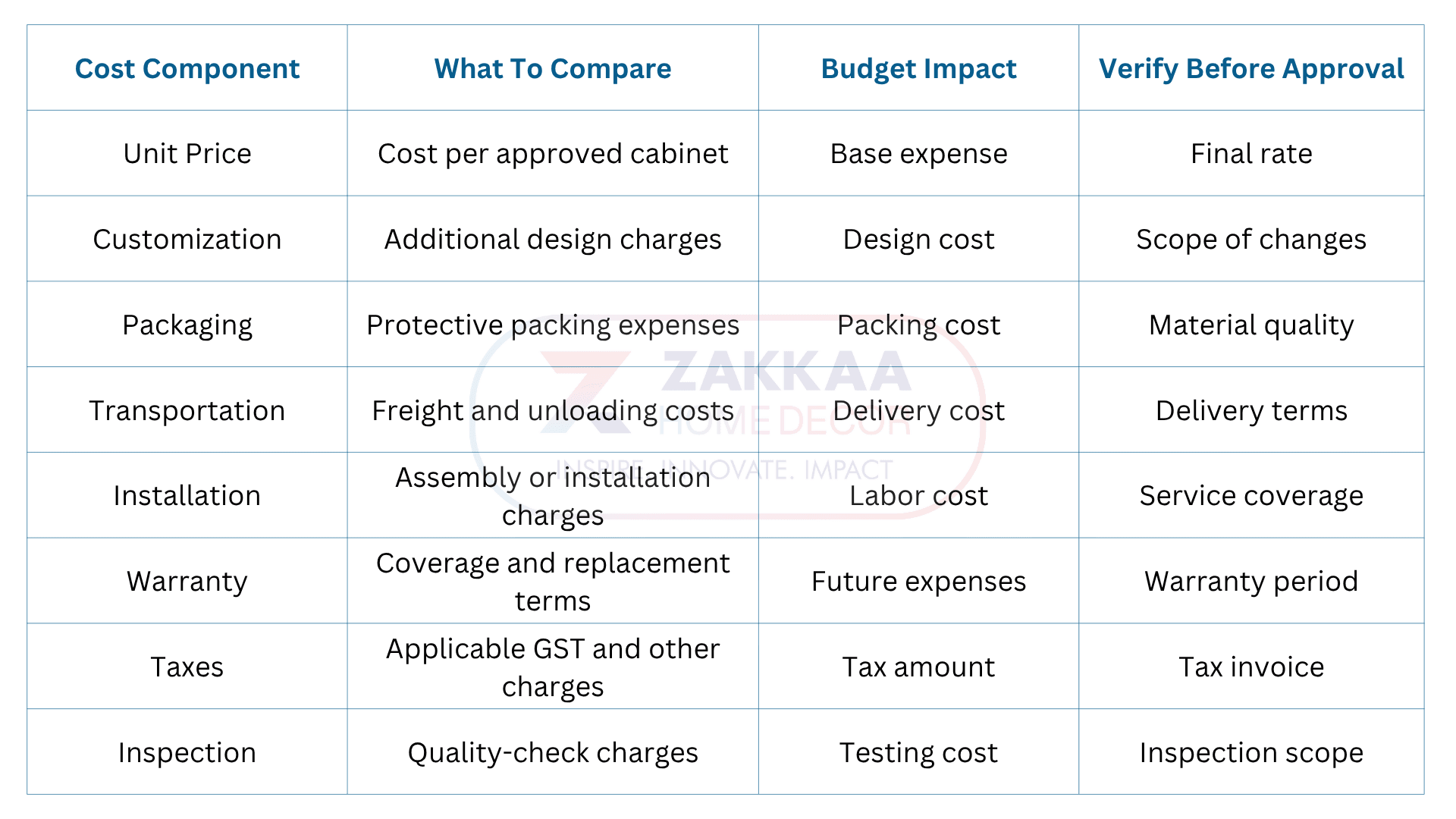
Calculate the complete delivered cost instead of comparing only the base cabinet price. This provides a more realistic picture of the procurement budget.
6. Approve Cabinet Sample Before Confirming Bulk Production
Product photographs and catalogue descriptions cannot always show how a cabinet performs in actual use. Request a physical sample or approve a production-ready prototype before placing the complete order.
During sample evaluation, check:
Whether dimensions match the approved drawings.
Whether doors and drawers operate smoothly.
Whether shelves fit the intended storage items.
Whether the locking arrangement works properly.
Whether the finish matches the approved specification.
Whether the assembled cabinet remains stable.
Once approved, retain the sample or documented drawings as the reference for subsequent production batches.
7. Plan Delivery Across Locations And Departments
Large procurement projects often involve several buildings, branches, floors, or departments. A supplier may complete manufacturing on schedule but still create problems if delivery arrangements are unclear.
Prepare a delivery plan that includes:
Quantity required at each location.
Delivery sequence and expected dates.
Packaging and transportation arrangements.
Unloading and placement responsibilities.
Inspection and damage-reporting procedures.
For multi-location projects, confirm whether the manufacturer can coordinate dispatches according to your installation schedule.
8. Create A Commercial Cabinet Procurement Approval Checklist
Before issuing the final purchase order, review the complete procurement requirements with your purchasing, administration, and facility teams.
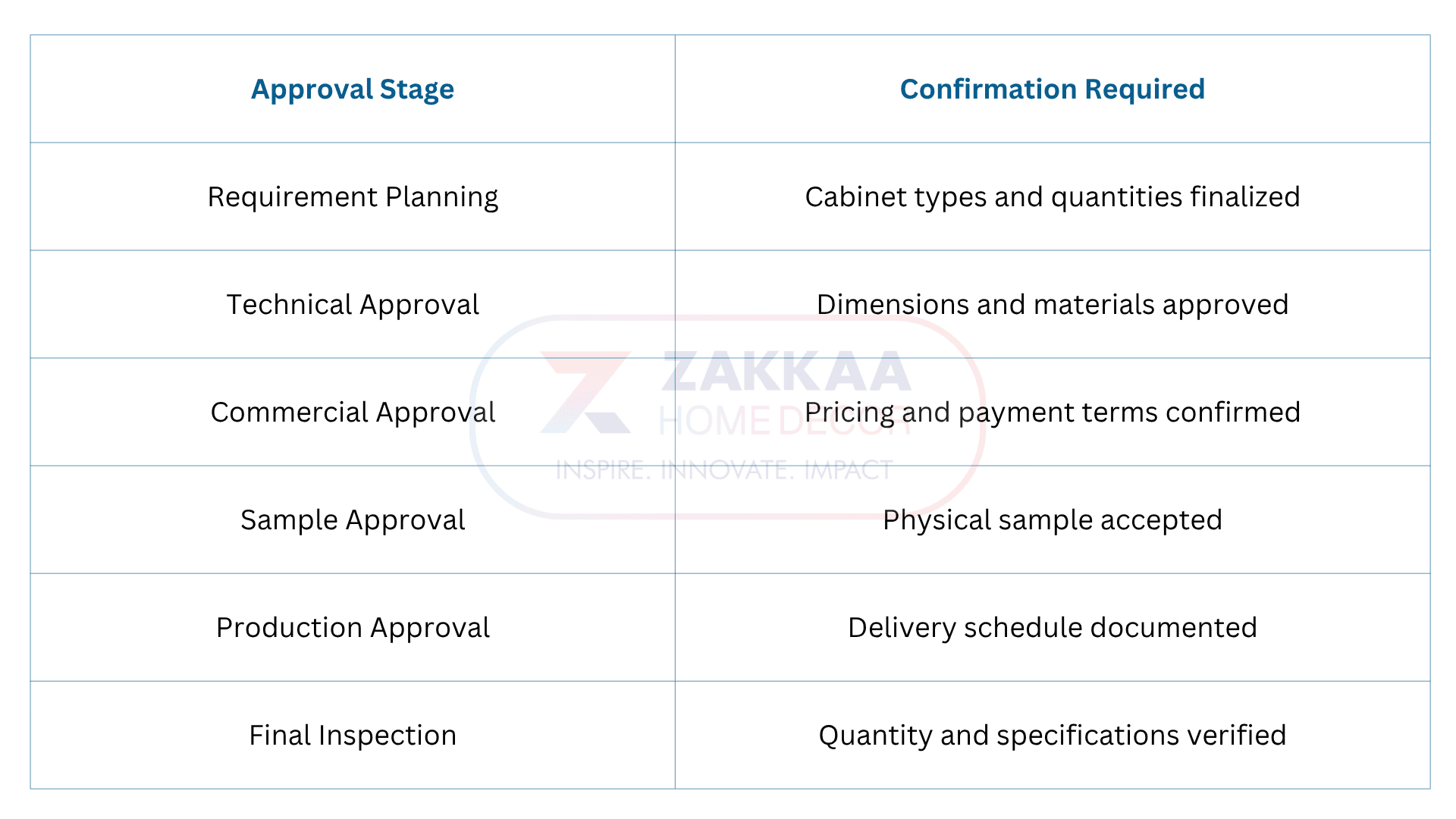
Keeping these approvals documented makes it easier to track responsibilities and resolve differences between the purchase order and delivered products.
How Zakkaa Helps You With Bulk Commercial Cabinet Procurement
Zakkaa manufactures steel storage cabinets and commercial furniture for offices, institutions, and business environments. As a prominent commercial cabinet and almirah manufacturer in India, its integrated manufacturing infrastructure supports precision sheet metal fabrication, product finishing, and large-volume cabinet requirements.
Manufacturing Capabilities
In-house team managing every stage of cabinet manufacturing.
Dedicated sheet metal production factory for cabinets.
Skilled production team handling customized cabinet requirements.
In-house fabrication supporting precise sheet metal components.
Manufacturing area supporting large-scale cabinet production.
Powder coating facilities for durable cabinet finishes.
Production infrastructure supporting bulk commercial cabinet orders.
Businesses planning large procurement projects can explore our commercial storage solutions and discuss their product specifications and quantity requirements.
Wrap Up
Buying commercial cabinets in bulk requires clear specifications, suitable storage configurations, supplier evaluation, sample approval, and planned deliveries. A structured procurement process helps businesses avoid mismatched products, unexpected expenses, and coordination problems across multiple locations. Planning a commercial storage project? Contact a trusted commercial cabinet manufacturer and supplier to discuss your bulk cabinet requirements and explore suitable manufacturing solutions.
Frequently Asked Questions (FAQs)
What Should Businesses Check Before Buying Commercial Cabinets In Bulk?
Evaluate cabinet dimensions, steel gauge, material, storage capacity, locking systems, finishing, customization, pricing, warranty, and delivery arrangements.
Which Material Is Suitable For Commercial Storage Cabinets?
CRCA steel and galvanized steel are commonly considered for commercial storage applications. The appropriate material depends on the intended use, construction requirements, and environmental conditions.
How Do I Calculate The Number of Cabinets Required?
Calculate the storage requirement for each department, identify the number of users, assess available space, and account for future storage needs.
Should Businesses Request A Sample Before Placing A Cabinet Bulk Order?
Yes. A physical sample helps procurement teams verify dimensions, material quality, storage arrangements, locking mechanisms, and finishing before approving production.
Can Commercial Cabinets Be Customized For Institutional Requirements?
Many manufacturers offer customization options such as cabinet dimensions, shelf arrangements, colors, compartments, and locking systems, depending on their production capabilities.
What Is The Importance of Steel Gauge In Commercial Cabinets?
Steel gauge indicates sheet thickness and influences cabinet construction, rigidity, and suitability for intended storage loads. Check the specified thickness for individual components.
Can One Manufacturer Supply Different Types of Commercial Cabinets?
Yes. Manufacturers with broader product ranges may supply filing cabinets, storage cupboards, personal lockers, and other commercial storage solutions under one procurement arrangement.
Why Is A Written Cabinet Specification Important?
A written specification establishes agreed product requirements and helps procurement teams compare quotations, approve samples, monitor production, and inspect delivered cabinets