Nov 20, 20266 min readBy Aditya Singh
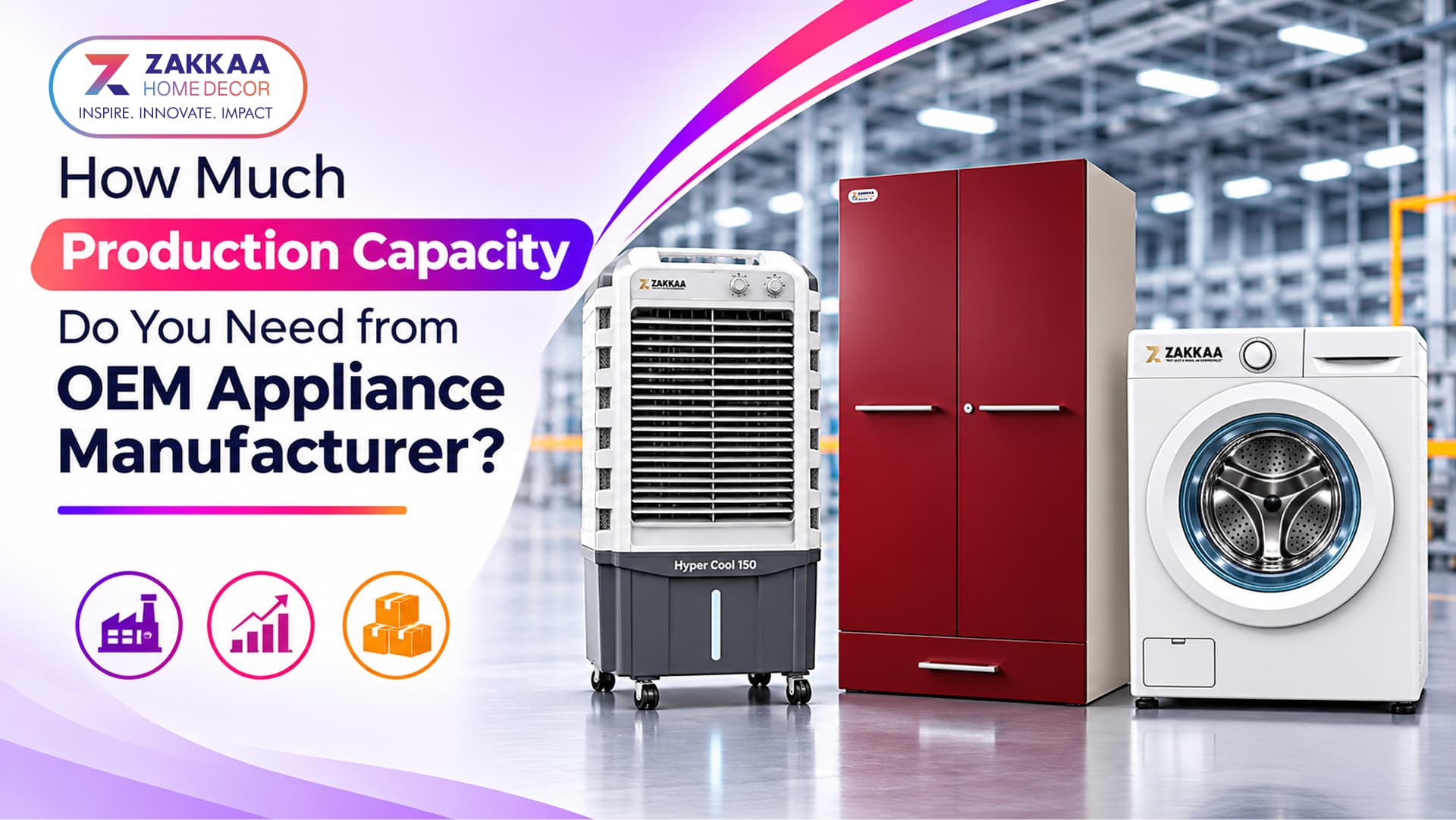
Ordering too little can leave your business struggling with stock shortages, while committing to excessive production can tie up capital in unsold inventory. The right OEM production capacity depends on your expected sales, order frequency, seasonal demand, and expansion plans.
For example, a regional appliance distributor may need a few thousand units per month, while a national brand serving multiple distribution networks may require significantly higher output. Neither requirement automatically makes one manufacturer better than another.
Your goal should be to find an OEM appliance manufacturer that can meet your current demand while providing enough flexibility to accommodate future orders.
So, how do you decide whether an OEM appliance manufacturer's production capacity is right for your business? The following guide explains what to evaluate before choosing a partner and committing to large-volume orders.
Factors That Determine Your Required Appliance Production Capacity
Before requesting a factory's production figures, understand how much output your business actually needs.
1. Monthly Sales And Demand Forecast
Start with your estimated monthly sales across all distribution channels. Consider existing dealer orders, retail demand, institutional requirements, and planned market expansion.
Use previous sales records if your business is already operational. New brands can estimate demand through distributor commitments, market research, and initial sales projections.
2. Seasonal Demand Fluctuations
Some appliances experience significant seasonal demand. Air coolers, heaters, washing machines, fans, refrigerators, TVs, and certain other products may require higher production volumes during specific months.
Your manufacturing partner should understand these fluctuations and plan production before demand peaks. Relying entirely on last-minute bulk manufacturing can create delivery pressure.
3. Product Range And Model Variations
Manufacturing 5,000 units of one model is different from producing 5,000 units across multiple models, sizes, and configurations.
Different product specifications may require separate tooling, components, assembly arrangements, or production changeovers. Discuss your complete product mix before estimating factory capacity.
4. Inventory And Replenishment Requirements
Your production requirement should account for existing inventory, warehouse availability, and the time needed to replenish dealer stock.
A business with regular monthly orders may need a different production schedule from one placing large orders before seasonal sales. Include inventory planning when discussing OEM production.
5. Future Business Expansion
Do not evaluate manufacturing scale only against your first purchase order. Consider how your requirements may change as you add dealers, enter new regions, or introduce additional appliance categories.
A trusted OEM manufacturing partner should have a realistic plan for accommodating increased demand without compromising product quality or delivery schedules.
Quick Read: What Is OEM Manufacturing? Everything Brands Need To Know
How To Calculate The OEM Production Capacity You Need
You can estimate your monthly production requirement using a simple formula:
Required Monthly Production = Expected Monthly Sales + Planned Inventory Buffer − Available Inventory
For example, suppose your business expects to sell 4,000 appliances monthly and wants to maintain an additional inventory of 1,000 units. If you already have 500 units in stock, your production requirement would be:
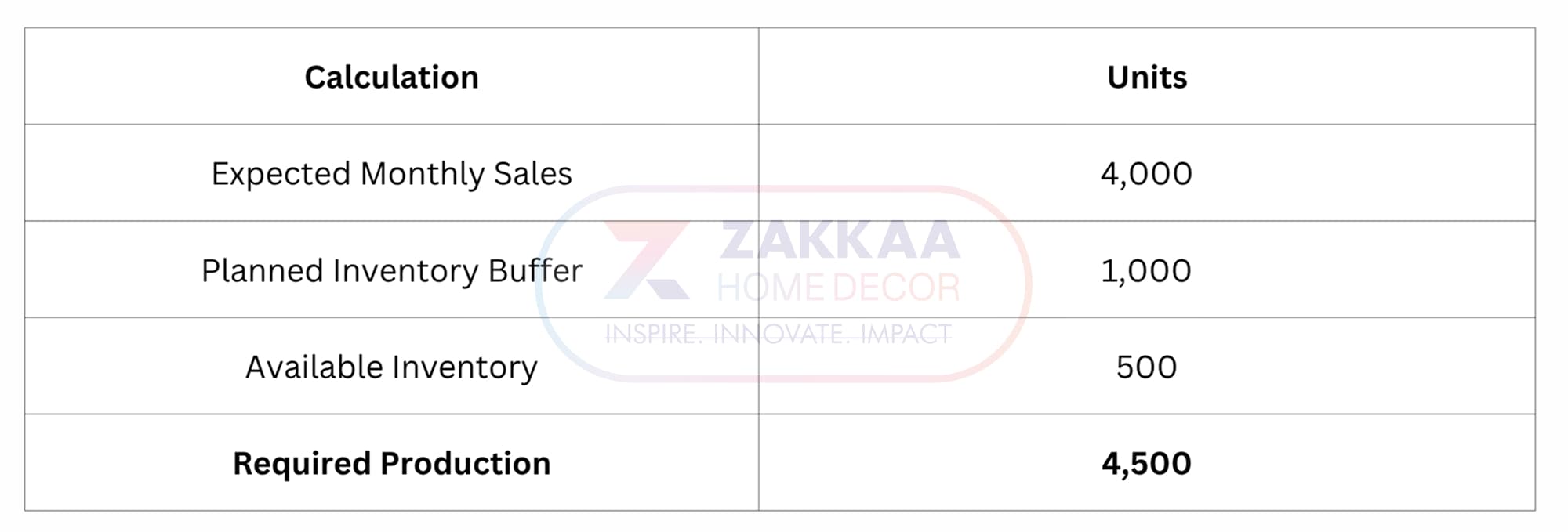
This gives you an initial production target of 4,500 units for that planning period.
The calculation should be updated according to actual sales, incoming orders, supplier lead times, and inventory movement. Your manufacturer should also confirm whether this quantity can be produced within the required delivery window.
Read Too: OEM Vs ODM Vs Private Label Manufacturing: What's the Difference?
What Type of Appliance Manufacturing Capacity Should You Look For?
Not every business needs the same factory setup. Your order volume and product requirements determine which manufacturing arrangement makes commercial sense.
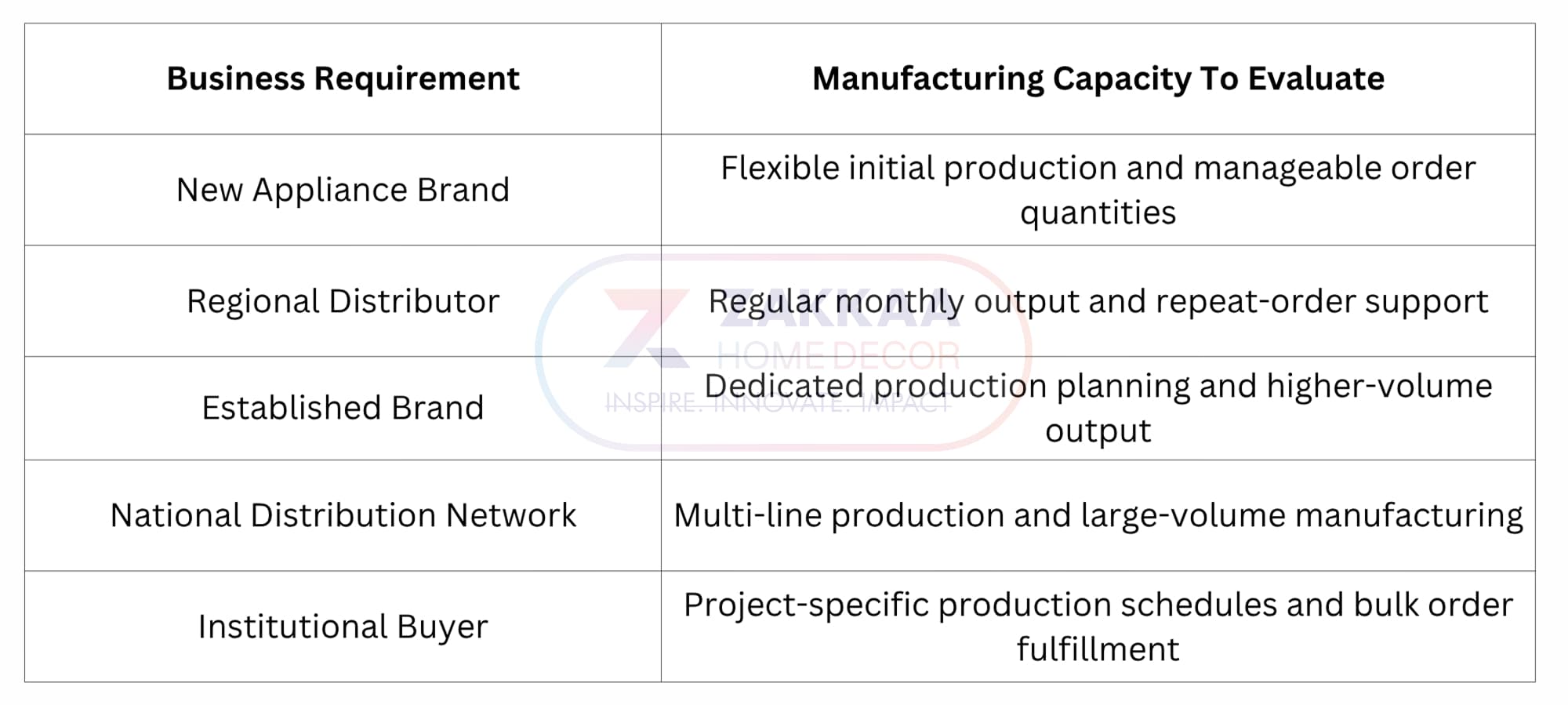
Rather than selecting the biggest factory, prioritize one with relevant production lines, suitable equipment, available capacity, and experience manufacturing your appliance category.
How To Evaluate An OEM Appliance Manufacturer's Actual Factory Capacity
A manufacturer's advertised output is only one part of the evaluation. You should understand how much it can realistically produce for your order.
Check these five areas before signing a manufacturing agreement:
Installed Capacity: Understand the maximum output supported by the factory's equipment and production infrastructure.
Demonstrated Output: Request production records for comparable appliances to understand actual manufacturing performance.
Available Capacity: Check how much production time remains after accounting for existing customer orders.
Production Bottlenecks: Evaluate whether assembly, component availability, testing, or packaging could restrict finished output.
Quality Inspection Capacity: Confirm that the manufacturer can inspect and approve the required quantity without creating dispatch delays.
Also discuss shift schedules, maintenance periods, production changeovers, and expected rejection rates. These details help establish a more realistic production commitment.
Explore More: Top Air Cooler Manufacturers In India For Retailers & Businesses
How Much Appliance Production Capacity Should You Keep For Future Growth?
Your production planning should account for more than current sales. A sudden increase in dealer orders or a new distribution agreement can quickly change your manufacturing requirements.
Consider these three planning stages:
Initial Production: Start with quantities supported by realistic sales estimates and confirmed purchase commitments.
Regular Production: Establish repeat manufacturing schedules based on sales performance, inventory movement, and replenishment timelines.
Expansion Production: Discuss additional shifts, production lines, component availability, and capacity allocation before increasing order volumes.
Avoid choosing an arbitrary capacity buffer. The additional output you need depends on demand fluctuations, supplier lead times, inventory costs, and how quickly your business can recover from a stock shortage.
Things To Discuss With An OEM Appliance Manufacturer Before Finalizing Capacity
Before entering a contract manufacturing arrangement, clarify the operational and commercial details that influence order fulfillment.
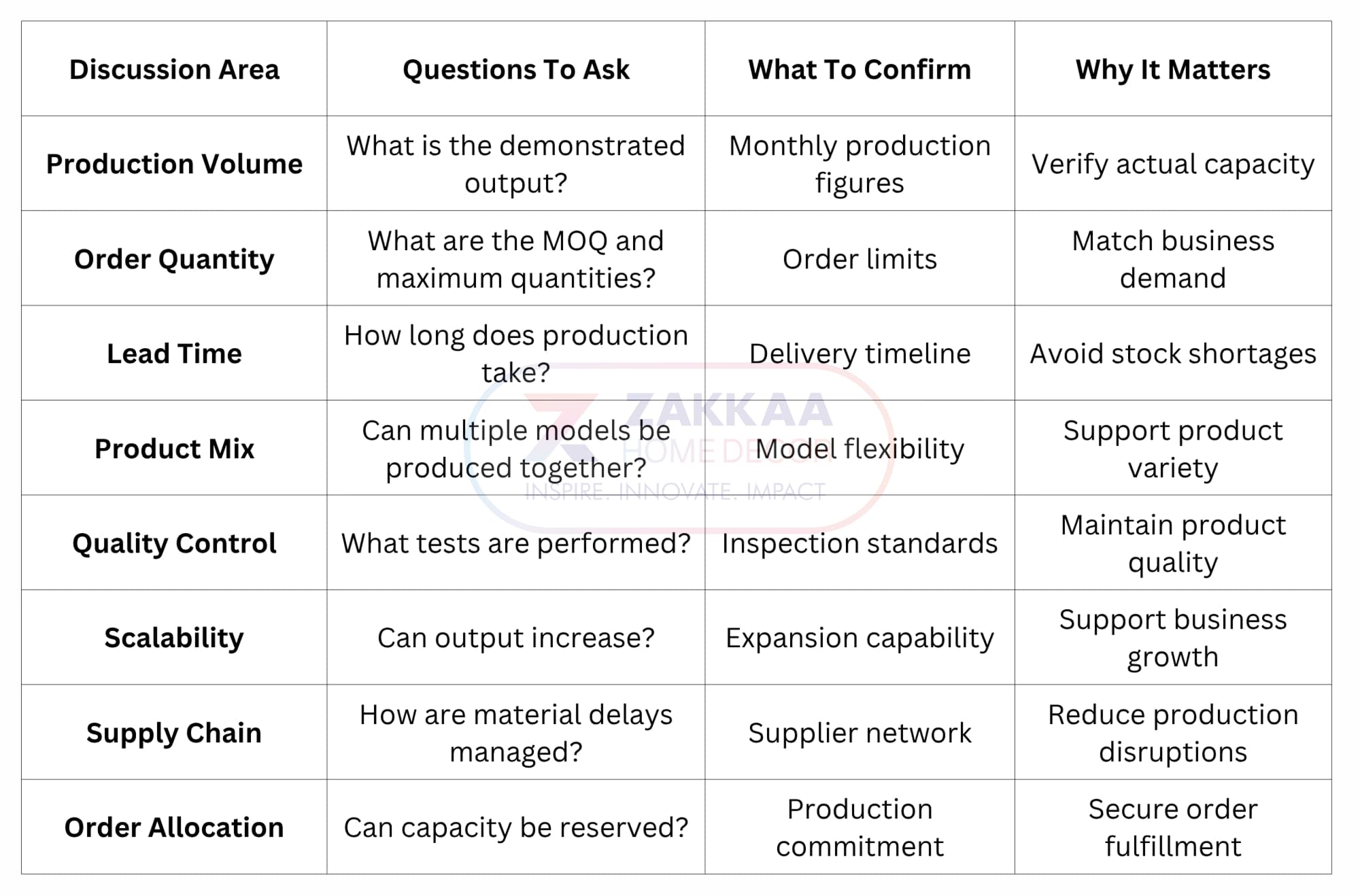
Get the agreed quantities, delivery milestones, quality requirements, and production commitments documented before confirming your order.
How Zakkaa Supports Large-Scale OEM Appliance Production
Zakkaa operates an integrated OEM manufacturing ecosystem with dedicated facilities for appliances, motors, and sheet metal fabrication. Its manufacturing infrastructure supports bulk production, product assembly, quality inspection, and private-label requirements.
Key Manufacturing Capabilities
Six Integrated Manufacturing Facilities
Multiple Assembly Lines And Testing
Businesses can discuss their appliance categories, order quantities, production schedules, and future expansion requirements with Zakkaa to evaluate a suitable manufacturing arrangement.
Wrap Up
The right OEM production capacity depends on your sales forecast, inventory requirements, seasonal demand, and future business plans.
Instead of focusing only on an OEM appliance manufacturer's maximum output, evaluate its demonstrated production, available factory capacity, and ability to fulfill repeat orders.
If you are expanding your appliance business through bulk manufacturing, contact a suitable OEM manufacturer to discuss your requirements and manufacturing partnership.
Frequently Asked Questions (FAQs)
What Is OEM Production Capacity?
OEM production capacity refers to the number of products a manufacturer can produce within a defined period according to agreed specifications and quality requirements.
How Do I Calculate My Required Appliance Production Capacity?
Estimate monthly sales, add your planned inventory buffer, and subtract available stock. Adjust the result according to lead times and upcoming orders.
How Much Production Capacity Should A New Appliance Brand Require?
A new brand should begin with quantities supported by realistic demand estimates, distributor commitments, and available working capital rather than selecting an arbitrary production target.
Does A Larger OEM Manufacturer Always Offer Better Production Capacity?
No. A large factory may have limited available capacity due to existing orders. Evaluate relevant production lines, demonstrated output, and delivery commitments.
How Does Product Variety Affect OEM Production Capacity?
Multiple models and configurations can require additional tooling, component arrangements, and production changeovers, affecting the output achievable within a given period.
Can An OEM Appliance Manufacturer Increase Production When Demand Grows?
Yes, if its infrastructure, workforce, component supply, and production planning support expansion. Confirm the additional capacity and implementation timeline before increasing orders.