Nov 19, 20267 min readBy Aditya Singh
A sheet metal air cooler may look sturdy when it leaves the factory, but its long-term performance depends heavily on the materials used in its construction. In India's hot and humid conditions, the cooler body can face moisture exposure, water splashes, dust, handling, and regular movement.
For air cooler manufacturers, selecting the right material is a commercial decision as much as an engineering one. An unsuitable sheet can increase fabrication difficulties, finishing expenses, corrosion risks, and product complaints. The right specification helps balance structural strength, sheet metal air cooler manufacturing costs, appearance, and expected service life.
Which Materials Are Used In Sheet Metal Cooler Manufacturing?
Steel is commonly used for metal air cooler bodies because it offers structural strength and can be processed through cutting, punching, bending, and joining operations. However, different steel varieties have different protective properties and manufacturing requirements.
Galvanized Iron (GI): Steel coated with zinc to improve corrosion resistance.
Cold-Rolled Steel: Steel processed at room temperature for smoother surfaces.
Stainless Steel: Steel containing chromium for improved corrosion resistance.
Pre-Coated Steel: Steel supplied with a protective or decorative coating.
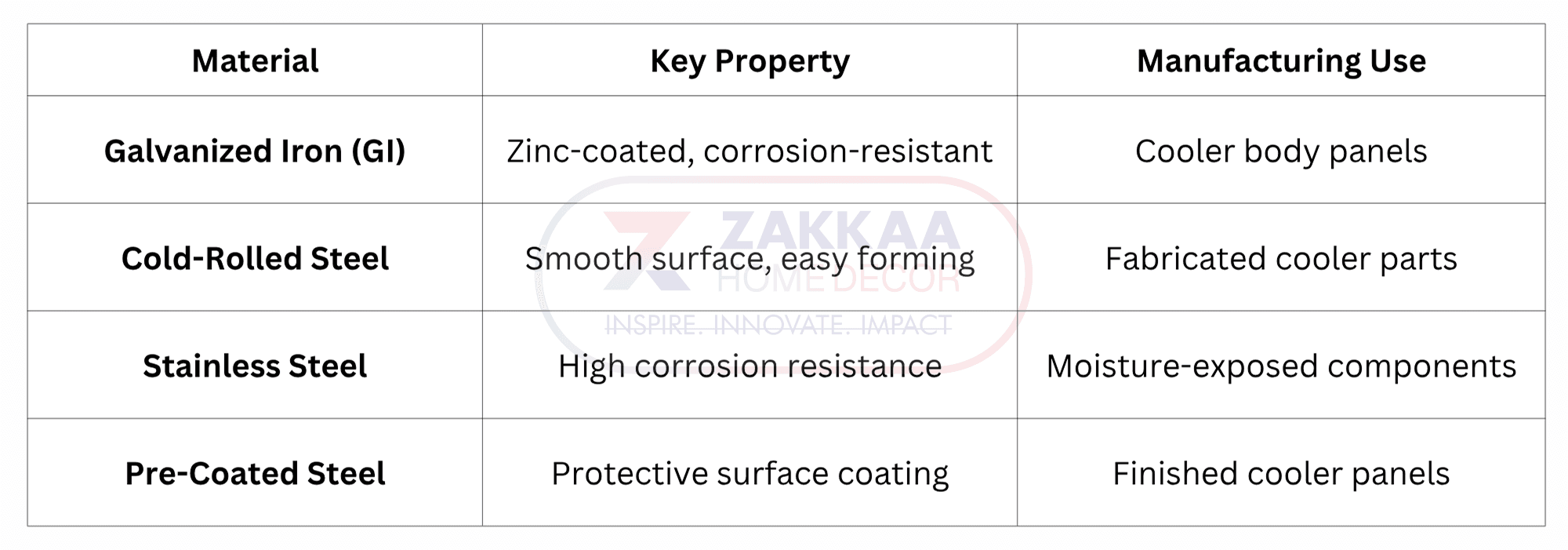
The choice of sheet metal air cooler material should depend on the intended application, production volume, design, and overall product cost. Galvanized steel is a relevant option for cooler bodies because galvanized sheets are recognized for applications such as air cooler manufacturing under IS 277.
Material Factors To Evaluate Before Manufacturing Sheet Metal Coolers
A sheet metal air cooler may have a simple outer structure, but the material behind it plays a major role in its overall performance. Factors such as thickness, coating, corrosion resistance, formability, and strength deserve attention before production begins. The following points explain what manufacturers should evaluate when choosing sheet metal for coolers.
1. Steel Grade And Composition
Steel grade determines several important material properties, including strength, ductility, and suitability for fabrication. A material that performs well during cutting may not necessarily offer the forming characteristics required for complex cooler panels.
Manufacturers should evaluate material specifications, mechanical properties, and supplier documentation before approving a steel grade. The objective is to select a material that supports the product's structural requirements without creating unnecessary processing costs.
2. Sheet Thickness And Structural Strength
Sheet thickness affects the rigidity, weight, and overall construction of the cooler body. Thinner sheets can reduce raw material costs, but they may require additional structural support to prevent deformation. Excessively thick sheets, meanwhile, can increase product weight and fabrication expenses.
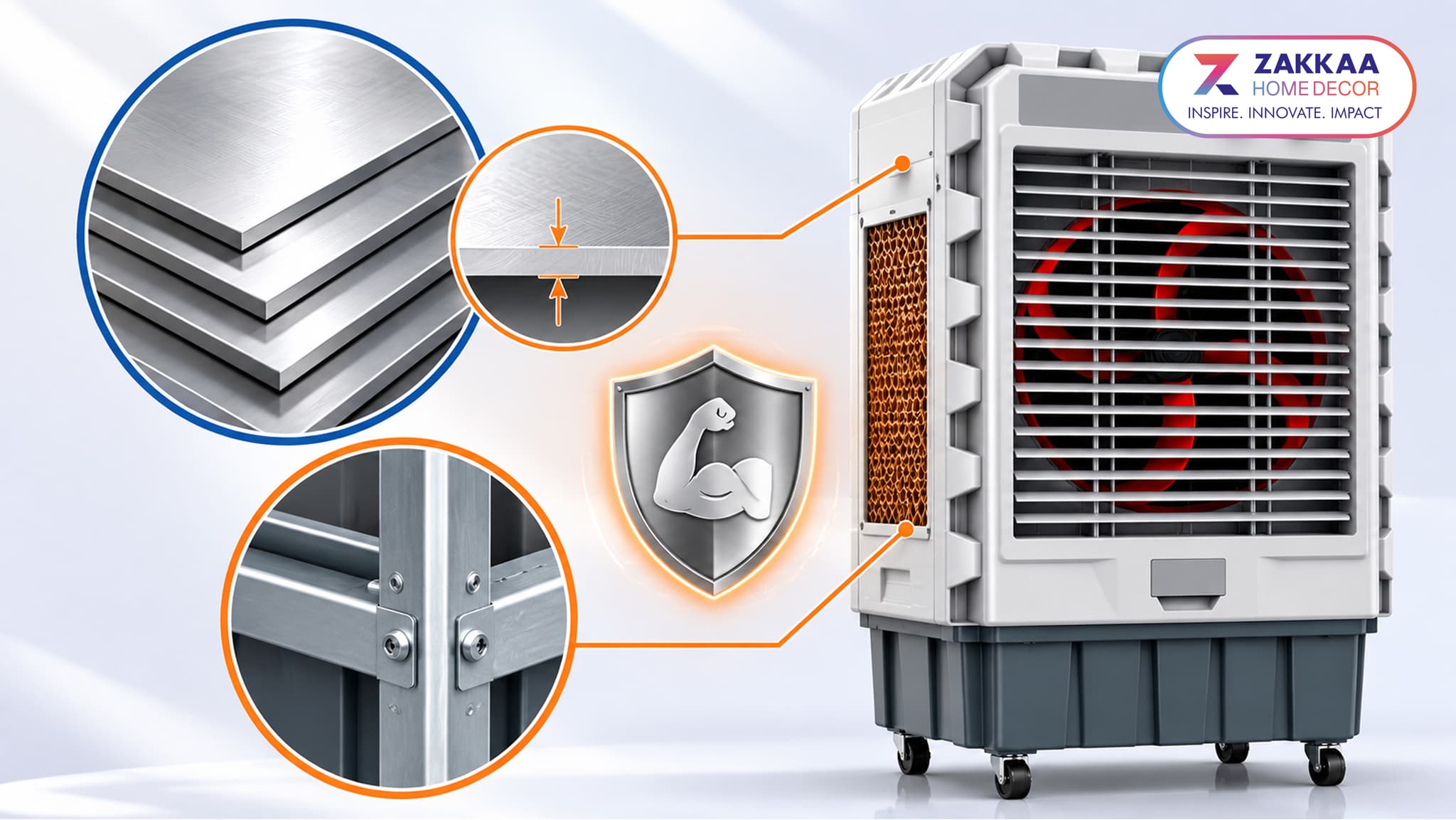
Manufacturers should determine thickness according to panel dimensions, cooler size, reinforcement design, and intended operating environment. Instead of selecting one thickness for every model, they should establish specifications through design evaluation and prototype testing.
3. Galvanization And Corrosion Protection
Water circulation is central to evaporative cooling, which makes corrosion protection particularly important for metal-bodied coolers. Galvanized steel has a zinc coating that provides a protective barrier against corrosion.
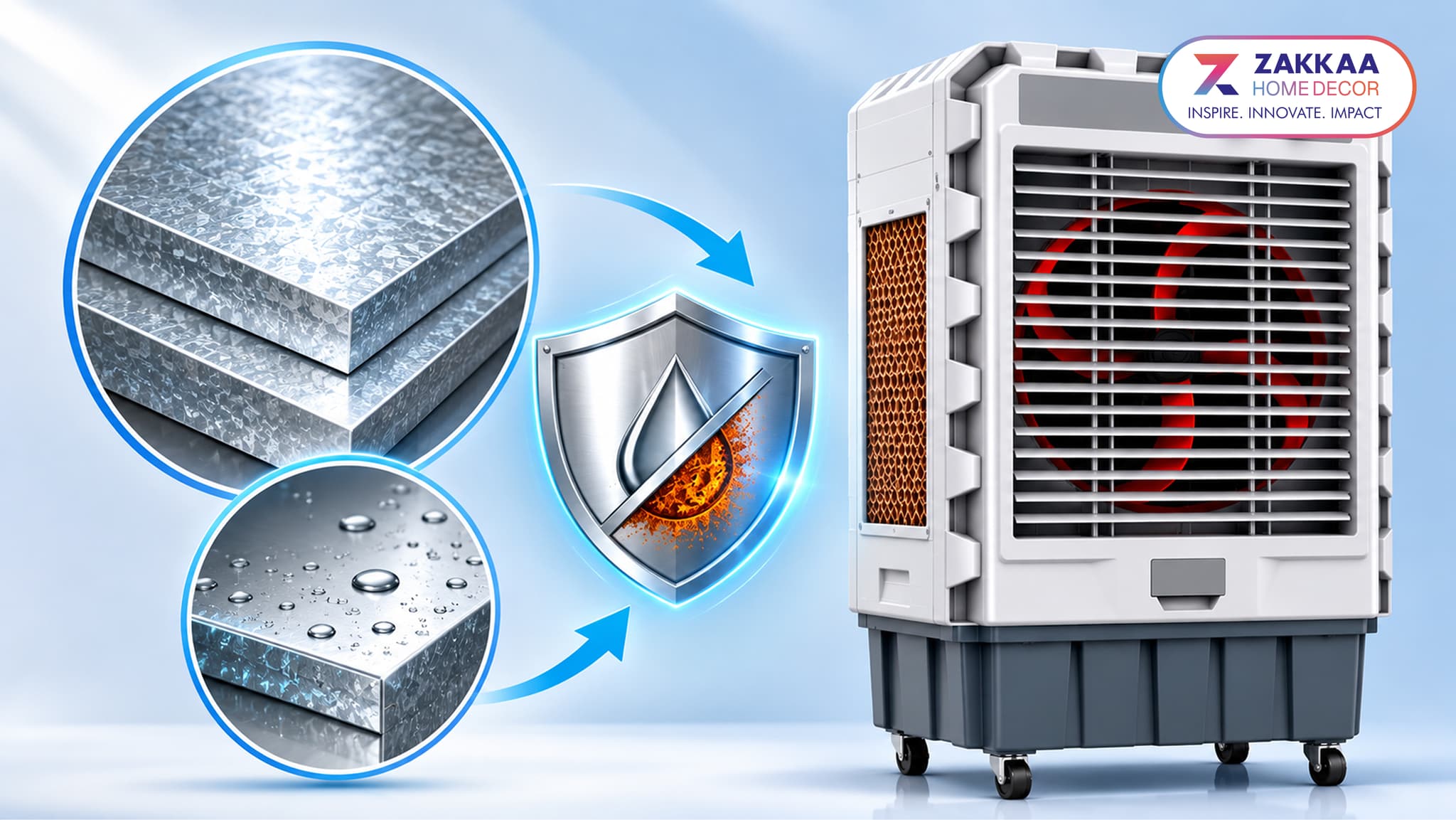
However, cutting, drilling, welding, and bending can affect protective coatings in localized areas. Manufacturers should account for these operations and evaluate whether exposed sections need suitable treatment before final finishing.
4. Surface Finish And Powder Coating Compatibility
The exterior finish influences both product appearance and protection. Powder coating is commonly used on metal appliance bodies because it creates a durable decorative finish when the surface is properly prepared and the coating is correctly applied.
Before selecting a coating system, manufacturers should evaluate surface cleanliness, coating compatibility, application thickness, curing conditions, and adhesion. Poor preparation can cause peeling, uneven coverage, and premature surface deterioration.
5. Formability And Fabrication Suitability
Cooler bodies contain multiple fabricated components, including side panels, front sections, top covers, bases, and supporting structures. The selected sheet must withstand the required cutting, punching, bending, and joining operations.
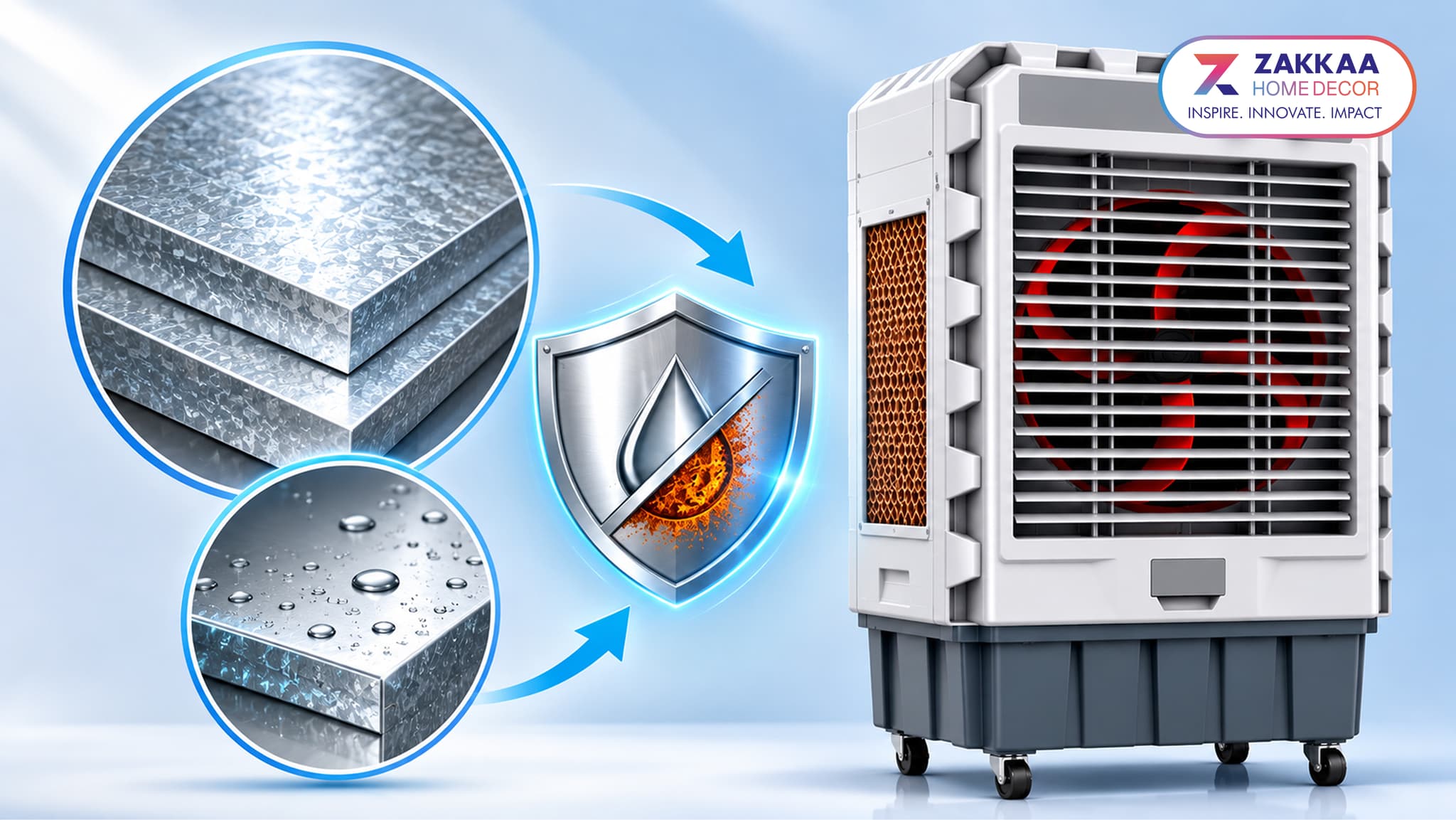
Poor formability can result in cracks, distorted edges, inaccurate dimensions, and increased material wastage. Manufacturers should test the material against actual production requirements before approving it for bulk fabrication.
6. Weight And Material Cost
Material selection directly affects the production cost and finished weight of a sheet metal cooler. Heavier construction may increase transportation and handling expenses, while reducing thickness without proper engineering can compromise structural performance.
A practical evaluation should consider the complete cost of ownership during manufacturing, including raw material prices, fabrication time, coating requirements, wastage, and rework. The cheapest sheet is not always the most economical choice.
7. Environmental Exposure And Application
A cooler designed for a bedroom may have different construction requirements from one intended for a factory or commercial workspace. Industrial units may experience more frequent handling, dust accumulation, and demanding operating conditions.
Manufacturers should assess where the product will be installed and how frequently its body will encounter moisture, cleaning, and physical contact. These conditions help determine the appropriate steel grade, protective treatment, and finishing specification.
How Does Material Selection Affect The Sheet Metal Fabrication Process?
The selected material influences how easily air cooler manufacturers in India can convert flat sheets into finished cooler components. It also affects machinery settings, joining methods, finishing requirements, and production quality.
For example, galvanized sheets require appropriate welding controls because heating zinc-coated material can produce hazardous fumes. Suitable ventilation, operator protection, and restoration of damaged coating areas should be considered during fabrication.
What Quality Checks Should Manufacturers Perform On Sheet Metal?
Material selection in sheet metal air cooler manufacturing alone cannot guarantee a durable finished product. Manufacturers also need inspection procedures to verify whether the material and fabricated body meet approved specifications.
Important checks include:
Material Verification: Confirm steel grade, thickness, and supplier documentation.
Dimensional Inspection: Check panel measurements, bends, holes, and component alignment.
Surface Inspection: Identify scratches, dents, rust spots, and coating defects.
Weld Inspection: Examine joints for visible defects and inadequate joining.
Coating Adhesion: Evaluate whether the protective finish adheres properly to the prepared surface.
Corrosion Evaluation: Use suitable tests to assess the protective coating system.
Assembly Inspection: Verify body rigidity, fitment, and component compatibility.
These checks help manufacturers identify material or fabrication issues before the cooler reaches the final assembly and dispatch stages.
How Zakkaa Supports Sheet Metal Air Cooler Manufacturing
Zakkaa supports OEM air cooler production through dedicated cooler manufacturing and sheet metal fabrication infrastructure. Its manufacturing ecosystem includes fabrication machinery, powder coating facilities, assembly operations, and quality inspection capabilities.
Manufacturing Capabilities
In-House Sheet Metal Fabrication
CNC Hydraulic Bending Operations
MIG And Spot Welding
Integrated Cooler Assembly And Testing
Businesses planning a metal cooler product line can discuss their material specifications, product design, finishing requirements, and bulk manufacturing needs with Zakkaa.
Final Thoughts
Material selection plays a major role in determining the durability, fabrication quality, appearance, and manufacturing cost of sheet metal air coolers. From steel grade and sheet thickness to galvanization and powder coating, every specification should match the product's intended application.
For businesses planning to manufacture metal-bodied air coolers, the right OEM air cooler manufacturing partner can help translate material requirements into production-ready products. Contact a trusted sheet metal air cooler manufacturer to discuss your sheet metal air cooler manufacturing and OEM requirements.
Frequently Asked Questions (FAQs)
Why Is Galvanized Steel Used In Metal Air Coolers?
Galvanized steel has a zinc coating that helps protect the underlying steel from corrosion, making it suitable for applications involving regular moisture exposure.
How Does Sheet Thickness Affect Cooler Durability?
Sheet thickness influences body rigidity, weight, and resistance to deformation. Manufacturers should select thickness according to the cooler's dimensions, reinforcement design, and intended use.
Is Powder Coating Necessary For Sheet Metal Coolers?
Yes, powder coating provides a decorative and protective surface finish. Its suitability depends on the base material, surface preparation, coating specifications, and operating environment.
Can Stainless Steel Be Used For Air Cooler Bodies?
Yes. Stainless steel can be used where additional corrosion resistance is required. However, its higher material and processing costs should be evaluated against the product's application.
What Causes Rust In Sheet Metal Air Coolers?
Rust can develop when protective coatings are damaged, exposed steel comes into contact with moisture, or surface preparation and finishing are inadequate.
How Can Sheet Metal Air Cooler Manufacturers Reduce Material Wastage?
Accurate design drawings, optimized sheet layouts, suitable cutting parameters, controlled fabrication, and proper material handling can help reduce production wastage.
Can Sheet Metal Coolers Be Customized For OEM Orders?
Yes. OEM sheet metal coolers can be developed around approved product specifications, including body dimensions, configurations, finishing, branding, and application requirements.