Nov 24, 20268 min readBy Aditya Singh
Have you considered starting a business in the home appliance market but worry about the investment involved?
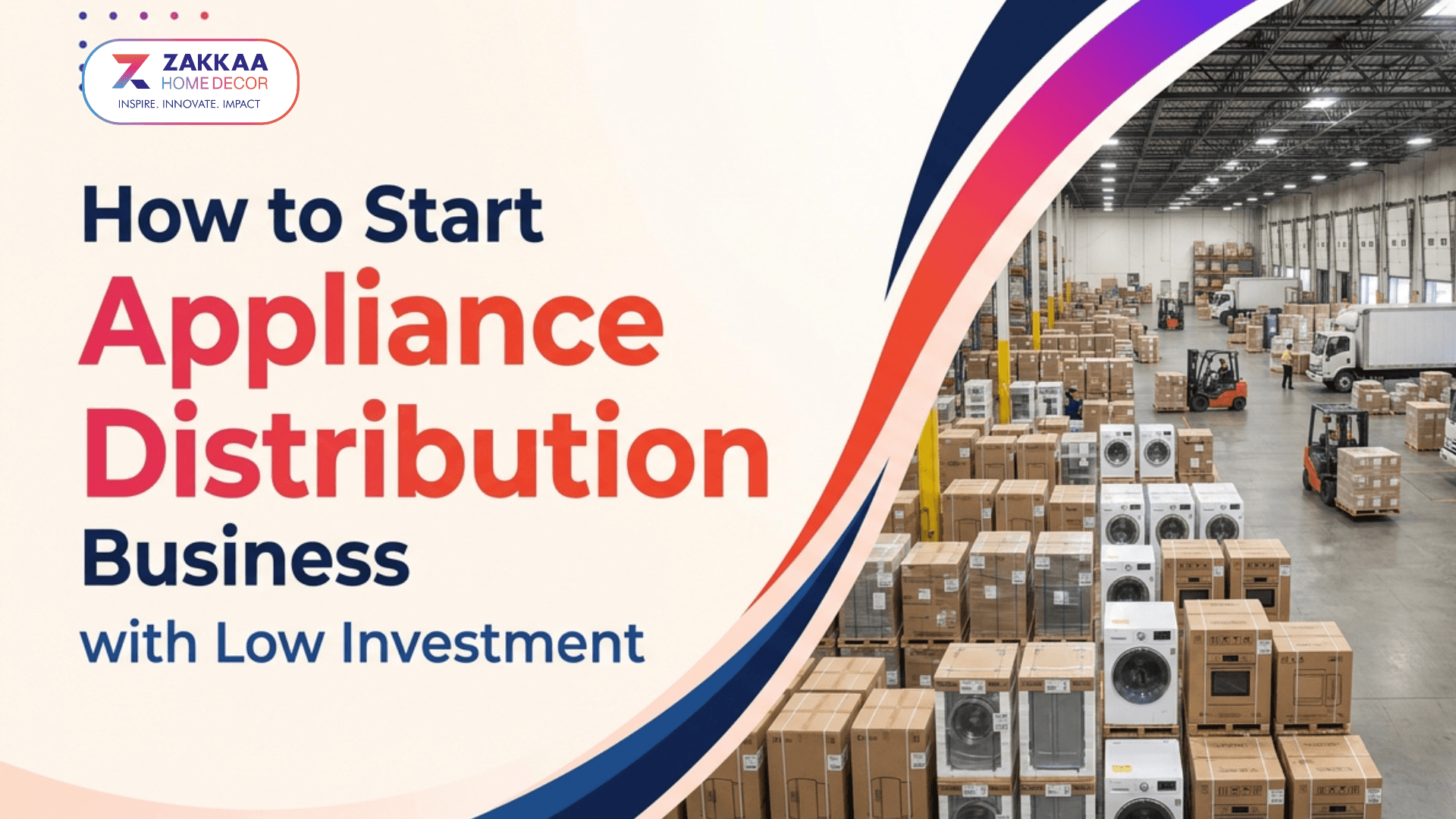
Appliance distribution is one option worth considering if you want to connect manufacturers with retailers and earn through product sales.
For example, you could supply ceiling fans, air coolers, mixer grinders, or other household appliances to shops in your city or nearby towns. Your starting investment will depend on the products you select and the scale of your operations.
But how do you find OEM appliance manufacturers, set up your distribution and dealer network, and manage your first orders? Let's understand what it takes to build an appliance distribution business in India without overspending.
Steps To Start A Successful Appliance Distribution Business
Your first appliance order is only one part of starting a distribution business; finding the right products and buyers matters just as much. A little planning to launch your appliances without owning a manufacturing factory, around suppliers, inventory, transportation, and retailer demand, can help you avoid costly early mistakes. These steps will guide you through setting up and growing your appliance distribution business in India.
1. Choose An Appliance Category Before Investing
Starting with several unrelated products can divide your investment and make inventory management difficult. Select a category based on local demand, competition, storage requirements, and your ability to reach potential buyers.
Some options include:
Cooling Appliances: Seasonal cooling solutions like air coolers and ACs with strong demand during India's summer months.
Washing Machines
Household laundry appliances such as simple washers and automatic washing machines purchased across different customer segments.
LED TVs
LED TVs and home entertainment products suitable for electronics retailers and showrooms.
Room Heaters
Seasonal heating appliances popular in colder regions during winter.
Refrigerators
Essential household appliances like single- or double-door refrigerators with steady year-round market demand.
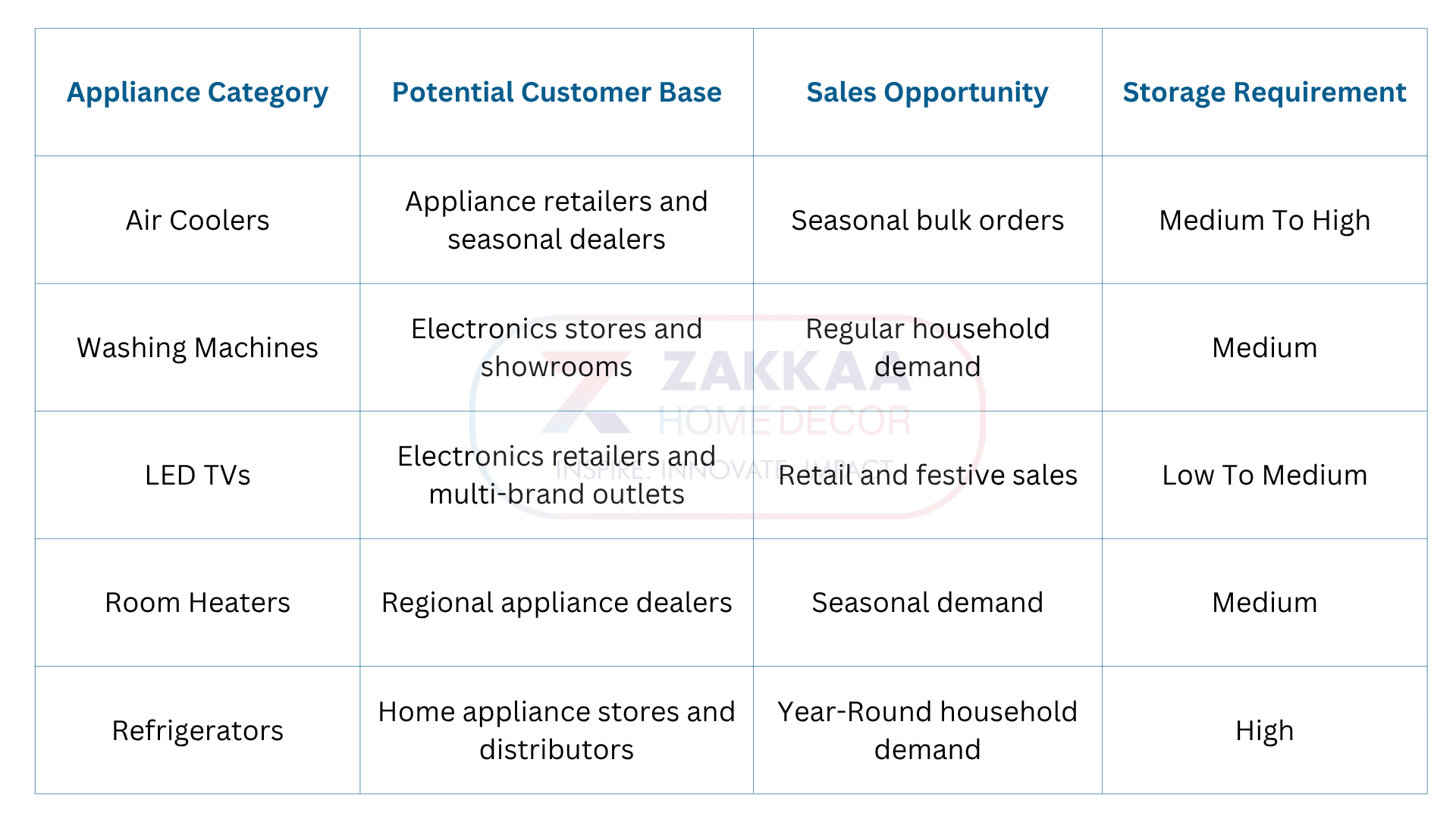
You can also consider complementary products once your first category develops regular sales. For example, an established cooler distributor may explore other seasonal or household appliances to serve existing retailers.
2. Select Appliance Distribution Model That Fits Your Budget
You do not necessarily need to operate as a full-scale distributor from the beginning. Different distribution arrangements involve different responsibilities, inventory requirements, and capital commitments.
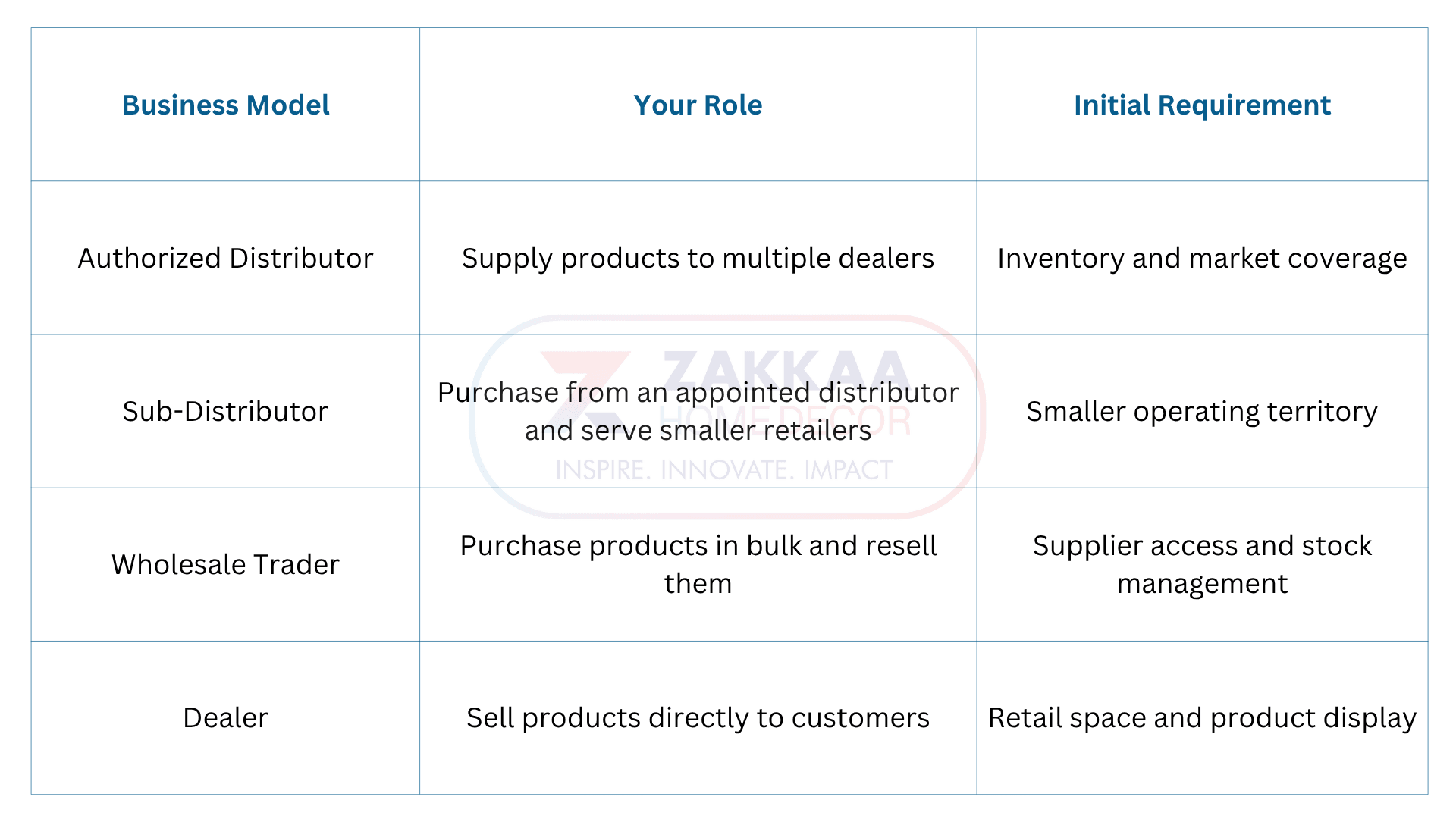
For entrepreneurs with limited capital, working as a sub-distributor or starting with a focused wholesale operation may be more practical than immediately accepting responsibility for an entire region.
3. Calculate Your Investment Around Business Operations
The product purchase is only one part of your startup expense. You also need funds for transportation, storage, billing, staff, and payments that remain outstanding with retailers.
Consider these expense heads before committing your money:
Opening Inventory: Purchase only the models and quantities supported by expected demand.
Storage: Begin with a suitable rented space instead of investing in a large warehouse.
Transportation: Compare outsourced delivery with vehicle ownership.
Business Setup: Budget for registration, billing equipment, accounting, and basic office requirements.
Working Capital: Keep funds available for replenishment, operating expenses, and retailer credit.
Promotion: Allocate a modest budget for product catalogs, local visits, and retailer outreach.
A useful starting principle is to protect working capital rather than spending most of your investment on opening stock.
4. Find An Appliance Supplier With Suitable Commercial Terms
Your appliance supplier affects product availability, purchase pricing, delivery schedules, and the support you can offer retailers. Compare manufacturers and authorized suppliers before selecting a business partner.
Pay particular attention to:
Product pricing and distributor margins.
Minimum order quantities and payment conditions.
Availability of popular models and replacement stock.
Warranty coverage and service arrangements.
Transportation responsibilities and delivery timelines.
Territory allocation and dealership policies.
Ask for a written commercial proposal. A slightly lower purchase price may not be beneficial if the supplier has unreliable stock availability or unclear warranty procedures.
5. Build A Dealer Network Before Expanding Inventory
A distribution business depends on the dealers and retailers who purchase and resell your products. Start identifying potential customers before increasing your stock commitment.
Your first dealer network can include:
Independent appliance retailers
Multi-brand electronics showrooms
Local wholesale traders
Regional appliance chains
Furniture and home appliance stores, where product categories overlap
Visit shops personally, understand their existing suppliers, and find out which products sell regularly. Offer clear pricing, dependable delivery, and accessible product information.
Instead of approaching hundreds of shops without a plan, focus on a smaller group of retailers with genuine buying potential.
6. Manage Inventory And Retailer Payments Carefully
Stock movement and payment collection determine how much money remains available for your next purchase order.
For example, selling appliances on credit may increase orders, but delayed payments can prevent you from purchasing fresh inventory. Set credit limits according to each retailer's payment history and financial reliability.
Track these figures regularly:
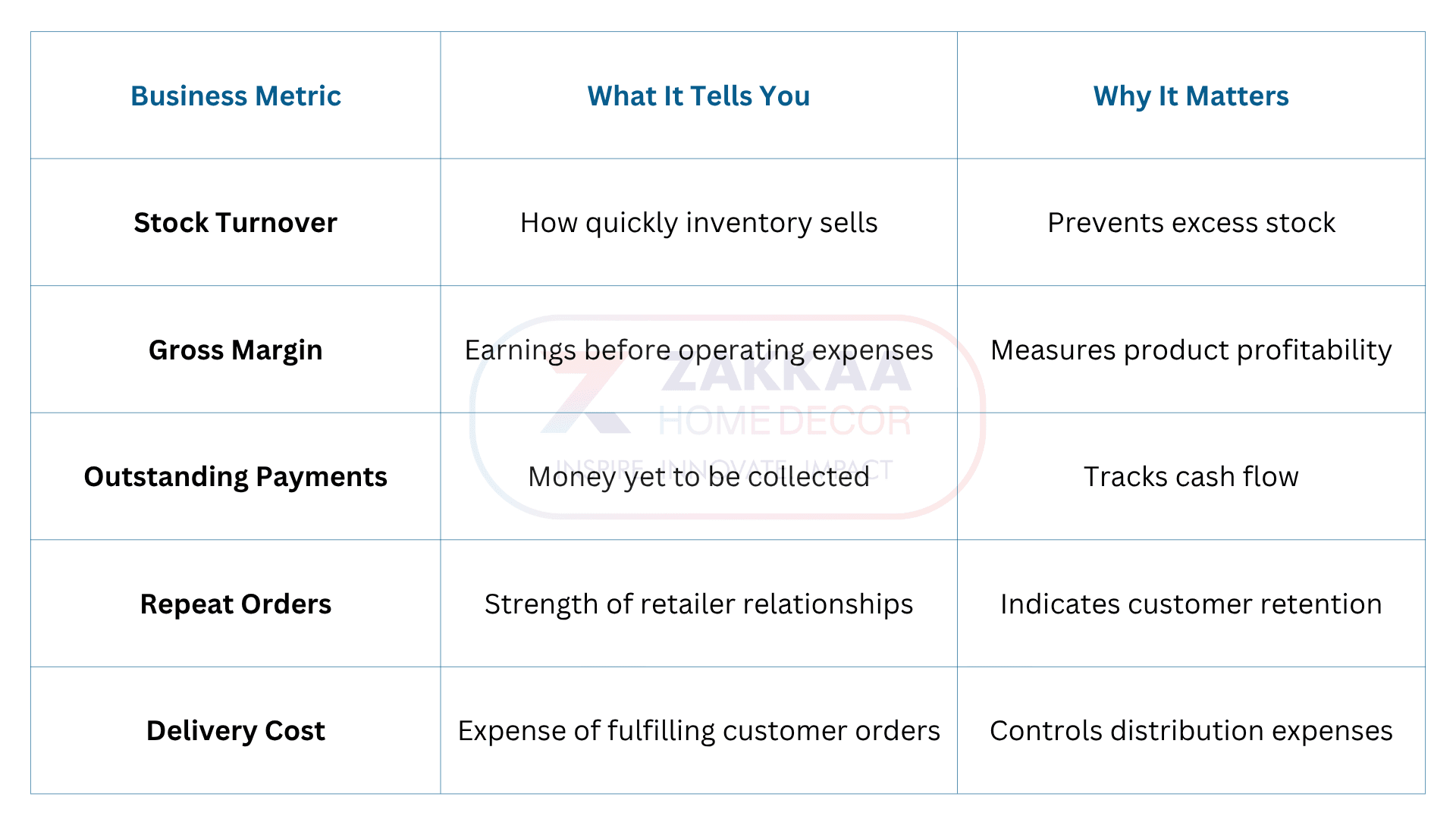
Avoid stocking slow-moving models simply because a supplier offers a bulk discount. Unsold inventory can block funds that your business needs elsewhere.
7. Develop Sales Channels Beyond Local Retailers
Once your initial dealer network becomes active, explore additional channels to increase product reach.
Regional Wholesale: Supply smaller traders who serve nearby towns and markets.
Institutional Orders: Approach offices, educational institutions, hotels, and other organizations when your product categories match their requirements.
Online Enquiries: Use a business website, product catalog, and WhatsApp Business to receive enquiries from potential retailers.
Local Market Promotion: Participate in trade events, visit retail markets, and share product information with prospective dealers.
These channels can support market expansion without requiring you to establish physical outlets in every location.
8. Complete Business Registration And Basic Compliance
Set up the business structure and documentation before beginning regular commercial operations.
Depending on your business model, consider:
Proprietorship, partnership, LLP, or company registration.
Business bank account and accounting records.
GST registration, where applicable.
Trade licenses or local permissions, if required.
Supplier agreements and purchase documentation.
Proper sales invoices and inventory records.
GST requirements depend on turnover, the nature of supplies, and other conditions. Inter-state taxable supplies and certain other activities can trigger registration requirements. Confirm the applicable rules with a chartered accountant before starting operations.
Is An Appliance Distribution Business A Good Opportunity In India?
India's appliance market offers opportunities for entrepreneurs who can connect manufacturers with retailers and local customers. However, entering this business does not require you to begin with a large warehouse, multiple delivery vehicles, or an extensive dealer network.
A focused distribution operation can start with one product category and a limited territory. Your initial priority should be finding products with local demand, negotiating workable supplier terms, and developing relationships with retailers who can generate repeat orders.
The business becomes more manageable when inventory purchases, delivery expenses, and retailer credit are planned around actual sales rather than assumptions.
Common Mistakes That Increase Distribution Business Costs
Even a promising product category can become difficult to manage when early business decisions are based on assumptions.
Buying Excess Stock: Large opening orders can leave money tied up in slow-moving products.
Offering Unlimited Credit: Delayed retailer payments can affect supplier payments and replenishment.
Ignoring After-Sales Support: Unclear warranty arrangements can damage retailer confidence.
Expanding Too Quickly: Entering several territories before establishing regular sales increases operating expenses.
Depending On One Retailer: A narrow customer base makes monthly revenue vulnerable to individual order changes.
A controlled expansion strategy gives you time to understand actual demand before increasing financial commitments.
How Zakkaa Helps Appliance Distributors Build Their Business
Zakkaa offers dealership and distribution opportunities backed by its appliance manufacturing infrastructure and established business network. Its partnership program connects distributors with product categories, regional market opportunities, and business support.
Key Partnership Benefits
Established Appliance Manufacturing Infrastructure
Multiple Product Category Opportunities
Regional Dealer Network Expansion
Dedicated Distributor Onboarding Support
Marketing And Sales Assistance
Entrepreneurs interested in distributing Zakkaa products can explore and discuss product availability, territory requirements, and commercial terms.
Final Remarks
Starting an appliance distribution business with low investment is possible when you control inventory, choose a focused product category, and build retailer relationships before expanding operations. Your long-term growth depends on supplier reliability, payment collection, product demand, and the ability to serve dealers consistently.
Looking for an established appliance brand to partner with? Become a partner, dealer of distributor to explore its dealership and distribution opportunities across India.
Frequently Asked Questions (FAQs)
How Much Investment Is Required To Start An Appliance Distribution Business?
Investment depends on the product category, opening inventory, storage, territory, and supplier terms. Starting with one category and a smaller distribution area can help control initial expenses.
Can I Start An Appliance Distribution Business Without A Warehouse?
Yes. You can explore shared storage, rented space, or supplier-supported dispatch arrangements, provided the supplier offers them, and your inventory and delivery requirements are manageable.
How Do I Find Appliance Suppliers In India?
Approach appliance manufacturers, authorized distributors, and established wholesale suppliers. Compare product pricing, minimum order quantities, warranty terms, delivery arrangements, and supply reliability.
How Can I Find Dealers For My Distribution Business?
Visit local appliance markets, approach multi-brand showrooms, contact independent retailers, and build relationships through trade events and direct business outreach.
What Is The Difference Between An Appliance Dealer And Distributor?
A distributor generally purchases products in bulk and supplies them to multiple retailers or dealers. A dealer usually sells products directly to end customers.
How Can I Increase Profit In A Wholesale Appliance Business?
Focus on product selection, competitive purchasing, inventory turnover, timely collections, and repeat retailer orders. Monitor operating expenses rather than relying only on sales volume.
Can New Entrepreneurs Become Authorized Appliance Distributors?
Yes. Manufacturers may evaluate applicants based on investment capacity, market knowledge, business infrastructure, territory potential, and ability to develop a dealer network.
Is GST Registration Required For Appliance Distributors?
GST registration depends on applicable turnover thresholds, supply locations, and statutory conditions. Consult a tax professional to determine the requirements for your business.