Oct 22, 20269 min readBy Aditya Singh
Running an electronics business and want to introduce your own smart TV range. You know your target customers, have an idea of the screen sizes they want, and understand the price range that could work in the market. But one big question remains: how do you make a television you can actually sell?
This is where Google TV manufacturing and OEM partnerships become important. Instead of setting up every production facility yourself, you can work with a manufacturing partner to develop the hardware, integrate the required software platform, test the finished product, and prepare it for the market.
However, not every smart TV factory offers the same capabilities. You need to understand the manufacturing process, component requirements, platform approvals, and quality checks before choosing a partner. Let's explore how the process works and what businesses should consider before entering the smart TV market.
What Is Google TV Manufacturing?
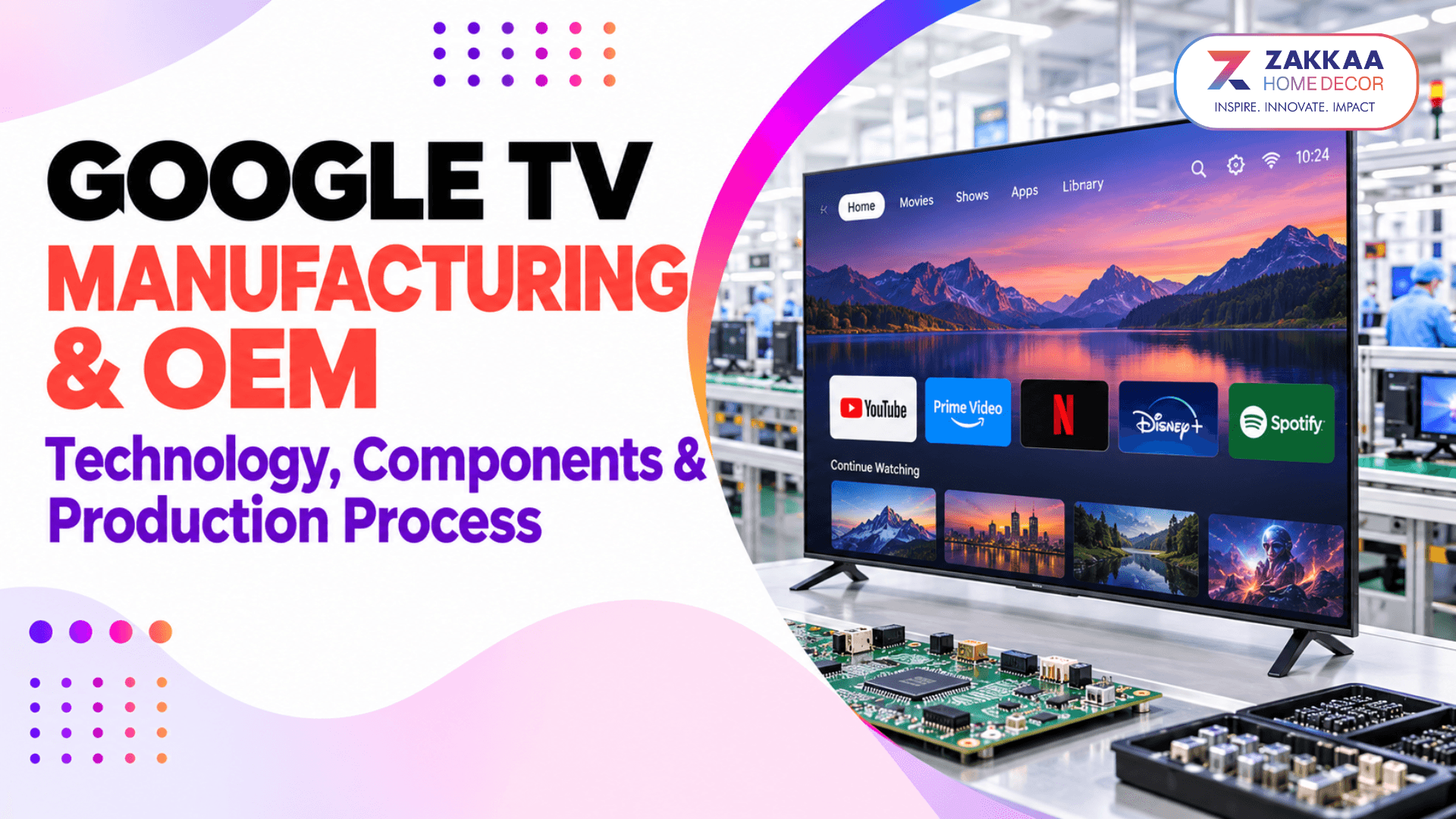
Google TV manufacturing involves producing televisions that combine compatible hardware with the Google TV software experience. The process includes component sourcing, assembly, software integration, testing, and preparation for commercial distribution.
Think of a television as two connected parts. The hardware includes the display, processor, speakers, power supply, and connectivity components. The software provides the interface through which users discover entertainment, access supported streaming services, and navigate television settings.
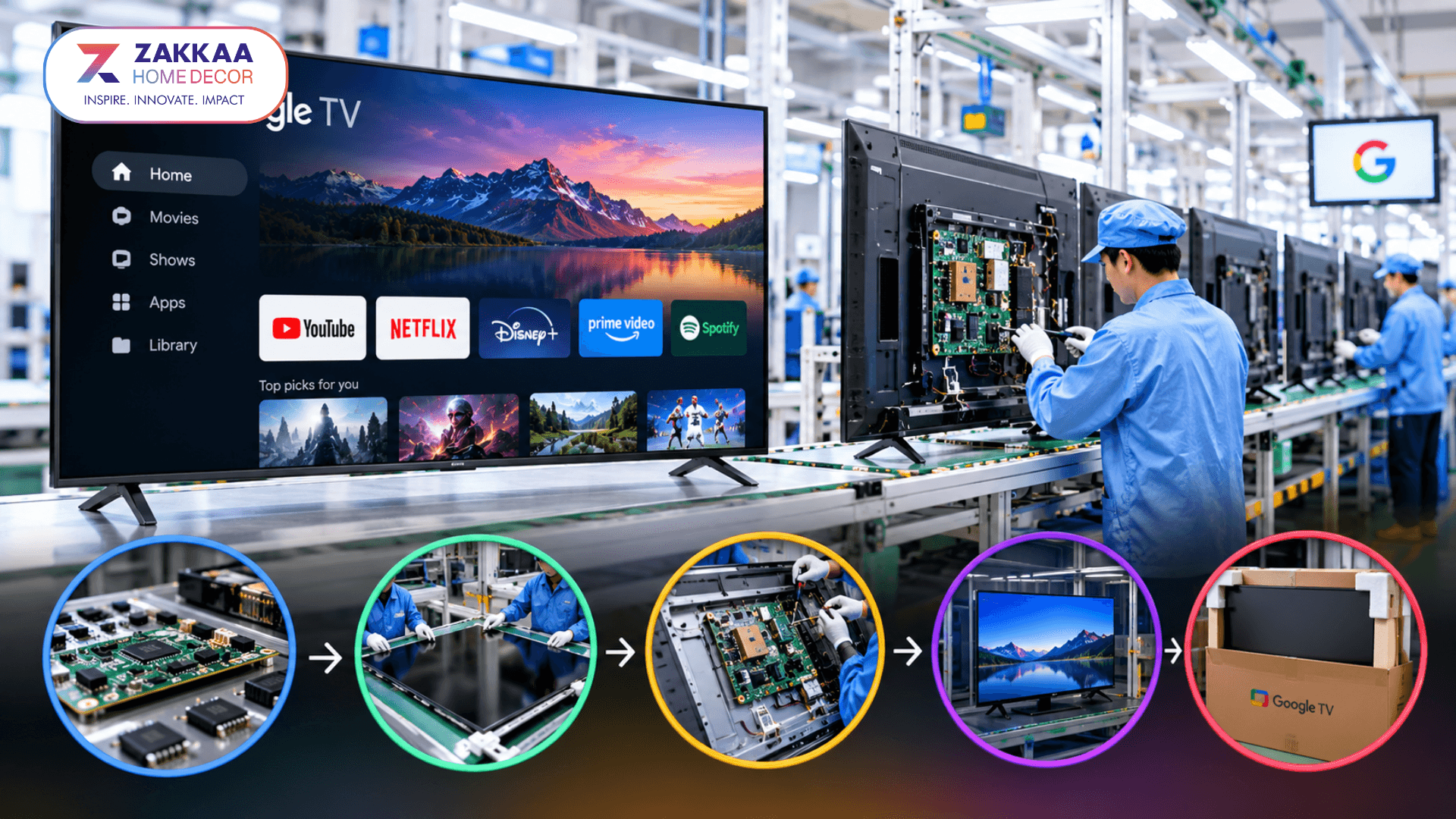
Google TV is an experience built on Android TV OS. However, an ordinary Android-based television does not automatically qualify as an authorized Google TV product. Manufacturers must meet the relevant technical requirements and follow the applicable platform approval process.
For businesses, working with an OEM or ODM partner can simplify product development by providing access to manufacturing capabilities without requiring them to establish every production facility themselves.
Google TV Manufacturing Process: 6 Key Steps From Design To Delivery
Google TV manufacturing involves more than assembling a screen and installing smart features. Each unit goes through several stages to ensure the display, software, sound, and connectivity work as expected. Here’s a look at the six key steps involved in manufacturing a Google TV.
1. Product Planning And Specification
Every television project begins with a clear understanding of the intended customer.
For example, a brand targeting budget-conscious households may consider a 32-inch HD television, while a premium-focused business might explore larger 4K models with enhanced picture and audio features.
At this stage, the brand and manufacturer agree on screen sizes, resolution, connectivity, memory, storage, design, target pricing, and expected order quantities. These decisions determine the components, engineering requirements, and production budget.
A detailed product specification also helps manufacturers provide more accurate quotations. Without one, two suppliers might quote different configurations, making their prices difficult to compare.
2. Component Sourcing And Selection
Once the specifications are finalized, the manufacturing team identifies suitable components. The display panel, processor, mainboard, power supply, memory, speakers, and connectivity modules must work together as a compatible system.
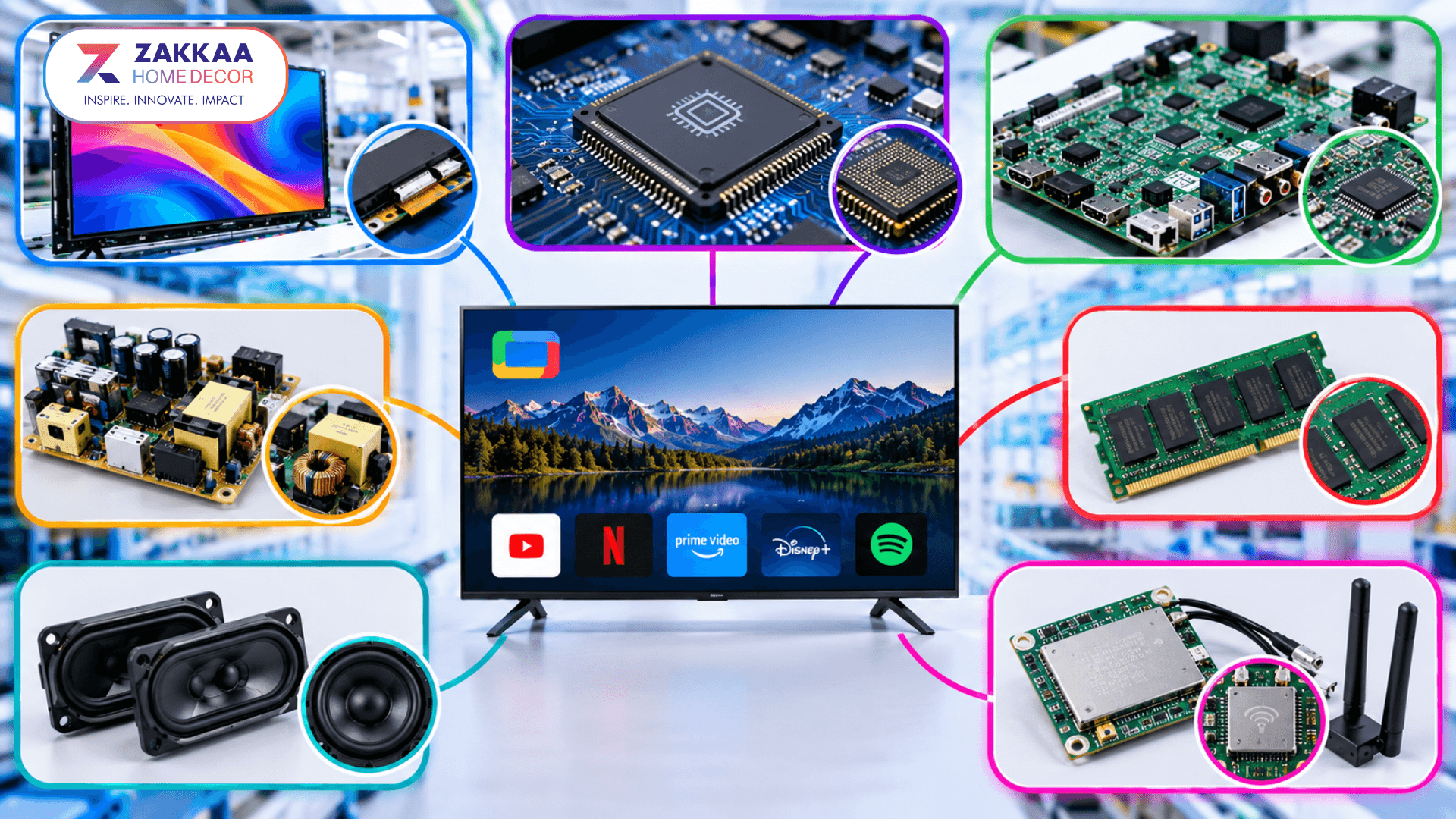
Component selection affects more than the initial manufacturing cost. It also influences picture quality, processing performance, connectivity, durability, and the availability of replacement parts.
Consider a business preparing for a large retail order. If a critical component becomes unavailable, production could face delays. A manufacturer with a clear sourcing strategy can help identify supply risks and evaluate approved alternatives before they disrupt delivery schedules.
Buyers should discuss component quality, availability, specifications, and change-control procedures before confirming an order.
3. Hardware Assembly And Integration
With the components ready, production moves to television assembly. The display panel, circuit boards, speakers, power components, ports, and other parts are fitted into the cabinet according to the approved design.
Technicians connect the components and check that the hardware matches the required specifications. The assembly process must account for secure connections, physical alignment, cable routing, and appropriate heat management.
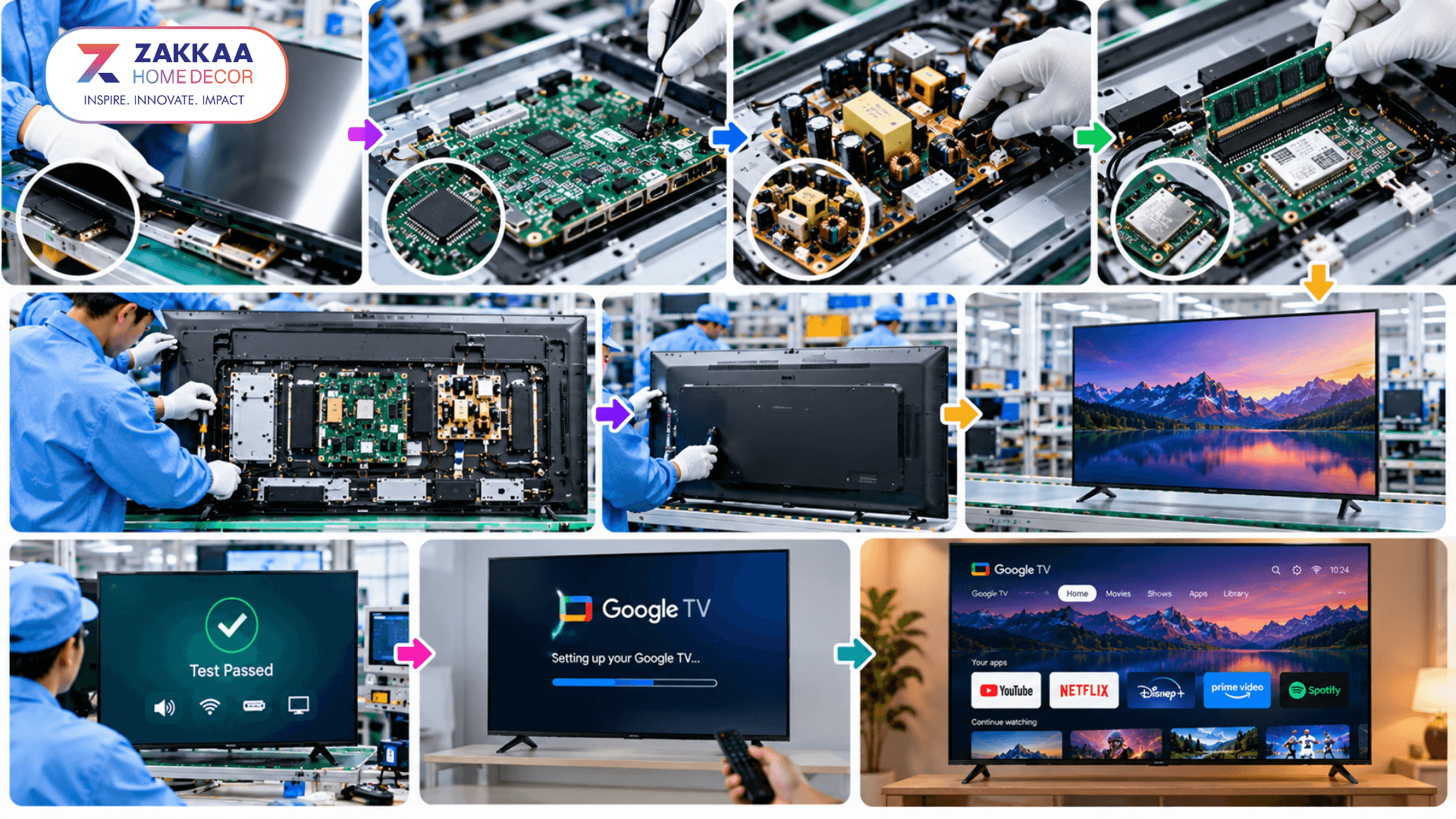
A television may look perfect from the outside, but loose connections or incorrectly fitted components can create problems during operation. This is why assembly inspections matter before the product moves to software integration.
The manufacturing arrangement should also clarify which assembly activities take place in-house and which depend on external suppliers.
4. Google TV Software Integration
Hardware alone cannot deliver the complete Google TV experience. The television also needs compatible software and the appropriate platform access and approvals.
During this stage, the responsible technical team configures the software environment, integrates supported hardware features, and checks functions such as navigation, connectivity, remote control operation, and application compatibility.
For an OEM buyer, an important question is who manages this process. The OEM manufacturer, technology partner, and brand may have different responsibilities depending on the agreement.
Before production begins, confirm the applicable Google TV authorization requirements, software support arrangements, approval documentation, and update responsibilities. Installing a similar-looking interface is not a substitute for the required platform authorization.
5. Quality Testing And Compliance
Before televisions reach customers, they must undergo checks to confirm that they meet the agreed specifications and applicable requirements.
Quality testing may cover display performance, sound output, Wi-Fi and Bluetooth connectivity, HDMI and USB ports, remote controls, software stability, electrical performance, and physical finishing.
For example, a television might power on successfully but still have an inconsistent display or unreliable connectivity. Testing multiple functions helps identify defects that a simple power-on check would miss.
Manufacturers should establish documented inspection procedures, defect-handling processes, and acceptance criteria. The appropriate testing method depends on the product and production arrangement.
Businesses selling televisions in India should also verify the applicable BIS requirements and other relevant regulatory obligations for the specific model before commercial release.
6. Final Inspection, Packaging And Dispatch
Once the television passes the required checks, the team completes the final inspection and prepares it for shipment.
This stage includes checking the cabinet, screen protection, ports, accessories, remote control, product labels, and packaging. The packaging must protect the television during storage, handling, and transportation.
For distributors and retailers, timely delivery is only one part of a successful supply arrangement. Products should also arrive in acceptable condition, with the agreed accessories and documentation.
Before dispatch, the buyer and manufacturer should confirm order quantities, packaging specifications, shipping arrangements, warranty terms, and delivery schedules. Clear coordination helps reduce disputes and supports a smoother launch.
Key Components Used To Make Google TV
Each component contributes to the television's performance and overall cost.
Display Panel: Determines screen size, resolution, brightness, and viewing characteristics.
System-On-Chip: Handles processing tasks and supports the required hardware and software configuration.
RAM & Storage: Support software operation and available application storage.
Mainboard: Connects the television's major electronic components.
Power Supply: Provides the required electrical power to internal components.
Connectivity Modules: Support Wi-Fi, Bluetooth, and other specified wireless functions.
Speakers: Deliver audio according to the product specifications.
Cabinet & Remote: Protect internal components and provide user controls.
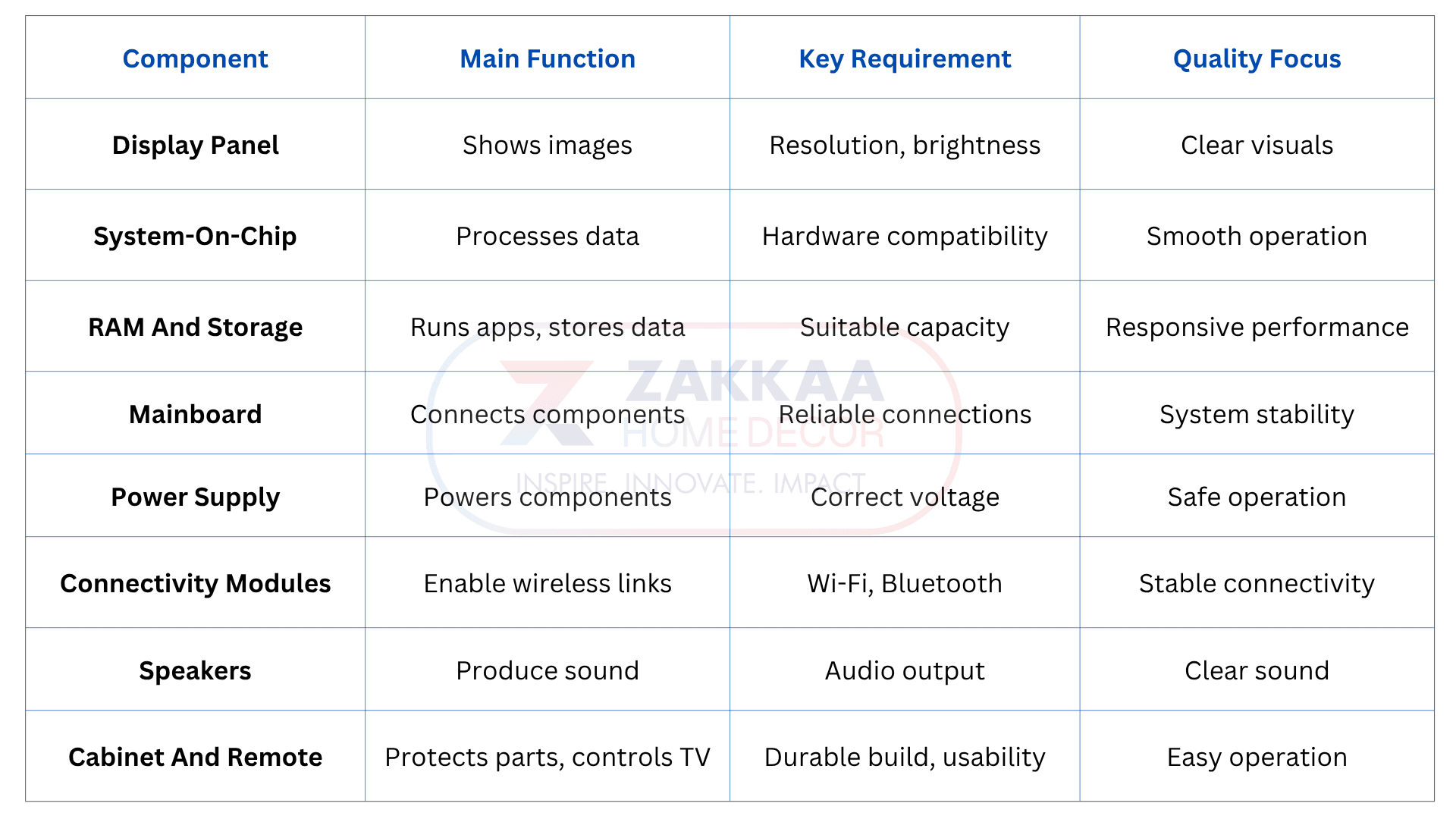
The exact configuration depends on the model, target price, intended features, and applicable platform requirements. Businesses should compare complete specifications rather than choosing a manufacturer solely by screen size or quoted price.
ODM Vs. OEM Smart TV Manufacturing: What To Choose?
OEM and ODM arrangements offer different ways to develop a television range. OEM smart TV manufacturing uses the buyer’s product design or specifications, while ODM manufacturing typically uses a design developed by the manufacturer. Both models allow businesses to sell smart TVs under their own brand, but they differ in design ownership, customization, development responsibilities, and production planning.
For businesses entering the smart TV market, the right model depends on their budget, technical capabilities, launch timeline, and product requirements. OEM manufacturing offers greater control when the buyer has specific design needs, whereas ODM can simplify development by using an existing platform.
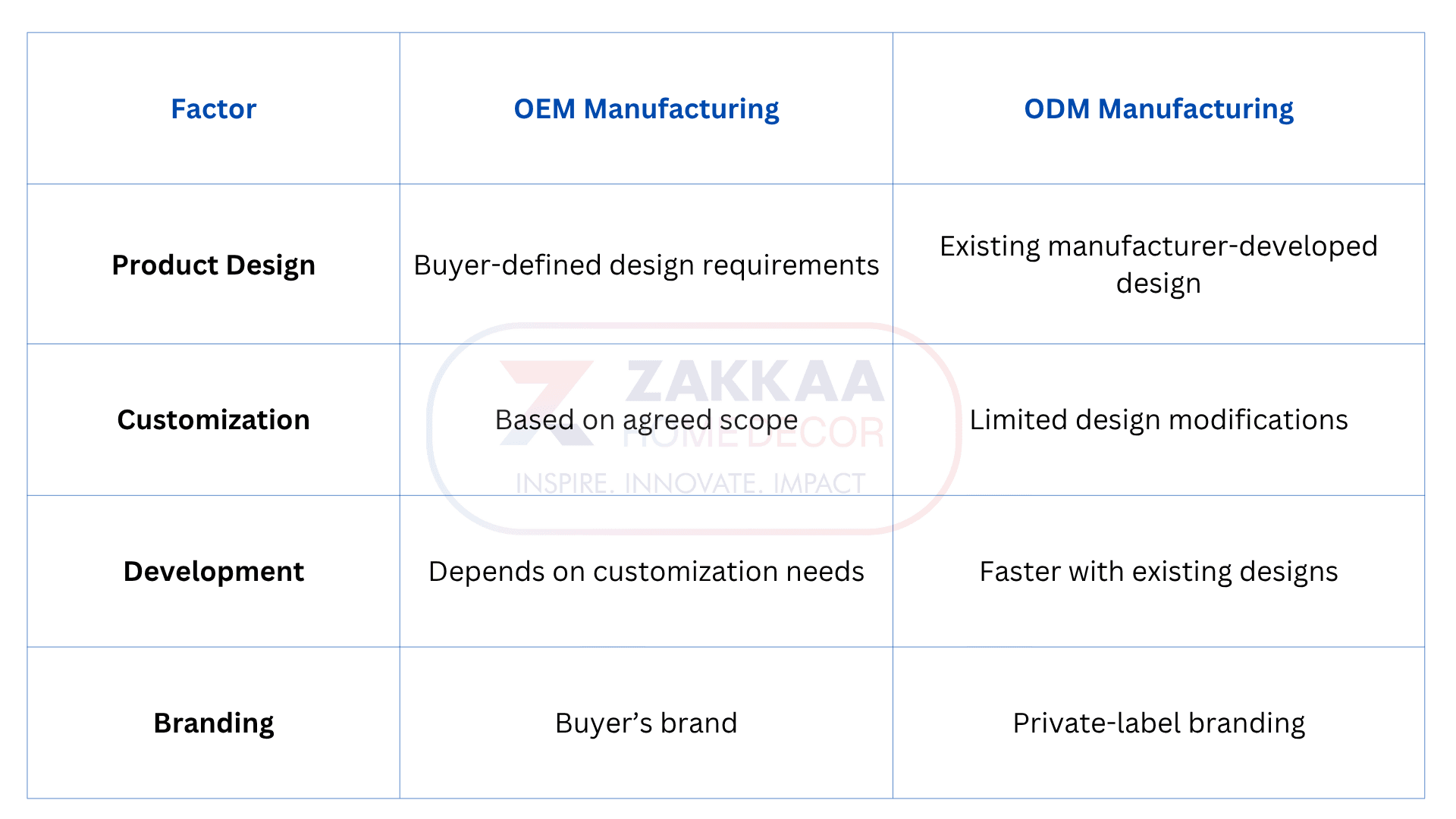
The right choice depends on your budget, product requirements, development timeline, and desired level of control. Before signing an agreement, clarify design ownership, tooling costs, software responsibilities, platform approvals, and production commitments.
How Much Does Google TV OEM Manufacturing Cost?
There is no single manufacturing price that applies to every television. A basic HD model and a larger 4K television have different component, integration, and testing requirements.
The main cost factors include:
Display Specifications: Screen size, resolution, panel technology, and display features.
Electronic Components: Processor, memory, storage, connectivity, and audio configuration.
Customization: Cabinet design, branding, tooling, and packaging requirements.
Software Integration: Technical work and applicable platform-related requirements.
Order Quantity: Component purchasing terms, production planning, and batch size.
Testing & Compliance: Required inspections, documentation, and applicable certifications.
Logistics: Packaging, transportation, warranty provisions, and distribution costs.
When comparing quotations, ensure that every supplier is pricing the same configuration. Ask for a detailed cost breakdown and clarify which charges are included, particularly tooling, testing, packaging, and platform-related work.
Choosing The Right Google TV Manufacturer in India
The right manufacturing partner should understand your business requirements, not simply offer an attractive price.
Evaluate production capabilities, component sourcing, quality-control processes, delivery planning, technical support, and documentation. Ask how the supplier manages repeat orders, component changes, and manufacturing defects.
You should also verify who handles Google TV platform approvals and applicable regulatory requirements. General smart TV manufacturing experience does not automatically establish authorization to produce a Google TV device.
For Zakkaa, the conversation should begin with your intended screen sizes, product specifications, target price range, order quantity, and customization requirements. These details provide a practical starting point for evaluating whether the available manufacturing capabilities match your project.
Why Consider Zakkaa For TV Manufacturing?
Launching a television range requires coordination between product planning, component sourcing, assembly, quality checks, and supply-chain management. Zakkaa serves businesses across manufacturing and product categories, making its OEM capabilities relevant to companies exploring manufacturing partnerships.
Before proceeding with a Google TV project, discuss the specific television configurations supported, the production scope, quality procedures, customization options, and expected order quantities.
It is equally important to verify the platform authorization and compliance arrangements for the proposed model. Confirming these details early helps businesses evaluate the partnership on a clear and practical basis.
Final Remarks
To summarize, Google TV manufacturing brings together product planning, component selection, assembly, software integration, testing, and dispatch. For businesses entering India's smart TV market, a clear product specification and a dependable OEM arrangement can make the process easier to evaluate and manage.
The next step is to define your product requirements, compare manufacturers on the same specifications, and verify the necessary platform approvals and compliance obligations before committing to production.
To launch your own smart TV range, connect with a prominent OEM TV manufacturer in India to explore suitable OEM production options.
Frequently Asked Questions (FAQs)
Can I Launch My Own Google TV Brand Through An OEM?
Yes, an OEM arrangement may support private-label television production, subject to the manufacturing agreement and the required Google TV platform authorization.
What Affects Google TV Manufacturing Costs?
Screen size, display technology, electronic components, customization, order quantity, software integration, testing, compliance, and logistics influence manufacturing costs.
What Should I Check Before Choosing A Google TV Supplier?
Review manufacturing capabilities, component sourcing, quality procedures, production schedules, technical support, platform authorization, and applicable compliance documentation.
What Compliance Requirements Apply To TV Manufacturing In India?
Requirements depend on the specific product and current regulations. Verify the applicable BIS requirements and other relevant obligations before manufacturing or selling the television.