Oct 21, 202611 min readBy Aditya Singh
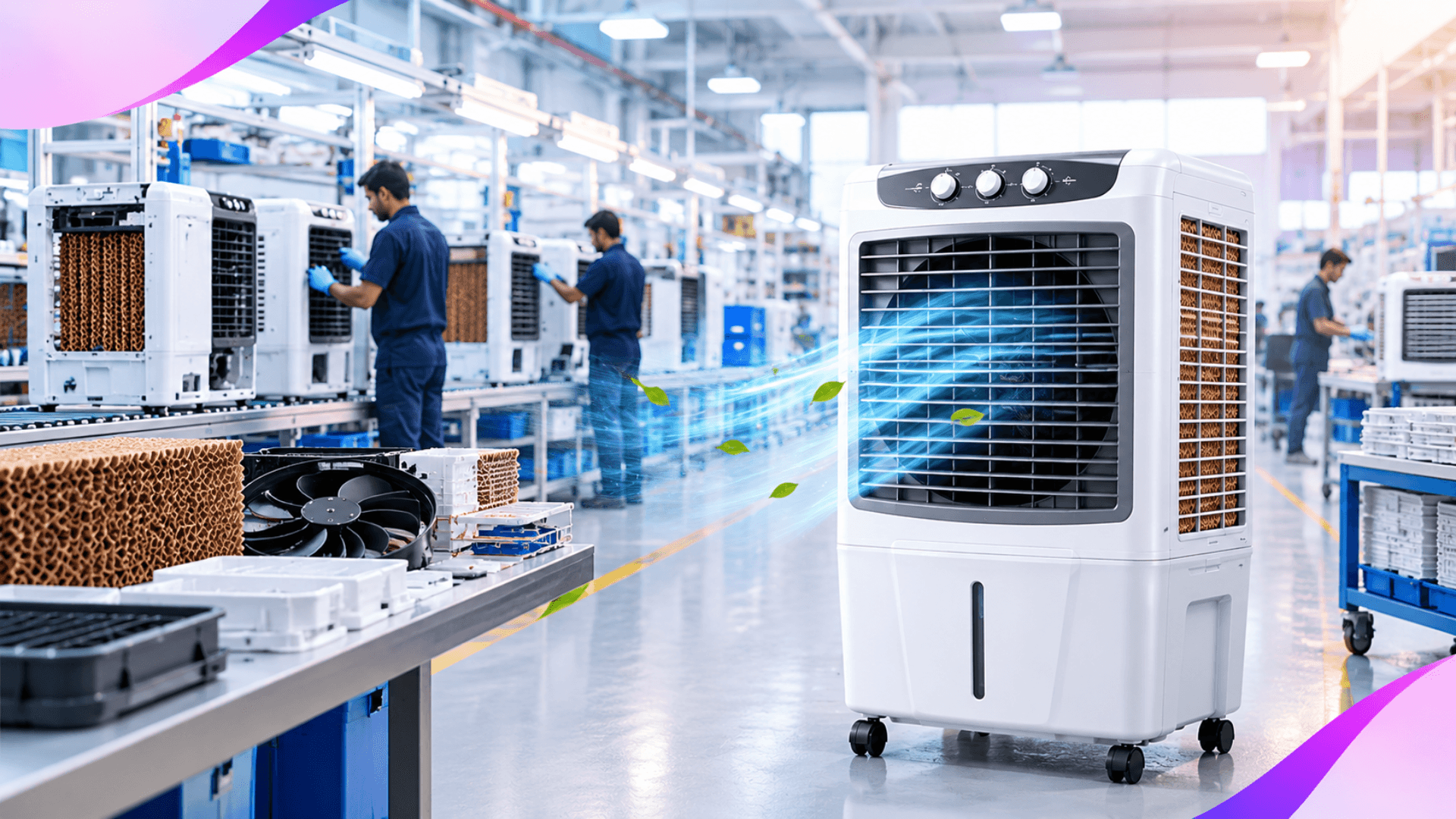
A customer may judge an air cooler by how quickly it cools a room, but cooler manufacturers know that performance depends on decisions made during production. The right components and careful assembly can make the difference between a dependable product and one that struggles during peak summer.
From selecting efficient motors to choosing suitable cooling pads and testing water pumps, every air cooler manufacturing decision influences the final product. Material strength, leakage prevention, electrical safety, and quality checks also play an important role in long-term reliability.
But how do manufacturers ensure an air cooler meets customer expectations? This guide examines the essential air cooler manufacturing factors behind quality air coolers, helping businesses understand what matters during design, production, and testing.
Major Factors To Consider While Manufacturing High-Quality Air Cooler
1. Body Material: The First Sign of Manufacturing Quality
The body is the first thing customers notice, but its real value goes beyond appearance. It must protect internal components, withstand routine handling, and hold up during regular use.
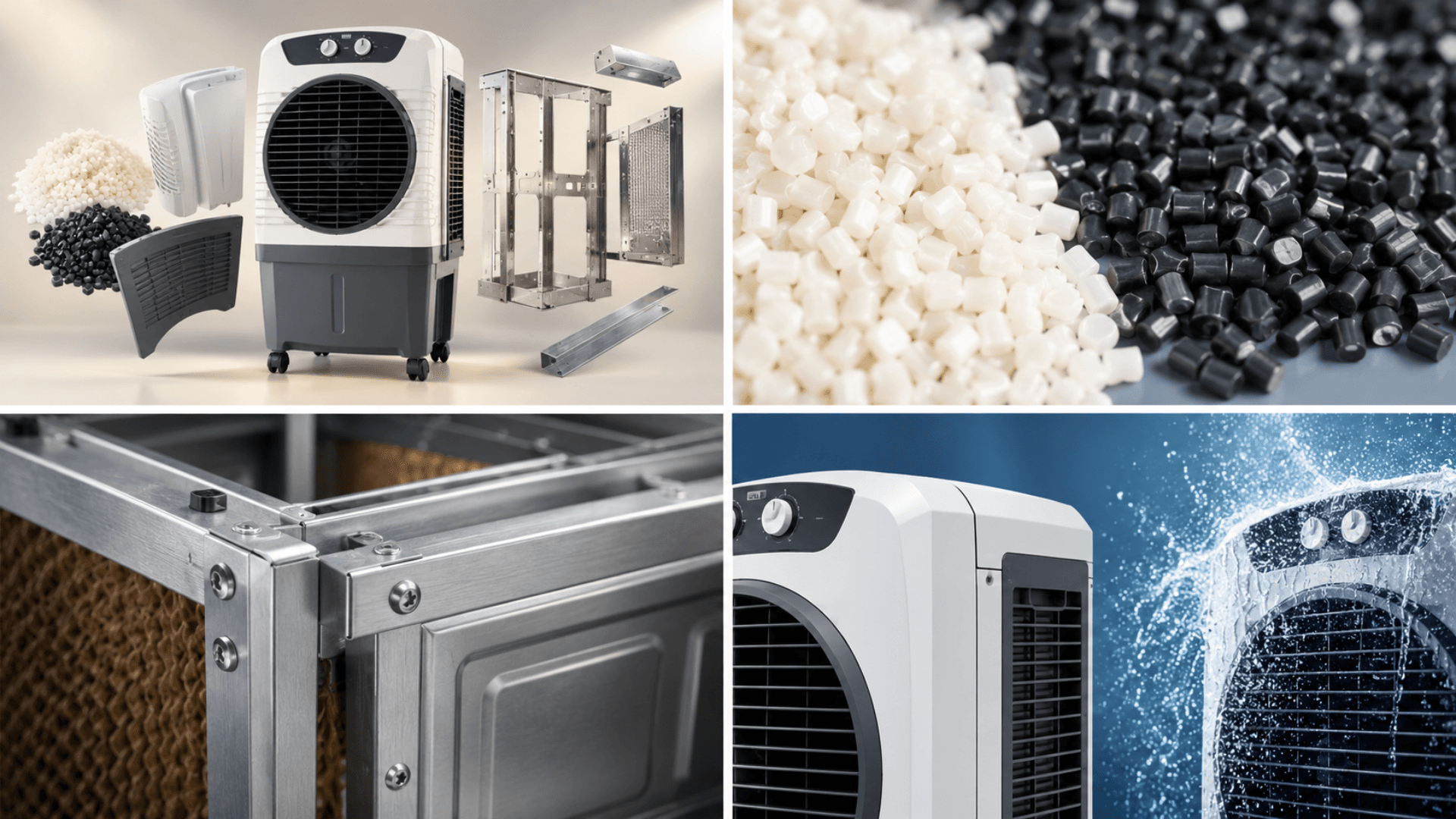
Air cooler manufacturers generally choose between plastic and metal bodies, depending on the product design, target price, and intended application.
Plastic Quality: The right plastic grade can provide a lightweight, corrosion-resistant body. Its impact resistance and suitability for outdoor exposure depend on the material formulation and design.
Metal Construction: Metal air cooler bodies can offer structural strength, provided the material thickness, joints, surface treatment, and protective coating are suitable.
Fit and Finish: Properly aligned panels, secure joints, and smooth edges improve the finished product's appearance and usability.
Water Resistance: The body and tank assembly should be designed to handle routine contact with water without developing avoidable leakage or deterioration.
A cooler can have an attractive finish and still suffer from weak joints or poorly fitted panels. These issues may become noticeable only after repeated use or transportation.
For OEM brands and bulk buyers, checking the actual material specifications is more useful than relying on appearance alone.
2. Air Cooler Motor Quality: Can It Handle Daily Use?
The motor does much of the hard work inside an air cooler. It drives the fan or blower, helping move air through the cooling system and into the room.
If the motor is poorly matched to the cooler's design, users may experience excessive noise, vibration, overheating, or unsatisfactory airflow.
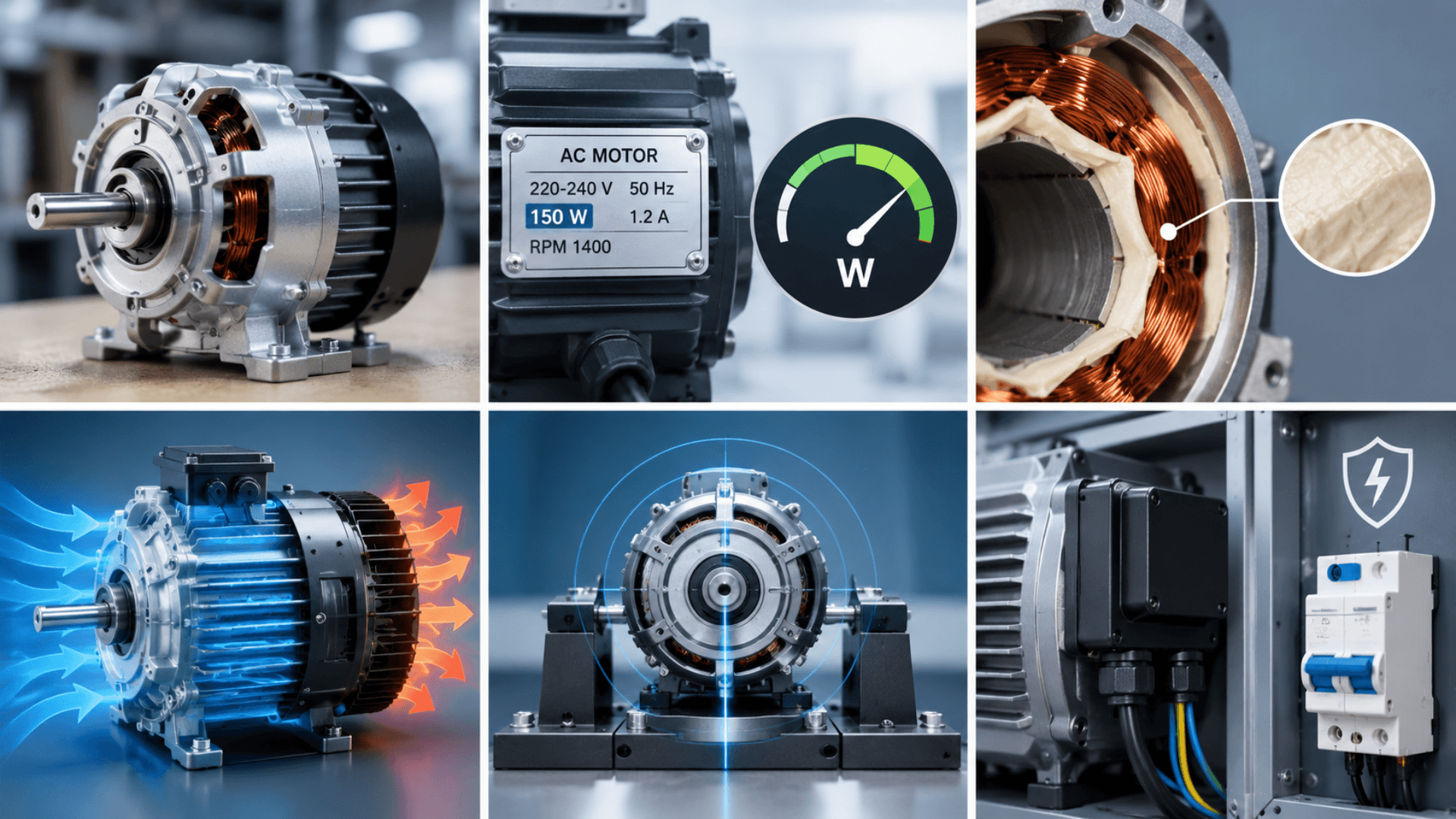
Correct Power Rating: The motor must suit the fan design and the cooler's intended operating conditions. Higher wattage alone does not guarantee better cooling.
Good Insulation: Suitable insulation and properly manufactured windings support reliable electrical operation.
Heat Management: The motor should operate within its specified temperature limits under the intended conditions.
Mechanical Balance: Correct alignment and suitable bearings help reduce vibration and unwanted noise.
Electrical Protection: Appropriate protective arrangements help manage foreseeable operating risks.
Manufacturers need to evaluate the motor as part of the complete appliance. A powerful motor cannot compensate for a poorly designed fan, restricted airflow, or inadequate cooling pads.
For distributors, it is worth asking which motor specifications are used across different models and what checks are performed before dispatch. This provides a clearer picture of the product than a simple comparison of motor wattage.
3. Cooling Pads: Where Cooling Performance Takes Shape
A customer may buy an air cooler because of its size, appearance, or advertised airflow. However, its cooling performance also depends on how effectively water and incoming air interact inside the unit.

Honeycomb Cooling Pads: Cellulose sheets arranged in a honeycomb structure for water absorption and evaporation.
Wood Wool Cooling Pads: Wood shavings that retain water and support evaporative cooling through airflow.
Aspen Cooling Pads: Natural wood fibres that absorb water and allow air to pass through.
Synthetic Cooling Pads: Engineered fibres designed for water distribution, airflow, and repeated use.
Here is an important point: a thicker cooling pad does not automatically make an air cooler better. The pad must work with the airflow, water circulation, and overall design.
Manufacturers should test the complete cooling system instead of selecting pads based on one specification. For buyers, this means asking about the pad material, maintenance requirements, and performance checks rather than judging quality by appearance alone.
4. Fan and Blower Design: More Air Is Not Always Better
Imagine an air cooler with a reliable motor and good cooling pads, but the airflow feels weak across the room. The problem could lie in the fan design, assembly, or the way air moves through the unit.
The fan or blower must draw air through the cooling pads and direct it towards the outlet with minimal unnecessary restriction.
Manufacturers need to consider blade shape, diameter, speed, housing design, and the spacing between moving parts. These elements work together to determine how air moves through the appliance.
Poor alignment or an unbalanced rotating assembly can also cause vibration and noise. Even small assembly variations may affect the finished product.
The manufacturing priority should be balanced performance: suitable airflow, acceptable noise levels, stable operation, and cooling performance that matches the model's specifications.
For OEM buyers, testing the assembled cooler is essential. Checking the fan and motor separately will not reveal every issue that may arise when all components work together.
5. Water Pump and Tank: Small Components, Big Consequences
A water pump may not be the first feature customers notice, but a problem with it can affect the entire cooling experience.
The pump moves water from the tank to the cooling pads. If water distribution becomes uneven, some areas may not remain sufficiently wet, reducing the system's ability to support evaporation.
Water systems also need to account for dust, debris, and mineral deposits that can accumulate during use. Accessible components make maintenance easier and can help users identify problems before they affect performance.
For businesses buying in bulk, pump reliability and replacement-part availability deserve attention during supplier evaluation. A lower purchase price offers limited value if common water-system faults become difficult or expensive to resolve.
6. Electrical Safety: A Manufacturing Requirement, Not an Extra Feature
An air cooler combines electrical components with a water-based cooling system. This makes correct wiring, suitable insulation, and careful component placement essential.
Manufacturers must ensure that switches, terminals, wiring, and other electrical components are installed according to the approved design and applicable requirements.
Quality checks should cover electrical connections, insulation, control operation, and any required protective features. The finished appliance must be evaluated as a complete unit rather than assuming that individually acceptable components guarantee overall safety.
For businesses sourcing air coolers in India, it is also important to verify the applicable BIS standards, certification requirements, and licence scope for the specific product and model. Requirements should be confirmed for the relevant product category rather than assumed to be identical across all appliances.
7. Manufacturing and Assembly: Where Consistency Matters
Even good materials and reliable components can produce a disappointing cooler if assembly quality varies from one unit to another.
Consider a bulk order of 1,000 units. If the first few products work well but later batches develop loose fittings, uneven panel alignment, or water leakage, the buyer may face a much larger problem than the cost of an individual defective unit.
This is why manufacturing discipline matters.
A well-managed production process should include suitable material inspections, assembly instructions, component checks, and defined acceptance criteria. Body dimensions, pump positioning, wiring routes, fastening, and panel alignment should follow the approved product specifications.
Manufacturers should also maintain records that help trace components and investigate recurring defects. If a particular issue appears across a production batch, traceability makes it easier to identify the source and take corrective action.
For retailers and private-label brands, the key question is simple: Can the manufacturer deliver the same approved quality across the entire order?
Production capacity matters, but repeatable quality is equally important when building a product range for the Indian summer market.
8. Air Cooler Testing: Catch Problems Before Dispatch
A cooler switching on successfully does not prove that every part of it is working as intended. A short functional check may not identify leakage, excessive vibration, uneven water distribution, or other defects.
That is why quality control should cover different stages of production.

The appropriate test methods and acceptance limits depend on the product design, applicable standards, and quality plan.
Manufacturers should document results and investigate recurring failures rather than treating each defect as an isolated incident. For bulk buyers, documented quality procedures provide a more useful basis for evaluating a supplier than verbal assurances alone.
9. Packaging and Transportation Protect the Finished Product
Manufacturing quality can be undermined if an air cooler is damaged before reaching the retailer.
Large appliances may experience movement, impact, stacking pressure, and repeated handling during storage and transportation. Inadequate packaging can lead to scratches, broken panels, damaged controls, or other avoidable problems.
Manufacturers should select packaging suited to the product's size, weight, construction, and distribution route. Accessories should be secured, product identification should be accurate, and dispatch checks should confirm that the order is packed correctly.
How to Choose an Air Cooler Manufacturer for Bulk Orders
For retailers, distributors, and OEM brands, selecting an air cooler manufacturer involves more than comparing quotations. The supplier must understand the required product specifications and demonstrate the ability to meet them across the order.
Before finalising a manufacturing partner, review these points:
Manufacturing Capabilities: Understand which production processes are handled in-house and which components are sourced externally.
Quality Procedures: Ask about incoming inspections, in-process checks, final testing, and defect handling.
Product Specifications: Confirm body materials, motor ratings, cooling pad types, water-system components, and agreed performance requirements.
Customisation Options: Discuss branding, packaging, approved design changes, and private-label requirements.
Production Capacity: Check whether the manufacturer can accommodate your order volume and expected seasonal demand.
Compliance Documentation: Verify applicable certifications, licences, and product test records.
Commercial Terms: Clarify minimum order quantities, payment terms, sample approval, lead times, and delivery commitments.
After-Sales Support: Discuss warranty responsibilities, spare parts, replacement procedures, and the process for resolving defects.
One step deserves particular attention: sample approval.
Before placing a large order, document the specifications of the approved sample and agree on how production units will be checked against them. Any proposed change in materials or components should be reviewed before implementation.
This creates a clearer understanding between the buyer and manufacturer, helping reduce avoidable disagreements during production and delivery.
Zakkaa: An OEM Manufacturing Partner for Air Cooler Brands
For businesses planning to launch or expand an air cooler range, finding the right OEM manufacturing partner is an important step. Product specifications, quality expectations, branding requirements, order volumes, and delivery timelines all need to be discussed before production begins.
Zakkaa serves B2B customers through OEM manufacturing, helping businesses explore manufacturing solutions aligned with their product and commercial requirements.
Conclusion
A high-quality air cooler is not the result of one superior component. It comes from the way materials, motors, cooling pads, water systems, electrical parts, and assembly processes work together. Testing and quality control then help confirm whether the finished product meets its intended specifications.
For retailers, distributors, and OEM brands, evaluating these factors before placing a bulk order can help reduce product-related risks and support better customer experiences. The right manufacturing partner should be able to explain its processes, demonstrate relevant quality checks, and agree on clear product requirements.
Planning to source air coolers for your business? Contact a trusted air cooler manufacturer to discuss your product requirements, bulk-order needs, and potential OEM manufacturing opportunities.
Frequently Asked Questions (FAQs)
What Determines Air Cooler Quality?
Air cooler quality depends on the body material, motor, cooling pads, fan design, water circulation, electrical safety, assembly accuracy, and quality testing.
Which Materials Are Best For Air Cooler Manufacturing?
Suitable plastic can provide lightweight, corrosion-resistant construction, while properly finished metal can offer structural strength. The right choice depends on the product's intended use, design, and material specifications.
How Does Motor Quality Affect Air Cooler Performance?
Motor quality influences airflow, operating noise, power consumption, and reliability. The motor must match the fan design and the cooler's intended operating conditions.
Why Is Quality Control Important In Air Cooler Production?
Quality control helps identify material defects, electrical problems, leakage, assembly errors, and performance variations before dispatch. It also supports more consistent production across batches.
What Should Businesses Check Before Choosing An Air Cooler Manufacturer?
Businesses should evaluate manufacturing capabilities, component specifications, testing procedures, applicable certifications, production capacity, customisation options, delivery terms, and after-sales support.
Can An OEM Manufacturer Customise Air Coolers For Private Labels?
OEM manufacturers may offer agreed changes to product specifications, branding, and packaging. Buyers should confirm available options, minimum order quantities, sample approvals, and production timelines.
How Can Buyers Verify An Air Cooler Manufacturer's Quality?
Buyers can request relevant product certifications, test records, inspection procedures, and approved specifications. Where possible, they should also review production facilities and evaluate samples before placing bulk orders.
Does A Higher-Priced Air Cooler Always Offer Better Quality?
No. Price alone does not establish quality. Buyers should compare materials, component specifications, verified performance, warranty terms, maintenance requirements, and supplier support.