Sep 04, 202611 min readBy Aditya Singh
A cooler can survive one summer and still be a poor long-term purchase. For businesses, the real durability test comes with repeated seasonal use, movement, moisture, dust, and the everyday knocks that an air cooler can face in homes, shops, offices, and commercial spaces.
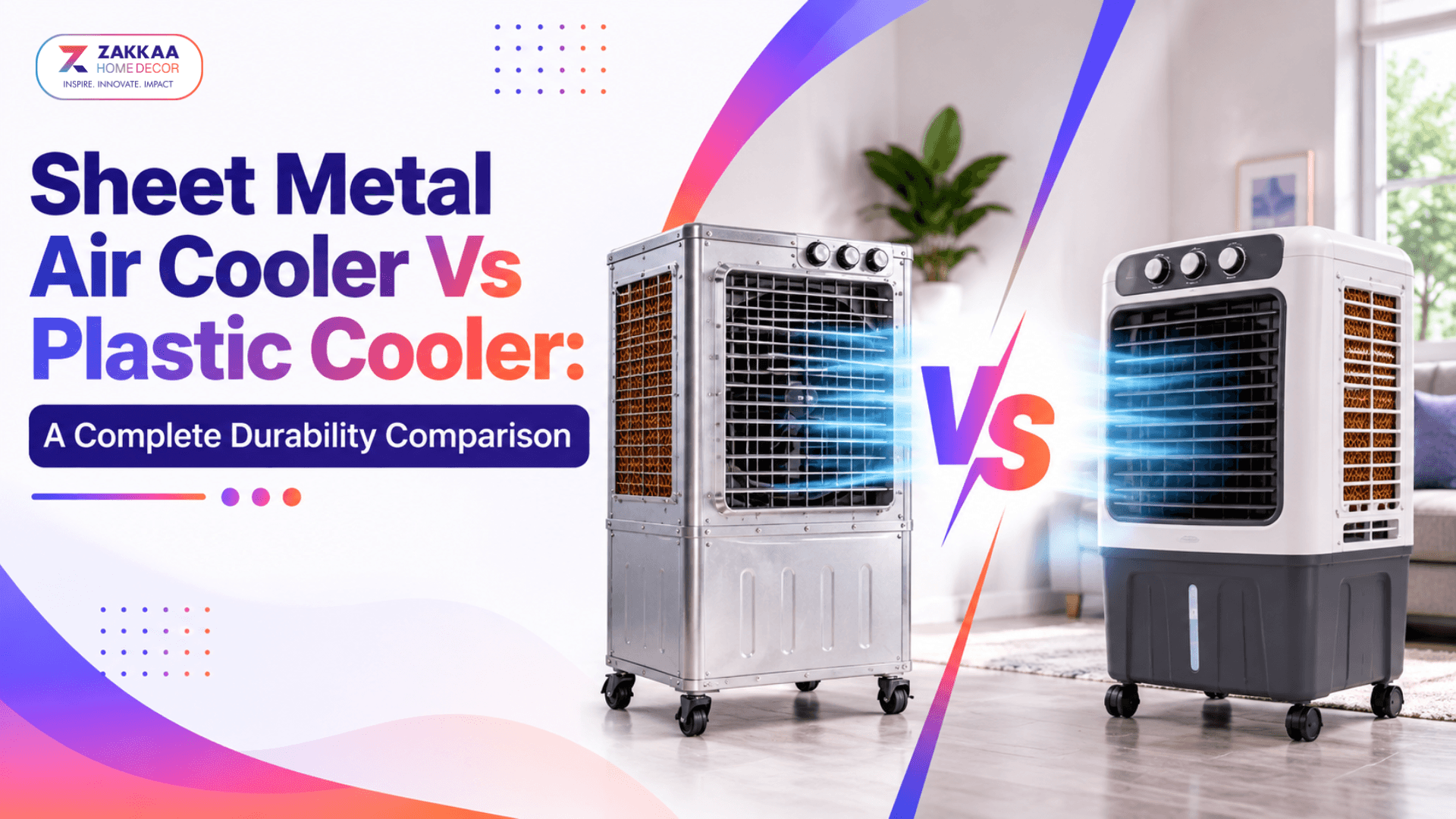
Sheet metal air coolers and plastic coolers respond differently to these conditions. Their resistance to dents, cracks, rust, heat, moisture, and general wear can affect product life, maintenance needs, and replacement costs.
That makes material selection an important part of air cooler buying and sourcing, especially for manufacturers, distributors, and bulk buyers. This guide compares sheet metal air coolers and plastic coolers to determine which offers better durability over extended use.
What Is A Sheet Metal Air Cooler?
A sheet metal cooler is an air cooler manufactured using metal sheets for its main body or structural components. Depending on the design, manufacturers can cut, bend, weld, finish, and assemble sheet metal into a rigid cooler cabinet.
A steel body cooler is particularly useful where the equipment needs to withstand frequent operation, movement, workplace conditions, or physical handling. This makes sheet metal construction common for industrial coolers, factory cooling equipment, and some commercial applications.
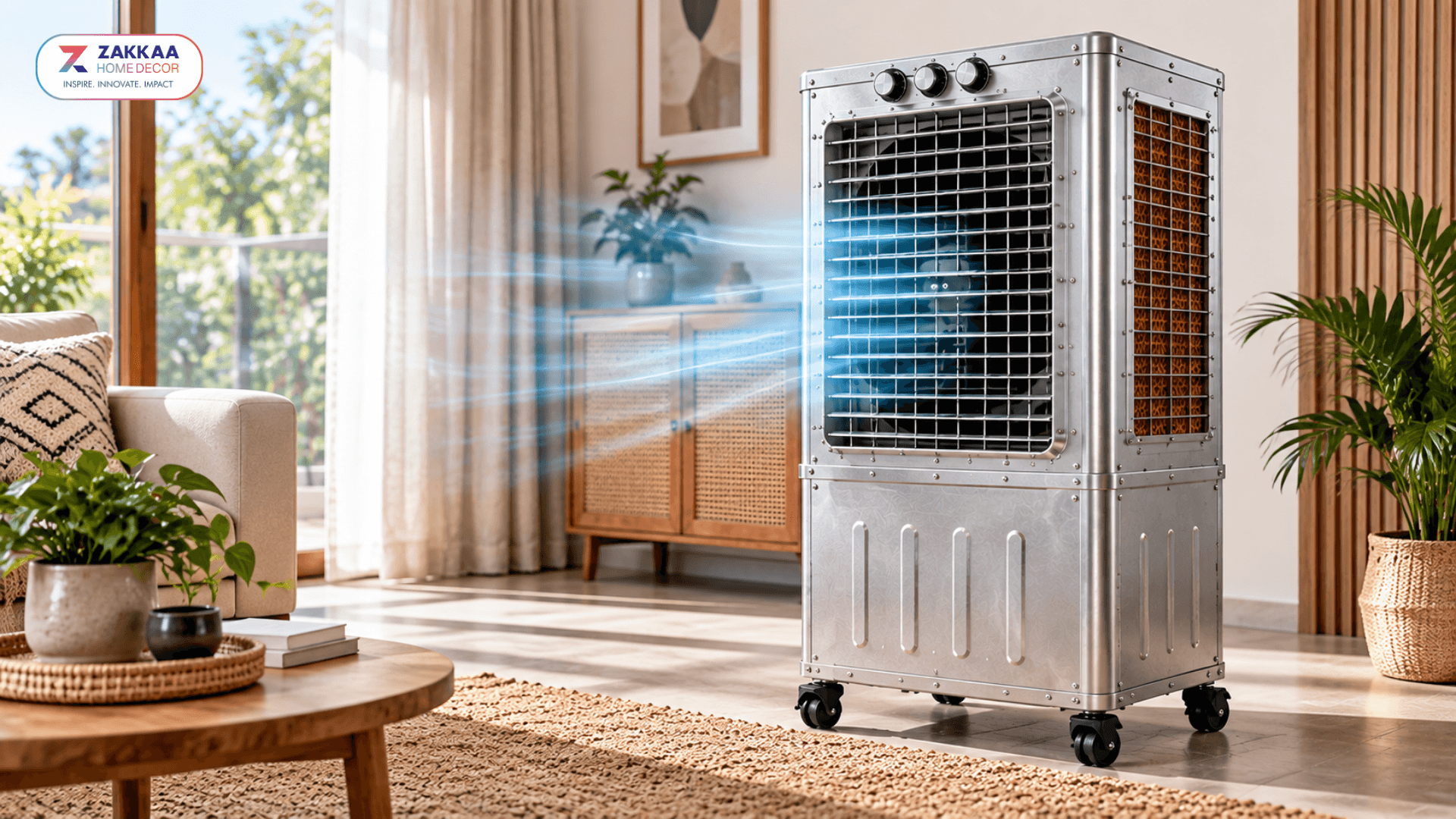
The air cooler manufacturing process also allows manufacturers to customise dimensions, air outlets, mounting arrangements, water systems, and other components according to the intended application.
What Is A Plastic Air Cooler?
A plastic cooler uses moulded plastic or polymer components for the primary body. The material allows manufacturers to create lightweight cabinets with rounded shapes and integrated features without the fabrication steps required for sheet metal construction.
Plastic construction is useful when portability is important. For example, a homeowner may prefer a cooler that can be moved between rooms without much effort, while a small shop may value a compact design that can be repositioned during the day.
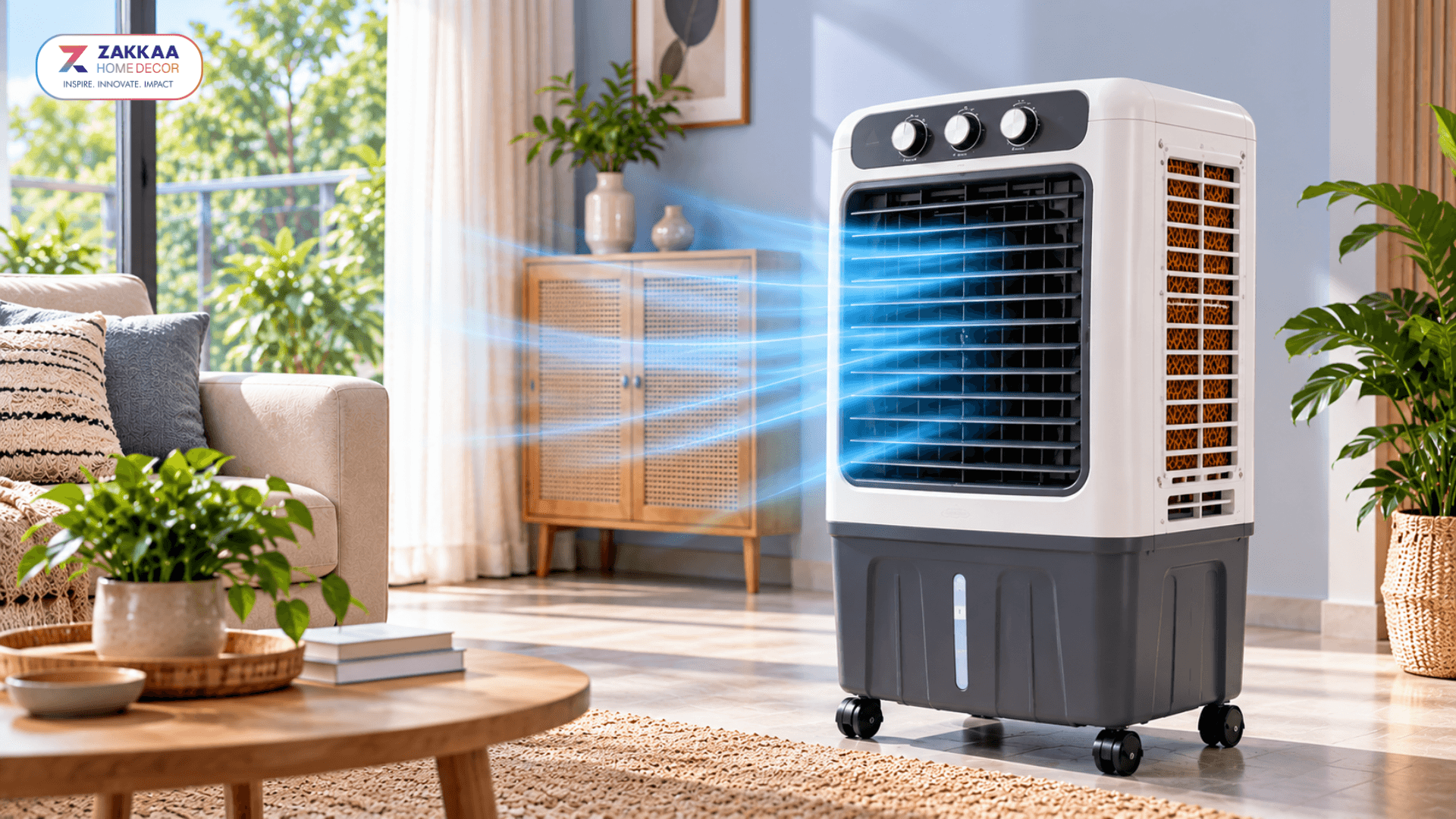
However, lightweight construction does not necessarily mean poor quality. A well-designed plastic cooler can provide years of service when it is used within its intended operating conditions.
Difference Between Sheet Metal Cooler And Plastic Cooler: At A Glance
Sheet metal coolers are generally stronger and better suited for heavy-duty use, while plastic coolers are lighter, easier to move, and practical for residential or lighter applications. The key differences include durability, weight, corrosion resistance, maintenance, customisation, and suitability for different cooling environments.
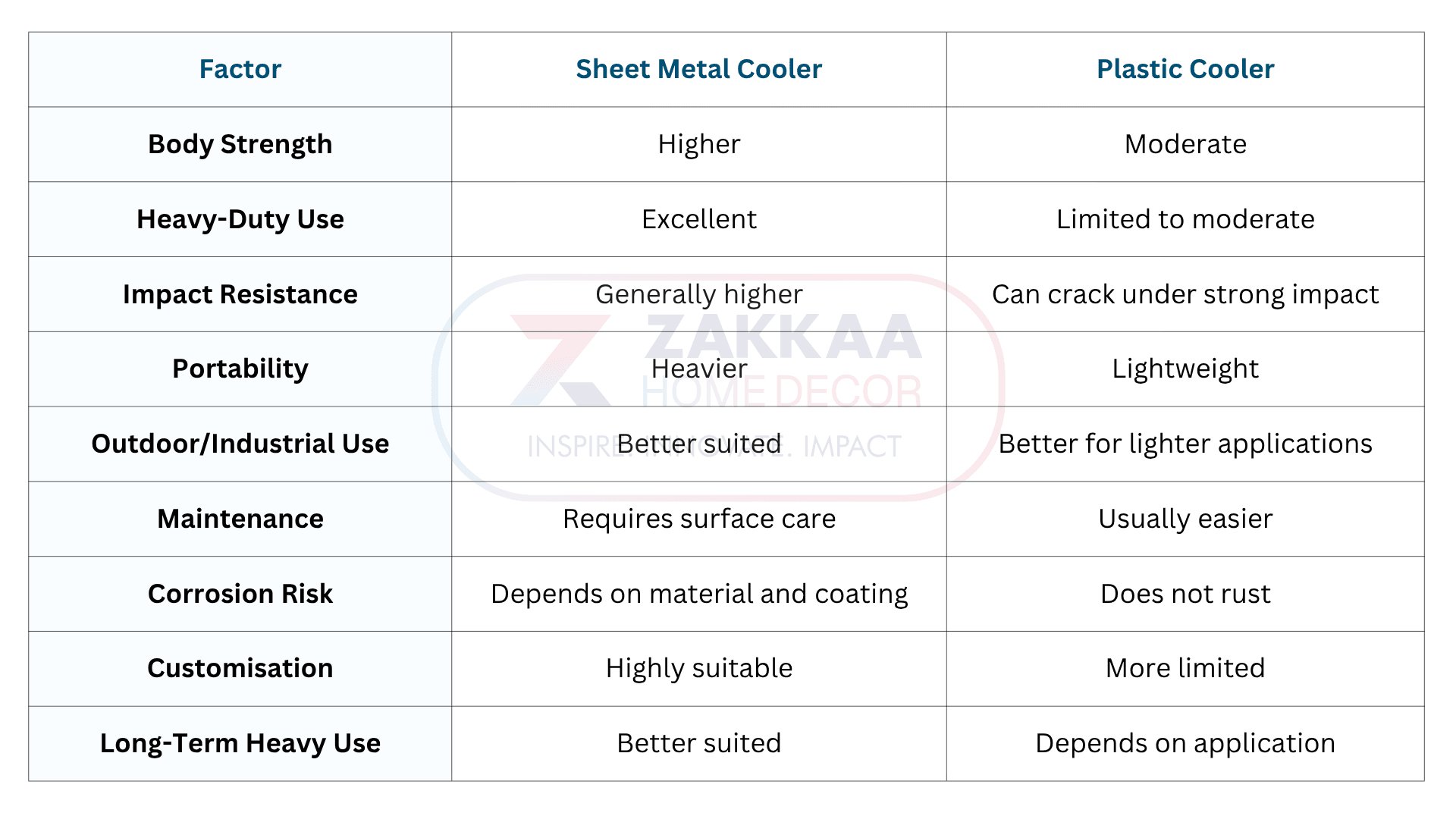
Sheet Metal Cooler Vs Plastic Cooler: All Key Differences Explained
The biggest difference is the material and construction of the cooler body. A sheet metal cooler uses fabricated metal panels, while a plastic cooler generally uses moulded polymer components. That basic difference affects weight, rigidity, impact resistance, maintenance, customisation, and suitability for different applications.
1. Durability And Body Strength
A well-built sheet metal cooler generally has a rigid structure that can handle frequent movement, accidental knocks, and demanding operating conditions. This makes a Steel Body Cooler particularly suitable for industrial and commercial environments where equipment may experience more physical handling.
Plastic coolers are lighter and can perform reliably under normal conditions, but some plastic materials can crack or become brittle after repeated impact or prolonged environmental exposure. Their durability therefore depends strongly on the quality and type of plastic used.
2. Weight And Portability
Plastic has an obvious advantage when portability is important. A lighter cooler can be moved between rooms, shops, or temporary work areas with less effort.
Sheet metal construction adds weight, but that extra weight can also make larger coolers feel more stable during operation. For an industrial cooler with larger fans, motors, tanks, and wheels, a heavier body may be more appropriate than an ultra-light design.
3. Rust And Corrosion
Plastic does not rust, which makes it attractive in environments where moisture is a concern. Metal, on the other hand, needs suitable surface protection to reduce corrosion.
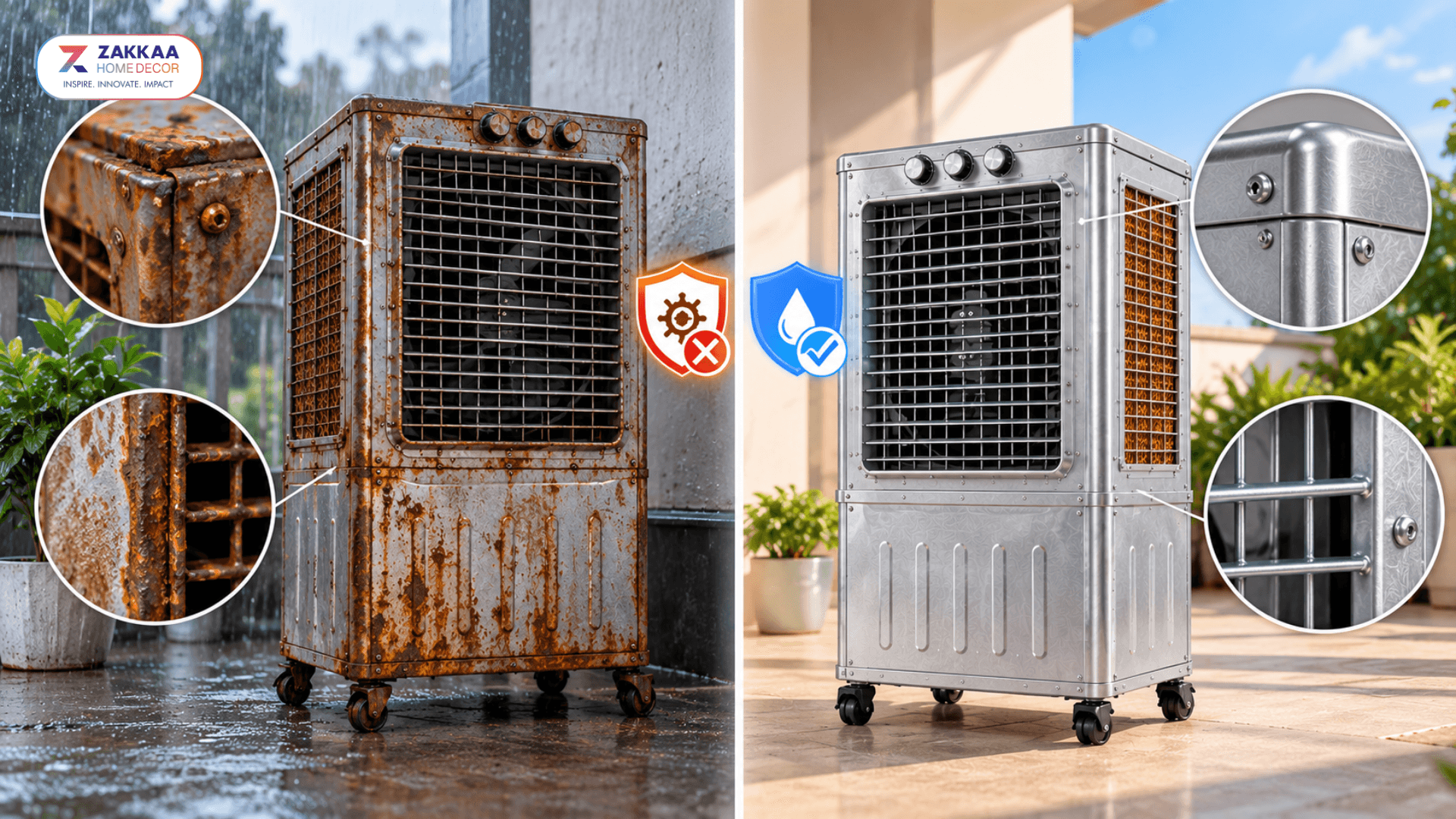
This does not mean every metal cooler is prone to rust. The result depends on the sheet material, surface preparation, coating, water exposure, and overall manufacturing quality. A properly finished metal body can provide good protection during regular use, while damaged or poorly protected surfaces need timely attention.
4. Resistance To Physical Wear
A cooler used in a home bedroom may rarely face physical stress. A factory air cooler, however, may be moved around production areas, cleaned frequently, or exposed to accidental knocks.
Sheet metal generally provides an advantage in such situations because of its structural rigidity. Plastic can still work well where handling is limited, but buyers should consider the actual environment instead of choosing solely on price.
5. Maintenance Requirements
Plastic bodies are generally simple to wipe and do not require rust-related maintenance. Sheet metal coolers need greater attention to surface damage, especially if scratches or chips expose the underlying metal.
However, the main maintenance work is similar for both types. Cooling pads, water tanks, pumps, fans, grills, and air passages need regular cleaning regardless of whether the outer body is metal or plastic.
6. Customisation Potential
Sheet metal is highly suitable for customised manufacturing because panels can be cut, bent, welded, and assembled into different configurations. This allows businesses to specify dimensions, cabinet arrangements, air outlets, wheel placement, finishing, and other design requirements.
Plastic bodies can also be customised, but creating a completely new mould can involve additional tooling requirements. For businesses ordering products in bulk, sheet metal manufacturing can therefore provide useful flexibility during product development.
7. Suitability For Heavy-Duty Use
When a cooler needs to operate for extended hours in a demanding workplace, construction strength becomes important. A properly designed heavy-duty cooler with a rigid body and suitable internal components can be better suited to these conditions.
For lighter residential applications, a plastic cooler can provide sufficient performance without the additional weight and structural capacity of a heavy-duty metal unit.
8. Long-Term Value
A durable cooler should be evaluated according to its complete lifecycle rather than its purchase price alone. A low-cost unit may appear attractive initially but become expensive if it requires frequent repairs or replacement.
At the same time, buying a heavy-duty metal cooler for light household use may not provide enough additional value to justify the higher cost. The best long-lasting cooler is the one whose construction matches its workload.
Which Cooler Is Better For Homes, Shops, Factories And Commercial Spaces?
The application should determine your choice.
1. Homes
For bedrooms, living rooms, and other residential spaces, a plastic domestic cooler can be a practical choice when the unit needs to be moved frequently. Noise, airflow, size, water capacity, and ease of cleaning may matter more than heavy-duty construction.

A metal cooler can still be used at home, particularly when you prefer stronger construction or need a larger cooling capacity. It simply may not be necessary for every residential requirement.
2. Shops
Small shops usually need a balance between cooling, portability, operating hours, and available floor space. A quality plastic or metal cooler can work depending on how heavily it will be used.
If the cooler operates throughout business hours and is exposed to frequent movement, a stronger commercial design may provide better long-term value.
3. Restaurants And Commercial Spaces
Restaurants and other commercial spaces can have longer operating hours and higher foot traffic. Here, a commercial air cooler should be selected according to airflow, air throw, water capacity, ventilation, construction, and maintenance requirements.
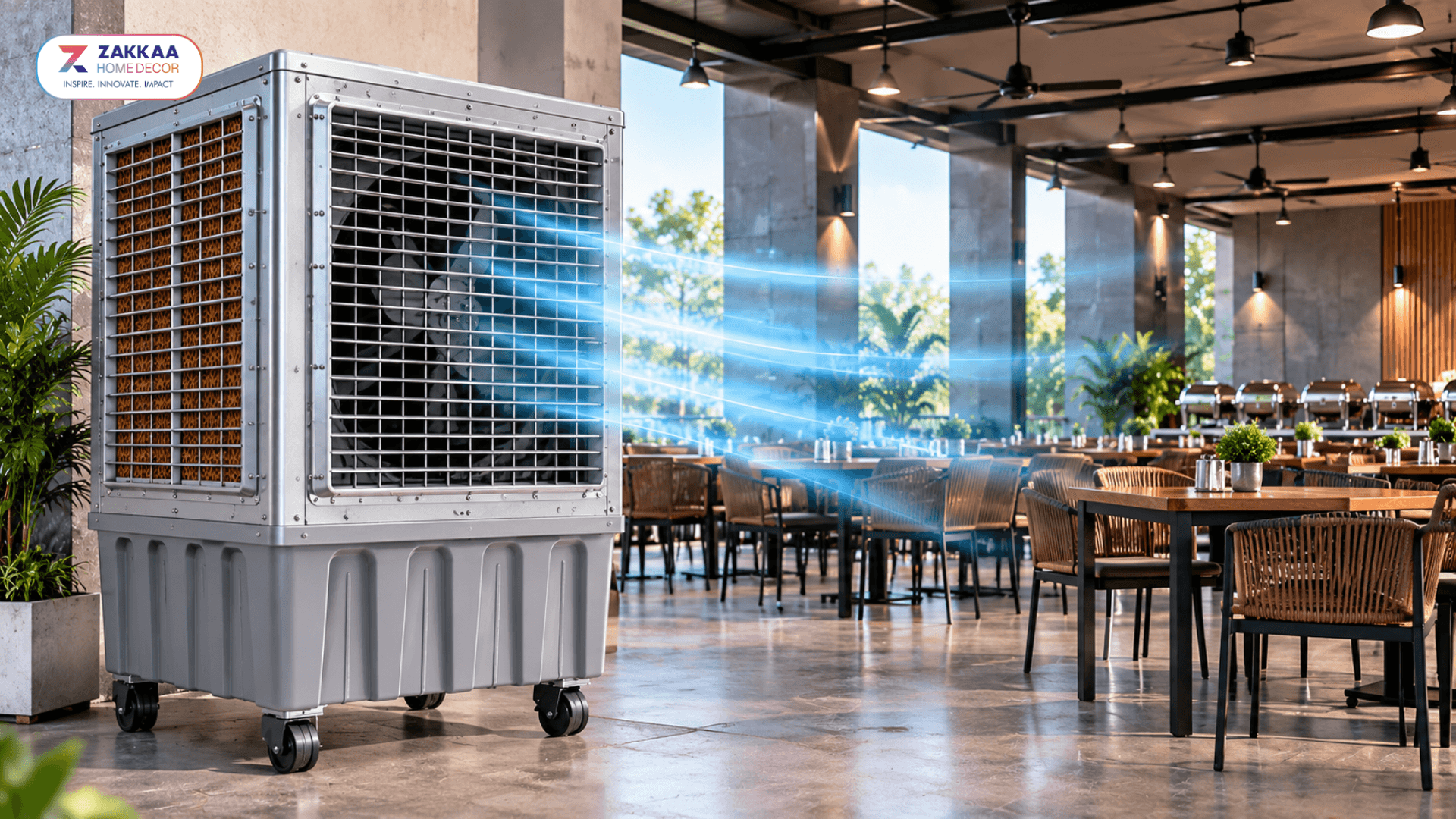
A metal construction can be advantageous where the unit experiences frequent handling, while plastic can work well in less demanding locations.
4. Workshops And Warehouses
Workshops and warehouses generally require stronger cooling equipment because of larger spaces, longer operating periods, and tougher working conditions.
A suitably sized metal industrial air cooler can be a better fit, particularly when durability and physical strength are priorities.
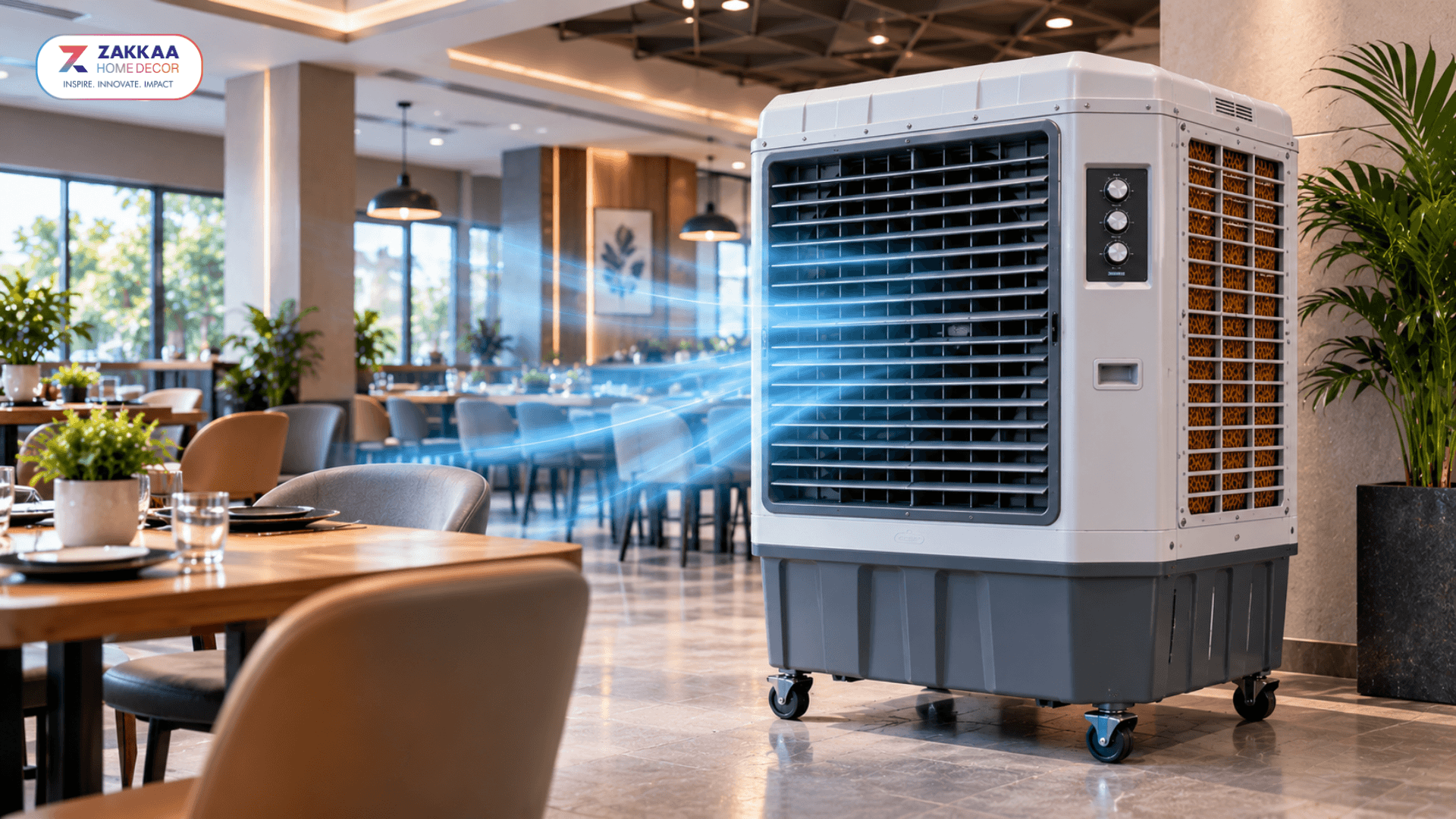
5. Factories
Factories often require high airflow, extended operating hours, and equipment that can withstand regular industrial handling. A factory air cooler should therefore be selected as a complete cooling system rather than based only on its body material.
The fan, motor, cooling pads, water system, airflow, air throw, ventilation, and construction should all match the working environment.
What Makes A Cooler Truly Durable?
A metal body alone does not automatically make a cooler durable. Manufacturing quality and component selection have a major role in determining how well the product performs over time.
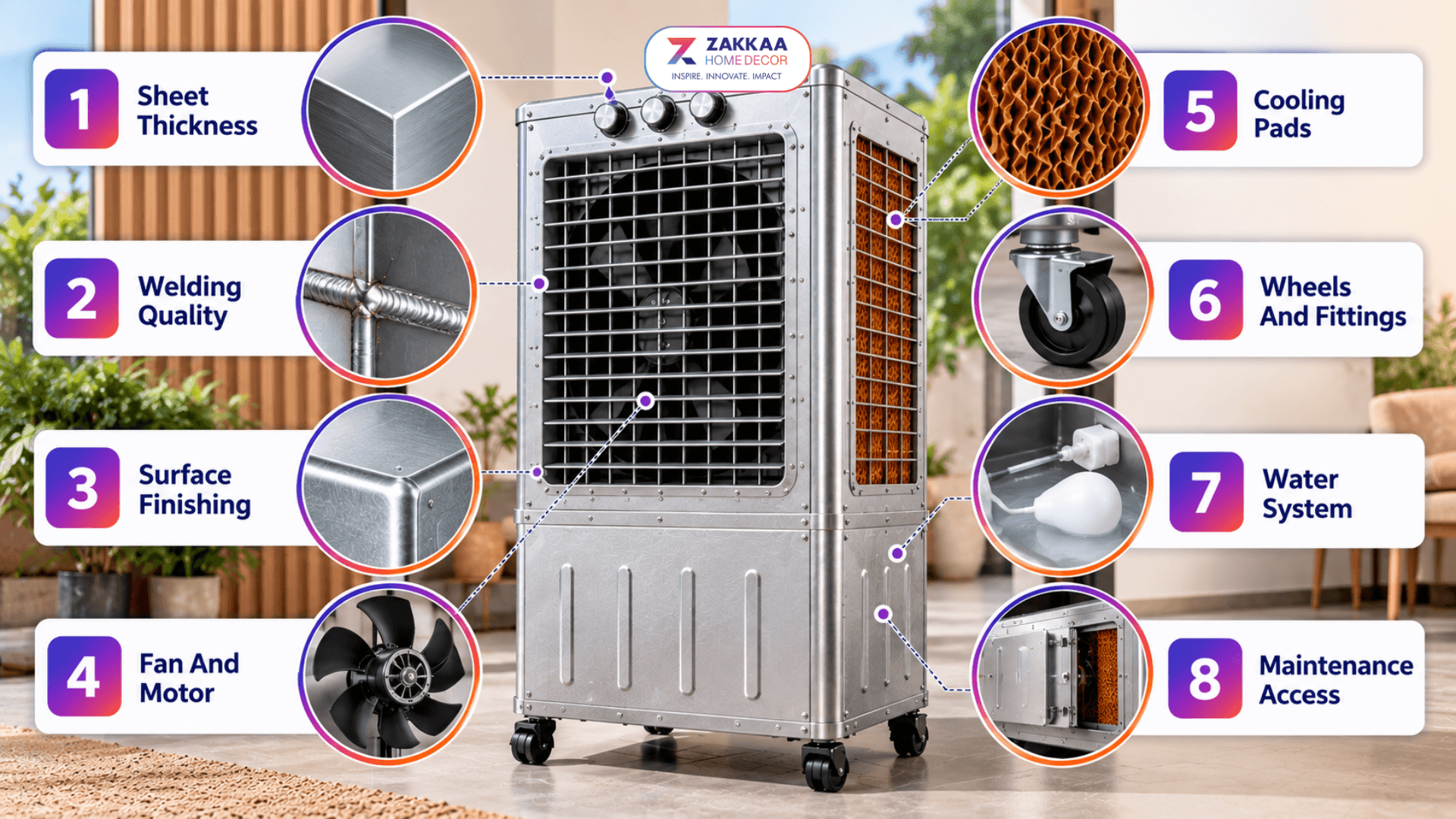
Sheet Thickness: Suitable sheet thickness provides the structural strength required for the intended application.
Welding Quality: Properly joined components help maintain structural stability during repeated use and movement.
Surface Finishing: Appropriate preparation and coating can protect metal surfaces from everyday exposure and corrosion.
Fan And Motor: The motor should match the required operating hours and airflow demand rather than being selected only for initial cost.
Cooling Pads: Quality cooling pads and proper water distribution support the cooler's evaporative cooling performance.
Wheels And Fittings: Industrial and commercial portable coolers need strong wheels, handles, fasteners, and other fittings.
Water System: The pump, tank, drainage arrangement, and water distribution system should be suitable for regular operation.
Maintenance Access: Components that can be accessed easily are simpler to clean, inspect, and service when required.
Can Sheet Metal Coolers Be Customized For Businesses?
Yes, sheet metal coolers are well suited to OEM customised manufacturing. Since the body is fabricated from individual metal components, manufacturers can modify dimensions and configurations according to the approved product design.
Businesses can discuss requirements such as cooler dimensions, body configuration, air outlet arrangement, water tank capacity, wheel placement, colour, finishing, branding, and other product specifications.
This can be particularly useful for businesses that require multiple units with the same design or want a cooler developed around a specific application. For bulk orders, approving a sample before mass production can also help ensure that the final units match the intended specifications.
Why Choose Zakkaa For Metal Air Cooler Manufacturing?
Zakkaa has capabilities in sheet metal fabrication and cooling product manufacturing. Businesses looking for sheet metal air coolers, commercial cooling, or industrial cooling solutions can discuss their required specifications, application, quantity, and product configuration with the manufacturing team.
For bulk buyers, OEM manufacturing provides greater control over the final product rather than limiting the purchase to readily available models. Zakkaa can support requirements involving product dimensions, sheet metal construction, finishing, components, and other agreed specifications.
For businesses developing cooling equipment under their own brand, this manufacturing approach can also support customised product development and bulk production based on approved designs.
Final Thoughts
To summarize, a sheet metal cooler is ideal when durability, structural strength, frequent handling, and heavy-duty operation are your priorities. On the other hand, buy a plastic cooler when portability, lightweight construction, and lighter residential use matter more.
There is no need to treat one material as universally better. Consider where the cooler will operate, how long it will run each day, how often it will be moved, and what level of physical stress it will face. For demanding industrial and commercial applications, a properly manufactured steel body cooler can provide the robust construction needed for long-term use, while a good plastic cooler can remain a sensible option for lighter requirements.
Frequently Asked Questions (FAQs)
Is A Sheet Metal Cooler Always Better Than A Plastic Cooler?
No. Sheet metal is generally better for demanding applications, while plastic can be more practical for lightweight residential use and frequent movement.
Can A Plastic Cooler Last For Several Years?
Yes, a good-quality plastic cooler can last several years when used, cleaned, and maintained according to its intended operating conditions.
Are Steel Body Coolers Suitable For Outdoor Use?
They can be suitable when the body has appropriate surface protection and the cooler is designed for the intended environment. Exposure to rain and moisture should still be managed.
What Type of Cooler Is Better For A Factory?
A suitably sized industrial metal cooler is often preferable for factories because it can combine strong construction with the airflow and operating capacity needed for demanding work areas.
Does The Cooler Body Affect Cooling Performance?
The body material itself does not determine cooling performance. Airflow, fan and motor capacity, cooling pads, water distribution, ventilation, and overall design have greater influence.
Are Metal Coolers More Difficult To Move?
They can be heavier than plastic models, particularly larger industrial units. Strong wheels and suitable handles can make a well-designed metal cooler easier to reposition.
Can An OEM Manufacturer Make A Customized Metal Cooler?
Yes, sheet metal manufacturing allows many product dimensions and configurations to be customised. Businesses can discuss their design, application, quantity, and branding requirements with an OEM manufacturer.
What Is More Important Than Choosing Metal Or Plastic?
The complete product specification matters more than body material alone. Check construction, airflow, components, operating conditions, maintenance, service support, and expected workload before purchasing.