Oct 15, 202611 min readBy Aditya Singh
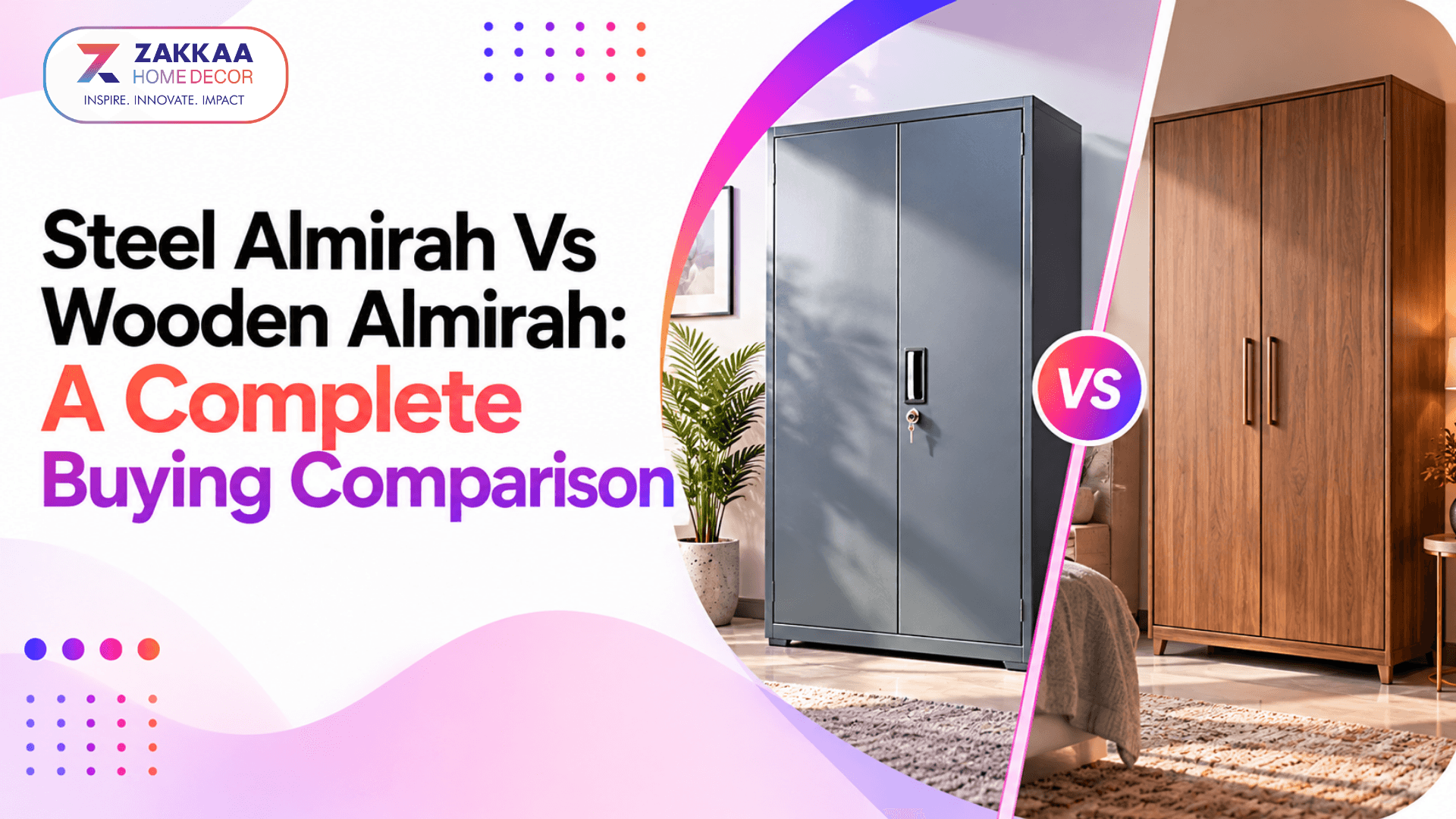
Your bedroom almirah does two important jobs: it keeps everyday essentials organised and contributes to the look of your room. But should you choose a sleek steel almirah design or a wooden wardrobe that adds a warmer, more traditional touch to your interiors?
The answer depends on how you use your storage space. Some households prioritise durability, easy maintenance, and everyday practicality, while others focus on aesthetics, finish, and matching furniture.
Climate, available space, storage capacity, and purchase cost also deserve attention before making the final choice when buying a steel almirah.
Choosing the right almirah becomes easier when you understand what each material offers. This guide compares steel and wooden almirahs in detail, covering their advantages, limitations, maintenance needs, and suitability for different Indian homes.
Steel Almirah Vs Wooden Almirah: Understanding The Difference
A steel almirah is made primarily from metal sheets, while a wooden almirah is constructed from solid wood, plywood, MDF, particleboard, or other wood-based materials. Both provide enclosed storage, shelves, and compartments, but their performance varies according to construction quality, finish, and intended use.
Steel furniture is commonly chosen for utility-focused spaces, including offices, staff rooms, rental properties, and homes that need practical storage. Wooden wardrobes are often preferred in bedrooms and living spaces where furniture design and interior coordination matter.
However, neither material is automatically better in every situation. A well-built wooden wardrobe can serve a household for many years, just as a properly finished steel almirah can provide dependable everyday storage. Comparing their specific features is more useful than judging them by material alone.
Difference Between Steel Almirah And Wooden Almirah: Which Is Right?
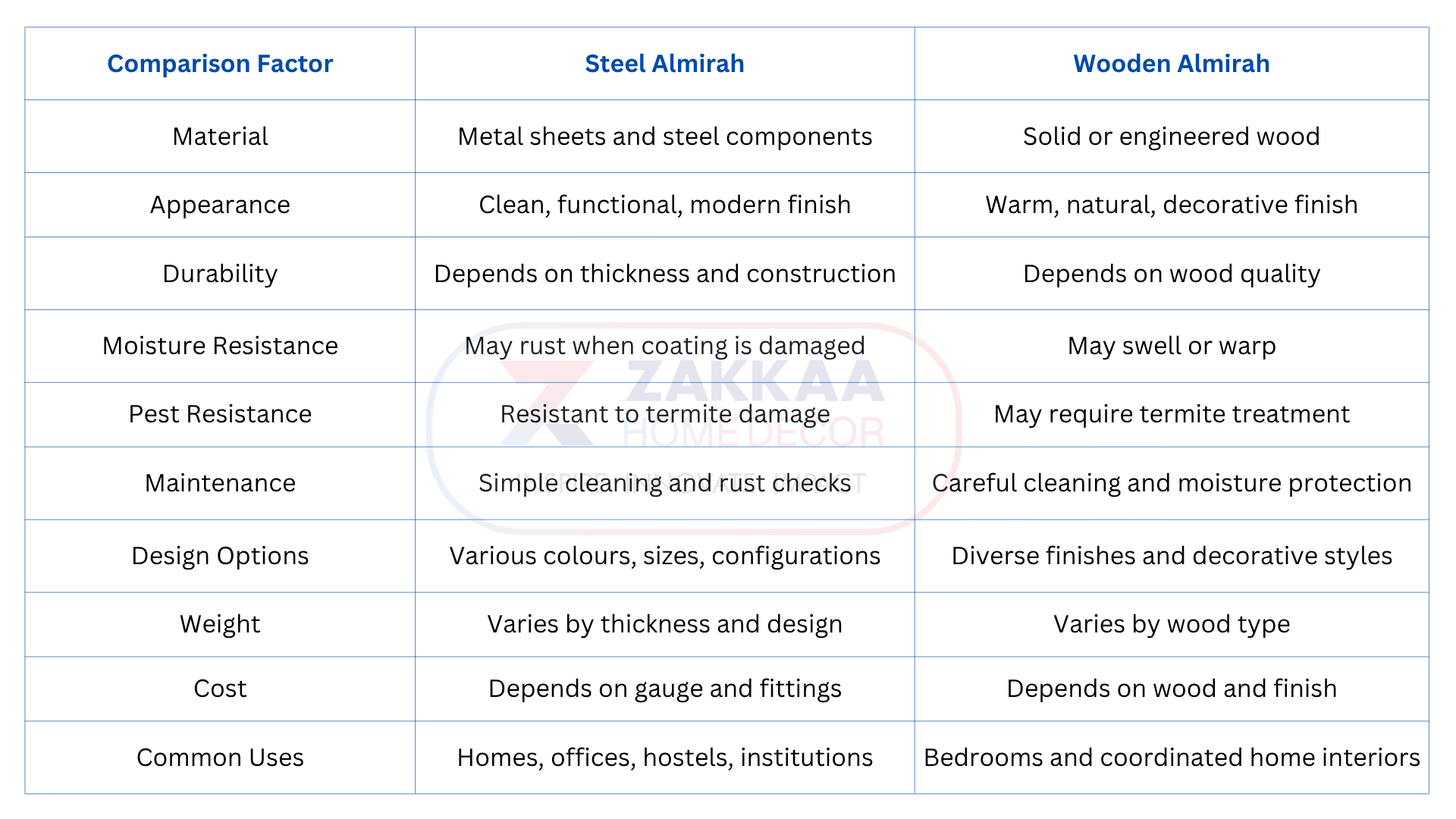
Buying an almirah is not just about finding enough space for your clothes, files, or household essentials. You also want furniture that suits your room, fits your budget, and holds up well with regular use. Steel and wooden almirahs both have their advantages, but the better choice depends on what matters most to you. Let’s compare these two storage options across 10 important factors to help you decide.
1. Durability And Everyday Use
A steel almirah makes sense for busy homes, hostels, and offices where doors open frequently, and storage gets plenty of daily use. A sturdy frame, good-quality steel sheets, and strong hinges help it handle everyday demands, although thin panels and poor fittings can still cause problems.
On the other hand, a wooden almirah can serve you well for years when it is made from quality wood or well-constructed engineered boards. Its durability depends on the material, joints, and hardware, so check these details rather than judging the wardrobe by its finish alone.
2. Price And Long-Term Value
If you need straightforward storage without spending too much, a basic steel almirah may be worth considering. The price changes with its size, steel thickness, finish, shelves, and locking system, so compare models with similar specifications before making a decision.
Wooden almirahs, meanwhile, cover a wider price range depending on whether they use engineered boards or solid wood. Decorative finishes, customised designs, and premium hardware can raise the cost. Remember to account for possible repairs and refinishing when deciding which option offers better value over time.
3. Maintenance And Cleaning Requirements
One reason many buyers consider a steel almirah is its simple cleaning routine. A soft cloth usually takes care of everyday dust, while occasional checks help catch loose handles, faulty locks, or scratches before they become bigger concerns. Damaged paint or coating should be repaired to reduce the risk of rust.
Wooden wardrobes need a little more attention to their finish. Too much water or harsh cleaning products can leave marks or damage certain surfaces, particularly engineered boards. Regular dusting and gentle cleaning are usually enough, provided you follow the care instructions for the material.
4. Moisture Resistance And Rust Protection
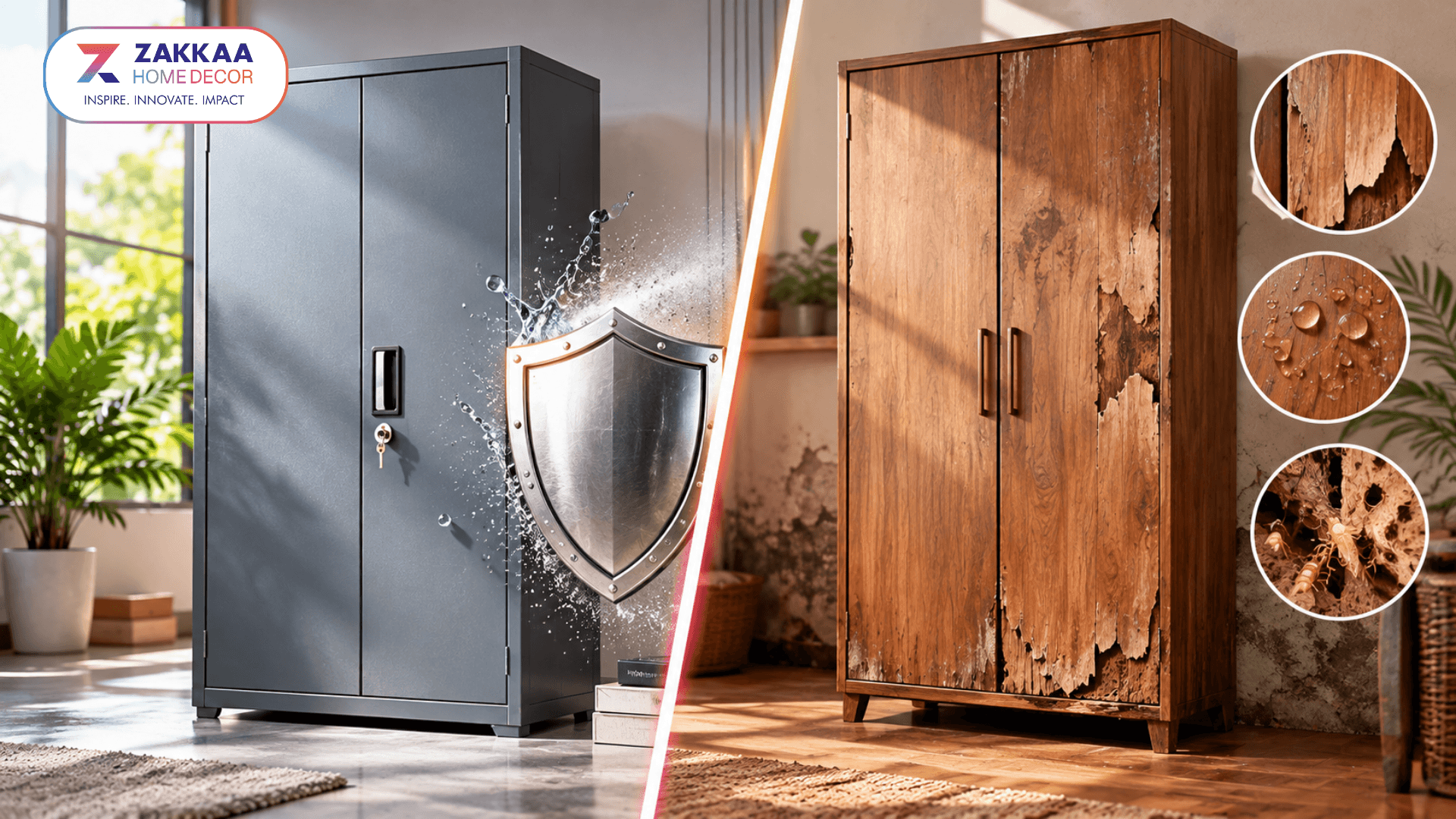
Spilled water or a damp room does not affect steel and wood in quite the same way. A steel almirah will not swell like a wooden one, but moisture can still cause rust if the protective coating is scratched or damaged. Keeping the surface dry helps protect the metal.
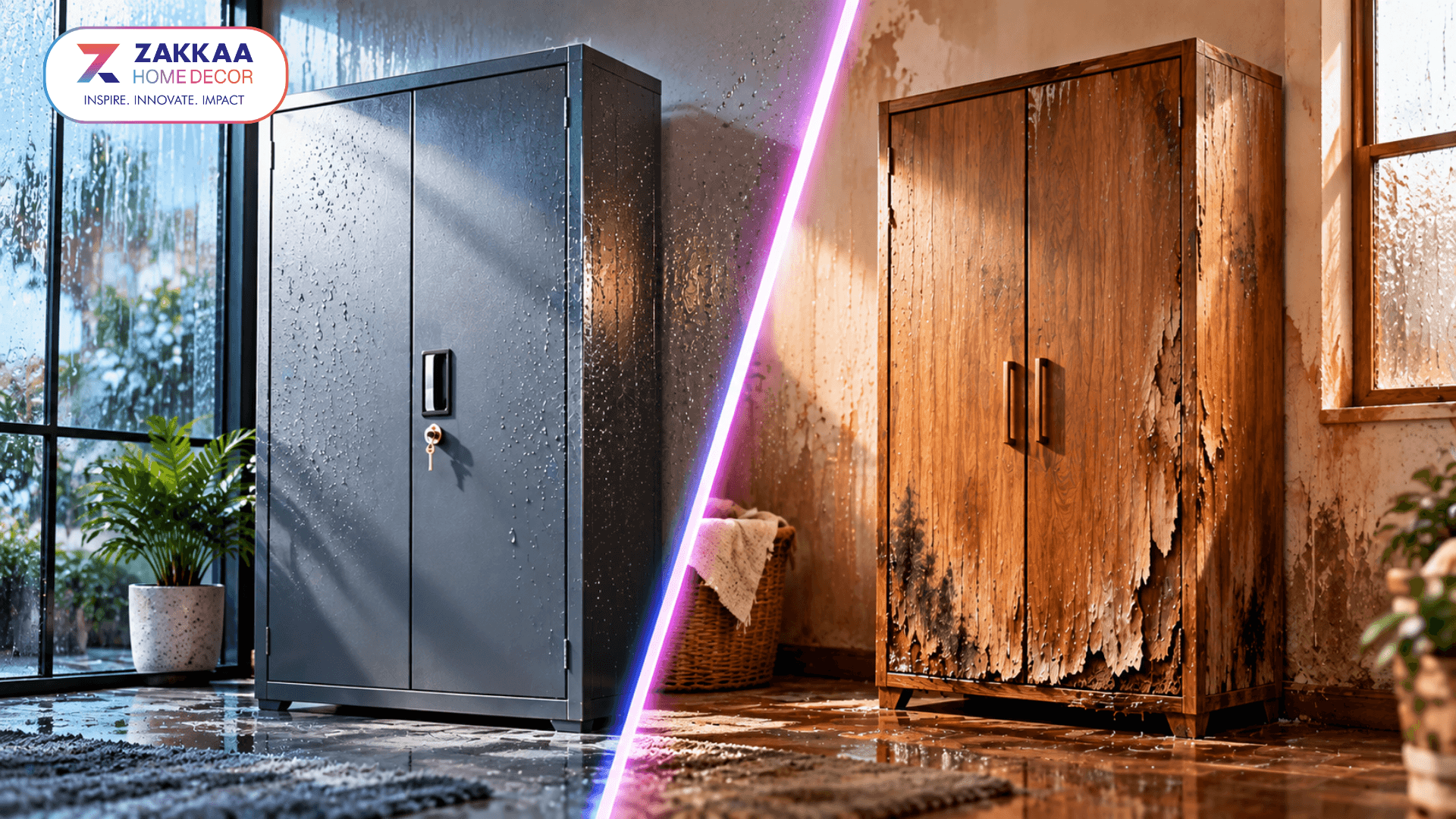
Wooden almirahs face a different challenge. Prolonged dampness can cause some materials to swell, warp, or peel, especially when water reaches exposed edges. If your room tends to stay humid, check the board type and moisture protection before buying, and avoid placing the wardrobe near leaking walls.
5. Termite Resistance And Pest Protection
Worried about termites damaging your storage furniture? The metal body of a steel almirah is not a food source for termites, which makes it a useful option for homes, offices, and shared accommodation. However, wooden accessories or nearby furniture may still need protection.
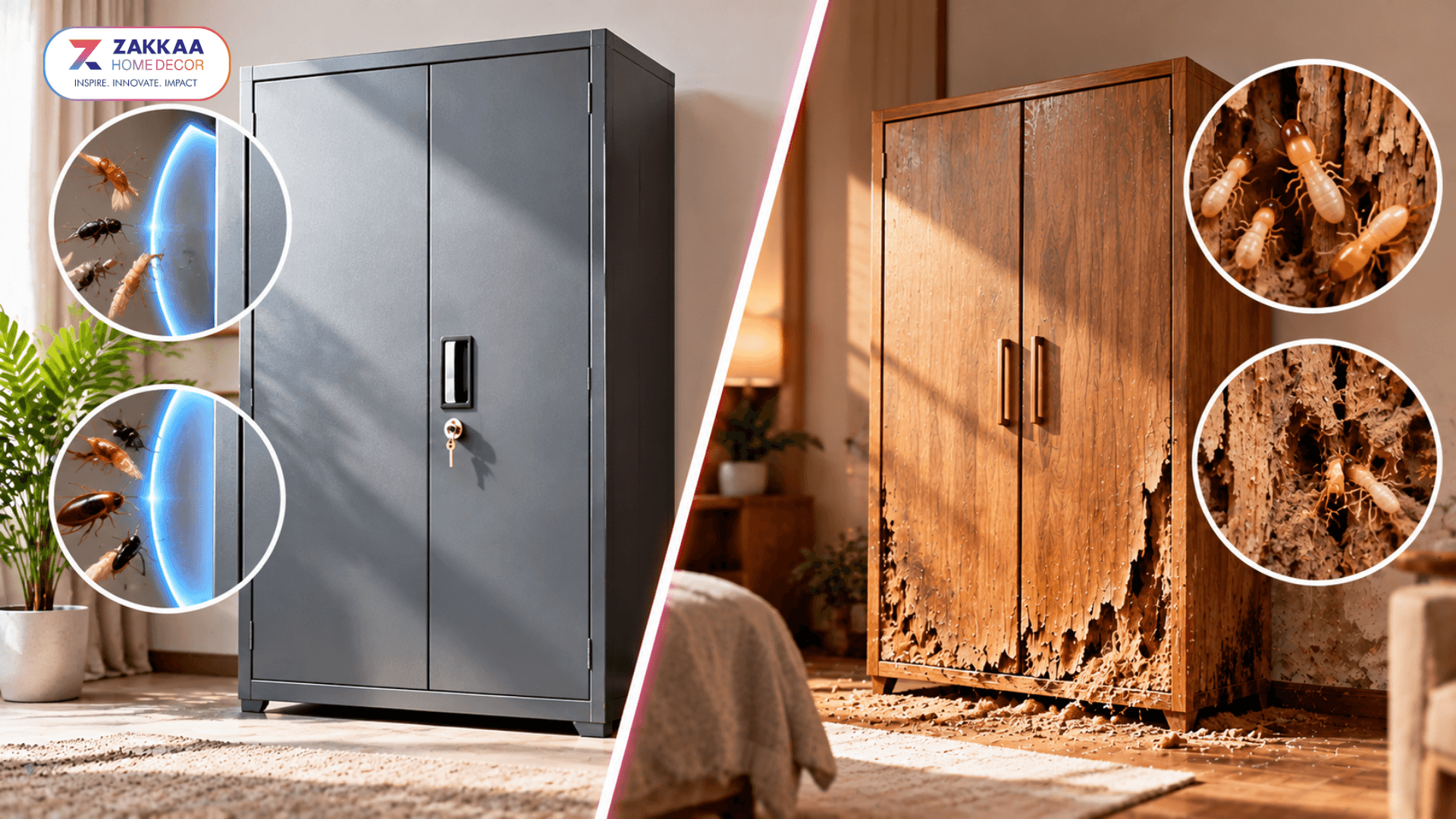
Wooden almirahs require more consideration in termite-prone areas. Their vulnerability depends on the wood or board used, any protective treatment, and the surrounding conditions. Ask the seller about termite treatment and inspect the furniture periodically, especially if you notice signs of pests elsewhere in your home.
6. Appearance And Interior Design
For a room where practicality comes first, a steel almirah can be a neat, uncomplicated addition. Modern models come in different colours, finishes, sizes, and door configurations, making it easier to find one for a bedroom, rental property, hostel, or office.
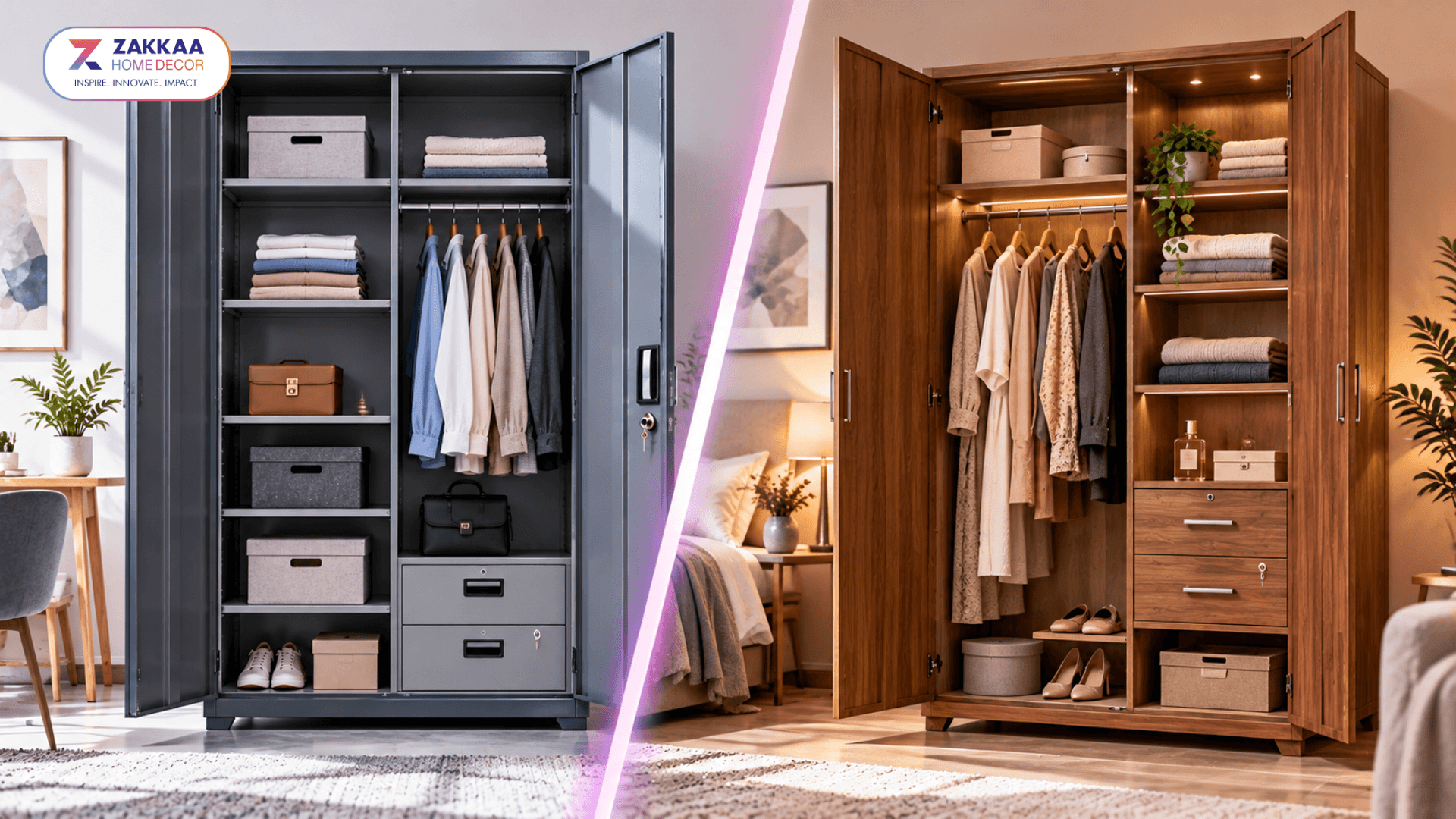
Wooden almirahs offer a different kind of appeal. Their textures, laminates, and decorative finishes can complement a bed, dressing table, or other bedroom furniture. If you want your wardrobe to blend with a particular interior theme, a wooden design may give you more options for creating a coordinated look.
7. Storage Layout And Organisation
A well-designed steel almirah can do more than hold folded clothes. Depending on the model, it may include shelves, drawers, lockers, and separate compartments for documents or personal belongings. Before buying, check the internal layout to make sure it suits what you plan to store.
Wooden almirahs can offer similar storage flexibility, including hanging rails, drawers, shelves, and overhead cabinets. Some designs also allow customised layouts to suit specific room requirements. If you have long garments, bulky bedding, or plenty of accessories, pay attention to the internal dimensions rather than the external size alone.
8. Weight And Installation
Moving a steel almirah is not always as easy as its slim appearance suggests. Its weight depends on the dimensions, steel thickness, and construction, so larger models may need help during delivery and installation. Measure doorways, staircases, and lifts before ordering to avoid last-minute difficulties.
Wooden almirahs also vary considerably in weight. Solid-wood designs can be particularly heavy, while engineered-wood models differ according to their boards and construction. Whichever material you choose, check the product dimensions and delivery arrangements, especially if the wardrobe needs to reach an upper-floor bedroom.
9. Repair And Customisation
When a steel almirah develops a problem, the repair may be as simple as replacing a handle, hinge, or lock. Minor scratches can sometimes be treated with a suitable coating, but bent panels or structural damage may be harder to fix. Checking spare-part availability before buying can save trouble later.
Wooden almirahs offer different repair possibilities. Depending on the finish and construction, scratches may be repaired, surfaces refinished, or loose fittings replaced. However, swollen boards and damaged joints can require more extensive work. Custom sizes and decorative finishes may also be available, although the options depend on the manufacturer and your budget.
10. Suitability For Homes, Offices, And Institutions
For offices, schools, hostels, and staff accommodation, a steel almirah is often a practical choice because its metal body resists termite damage and its surface is relatively easy to maintain. It can also suit homes where buyers prioritise functional storage over decorative detailing. For bulk purchases, compare construction quality, locking options, and delivery terms.
Wooden almirahs, by comparison, often suit bedrooms and living spaces where furniture needs to complement the existing décor. They can also work in offices or institutions when the design and material match the intended use. Consider daily usage, room conditions, maintenance, and budget before settling on either option.
Steel or Wooden Almirah: Which Almirah Should You Choose For Your Needs?
A useful wardrobe comparison starts with the environment and the purpose of the purchase. These scenarios can help you identify the more suitable option.
Choose A Steel Almirah If:
You need practical storage for everyday clothing, household essentials, files, or office supplies.
You want furniture that is relatively straightforward to clean and maintain.
Termite resistance is an important consideration.
You are furnishing staff rooms, hostels, schools, or multiple office locations.
You need standardised units for a bulk purchase, subject to available designs and specifications.
Choose A Wooden Almirah If:
You want storage furniture that complements your bedroom interiors.
A natural wood appearance or decorative finish is a major priority.
You need a specific design that coordinates with existing furniture.
You have selected a suitable material for your room conditions and budget.
You are willing to follow the recommended care and maintenance requirements.
What Should Bulk Buyers Consider While Purchasing Steel or Wooden Almirahs?
For dealers, distributors, offices, educational institutions, and other bulk purchasers, the decision involves more than choosing a material. The supplier, product specifications, delivery terms, and consistency across the order also matter.
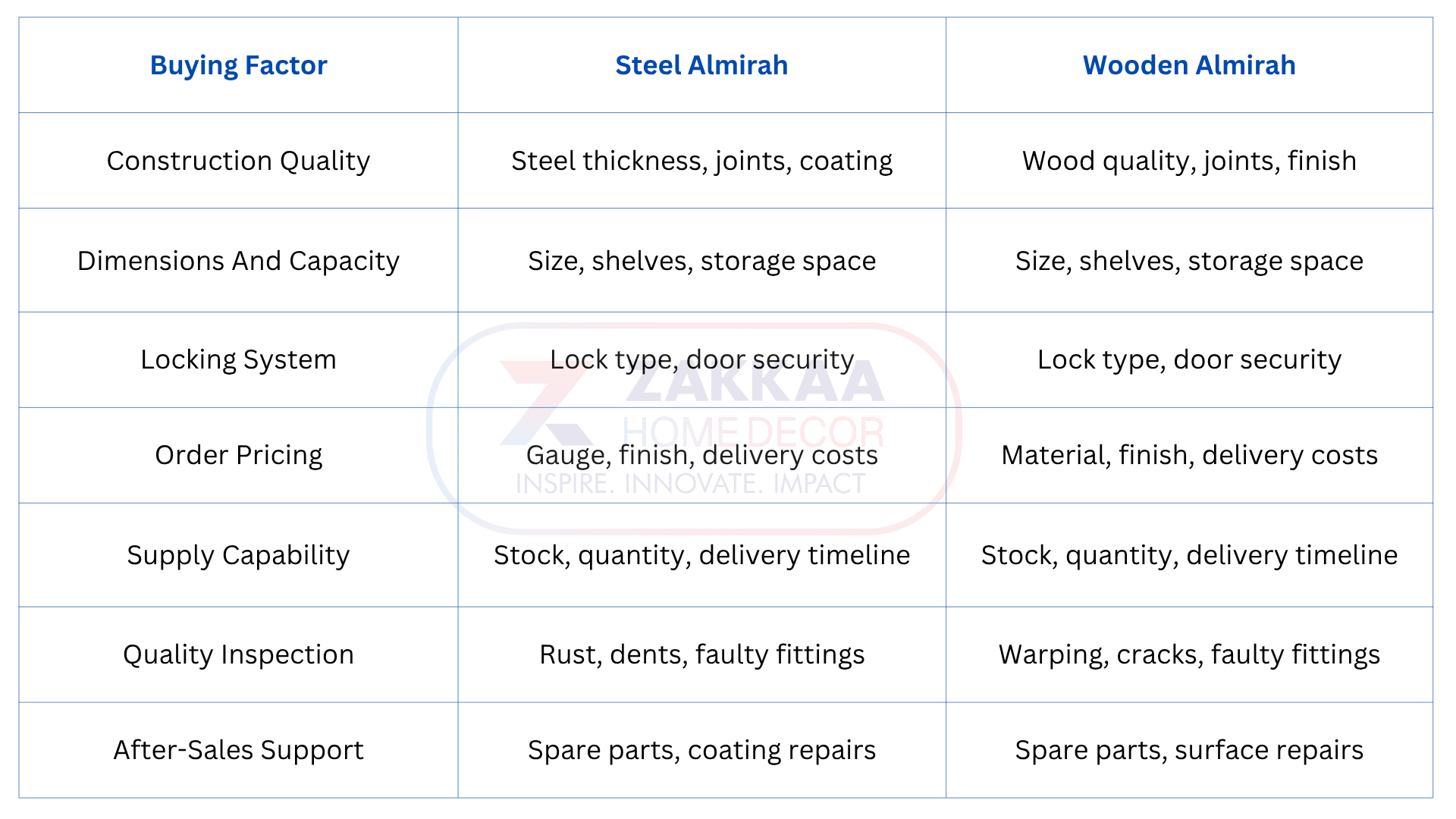
Before finalising a purchase, check these points:
Construction Quality: Review material thickness, joints, hinges, shelf support, door alignment, and surface finish.
Dimensions and Capacity: Confirm external measurements, usable internal space, shelf arrangement, and the number of units required.
Locking Arrangements: Specify the type of lock and any additional access-control requirements.
Order Pricing: Compare quotations for equivalent specifications, including taxes, transport, installation, and other applicable charges.
Supply Capability: Confirm the supplier's production capacity, expected delivery schedule, and ability to fulfil the required quantity.
Product Inspection: Ask about available quality checks, applicable warranties, and the process for handling damaged or defective units.
After-Sales Support: Clarify how spare parts, repairs, and warranty claims will be managed.
For large projects, requesting a sample or inspecting a representative unit can help buyers assess quality before approving the complete order.
How To Find A Durable Almirah
A durable almirah is not determined by material alone. The manufacturing process, construction, fittings, finish, and intended application all influence its performance.
When comparing steel furniture, examine the panel quality, protective coating, shelf strength, hinge construction, and door fit. A poorly manufactured steel unit may not provide the expected durability, even if its material appears suitable.
For a wooden wardrobe, identify the actual material used rather than relying only on the product's appearance. Check the quality of the board or timber, edge finishing, joints, hardware, and moisture-protection measures.
Buyers should also measure the intended location, check access for delivery, and consider how much storage space they will need over time. These steps help prevent avoidable purchase mistakes.
Whether you need a bedroom almirah or an office storage cabinet, compare specifications and supplier reliability before placing your order.
Final Thoughts
A steel almirah is often the more practical choice for buyers who value straightforward maintenance, termite resistance, and functional storage. A wooden almirah may be the better fit for those who prioritise interior design, decorative finishes, and coordinated furniture.
The right choice depends on your room conditions, budget, storage requirements, and expectations for long-term use. For bulk procurement, evaluate product specifications, manufacturing quality, pricing, and delivery commitments before selecting a supplier.
Looking for storage furniture for your home, business, or institution? Explore Zakkaa's product range and contact the team to discuss your requirements.
Frequently Asked Questions (FAQs)
Can A Steel Almirah Be Used In A Humid Coastal Area?
Yes, provided it has a suitable protective finish and is maintained properly. Keep it away from persistent dampness, wipe off moisture, and repair coating damage promptly to reduce the risk of rust.
Is A Steel Almirah Suitable For Storing Important Documents?
Yes. A steel almirah with suitable shelves and a reliable lock can organise documents and office records. For sensitive records, consider access controls and any additional fire or security protection required.
How Do I Measure A Room Before Buying An Almirah?
Measure the available floor space, ceiling height, doorway width, and delivery access. Allow sufficient room for opening doors and drawers, and check the product's full dimensions before ordering.
Does A Steel Almirah Require Assembly After Delivery?
It depends on the product design. Some units arrive assembled, while others require assembly or installation. Confirm the delivery format and installation arrangements with the seller before purchasing.
Can Steel And Wooden Almirahs Be Recycled?
Steel is widely recyclable through established metal-recycling channels. Wooden furniture may be reused, repaired, or recycled depending on its material, coatings, adhesives, and local facilities.
What Should Dealers Check Before Ordering Almirahs In Bulk?
Dealers should review product specifications, sample quality, unit pricing, minimum order quantities, delivery schedules, packaging, warranty terms, and after-sales support. Written confirmation helps prevent misunderstandings when placing large orders.