Oct 13, 202610 min readBy Aditya Singh
When summer temperatures rise across India, a refrigerator becomes essential for keeping drinking water cold, storing fresh produce, and preserving everyday groceries. But have you ever thought about what goes into manufacturing a fridge?
Behind every refrigerator sold in an electronics showroom is a manufacturing process that combines engineering, specialised components, and quality control.
For appliance brands and manufacturers, getting each stage right is essential to producing reliable refrigerators at competitive prices.
So, what happens inside a refrigerator manufacturing plant before an appliance is ready for delivery? This guide breaks down the major production stages, essential components, and quality checks involved.
Quick Answer: What Is Refrigerator Manufacturing?
Refrigerator manufacturing is the process of turning raw materials and individual components into an appliance that keeps food fresh and drinks cold. It involves designing the cabinet, installing insulation, assembling the compressor and cooling system, and fitting electrical components that help maintain the desired temperature.
From the factory floor to your kitchen, every stage has a specific purpose. Refrigerator manufacturers combine metal fabrication, component assembly, refrigerant system installation, and quality testing to produce refrigerators that meet performance, safety, and energy-efficiency requirements.
How Companies Manufacture Refrigerators: Step-by-Step Process
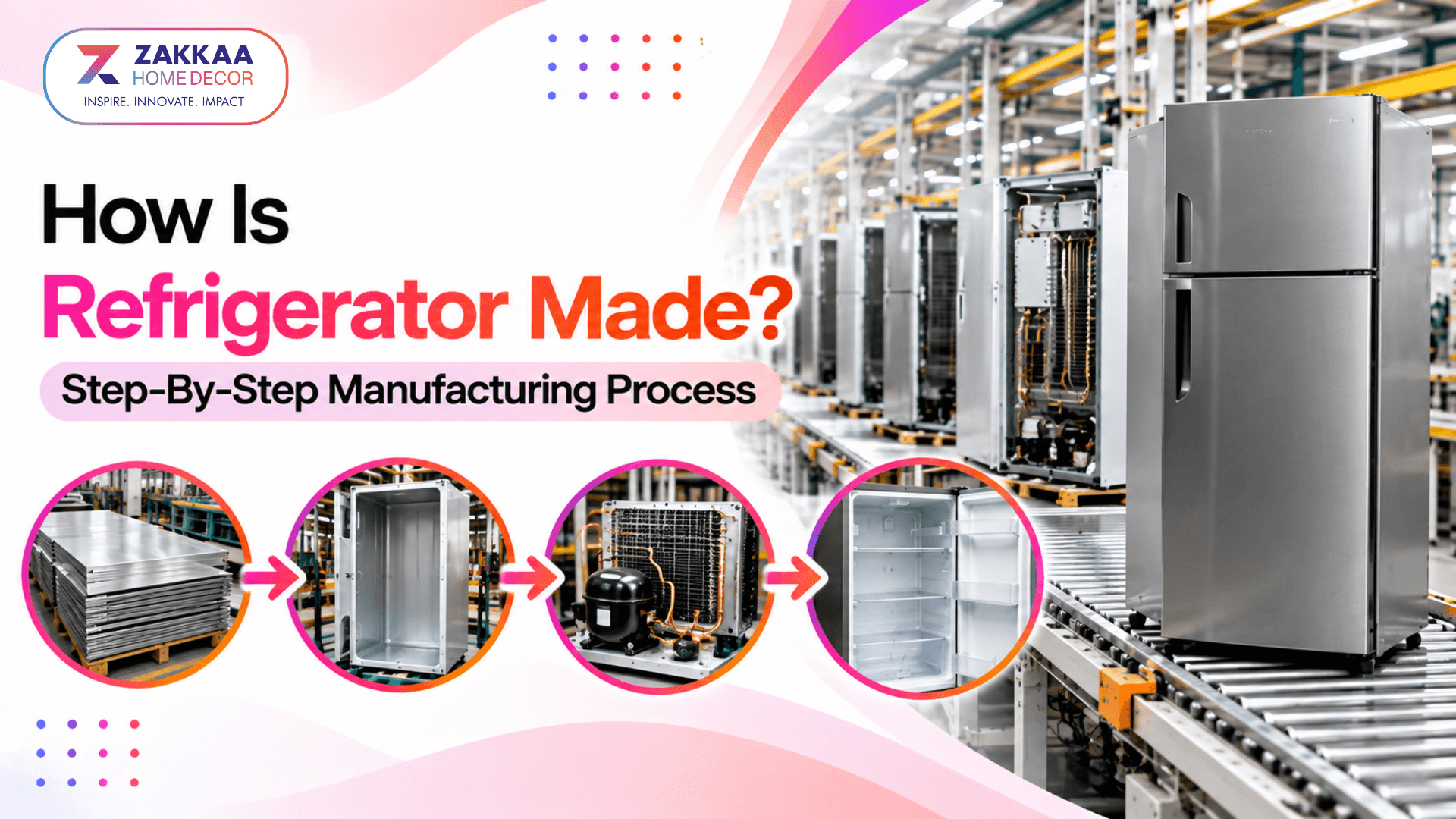
Refrigerator production generally follows a sequence of design, component preparation, cabinet manufacturing, refrigeration-system integration, assembly, and testing. The exact workflow varies by refrigerator type, including direct-cool, frost-free, single-door, double-door, and commercial models.
Step 1: Plan the Refrigerator Design and Specifications
The manufacturing process begins with defining the product's intended use, capacity, design, and technical requirements. These decisions determine the components, production equipment, and assembly procedures needed for the refrigerator.
Important specifications include:
Storage Capacity: Common household refrigerator sizes vary according to customer requirements and product categories.
Cooling Technology: Direct-cool and frost-free refrigerators use different cooling arrangements.
Energy Performance: The design must account for energy consumption targets and applicable labelling requirements.
Temperature Control: The control system regulates cooling based on the selected settings and operating conditions.
Cabinet Configuration: Single-door, double-door, and other designs require different internal layouts and dimensions.
Interior Features: Shelves, drawers, door racks, lighting, and other accessories depend on the product model.
Exterior Design: Door finishes, handles, colours, and cabinet styling affect the product's appearance.
OEM manufacturers should finalize the product specifications and bill of materials before purchasing components. This helps prevent compatibility issues and provides a clear foundation for production planning.
Step 2: Source the Essential Refrigerator Components
Refrigerator manufacturing requires components that work together to produce and maintain the required cooling conditions. Fridge suppliers should be evaluated for component quality, compatibility, delivery reliability, and documentation.
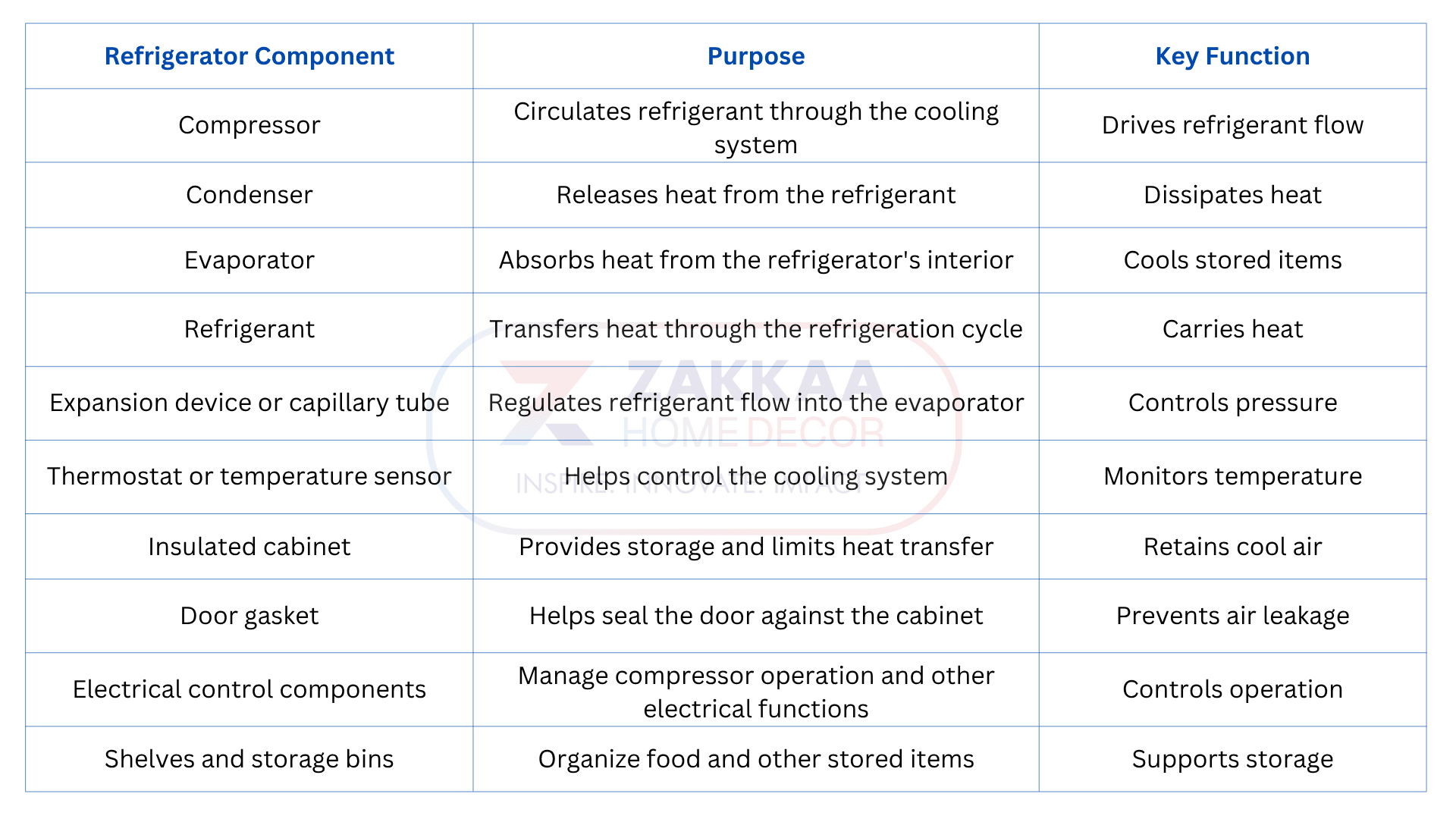
The exact components depend on the refrigerator's cooling architecture. Frost-free models, for example, typically include additional components such as an evaporator fan and defrost system.
Step 3: Manufacture the Outer Cabinet and Inner Liner
The cabinet forms the main body of the refrigerator. It needs to support the appliance's structure, accommodate its internal components, and provide space for thermal insulation.
The outer cabinet is commonly made from formed metal sheets, while the inner liner is often produced from mouldable plastic. The manufacturing process may include the following operations:
Cutting and forming metal sheets to create the required cabinet shape.
Preparing the exterior surface and applying the specified finish where required.
Heating and forming plastic sheets into the inner liner using suitable moulding equipment.
Trimming and inspecting the liner for dimensional accuracy.
Preparing the outer shell and inner liner for cabinet assembly.
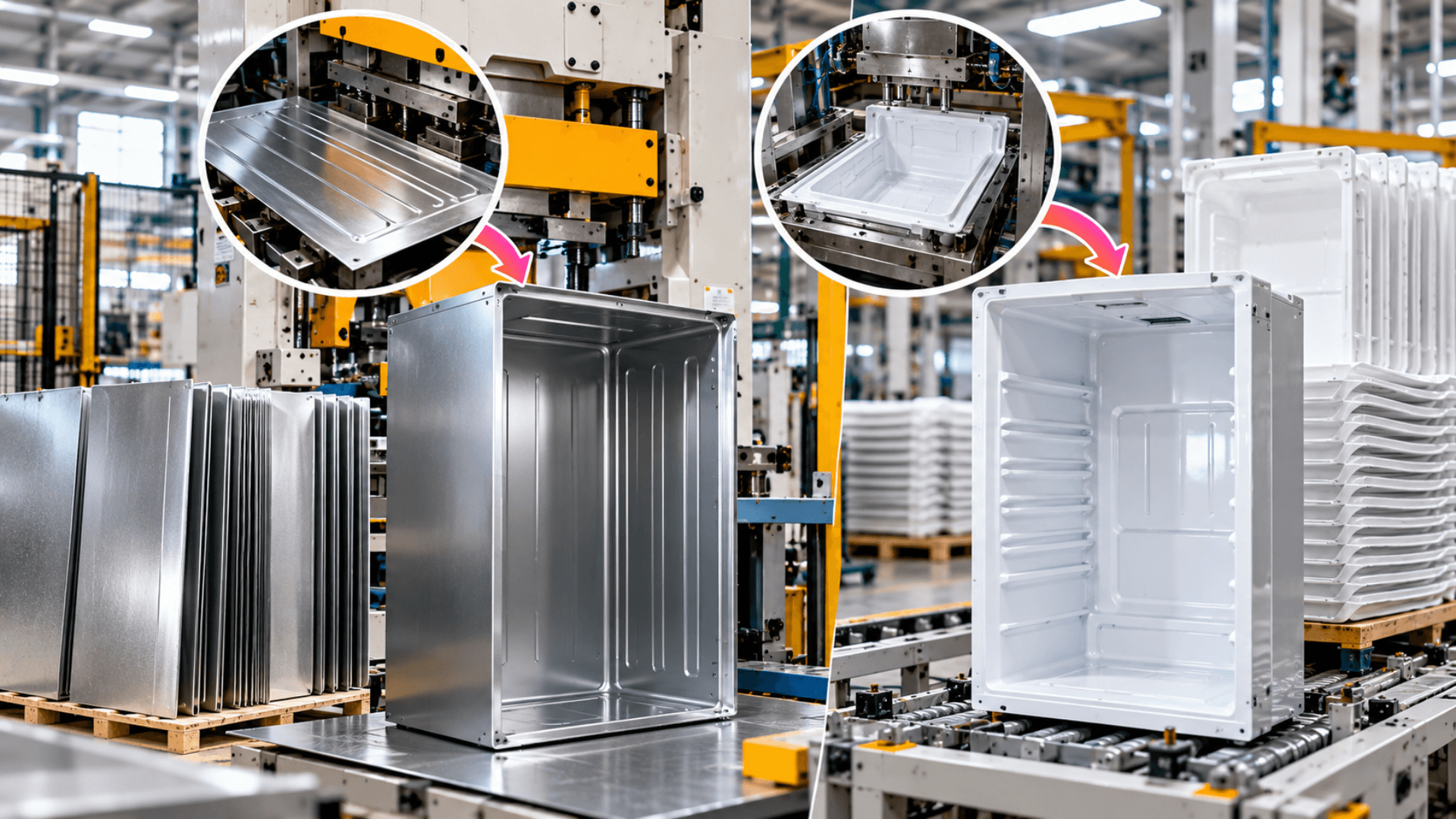
The processes and materials vary according to the refrigerator model and factory setup. Some manufacturers purchase finished cabinet parts instead of producing them internally.
Dimensional accuracy is important because the cabinet must accommodate the door, shelves, insulation, cooling components, and electrical connections.
Step 4: Fill the Cabinet With Thermal Insulation
Insulation is a critical part of refrigerator manufacturing because it helps limit heat transfer between the internal storage space and the surrounding environment.
In many refrigerator designs, the outer shell and inner liner are assembled to create a cavity. A suitable insulating foam system is then introduced into this space using specialized dispensing equipment and fixtures. As the foam expands and cures, it fills the cavity and helps provide structural rigidity.
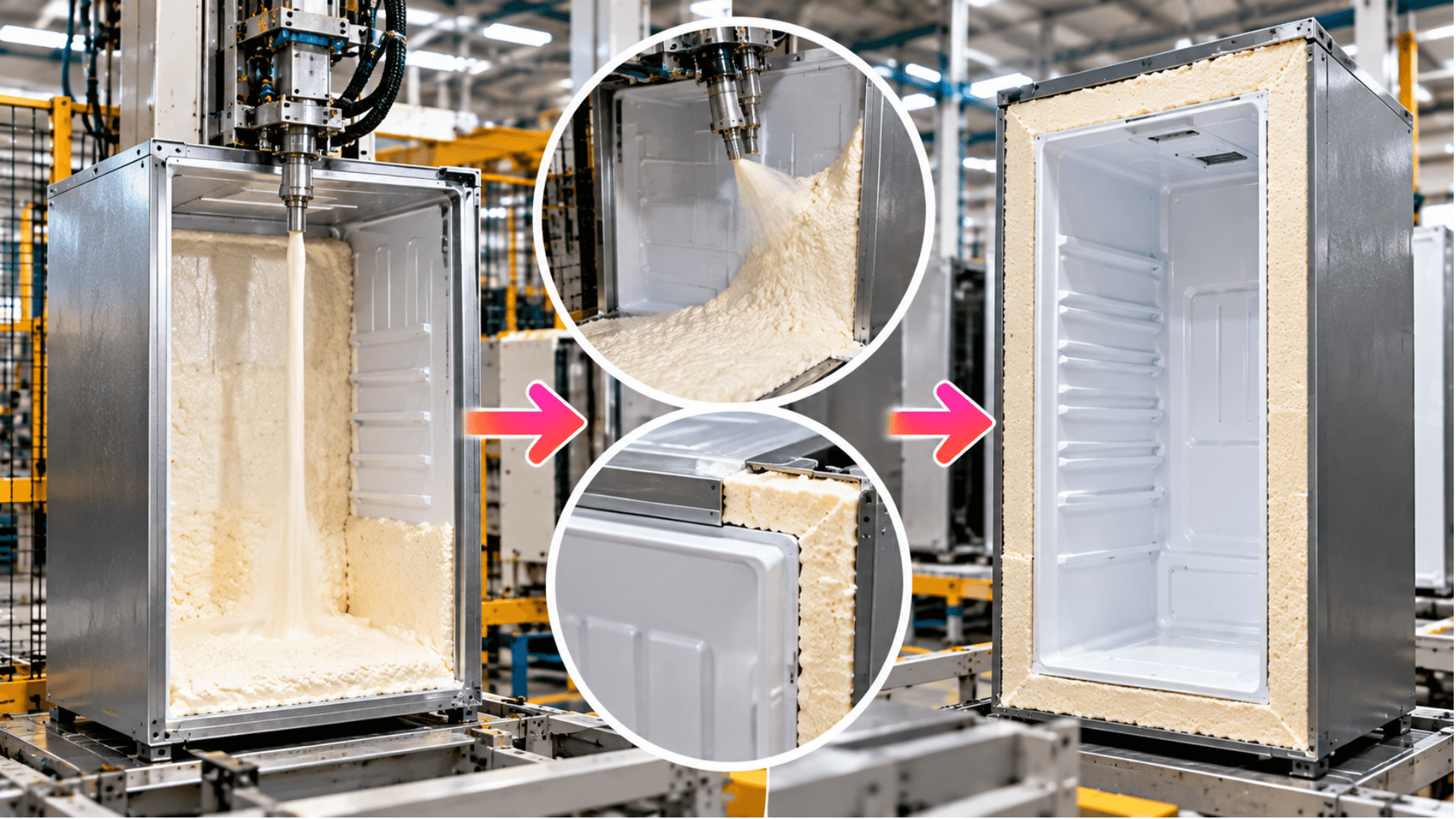
The general process involves:
Positioning the cabinet shell and inner liner correctly.
Securing the assembly in a suitable foaming fixture.
Introducing the specified insulation material.
Allowing the material to expand and cure according to the process requirements.
Inspecting the finished cabinet for dimensional issues and potential insulation defects.
The precise method depends on the manufacturer's materials and production technology. Inadequate filling, uneven insulation, or cabinet distortion can affect thermal performance and product quality.
Manufacturers should therefore maintain appropriate process controls and inspect cabinets before they move to the next production stage.
Step 5: Assemble the Refrigeration System
The refrigeration system is responsible for moving heat from inside the refrigerator to the surrounding environment. Its main components work together through a continuous refrigerant cycle.
During assembly, the compressor, condenser, evaporator, connecting tubing, and relevant control components are installed according to the product design. Tubing connections must be completed using approved joining methods, and the assembled circuit must be checked for leakage.
This stage generally includes:
Positioning the compressor and cooling components.
Installing the condenser and evaporator in their specified locations.
Connecting refrigerant tubing and associated components.
Completing the required joints and inspecting them.
Performing the specified leak and system integrity checks.
The arrangement differs by model. Some designs place condenser components along the rear or sides of the cabinet, while evaporator arrangements vary between direct-cool and frost-free refrigerators.
Refrigerant handling must follow the applicable safety and environmental procedures. Only trained personnel should perform tasks such as refrigerant charging and refrigeration-circuit servicing.
Step 6: Install Electrical Components and Controls
Once the main mechanical and refrigeration components are in place, the electrical system is integrated with the refrigerator.
This system may include wiring harnesses, control boards, temperature sensors, thermostats, interior lights, switches, and other model-specific components. Frost-free refrigerators may also require fan motors, defrost heaters, and related controls.
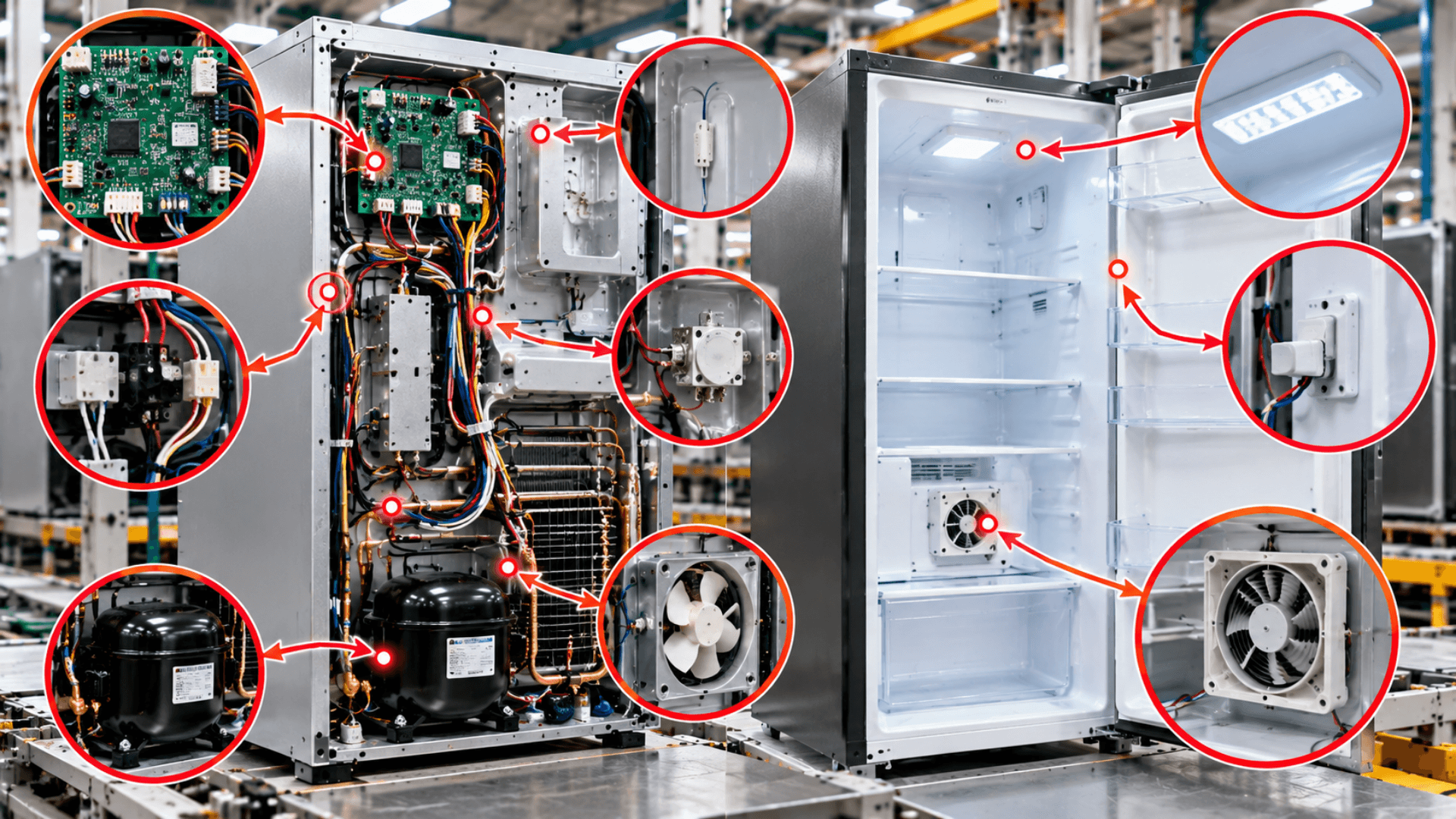
The assembly team must connect each component according to the approved wiring diagram. Incorrect connections can cause operational failures, electrical hazards, or damage to other parts.
The inspection process should verify:
Correct wiring and connector placement.
Proper mounting of electrical components.
Functionality of temperature controls and sensors.
Operation of interior lighting and other fitted features.
Compatibility between the control system and refrigeration components.
Electrical integration should follow documented work instructions and applicable product safety requirements.
Step 7: Complete Final Refrigerator Assembly
The final assembly stage brings the cabinet, cooling system, electrical components, door, and interior accessories together into a finished appliance.
Depending on the production line, the process may include installing door hinges, magnetic gaskets, handles, shelves, drawers, and storage racks. Workers also check door alignment and confirm that the gasket creates a suitable seal when the door closes.
For frost-free models, the assembly may include additional air-circulation components and defrost-system parts.
Before testing, the refrigerator should undergo a visual and mechanical inspection. Loose fasteners, damaged surfaces, misaligned doors, poorly fitted gaskets, and incorrect accessory placement should be corrected.
Standardized assembly procedures help reduce avoidable defects and make it easier to maintain product quality across larger production batches.
Step 8: Test Cooling Performance and Product Safety
Testing determines whether the finished refrigerator operates according to its design specifications and applicable requirements. A refrigerator that starts successfully may still have cooling, electrical, leakage, or temperature-control problems, so testing must cover more than basic operation.
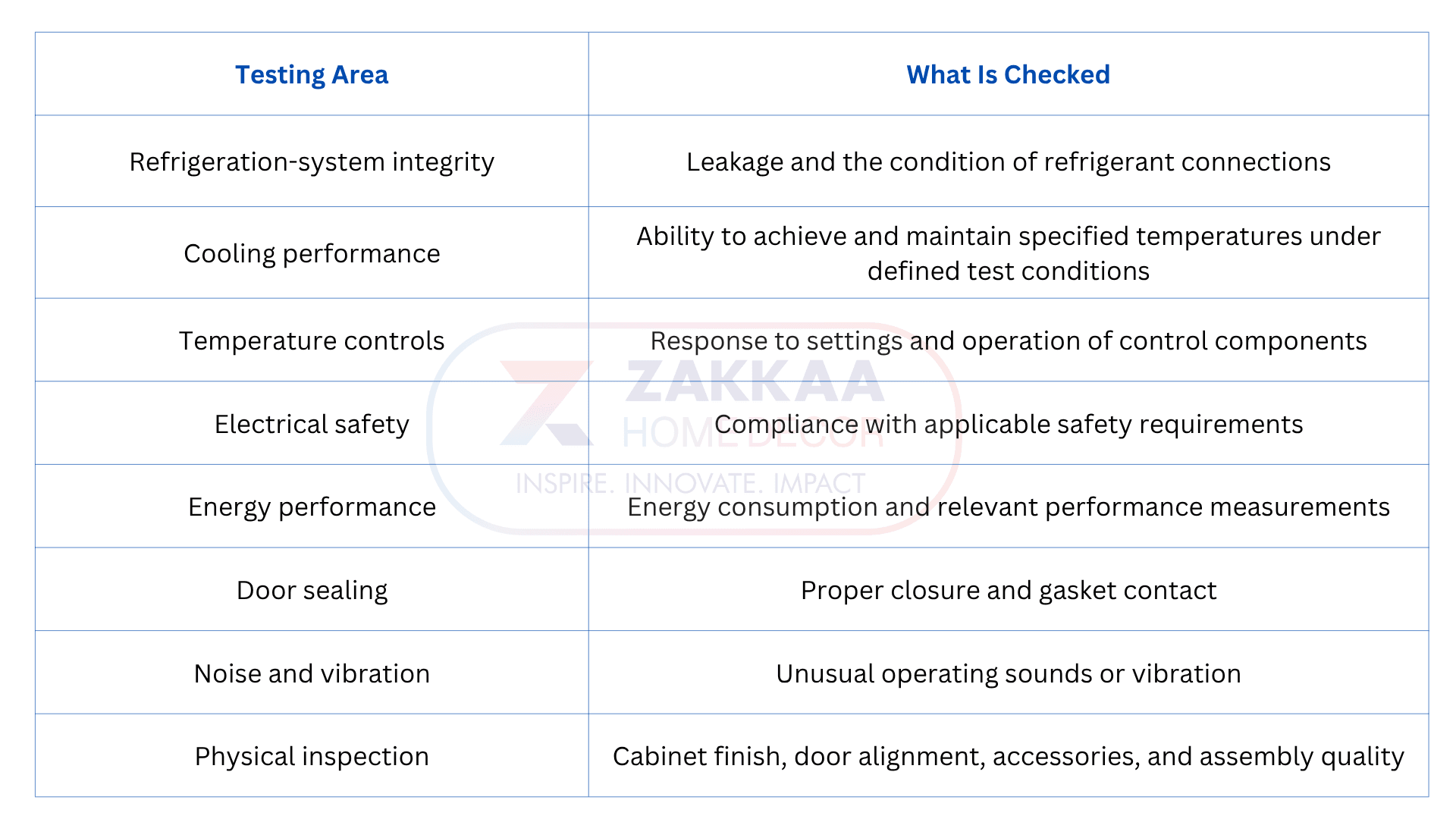
Depending on the model and quality plan, manufacturers may conduct controlled operating tests, temperature measurements, and additional reliability checks.
Testing requirements should be defined before production begins. A documented inspection process also helps identify recurring defects and trace problems to particular components, suppliers, or production stages.
Step 9: Clean, Label, and Package the Refrigerator
After the refrigerator passes the required inspections, it is prepared for dispatch. The unit is cleaned, checked for visible defects, and fitted with the accessories and documentation specified for the product.
Packaging typically includes protective materials, corner protection, a suitable carton, and handling instructions. The packaging design should protect the cabinet, door, and internal components during storage and transportation.
Manufacturers should also verify product labels, model identification, serial numbers, and applicable regulatory information. Where required, energy-efficiency labels and other compliance information must be applied according to the relevant rules.
For bulk orders, batch records and dispatch documentation support traceability. These records can help the manufacturer and buyer investigate product issues, manage warranty claims, and coordinate repeat orders.
Machinery Required In Refrigerator Manufacturing: Complet Details
Machinery requirements depend on whether the factory produces cabinets, forms plastic liners, performs insulation foaming, assembles refrigeration circuits, or focuses mainly on final assembly.
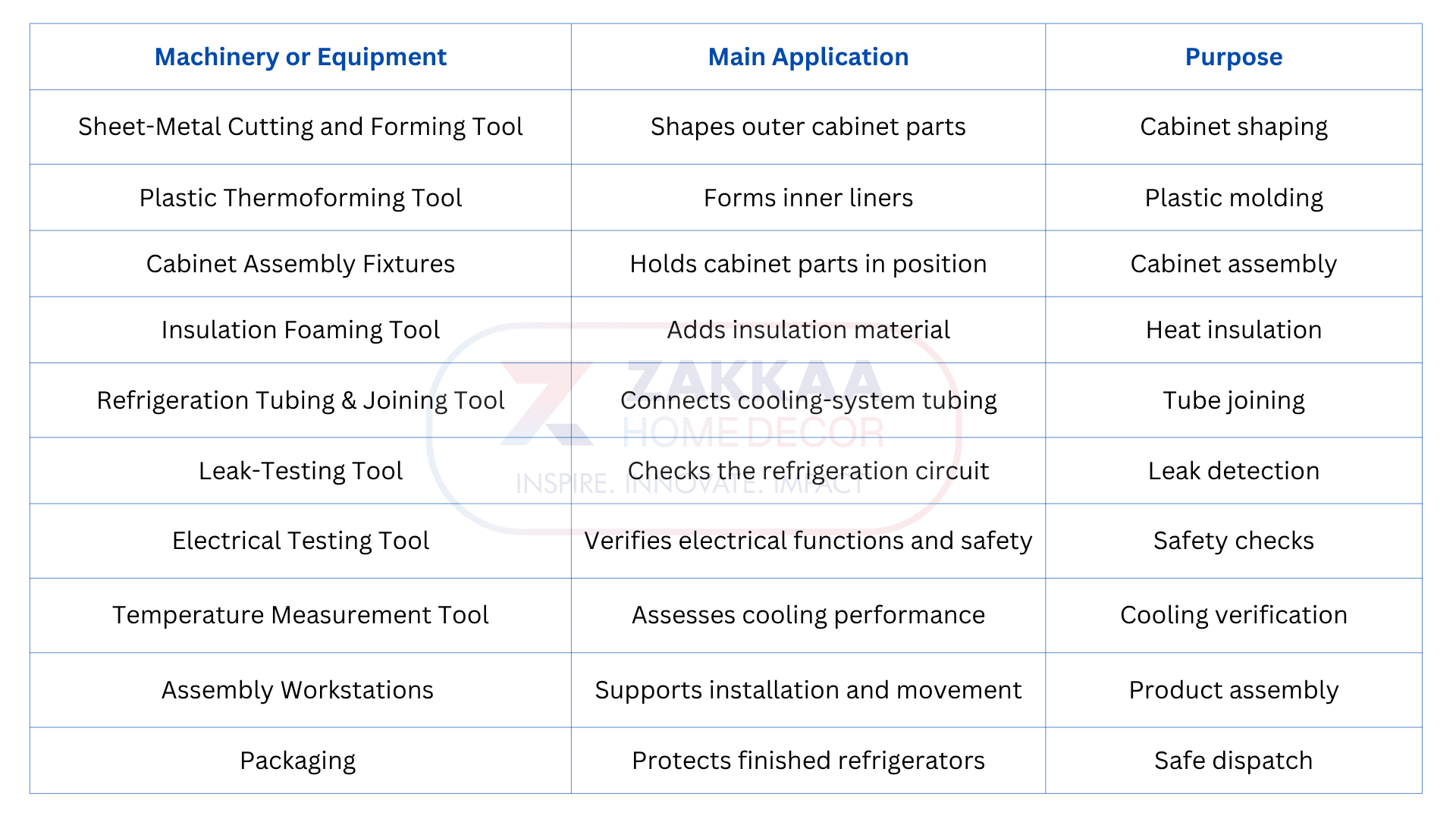
Additional facilities may include component storage, repair stations, quality-control laboratories, and designated areas for refrigerant handling.
Businesses should define their production model and target output before purchasing machinery. A factory assembling sourced components will need a different investment plan from one that manufactures cabinets and performs insulation foaming in-house.
OEM Refrigerator Manufacturing Vs. Setting Up Your Own Factory
Businesses planning to launch a refrigerator brand can establish their own factory or work with an OEM refrigerator manufacturer. The right choice depends on their investment capacity, technical expertise, desired control, and long-term business strategy.
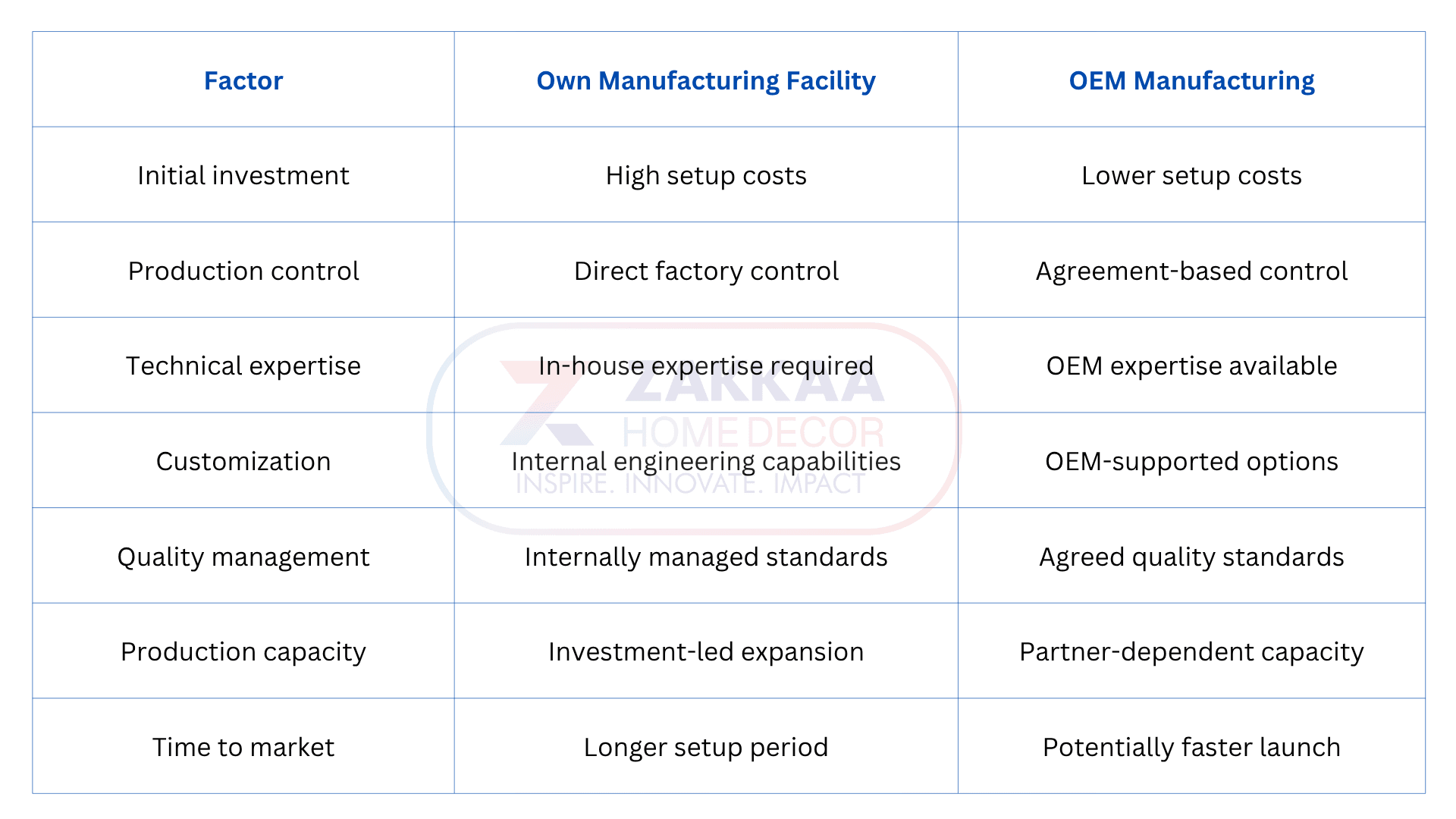
OEM manufacturing can be useful for businesses that want to market refrigerators under their own brand without developing every production process internally. However, buyers should assess the fridge supplier's capabilities, component sourcing, testing procedures, compliance responsibilities, minimum order quantities, delivery schedules, and warranty arrangements before signing an agreement.
Conclusion
Refrigerator manufacturing involves product planning, component sourcing, cabinet formation, insulation, refrigeration-system assembly, electrical integration, testing, and packaging. Each stage contributes to the finished appliance's cooling performance, durability, safety, and quality.
Businesses can establish their own manufacturing facilities or work with an OEM refrigerator manufacturer, depending on their investment, production needs, and technical capabilities. A clear understanding of the manufacturing process helps buyers evaluate suppliers, plan production requirements, and make informed sourcing decisions.
If you want to source refrigerators for your business, contact a reliable refrigerator manufacturer like Zakkaa to discuss your appliance sourcing, bulk procurement, and manufacturing requirements.
Frequently Asked Questions (FAQs)
What Raw Materials Are Used In Refrigerator Manufacturing?
Common materials include steel sheets, mouldable plastics, insulation materials, copper or aluminium tubing, electrical components, and approved refrigerants. The exact materials depend on the refrigerator design and manufacturing process.
How Long Does It Take To Manufacture A Refrigerator?
Production time depends on the model, component availability, factory capacity, assembly process, testing requirements, and order volume. Custom designs may require additional time for engineering, validation, and production preparation.
What Is The Difference Between Direct-Cool And Frost-Free Refrigerator Manufacturing?
Direct-cool refrigerators generally use a simpler cooling arrangement, while frost-free models typically include additional components such as an evaporator fan and defrost system. These differences affect component selection, assembly, and testing.
Which Refrigerant Is Used In Refrigerator Manufacturing?
The refrigerant depends on the refrigerator design, cooling requirements, safety considerations, and applicable environmental regulations. Manufacturers must select and handle refrigerants according to the approved product specifications and relevant requirements.
What Quality Documents Should Buyers Request From A Refrigerator Manufacturer?
Buyers can request applicable certification documents, product specifications, test reports, warranty terms, quality-control procedures, and component documentation. The exact documents required depend on the product, buyer's requirements, and regulatory framework.
Can A Small Business Start A Refrigerator Brand Through OEM Manufacturing?
Yes, a small business can explore OEM manufacturing if it finds a suitable partner that supports its product requirements, order volume, branding needs, commercial budget, and applicable compliance obligations.