Oct 09, 202610 min readBy Aditya Singh
You probably already know what furniture your institution needs. The bigger challenge is finding a reliable furniture manufacturer in India who can produce the right quantities, meet your specifications, and deliver everything when your project demands it.
If you are furnishing an entire school, college, office, or hostel, every decision about materials, dimensions, design, and delivery affects how the space will function once people start using it.
The tricky part? Two institutional furniture manufacturing providers may offer similar-looking desks, chairs, and storage units, yet differ considerably in production capacity, finish quality, customisation, and order management.
A quotation might look attractive on paper, but will the furniture meet your specifications across the entire batch?
Before you compare prices or sign a purchase agreement, there are a few details worth checking. Here is how to assess an institutional furniture manufacturer with your actual project requirements in mind.

10 Steps to Select School Furniture Manufacturer for Wholesale Orders
A furniture order for 20 classrooms, 200 office employees, or an entire hostel leaves little room for costly mistakes. One furniture supplier’s delay can disrupt your project, while inconsistent product quality can turn an apparently affordable deal into an expensive problem.
If you are responsible for institutional furniture procurement, the real challenge is finding a manufacturer who can meet your specifications, budget, and deadline without unpleasant surprises. These 10 steps will help you assess suppliers with greater confidence before committing to a bulk order.
1. Match the Manufacturer to Your Project
A school furniture order and a hospital furniture project may both involve hundreds of units, but their requirements are far from identical. Classroom desks need to suit students and daily classroom activities, while office workstations must fit the available space and employees’ working needs.
Your first task is to find a trusted institutional manufacturer whose product range matches your project. A useful starting point is its catalogue, which should help you identify relevant desks, chairs, tables, beds, storage units, or workstations.
A Practical Tip: Prepare a product list with quantities, dimensions, intended use, and delivery locations before requesting quotations. Clear requirements make supplier comparisons far more meaningful.
2. Look Beyond the Product Catalogue
An impressive catalogue can attract your attention, but it cannot tell you everything about a manufacturer's capabilities. Your next step is to understand whether the supplier has experience with furniture similar to what you need.
For example, a school furnishing several campuses may need uniform desk dimensions and matching finishes across every location. A corporate office project may require coordinated workstations, meeting tables, and storage units.
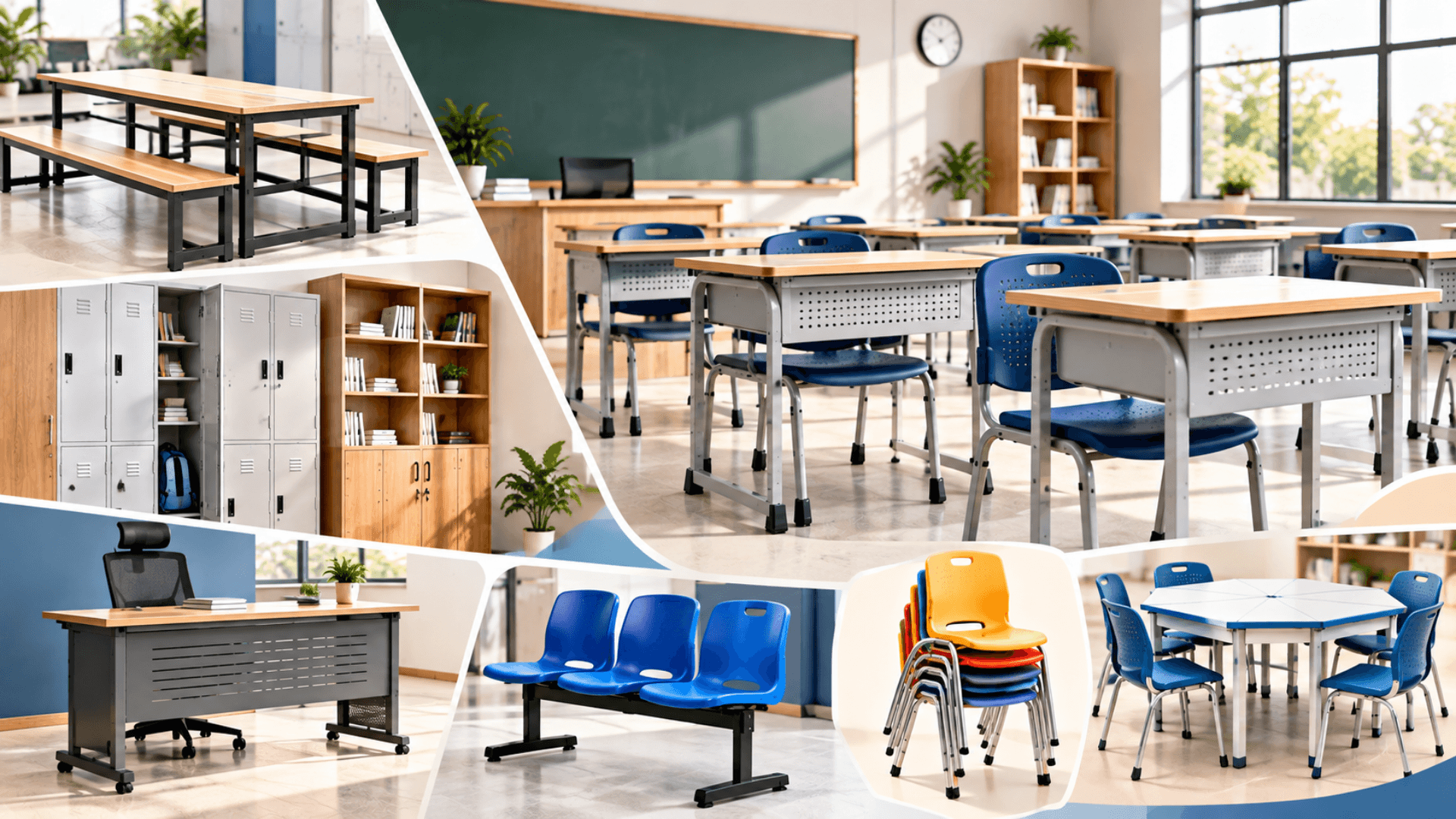
Ask for relevant project references, product documentation, or examples of comparable work where available. The aim is to establish whether the manufacturer understands your requirements, not simply whether it sells furniture.
3. Find Out Whether Your Deadline Is Realistic
A supplier who promises to deliver 1,000 chairs in two weeks may sound appealing, but the commitment means little without a realistic production schedule. Existing orders, material availability, customisation, and transportation can all affect the final delivery date.
A useful discussion with the manufacturer should cover:
Production Time: The expected time needed to complete your order.
Batch Planning: Whether all units will arrive together or in stages.
Delivery Commitments: The expected dispatch and arrival dates.
For projects tied to school reopening, office relocation, or a facility launch, a realistic written schedule is more valuable than an ambitious verbal promise.
4. Examine What You Are Actually Buying
Two desks can look almost identical in a photograph while having different frame construction, panel materials, fittings, and finishes. Those differences matter when furniture is purchased in large quantities and expected to withstand regular use.
A physical sample gives you a better understanding of the product than a catalogue image alone. Pay attention to stability, joints, edges, hardware, surface finishing, and the suitability of materials for the intended environment.
For metal furniture, the frame and protective coating deserve attention. For desks and storage units, panel quality, hinges, handles, and edge finishing are worth checking.
The key decision: Approve specific materials and construction details rather than accepting vague descriptions such as “premium quality.”
5. Check How Much Customisation You Actually Need
A standard furniture model may work perfectly for one institution and create problems for another. A school with limited classroom space, for instance, may need desks with specific dimensions, while an office may require workstations designed around its floor plan.
The important question is whether the manufacturer can accommodate your requirements without making the order unnecessarily expensive or delaying production.
Before approving a customised design, clarify the following:
Design changes: Can the manufacturer adjust dimensions, storage arrangements, or configurations?
Minimum quantities: Does customisation require a minimum order for each design?
Cost implications: Will changes affect unit pricing or delivery dates?
A detailed drawing or approved sample can prevent misunderstandings once production begins. The earlier you finalise the design, the easier it becomes to control the order.
6. Understand How Quality Will Be Maintained Across the Order
A sample may look excellent, but your actual requirement could involve 300 desks, 150 beds, or furniture for several buildings. The challenge is ensuring that the delivered products match the specifications you approved.
Ask the manufacturer how it checks products during production and before dispatch. Depending on the furniture, these checks may cover dimensions, frame stability, joints, fittings, surface finishes, and packaging.
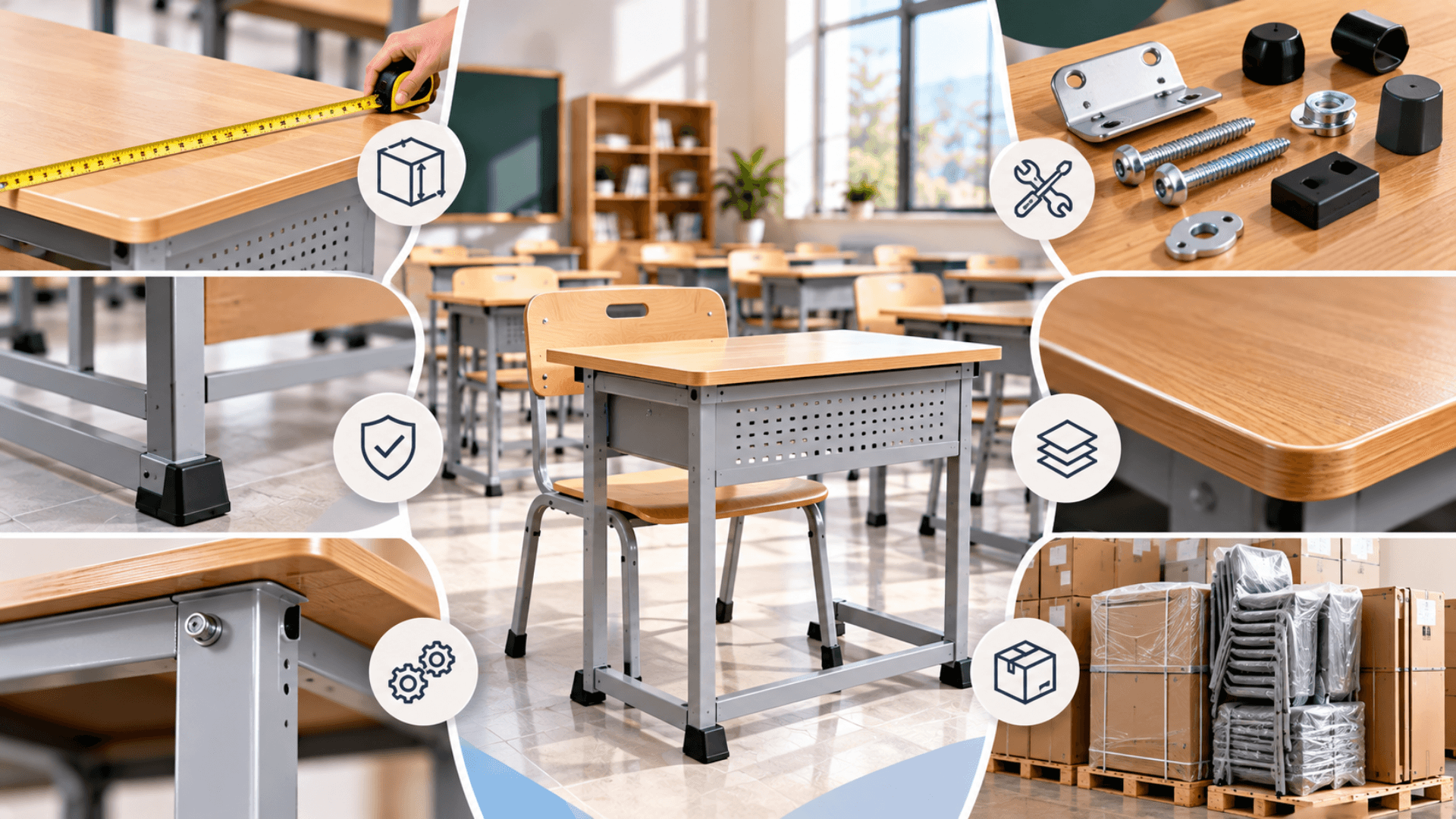
Your acceptance criteria should also be clear. For example, if a batch contains desks with incorrect dimensions or damaged edges, you should already know how those items will be inspected and addressed.
For large or customised orders, a pre-dispatch inspection may be worthwhile. Written inspection requirements and an agreed process for handling defective products provide a clearer basis for resolving problems.
7. Compare Quotations Without Sacrificing the Specifications
The lowest quotation can be tempting when you are purchasing furniture in large quantities. However, a small difference in the unit price may reflect differences in materials, construction, included services, or product dimensions.
Consider a requirement for 500 classroom desks. One supplier quotes a lower price but excludes transportation, while another includes delivery and specifies the exact panel and frame requirements. The initial prices alone would not give you a fair comparison.
Request itemised quotations based on the same product specifications and quantities. Your comparison should include:
Unit prices and applicable taxes.
Material and customisation costs.
Packaging, transportation, and installation charges, where applicable.
Payment milestones and any additional fees.
The best-value quotation is the one that meets your requirements at a justifiable total cost. A cheaper product that fails to meet your specifications is not a genuine saving.
8. Plan Delivery Around the Reality of Your Site
A furniture order can be manufactured on time and still cause problems if the delivery schedule does not match your site's readiness. Early arrivals may create storage difficulties, while late deliveries can delay installation or the opening of a facility.
Share your delivery location, access restrictions, unloading arrangements, and required dates with the supplier. Projects involving multiple buildings or campuses may also need separate delivery schedules.
One detail worth clarifying is responsibility after dispatch. Confirm who arranges transportation, who handles unloading, and whether installation is included in the quotation.
For phased projects, request a schedule that identifies the products and quantities assigned to each delivery. A documented plan gives your team a clearer picture of when each area can be prepared for use.
9. Know What Happens After Delivery
The supplier's responsibility should not be a mystery once the furniture reaches your premises. Missing fittings, transit damage, and manufacturing defects can still create additional work after the order has been received.
Before confirming the purchase, review the warranty period, coverage, exclusions, and claim process. Ask about replacement parts, repair arrangements, and the procedure for reporting damaged or defective items.
The distinction between manufacturing defects and transit damage is particularly important because the reporting requirements and responsibilities may differ.
For institutions operating across multiple locations, the availability of compatible replacement parts can also matter. A clear support arrangement makes it easier to address issues without restarting the entire procurement process.
10. Verify the Supplier Before Releasing the Advance
A polished catalogue and an attractive quotation are not enough to establish whether a supplier is suitable for a major purchase. Your final assessment should cover the business, the proposed products, and the written commitments.
Check applicable business registrations, relevant certifications, product documentation, and references from previous buyers where available. A factory visit or independent inspection may provide additional reassurance for substantial orders.
The purchasing agreement deserves equal attention. It should identify the approved products, quantities, specifications, prices, payment terms, delivery dates, and procedures for inspecting and resolving defective items.
Clear communication during negotiations is another useful indicator. Detailed answers and realistic commitments give you more to work with than promises that remain vague when you ask for specifics.
Institutional Furniture Manufacturer vs. Furniture Trader: Which To Consider
The right supplier depends on what your project needs, rather than the title a business uses. Manufacturers generally produce furniture themselves, while traders source products from manufacturers or other suppliers. However, their actual services can overlap.
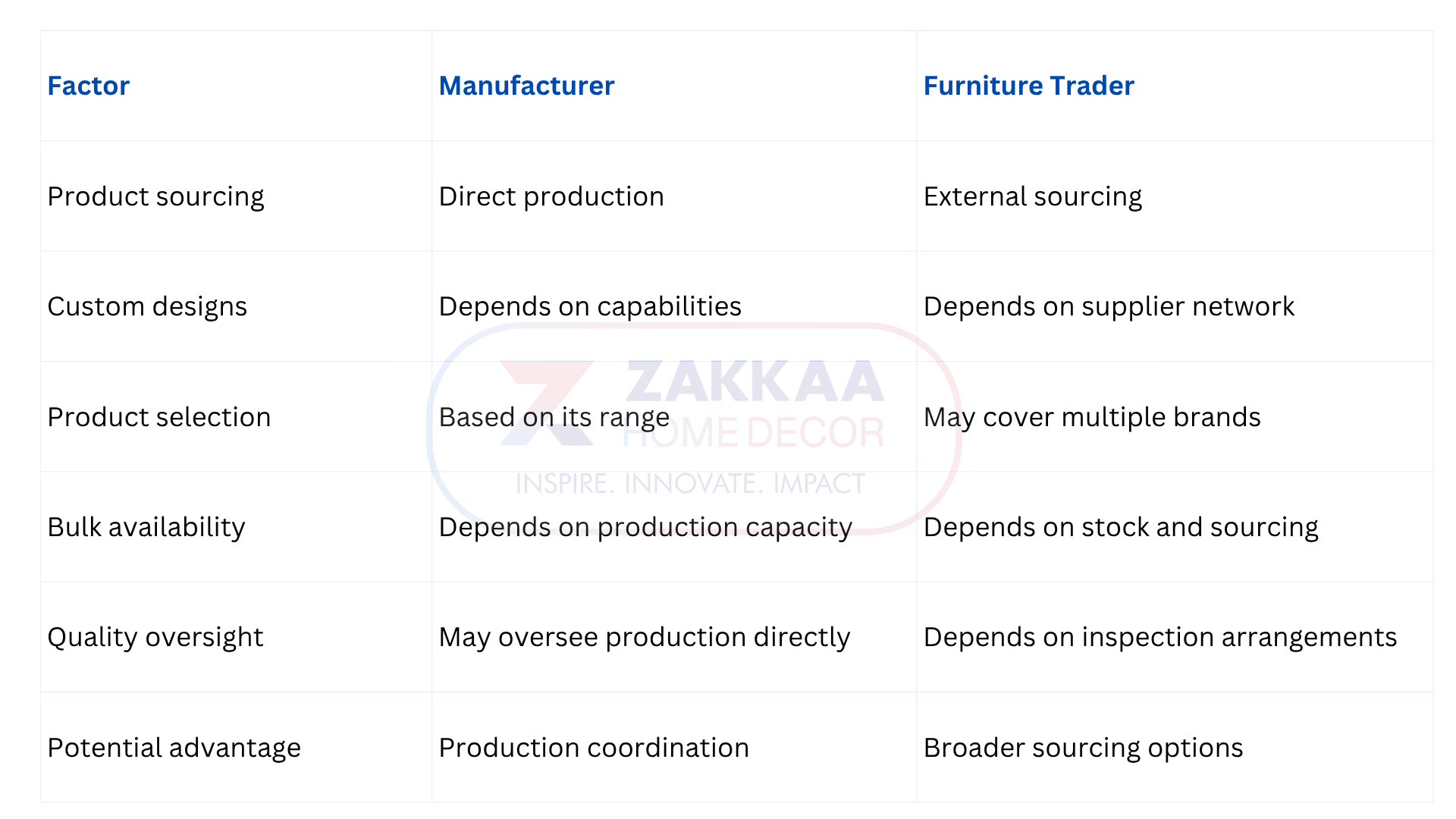
A manufacturer may suit a project that requires customised furniture, large production runs, or repeat orders. A trader may be more convenient when you need ready-stock products from different brands.
Neither option is automatically cheaper or more reliable. Your decision should depend on product specifications, total costs, delivery commitments, and who will take responsibility if the supplied furniture does not meet the agreed requirements.
Final Checklist Before Confirming Your Rug Exporter in India
Before you approve the purchase order, make sure the important decisions are documented.
Product dimensions, materials, quantities, and finishes are finalised.
The sample or representative product has been approved.
Production capacity and delivery dates have been confirmed.
The quotation includes all applicable charges.
Payment terms and delivery responsibilities are clear.
Quality inspection and acceptance criteria are documented.
Warranty coverage and defect-resolution procedures are agreed upon.
Supplier credentials and relevant references have been checked.
The purchase order reflects the final agreement.
One final review can help you catch missing details before money changes hands. If a major condition remains unclear, resolve it before releasing the advance rather than relying on an informal assurance.
Final Thoughts
The right institutional furniture manufacturer is not necessarily the one offering the lowest price or the largest catalogue. Your best option is a supplier whose products, production capabilities, quality controls, and delivery arrangements match your project's actual requirements.
A careful evaluation before placing the order can help you avoid specification disputes, delivery problems, and unexpected costs. Explore Zakkaa's product range and contact the team to discuss your institutional furniture requirements.
Frequently Asked Questions (FAQs)
What Should You Look For In An Institutional Furniture Manufacturer?
Relevant experience, suitable production capacity, specified materials, quality checks, transparent pricing, realistic delivery schedules, and clear warranty terms are important considerations.
How Can You Check A Manufacturer's Bulk Production Capacity?
Discuss your quantities and deadlines, request a production schedule, and verify relevant capabilities. A factory visit or suitable inspection may help with larger orders.
Should You Inspect A Sample Before Placing A Bulk Order?
Yes. A sample helps you assess dimensions, materials, fittings, stability, and finish before approving the specifications for the full order.
Is Buying Directly From A Manufacturer Always Cheaper?
No. Total costs depend on specifications, quantities, customisation, transportation, and other charges. Compare equivalent quotations before making a decision.
What Should A Bulk Furniture Purchase Order Include?
It should specify products, quantities, materials, prices, applicable taxes, payment terms, delivery schedules, inspection criteria, warranty conditions, and defect-resolution procedures.
How Can You Reduce Delays In Institutional Furniture Procurement?
Finalise specifications early, approve samples promptly, agree on realistic production dates, and document delivery responsibilities. Regular communication can help identify problems before dispatch.