Sep 08, 202613 min readBy Aditya Singh
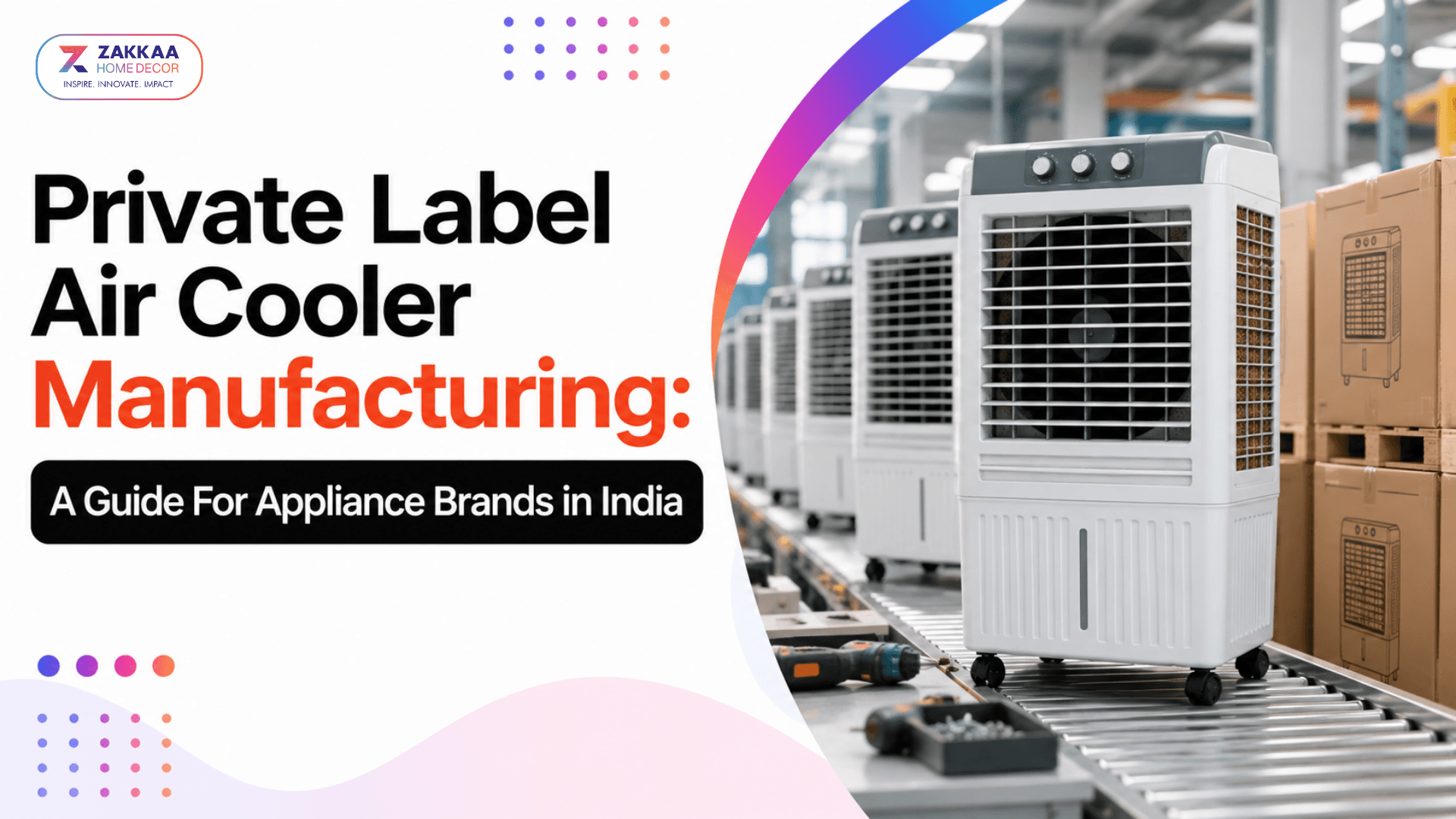
A private-label air cooler gives appliance brands a way to sell a product under their own name without building an entire manufacturing operation from scratch. The opportunity is attractive, but the final product still depends on choices around design, specifications, components, customization, quality, and production capability.
For a brand, the air cooler manufacturer becomes part of the product behind the label. Cooling performance, body construction, energy consumption, controls, appearance, packaging, and batch quality can all influence how customers judge the finished appliance, and ultimately the brand itself.
A successful private-label program therefore requires more than finding a factory willing to add your logo. This guide explains how private-label air cooler manufacturing works, what buyers can customize, how to evaluate a manufacturing partner, and what to check before placing a bulk order.
What Is Private Label Air Cooler Manufacturing?
Private label air cooler manufacturing means a manufacturer produces air coolers that another business sells under its own brand. The manufacturing company handles production, while the brand owner generally focuses on product positioning, branding, sales, distribution, and customer relationships.
For example, an appliance company may want to launch three cooler models under its own brand without establishing a dedicated cooler factory in India. It can work with an OEM manufacturer, select suitable designs, specify the required features, add its branding, approve samples, and place a production order.
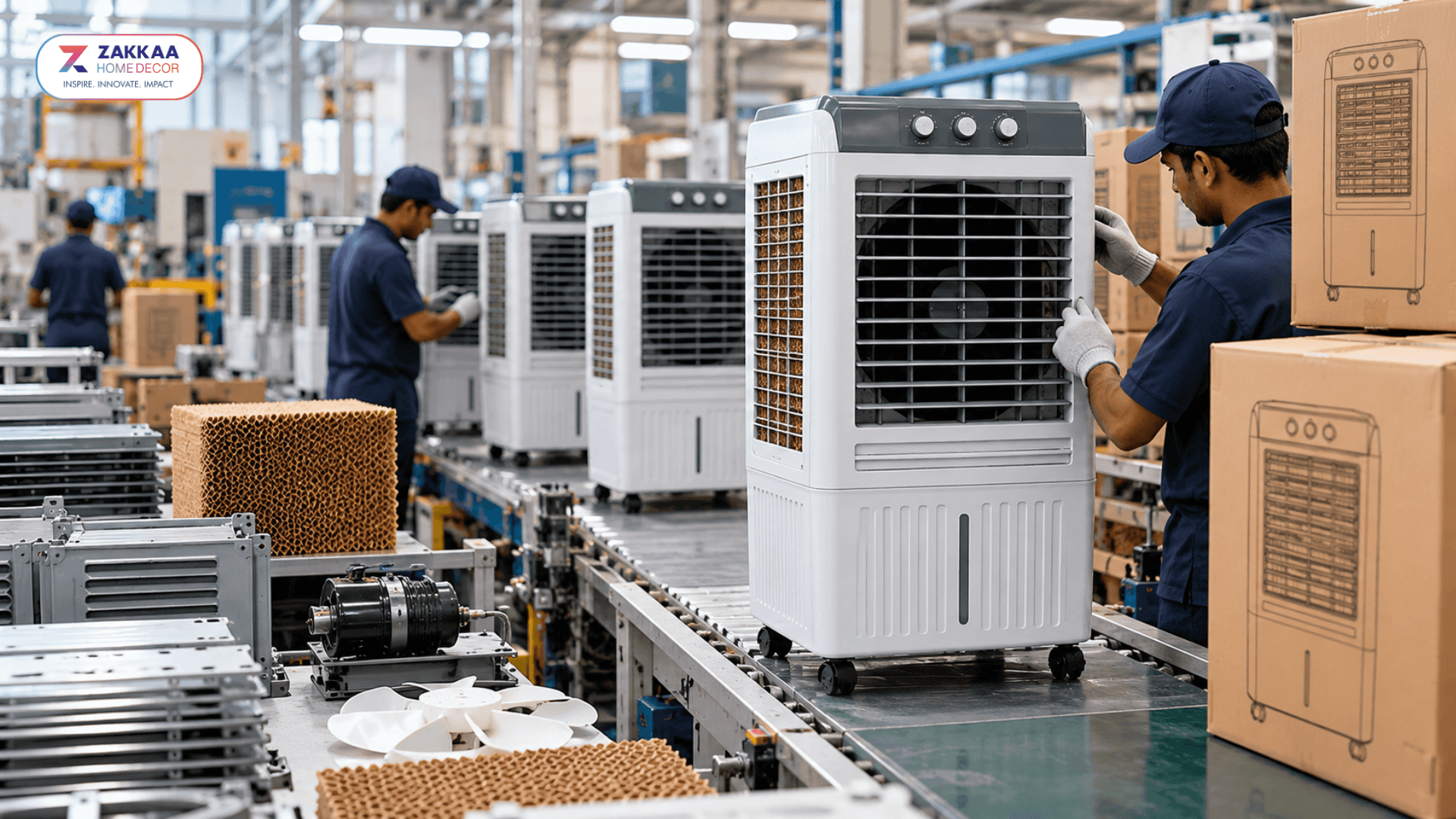
The exact arrangement can vary. Some brands choose an existing cooler design with their branding, while others want changes to dimensions, colours, features, components, packaging, or overall appearance.
Private Label Vs OEM Vs White Label Air Coolers: Key Differences
White label air coolers use an existing product with your branding; private label coolers offer selected branding and product customisation, while OEM coolers are manufactured around your specific requirements. The main difference is the level of control you have over the product, design, specifications, and manufacturing process.
White label is generally the simplest option for brands that want to enter the market quickly. The manufacturer already has the product, and your brand identity can be added through labels, packaging, or other branding elements.
Since the product itself remains largely unchanged, this approach can work when speed and a straightforward product launch are more important than differentiation.
Private label sits between a ready-made product and a fully customised OEM solution. A brand can select an existing cooler and request changes such as colour, branding, packaging, selected features, or other specifications supported by the manufacturer.
This gives appliance businesses more control over their product offering without requiring complete product development from the beginning.
OEM manufacturing provides the highest level of control because the cooler can be produced according to an approved product specification. Brands can work with an OEM cooler manufacturer on dimensions, materials, airflow, components, appearance, features, and other requirements.
This approach is particularly useful for established appliance businesses or brands looking to develop a distinctive product range and build long-term cooler brand manufacturing capabilities.
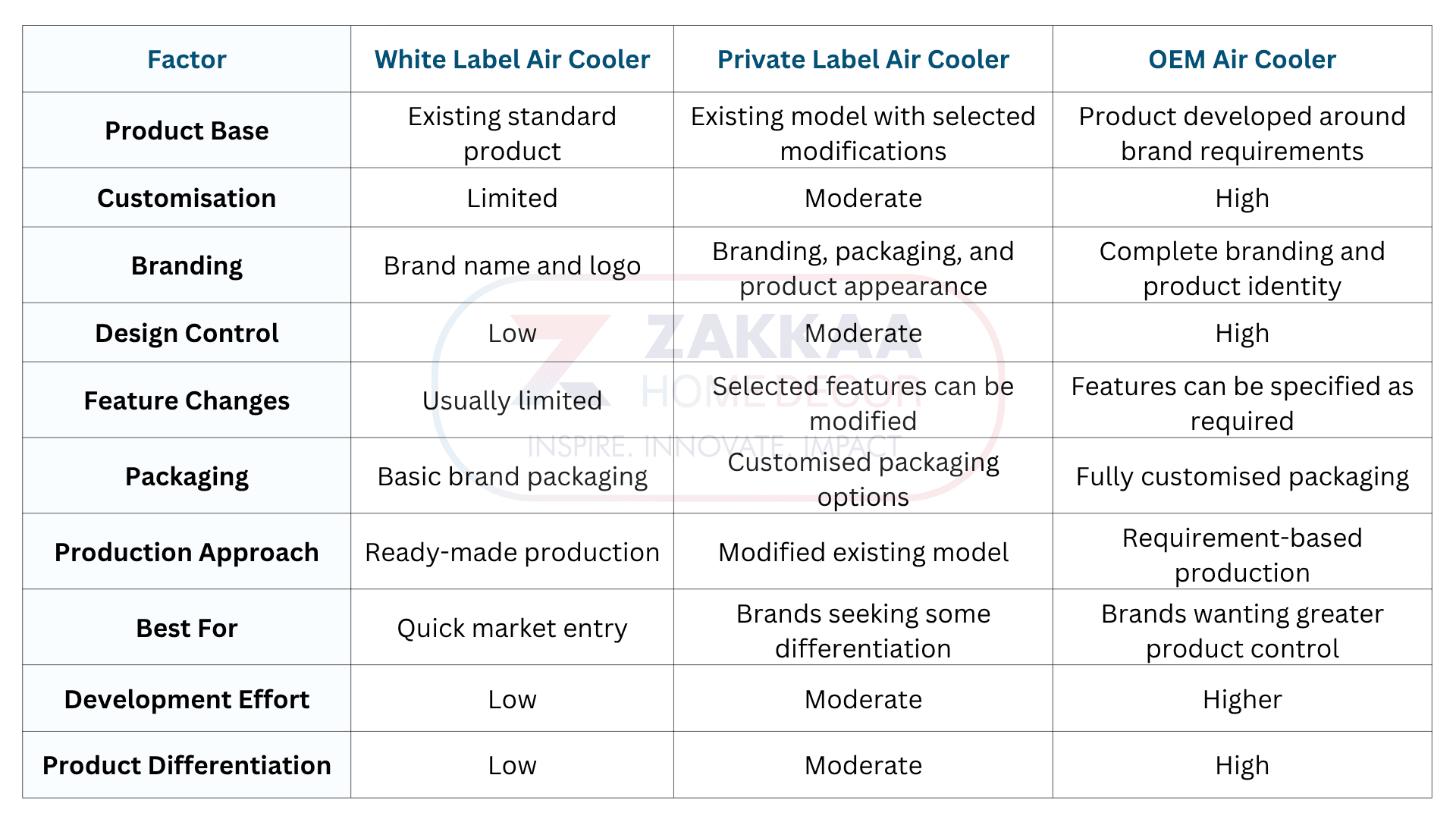
The most suitable option depends on how much control you want over the product. A new brand testing the market may prefer a ready model, while an established appliance company may want a distinctive product with its own specifications.
How Does Air Cooler Private Labelling Work?
The process is relatively straightforward when product requirements are clearly defined from the beginning.
1. Define Your Air Cooler Requirements
Start by deciding what type of cooler you want to sell. Your target customer and intended market will influence the product specification.
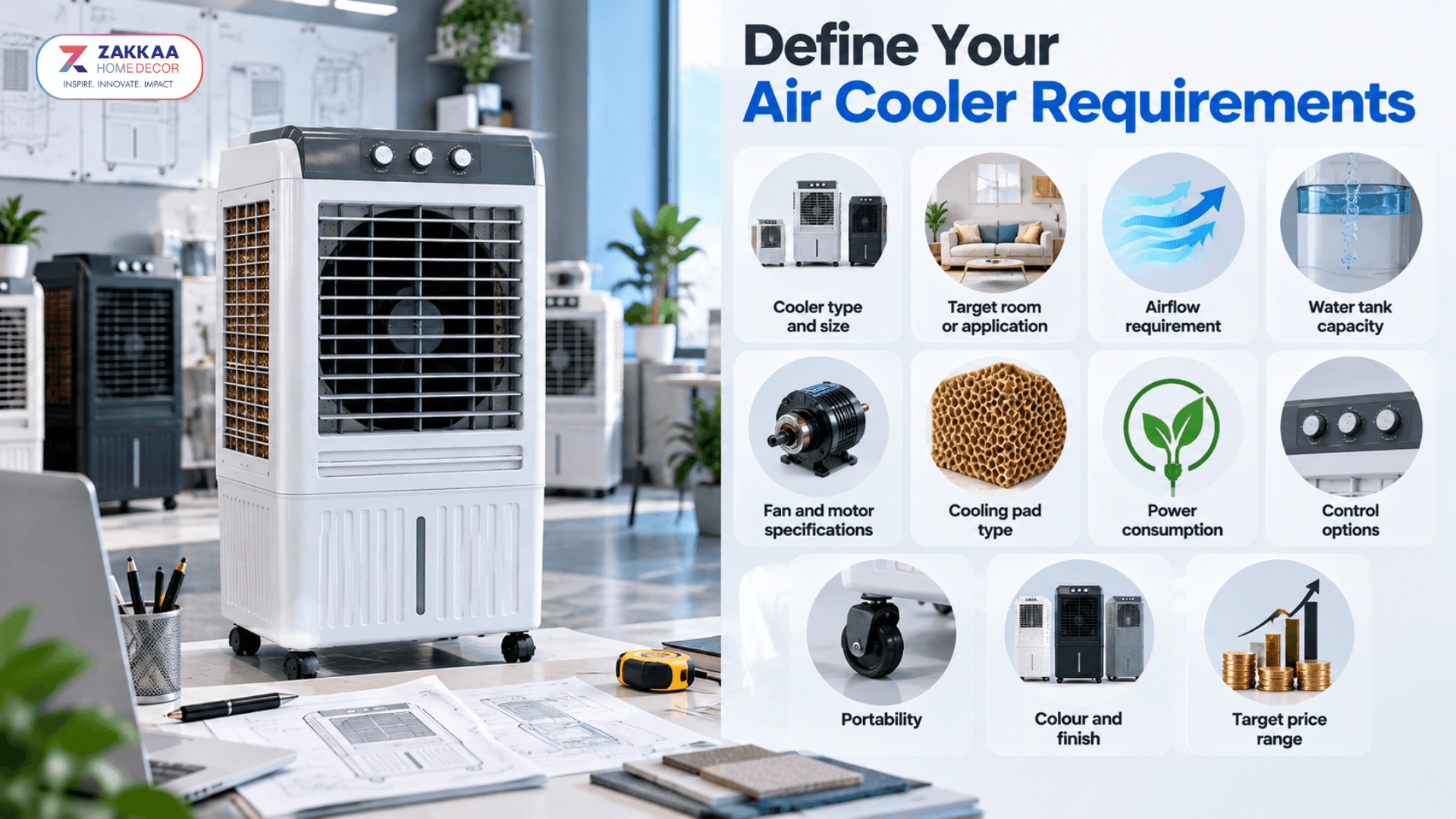
Consider factors such as cooler type and size, target room or application, airflow requirement, water tank capacity, fan and motor specifications, cooling pad type, power consumption, control options, portability, colour and finish, and target price range
A brand targeting residential customers will have different priorities from one selling coolers to commercial establishments.
2. Select An OEM Cooler Manufacturer
The next step is finding and choosing the right OEM manufacturing partner in India for home appliances with suitable production capabilities.
Do not evaluate a manufacturer only by its catalogue. Ask about its manufacturing setup, sheet metal fabrication capabilities, assembly process, quality checks, production capacity, customisation options, and experience with bulk orders.
A manufacturer that can produce the required quantity but cannot support your desired specifications may not be the right long-term partner.
3. Choose An Existing Model Or Customise It
At this stage, you can decide whether to use an existing design or develop a customised product.
An existing model can reduce development time and make the initial launch easier. Customisation makes more sense when you want your coolers to have a different appearance, dimensions, feature combination, or market positioning.
This decision should be made according to your budget, launch timeline, expected volume, and brand strategy.
4. Approve Product Specifications
Once the product direction is clear, the manufacturer prepares the specifications for production.
This may cover body dimensions, materials, sheet thickness, fan and motor, cooling pads, water system, controls, electrical components, wheels, finishing, and other product details.
Getting these details documented is important because it gives both sides a clear reference before production begins.
5. Review And Approve A Sample
A physical sample gives the brand an opportunity to assess the product before committing to bulk production.
Check the sample for:
Dimensions
Body construction
Airflow
Air throw
Cooling pad arrangement
Water distribution
Noise
Controls
Wheels and mobility
Surface finish
Branding
Overall appearance
Any required changes should be finalised at this stage rather than after mass production has started.
6. Finalise Branding And Packaging
Private label manufacturing allows the product to carry your brand identity. Depending on the manufacturing arrangement, branding may include logos, labels, control-panel graphics, product stickers, cartons, manuals, and other packaging elements.
The branding should be finalised along with the product specifications so there is no confusion during production.
7. Begin Bulk Air Cooler Production
After sample approval and commercial finalisation, the manufacturer moves into bulk production.
The production process can include sheet metal cutting, CNC fabrication, bending, welding, surface finishing, body assembly, cooling-pad installation, fan and motor assembly, electrical assembly, testing, and packaging.
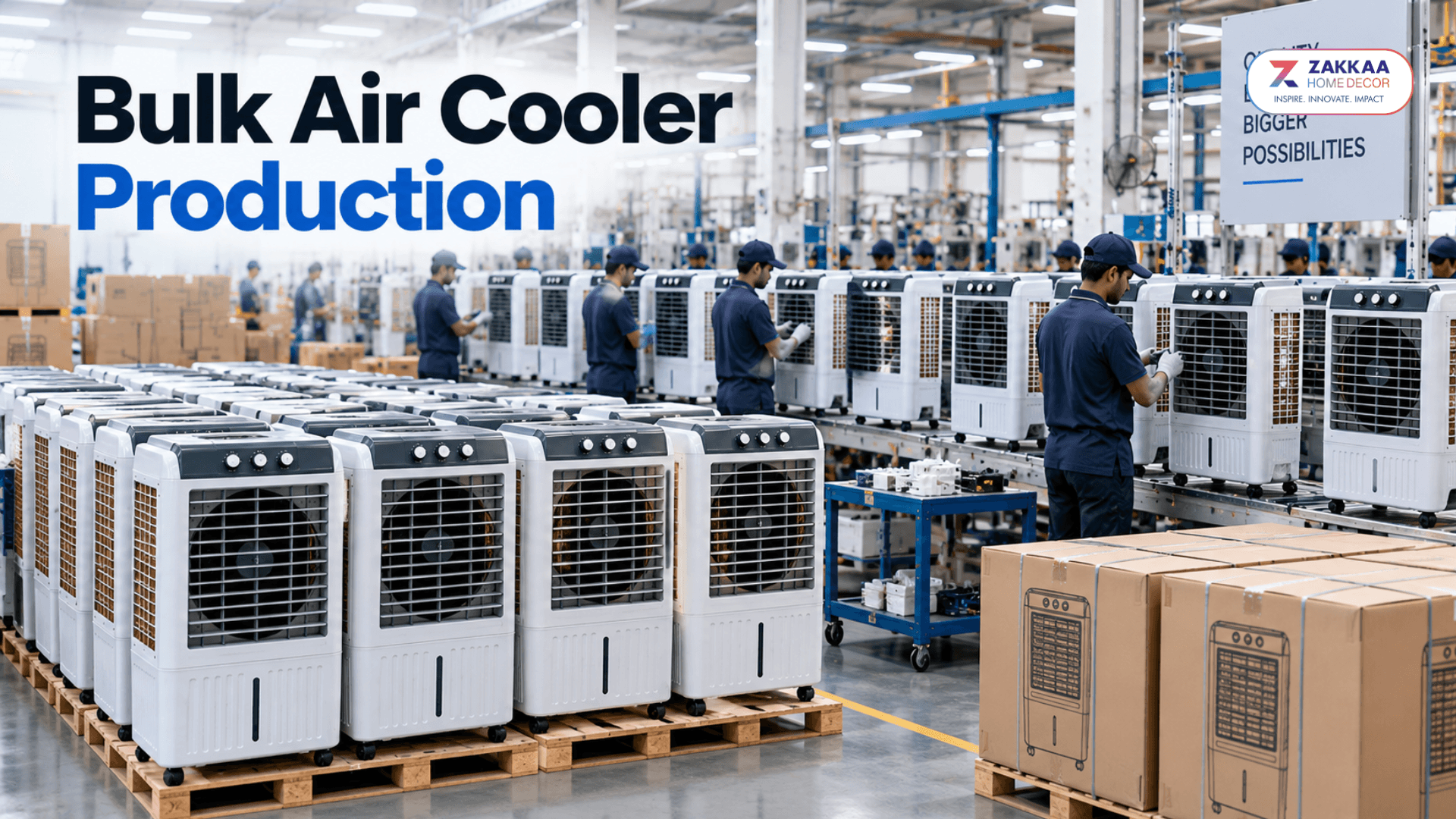
The exact process varies according to the cooler design.
8. Inspect Finished Products
Quality inspection should not be treated as the final formality. During private label manufacturing, brands should have clear quality expectations before production starts.
Depending on the product, inspection may cover dimensions, body finish, electrical operation, water leakage, airflow, fan operation, cooling performance, controls, wheels, and general assembly.
9. Packaging And Dispatch
Once the products pass the required checks, they are packed and prepared for dispatch.
Packaging needs to protect the cooler during transportation while also presenting the product according to your brand requirements. For large orders, the dispatch plan should also be aligned with your warehouse and distribution requirements.
What Can You Customise In A Private Label Cooler?
The level of customisation depends on the manufacturer, product design, order quantity, and development requirements.
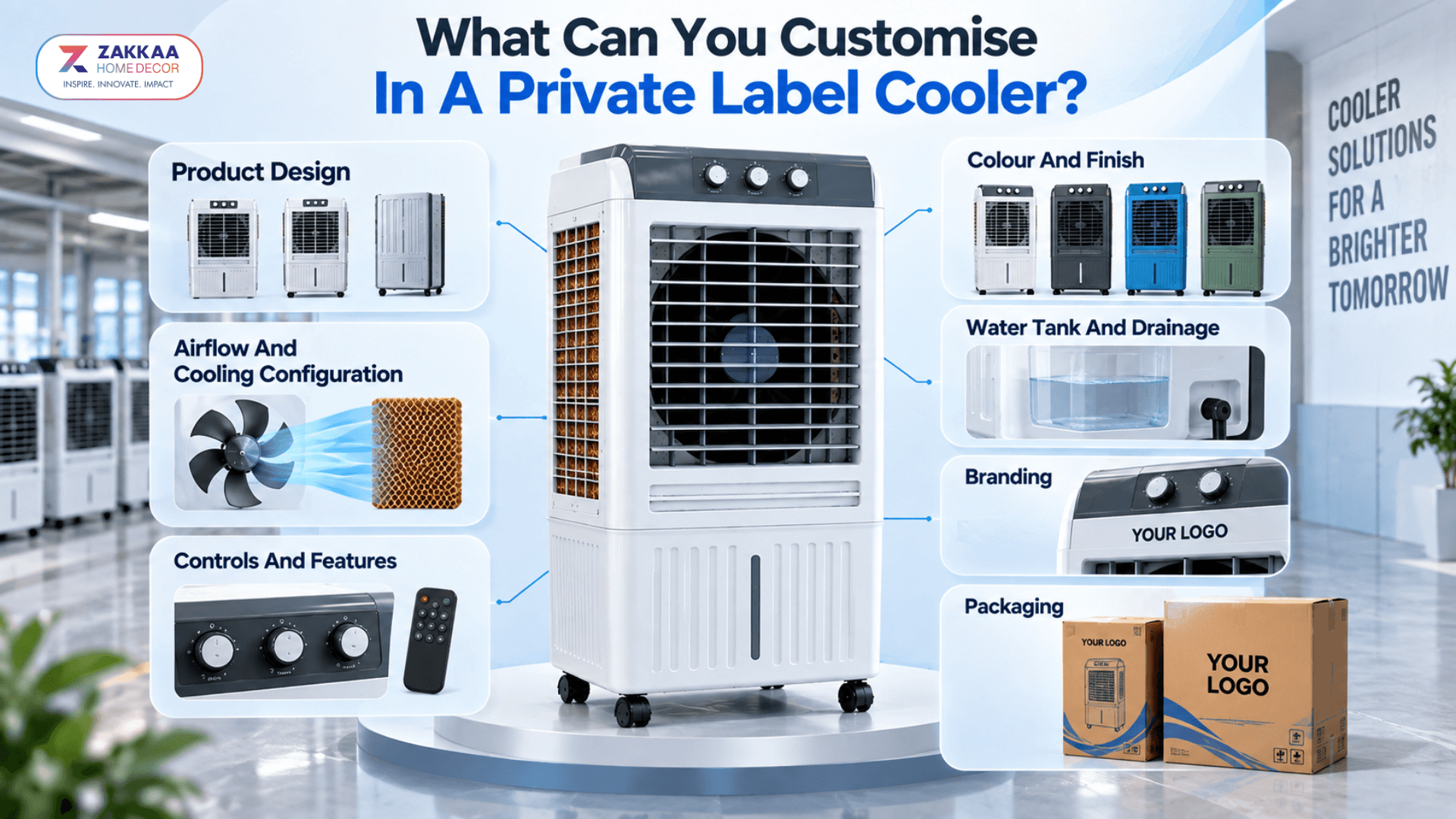
Product Design
You can work with the manufacturer on the overall appearance, dimensions, cabinet configuration, and placement of different components.
Colour And Finish
Brand-specific colours and suitable surface finishes can help create a recognisable product range. The chosen finish should also suit the intended usage environment.
Airflow And Cooling Configuration
Different markets may require different airflow capacities, air throw, fan arrangements, and cooling-pad configurations. These should be selected according to the intended application rather than added simply to increase the specification.
Water Tank And Drainage
Tank capacity, water filling arrangements, water-level indicators, drainage, and pump configuration can be discussed based on the product design.
Controls And Features
Brands can specify the required control arrangement and selected features depending on their target price and customer expectations.
Branding
Logo placement, labels, control-panel graphics, packaging, user manuals, and other brand elements can be incorporated into the product and packaging plan.
Packaging
Custom cartons, product labels, manuals, warranty information, and packaging inserts can help create a complete branded product experience.
What Should Brands Ask An Air Cooler Supplier Before Ordering?
A good air cooler supplier should be able to answer practical manufacturing questions clearly.
Ask about:
Manufacturing Capacity: Can the factory handle your expected order quantity and future requirements?
MOQ: What is the minimum order quantity for the selected model or customised version?
Sample Process: Can you receive and approve a sample before bulk production?
Production Timeline: How long will tooling, sample development, and bulk production take?
Component Sourcing: Which components are manufactured internally and which are sourced externally?
Quality Control: What checks are performed during production and before dispatch?
Customisation: Which specifications can actually be changed?
Packaging: Can the product and packaging be supplied according to your brand requirements?
Repeat Orders: Can the same approved specifications be reproduced for future batches?
These questions help distinguish a genuine manufacturing partner from a supplier that is simply reselling available products.
How Much Does Private Label Cooler Manufacturing Cost?
There is no single price for a private label cooler because the manufacturing cost depends on the product specification and order requirements.
Important cost factors include:
Cooler size and design
Material and sheet thickness
Fan and motor
Cooling pads
Water tank capacity
Electrical components
Wheels and hardware
Surface finishing
Customisation
Branding and packaging
Tooling or development requirements
Order quantity
Testing and quality requirements
Transportation
A simple private label model using an existing design will generally have a different cost structure from a fully customised cooler developed specifically for your brand.
For this reason, brands should compare complete quotations rather than comparing only the per-unit manufacturing price.
What Makes A Good Private Label Cooler Brand?
A private label strategy is not successful simply because a cooler carries your logo. Customers judge the actual product after purchase.
The cooler should deliver the performance promised on the packaging and product listing. Its body should feel appropriate for its intended use, controls should work properly, water systems should function correctly, and the product should be easy to operate and maintain.
Your brand also needs clear specifications. Avoid adding features just to make the product description longer. Choose features that solve real customer requirements and fit the price segment you are targeting.
A strong private label product is therefore the result of good product selection, realistic specifications, reliable manufacturing, quality control, and proper branding.
Common Mistakes Brands Make When Starting Private Label Cooler Manufacturing
The first private-label production order can set the direction for an entire cooler brand. A product that works well at the sample stage still needs to translate into reliable bulk production and a commercially viable product line. The areas that deserve the closest attention when starting private-label cooler manufacturing are discussed below.
Choosing Only the Lowest Price
The cheapest quotation may not provide the best product. A lower price can sometimes come from differences in material, components, finishing, testing, packaging, or support.
Skipping Physical Sample Approval
Pictures and specifications cannot show everything. A physical sample lets you identify design or usability issues before committing to a large production run.
Keeping Specifications Verbal
Important requirements should be documented. Written specifications reduce misunderstandings about materials, dimensions, features, colours, components, and packaging.
Ordering Too Much Too Early
New brands may not know which models customers will prefer. A carefully planned initial order can provide market feedback before larger production commitments.
Ignoring After-Sales Requirements
The manufacturer relationship should not end when the products leave the factory. Discuss spare parts, warranty support, service requirements, and replacement procedures before launch.
Changing Specifications During Production
Frequent changes after production begins can create delays, additional costs, and inconsistencies. Finalise the approved product specification before bulk manufacturing.
How To Choose The Right Custom Cooler Manufacturer?
The right air cooler manufacturer should match your product requirements, expected volumes, quality expectations, and future plans.
Look for a manufacturer that has:
Suitable manufacturing infrastructure
Sheet metal fabrication capabilities
Product assembly facilities
Quality inspection processes
Experience with bulk production
OEM manufacturing capability
Customisation support
Clear communication
Suitable production capacity
Reliable packaging and dispatch processes
Support for repeat orders
If you are planning to build a long-term appliance brand, manufacturing capability matters beyond the first order. Your supplier should ideally be able to support additional models, increased quantities, and future product development as your brand expands.
Why Choose Zakkaa For Air Cooler Private Label Manufacturing?
Zakkaa is an Indian OEM manufacturer that can support businesses looking for custom air cooler manufacturing and private label production. Its manufacturing capabilities can support requirements involving product specifications, sheet metal fabrication, assembly, finishing, quality inspection, branding, and bulk production.
For an appliance brand, this means the manufacturing process can be planned around the intended product rather than relying entirely on an off-the-shelf cooler. Brands can discuss their required specifications, target application, quantity, customisation, and branding needs before production.
Zakkaa can also support businesses looking for air cooler OEM services as they develop or expand their cooling product range. The focus remains on turning approved product requirements into manufactured units suitable for the brand's intended market.
Final Thoughts
Private label manufacturing gives appliance brands a practical way to enter or expand in the air cooler market without establishing their own complete production facility. The key is to treat manufacturing as a product-development and sourcing process rather than simply finding the lowest per-unit price.
Start with a clear product requirement, choose an experienced OEM appliance supplier, review the manufacturing capabilities, approve a physical sample, document every important specification, and establish quality expectations before bulk production. The right air cooler manufacturing partner can then help you turn that specification into a branded cooler that is ready for your market.
To launch your own cooler brand, connect with a reliable air cooler manufacturer and discuss your private label air cooler manufacturing requirements and explore the right production approach for your business.
Frequently Asked Questions (FAQs)
What Is Private Label Air Cooler Manufacturing?
Private label manufacturing allows a business to sell air coolers under its own brand while another manufacturer handles production. The arrangement can include branding and selected product customisation.
Can A New Appliance Brand Start With Private Label Coolers?
Yes, private label manufacturing can be suitable for new brands because it avoids the need to establish complete manufacturing infrastructure. Starting with a focused product range can also simplify initial market testing.
What Is The Difference Between Private Label And White Label Coolers?
White label generally involves selling an existing product with your branding, while private label can include selected changes to specifications, appearance, packaging, or features depending on the manufacturer.
Can I Customize An Air Cooler For My Brand?
Yes, depending on the manufacturer and order requirements. Customisation can cover dimensions, colours, features, components, branding, packaging, and other approved product specifications.
What Is The Minimum Order Quantity For Private Label Coolers?
There is no universal MOQ because it depends on the manufacturer, model, level of customisation, and production requirements. Discuss your expected quantity with the manufacturer before finalising the product.
Should I Approve A Sample Before Bulk Production?
Yes, approving a physical sample is strongly recommended. It lets you evaluate the actual construction, appearance, functionality, branding, and other specifications before committing to the complete order.
Can Private Label Coolers Be Sold Under My Own Brand Name?
Yes, that is the primary purpose of private label manufacturing. The product and packaging can be prepared according to the agreed branding and manufacturing arrangement.
What Should I Check In An OEM Cooler Manufacturer?
Check manufacturing capabilities, product quality, customisation support, production capacity, sample approval process, quality checks, MOQ, timelines, packaging, and support for future repeat orders.