Oct 23, 20268 min readBy Aditya Singh
Not every household needs an expensive fully automatic washing machine. Many Indian families prefer semi-automatic models because they are affordable, easy to operate, and give users more control over water usage and washing routines.
For OEM manufacturers, however, creating an affordable washing machine involves more than putting a wash tub and motor inside a cabinet. Each component must work properly with the others, and the machine needs to pass essential performance and safety checks before reaching customers.
So, how does a semi-automatic washing machine come together on the factory floor? Let’s explore the main components, manufacturing stages, and quality checks that help washing machine manufacturers produce reliable machines at competitive prices.
What Is Semi-Automatic Washing Machine Manufacturing?
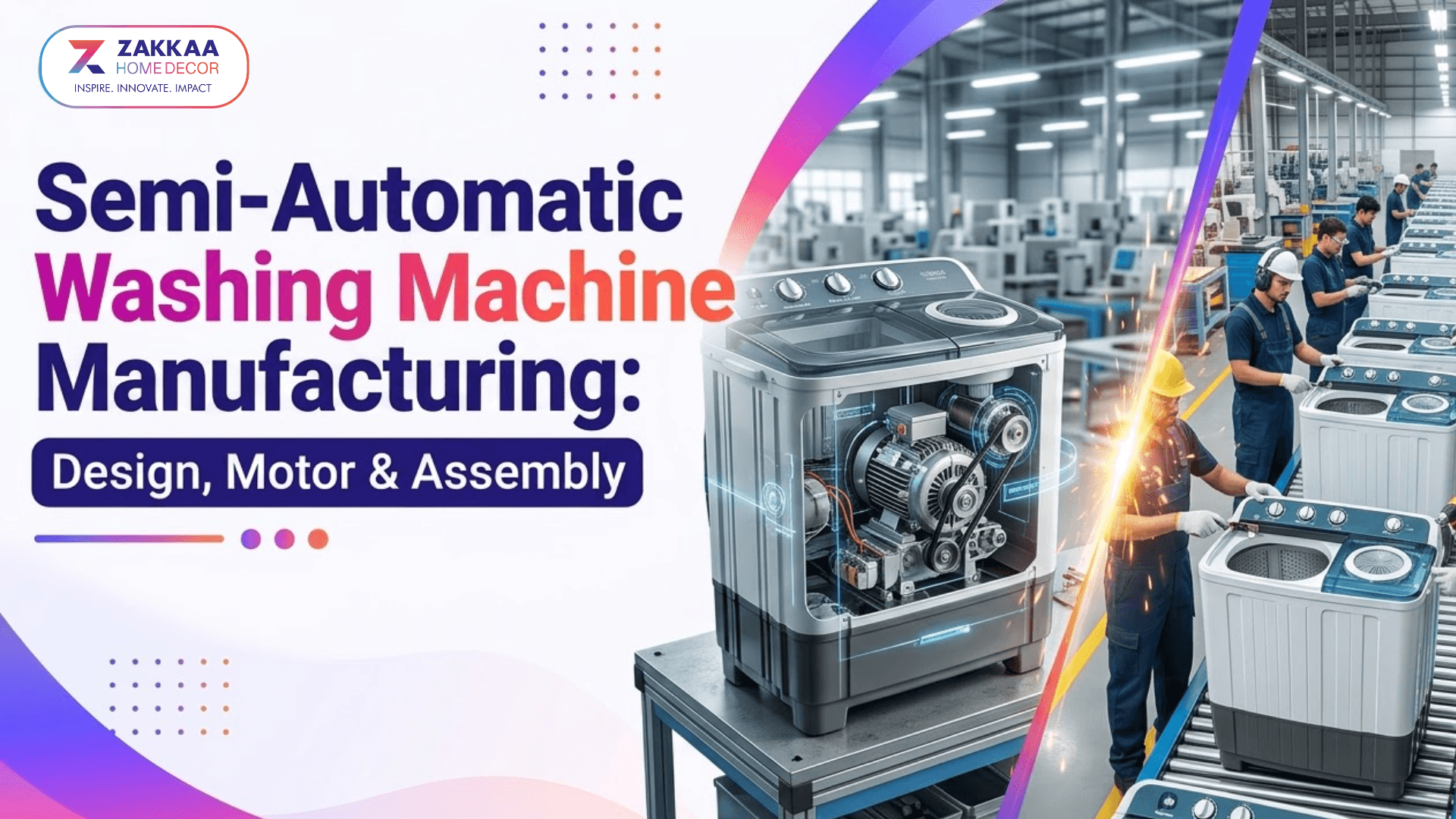
Semi-automatic washing machine manufacturing involves producing laundry appliances that require some manual involvement during the washing cycle, such as transferring clothes from the wash tub to the spin tub.
Unlike fully automatic washing machines, semi-automatic models typically have separate washing and spinning compartments. Users manage certain operations themselves, including filling or draining water where required and moving clothes between tubs.
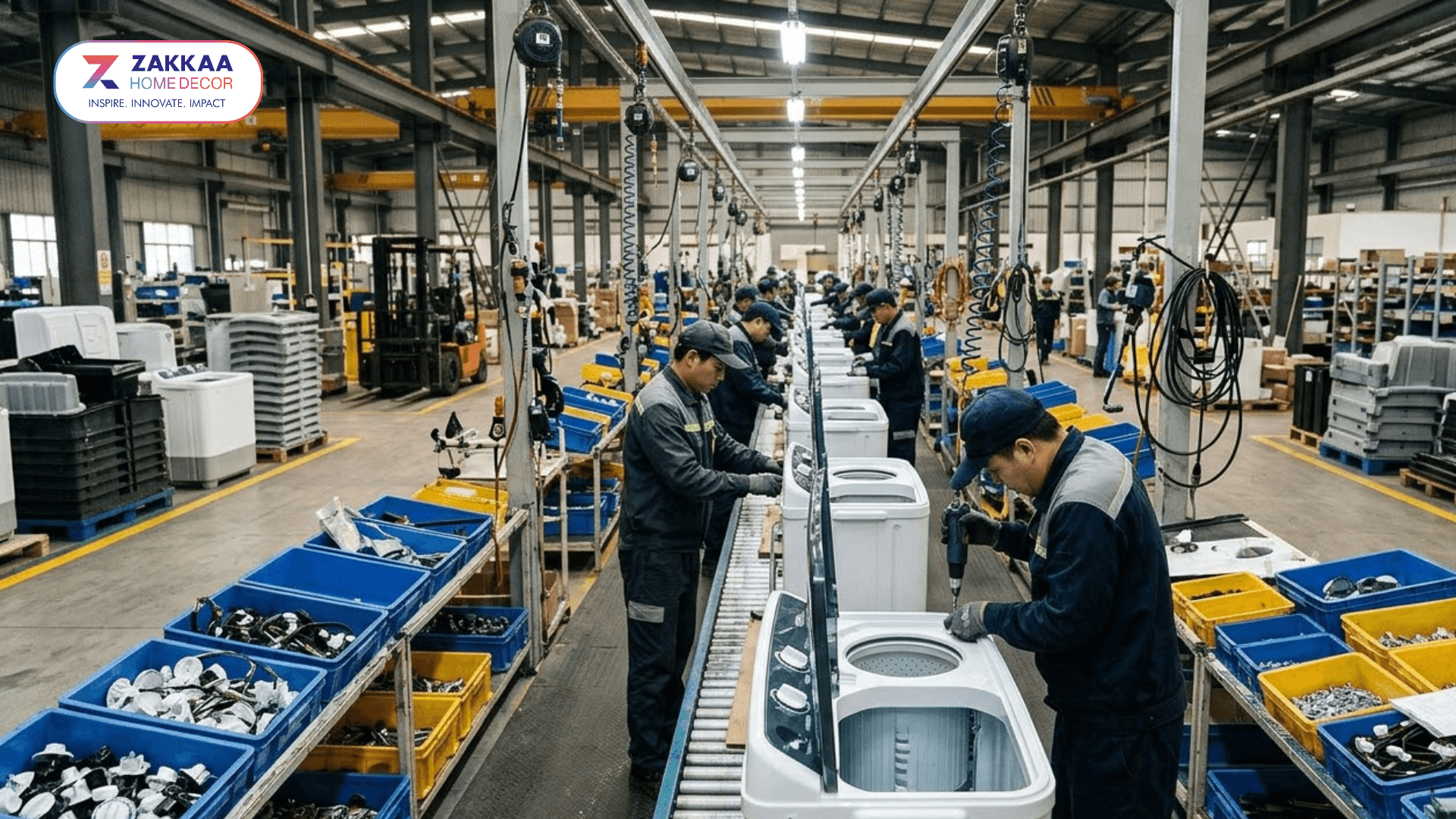
For manufacturers, producing these appliances involves more than fitting two tubs into a cabinet.
For example, a brand targeting households looking for affordable laundry appliances may prioritize straightforward controls, practical capacity, durable construction, and easy maintenance.
Comprehensive Semi-Automatic Washing Machine Manufacturing Process
Making a reliable semi-automatic washing machine involves several steps. Each stage plays a role in ensuring smooth washing, effective spinning, and dependable performance. Let’s walk through the complete semi-automatic washing machine manufacturing process.
1. Semi-Automatic Washer Design And Capacity Planning
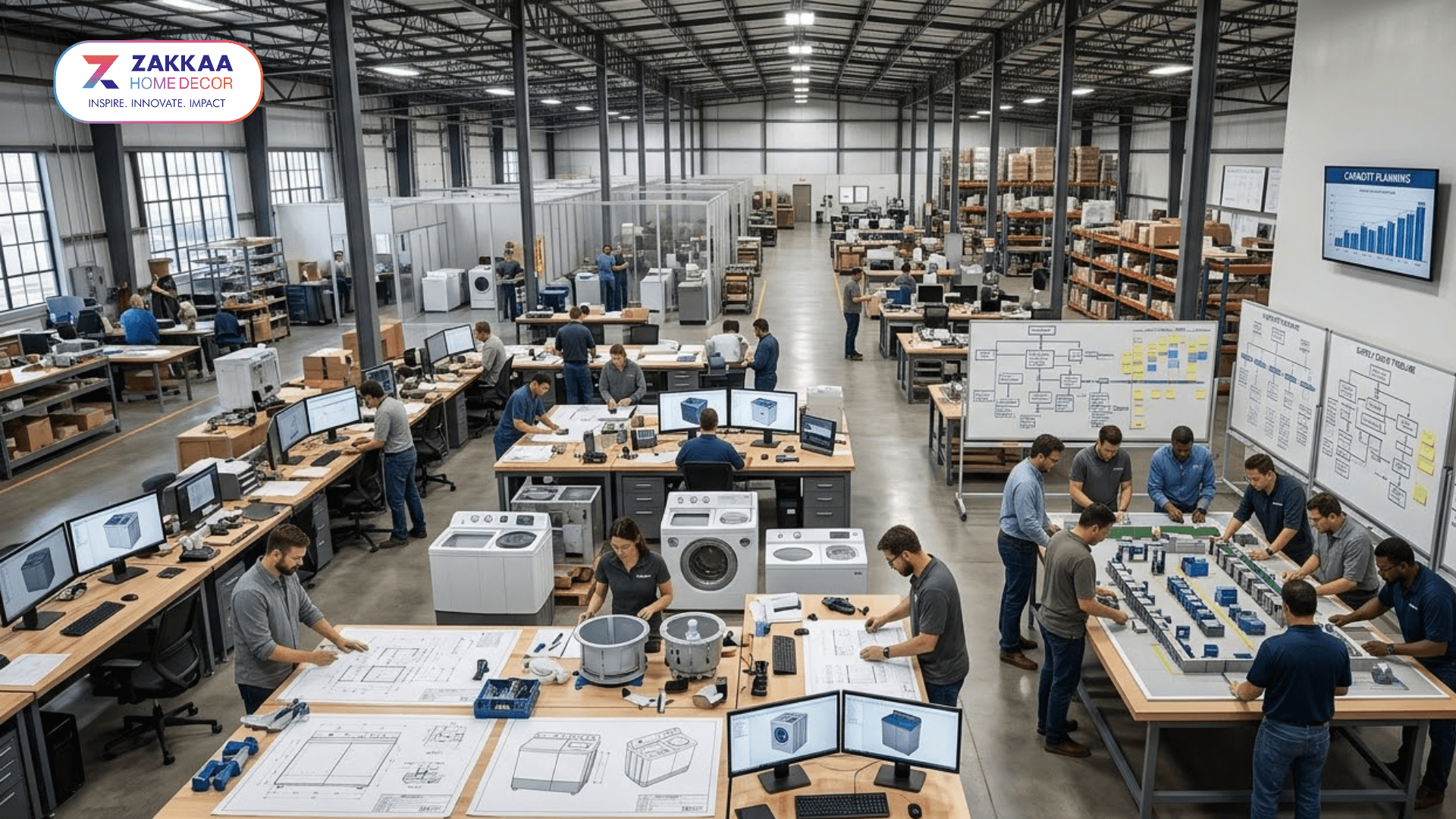
Every manufacturing project begins with a clear product brief that defines the target customers, washing capacity, features, and selling price. These decisions guide the cabinet design, component specifications, tooling requirements, production budget, and testing plan.
Key Planning Factors
Washing Capacity: Determine wash and spin capacities for the intended customer segment.
Cabinet Dimensions: Establish dimensions, materials, and structural requirements for the appliance.
Motor Specifications: Define motor ratings according to washing and spinning requirements.
Control Functions: Specify timers, switches, and user interface requirements.
Drainage Design: Plan water inlet arrangements, drainage systems, and hose connections.
Safety Requirements: Identify necessary safety features, packaging specifications, and applicable standards.
2. Sourcing Washer Motors, Tubs, And Electrical Components
Once the product specifications are approved, manufacturers source the components required for production. Incoming inspections help verify part quality, compatibility, and accuracy before components enter the assembly line.
Essential Components
Wash Tub: Holds laundry and water during the washing cycle.
Spin Tub: Supports high-speed spinning to remove excess water.
Washer Motor: Powers the washing mechanism according to design specifications.
Control Panel: Houses timers, switches, and user operating controls.
Electrical Components: Include wiring harnesses, connectors, and protection devices.
Cabinet Materials: Provide structural support and protection for internal assemblies.
3. Assemble Wash Tub, Spin Tub, And Cabinet
After component inspection, technicians assemble the cabinet, wash tub, spin tub, and associated mechanical parts according to the approved design. Proper alignment, secure mounting, and protected wiring help minimize vibration, noise, and premature component wear.
Main Assembly Activities
Cabinet Assembly: Fit the outer body and supporting structural components.
Tub Installation: Position the wash and spin tubs correctly.
Motor Mounting: Secure motors and their associated drive mechanisms.
Drainage Connections: Fit drainage hoses and required water outlets.
Wiring Protection: Route electrical wires away from moving components.
Alignment Checks: Inspect mounting positions, clearances, and cabinet fitting.
4. Washer Motor Installation And Control Panel Integration
A semi-automatic washing machine needs controls that allow users to operate its washing and spinning functions safely and conveniently.
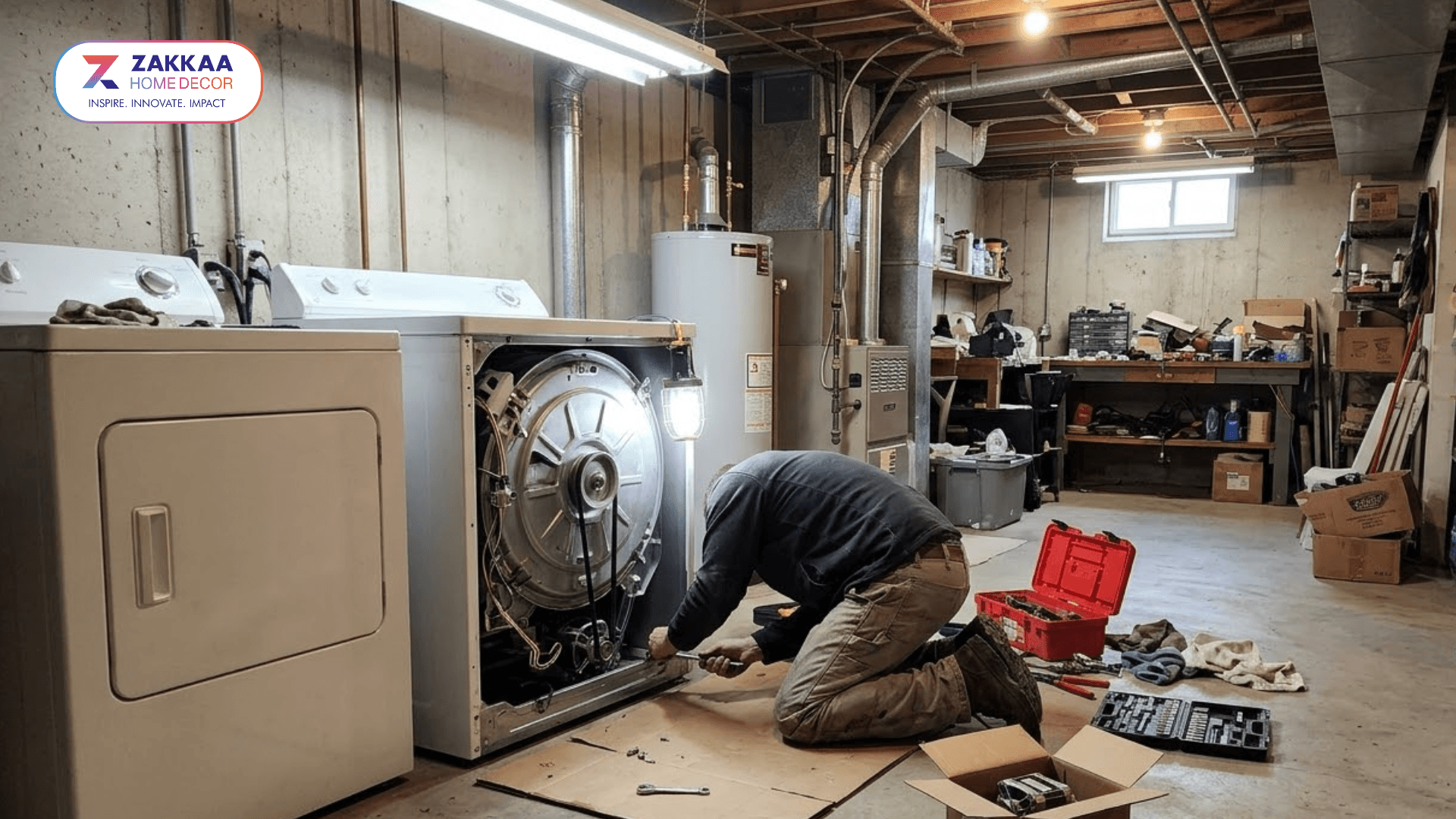
During this stage, the manufacturing team installs the control panel, timers, switches, wiring harnesses, and other specified electrical components.
Electrical Integration Tasks
Motor Connections: Connect wash and spin motors according to specifications.
Timer Installation: Fit timers for the required washing and spinning cycles.
Switch Integration: Install control switches and associated operating mechanisms.
Wiring Inspection: Check connections, insulation, routing, and secure fastening.
Function Verification: Confirm that controls operate according to intended settings.
Safety Checks: Verify electrical protection and relevant safety provisions.
5. Washing, Spinning, And Electrical Safety Testing
Before a washing machine is approved for dispatch, the manufacturer must verify that its major functions operate correctly.
Testing may include wash operation, spin performance, drainage, timer functions, motor operation, abnormal noise, vibration, leakage, and electrical safety.
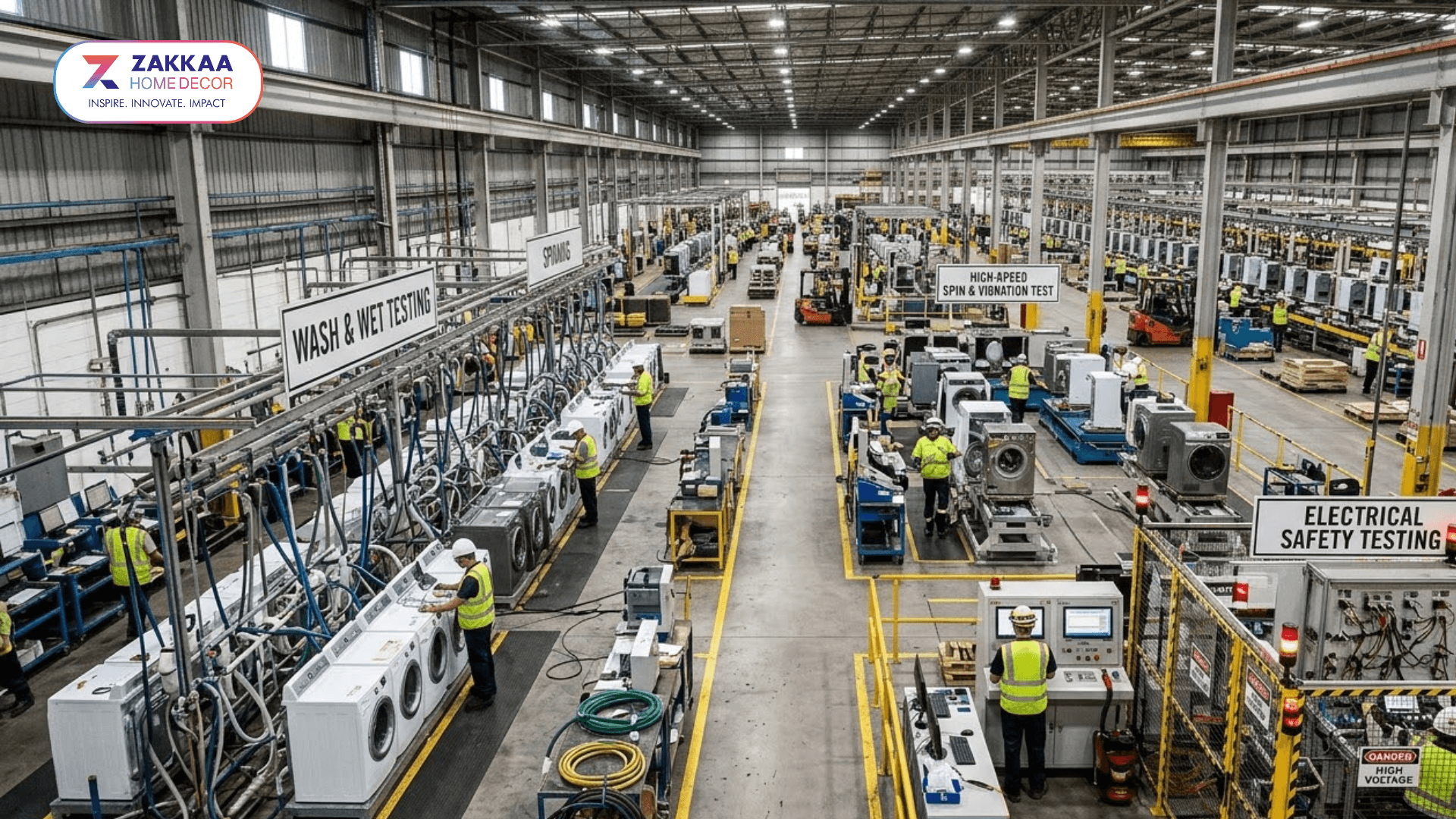
For instance, a machine might complete its washing cycle but develop excessive vibration during spinning. Testing helps identify such issues before the appliance reaches a retailer or household.
Essential Quality Tests
Wash Cycle Testing: Verify agitation and washing operation under specified conditions.
Spin Performance Testing: Check spinning operation and water removal performance.
Drainage Testing: Confirm proper water discharge without unwanted leakage.
Timer Testing: Verify that cycle controls operate as specified.
Vibration Inspection: Identify excessive movement, unusual noise, or unstable operation.
Electrical Safety Testing: Perform checks required by the applicable standards and quality plan.
6. Final Washer Inspection, Packaging, And Dispatch
After passing the required tests, the washing machine undergoes a final inspection before packaging and shipment. Manufacturers verify accessories, labeling, cabinet finishing, and packaging protection to help ensure products reach retailers and customers in acceptable condition.
Final Dispatch Checks
Cabinet Inspection: Check finishing, fitting, and visible surface defects.
Accessory Verification: Confirm that required hoses, cords, and accessories are included.
Label Inspection: Verify product identification and required labeling details.
Packaging Protection: Secure the appliance against handling and transportation damage.
Order Confirmation: Verify quantities, documentation, and agreed product configurations.
Dispatch Coordination: Confirm shipping arrangements and delivery schedules with the buyer.
Essential Components Used To Make Semi-Automatic Washing Machine
Understanding the main components helps buyers compare manufacturing quotations and evaluate product specifications.
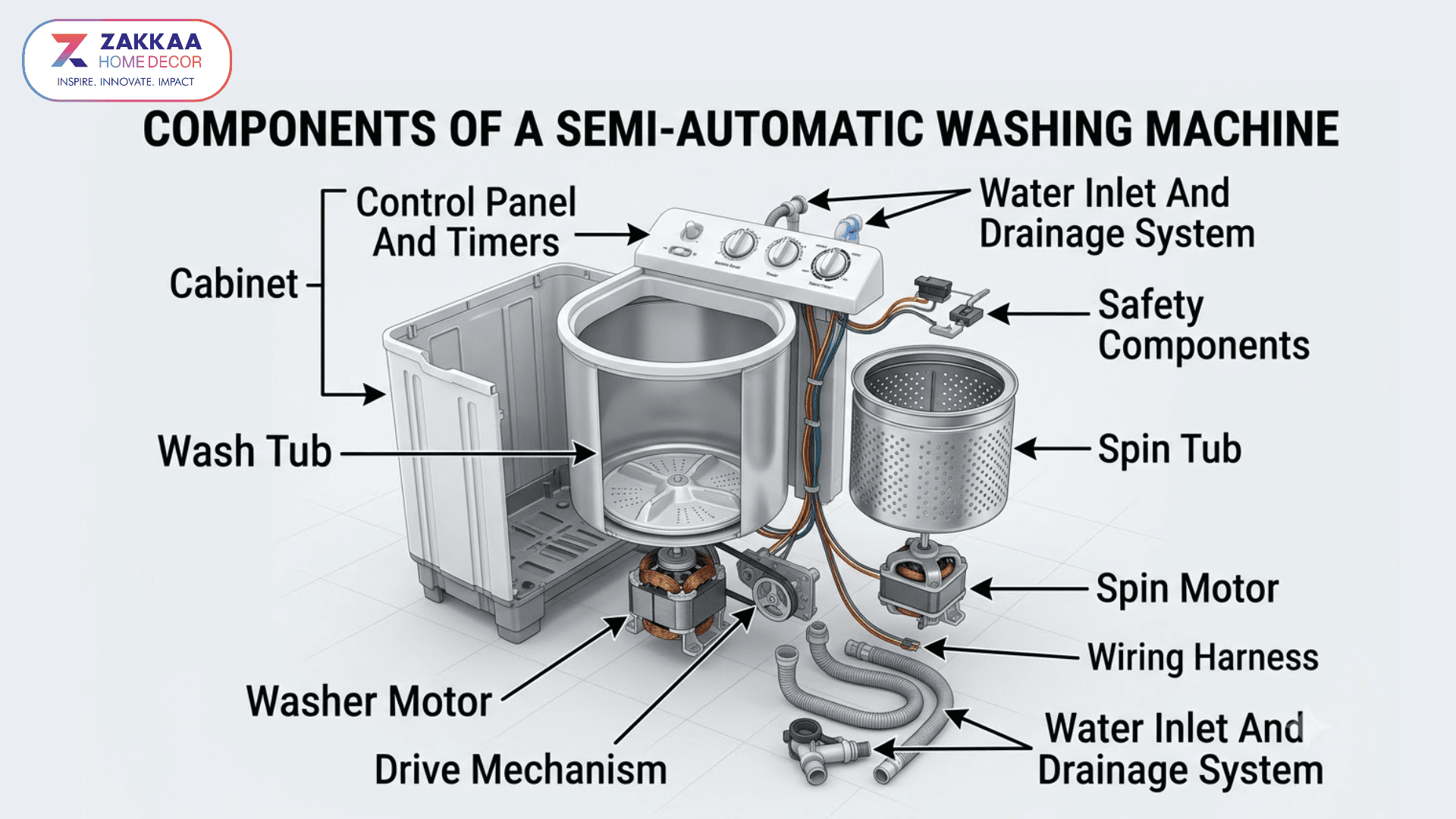
Wash Tub
Holds clothes and water during the washing cycle.
Spin Tub
Holds clothes during the spinning and water-extraction process.
Washer Motor
Drives the washing mechanism according to the machine design.
Spin Motor
Drives the spinning mechanism to remove water from clothes.
Control Panel And Timers
Allow users to select and manage washing and spinning operations.
Drive Mechanism
Transfers motor power to the relevant moving components.
Water Inlet And Drainage System
Supports water filling and removal as designed.
Cabinet
Houses the internal components and provides structural protection.
Wiring Harness
Connects the electrical components according to the approved design.
Safety Components
Help meet the applicable electrical and operational safety requirements.
The quality and compatibility of these components influence product performance, serviceability, manufacturing costs, and expected durability.
A buyer should compare the complete specification rather than assuming that two machines with the same washing capacity will deliver identical performance.
OEM Washing Machine Manufacturing: What Buyers Should Know
OEM washing machine manufacturing allows a business to work with a manufacturing partner to produce appliances according to an agreed product specification and commercial arrangement.
This can be useful for electronics brands, distributors, retailers, and businesses planning to introduce their own laundry appliance range.
Depending on the agreement, the manufacturer may handle component sourcing, assembly, testing, packaging, or other production activities. Some projects involve more customization, while others use an existing product design.
Factors Affecting Semi-Automatic Washing Machine Manufacturing Costs
Manufacturing costs vary according to the machine's design, components, order volume, and production requirements.
Washing And Spinning Capacity
Motor Specifications
Cabinet And Tub Materials
Control Features
Customization
Order Quantity
Quality Testing
When comparing suppliers, request quotations based on the same specifications. Check whether the quoted price includes packaging, testing, customization, and other agreed services.
It is also important to distinguish the manufacturing price from the total business cost, which may include transportation, distribution, warranty provisions, and applicable taxes.
Why Consider Zakkaa For Washing Machine Manufacturing?
Zakkaa's broader manufacturing and OEM capabilities provide a starting point for discussing potential product requirements. However, buyers should confirm the specific semi-automatic washing machine models, production processes, customization options, and testing capabilities available for their project.
Before proceeding, clarify the component specifications, quality-control arrangements, commercial terms, applicable compliance documentation, and delivery commitments.
This approach helps businesses evaluate the manufacturing arrangement based on their actual needs instead of relying on general claims about production capabilities.
Final Thoughts
Semi-automatic washing machine manufacturing involves product planning, component sourcing, mechanical assembly, electrical integration, quality testing, and final dispatch. Each stage contributes to the appliance's performance, reliability, and suitability for the intended market.
For buyers and OEM businesses, the next step is to prepare a clear product specification and evaluate manufacturers on component quality, production capabilities, testing procedures, and commercial terms.
Planning to develop your own laundry appliance range? Contact a reliable OEM washing machine manufacturer and supplier in India.
Frequently Asked Questions (FAQs)
What Does An OEM Washing Machine Manufacturer Do?
An OEM manufacturer produces appliances according to agreed specifications and may manage sourcing, assembly, testing, branding, and packaging, depending on the contract.
How Is Quality Control Performed During Washing Machine Production?
Quality control may include component inspections, assembly checks, motor operation, washing and spinning tests, drainage checks, electrical safety testing, and final product inspection.
How Can Businesses Choose A Reliable Washer Supplier?
Compare manufacturing capabilities, component sourcing, quality procedures, order flexibility, delivery commitments, warranty arrangements, and applicable compliance documentation.
Can I Choose Different Washing Machine Capacities For My Brand?
Yes, OEM manufacturers may offer different washing machine capacities depending on their product range, production capabilities, and customization requirements.
What Is The Minimum Order Quantity For OEM Washing Machines?
The minimum order quantity varies by manufacturer, model, customization level, and production requirements. Confirm the MOQ before finalizing your order.
Can OEM Manufacturers Customize Washing Machine Packaging And Branding?
Yes, OEM arrangements may include custom logos, brand labels, user manuals, and packaging designs, subject to the manufacturer's capabilities and agreement.