Oct 12, 202612 min readBy Aditya Singh
An LED TV may look like a slim screen with a simple remote, but its manufacturing involves several precise steps. From selecting the display panel and assembling electronic circuits to fitting the cabinet and testing picture quality, every stage of LED TV manufacturing contributes to the television's final performance.
For businesses entering the television market, understanding these steps can clarify production requirements, component choices, equipment needs, and quality control priorities. It also helps manufacturers identify where careful assembly and thorough testing can prevent common defects before products reach customers.
So, how do you manufacture an LED TV from start to finish? This guide covers the complete LED TV manufacturing process, including essential components, assembly stages, testing procedures, and the key considerations involved in producing reliable televisions.
What Is LED TV Manufacturing?
LED TV manufacturing is the process of assembling electronic components, display modules, audio systems, power circuits, and housing into a functional television.
Depending on the factory's capabilities, the process may also include printed circuit board assembly, LED backlight integration, display module production, software installation, and product testing.
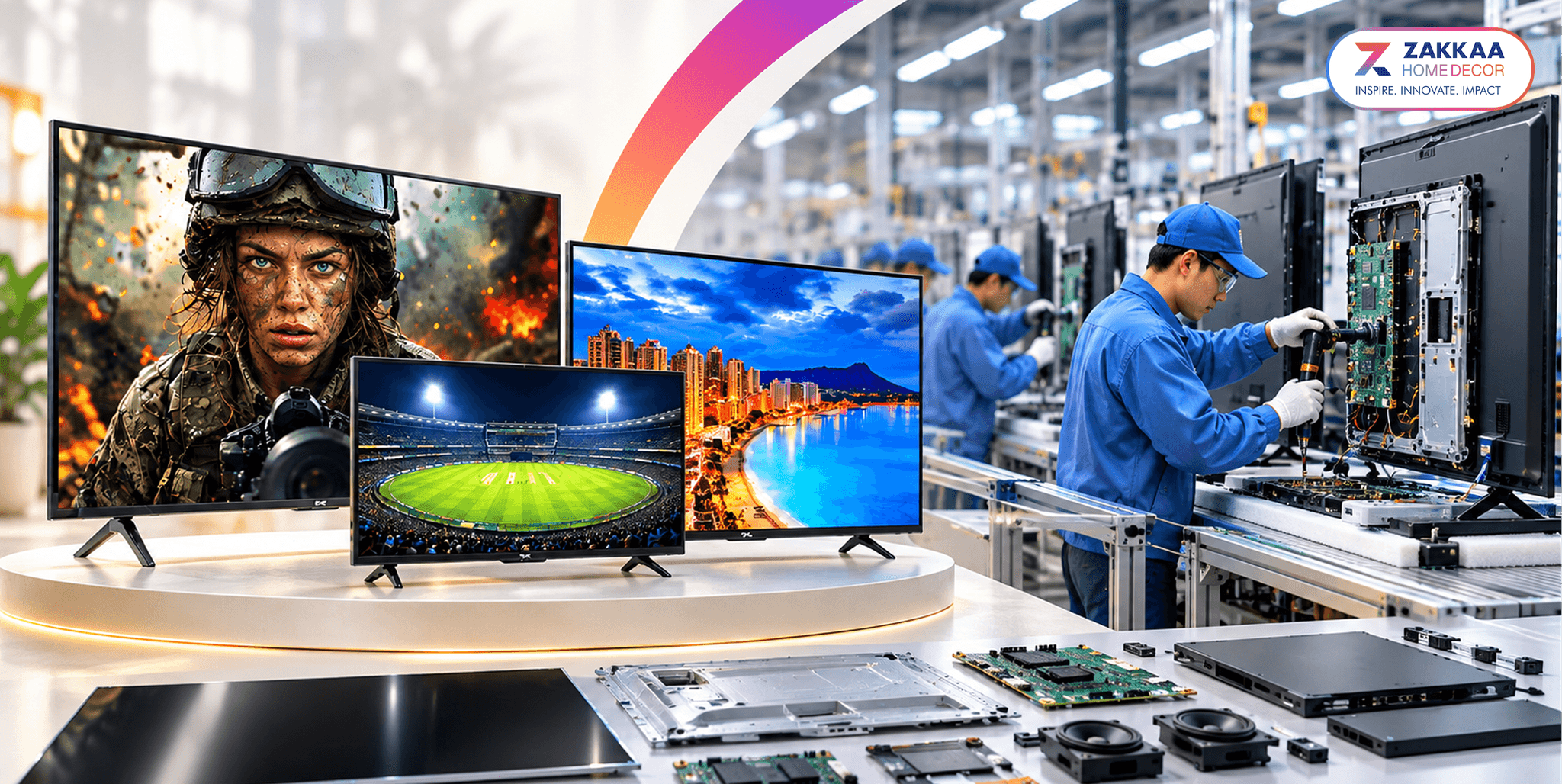
An important distinction is that most conventional LED TVs use an LCD panel illuminated by LEDs.
Manufacturing the complete display panel for televisions requires specialized facilities and processes, while many television factories focus on assembling sourced panels or display modules with other electronic components. These are different manufacturing activities with different infrastructure requirements.
For businesses planning to enter consumer electronics manufacturing, the appropriate model depends on investment capacity, technical expertise, production volume, and the level of customization required.
How to Make LED TV: Step-by-Step Manufacturing Process
The television manufacturing process generally follows a sequence from component procurement to final packaging. The exact workflow varies according to whether a factory assembles ready-made display modules or performs additional operations in-house.
Step 1: Plan the TV Design and Specifications
The first step is to define the television model, target customer, technical specifications, and expected production volume. These decisions determine which components the manufacturer needs and how the assembly line should be configured.
Important specifications include:
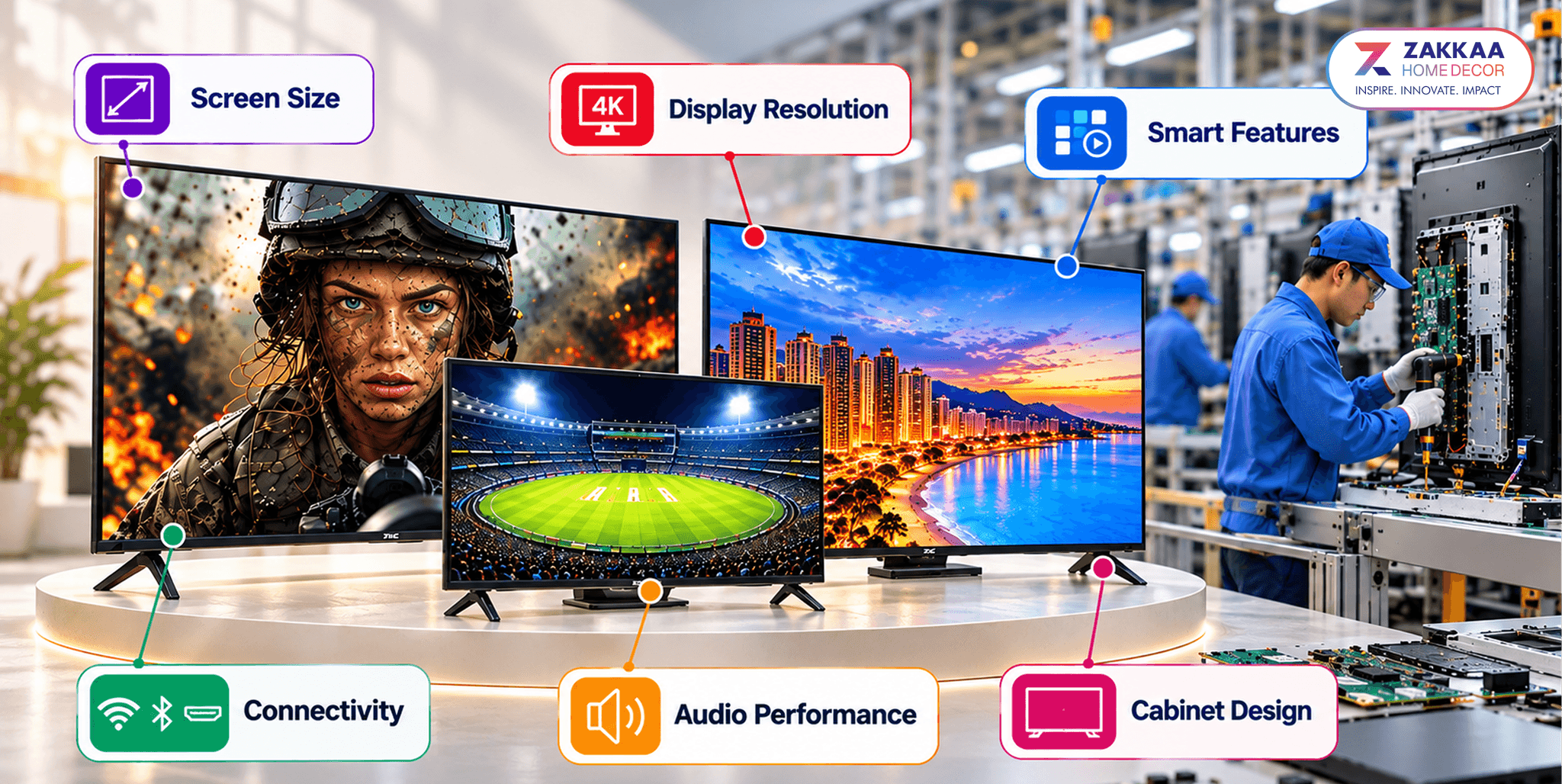
Screen Size: Common options include 32-inch, 43-inch, 50-inch, and 55-inch models, depending on the intended market.
Display Resolution: HD, Full HD, and 4K options affect panel selection and processing requirements.
Smart Features: Smart TVs may require a suitable operating system, processor, memory, Wi-Fi, and application support.
Connectivity: HDMI, USB, Wi-Fi, Bluetooth, and other connections depend on the product configuration.
Audio Performance: Speaker specifications and audio processing influence the overall viewing experience.
Cabinet Design: The housing must accommodate the display, circuit boards, speakers, and ventilation requirements.
Manufacturers should finalize a product specification sheet before purchasing components. This reduces compatibility issues and helps the team plan assembly, testing, and packaging.
Step 2: Source the Essential TV Components
Component sourcing is a critical part of television manufacturing because each part must meet the selected model's technical requirements. Suppliers should be evaluated on product quality, availability, traceability, delivery reliability, and compatibility.
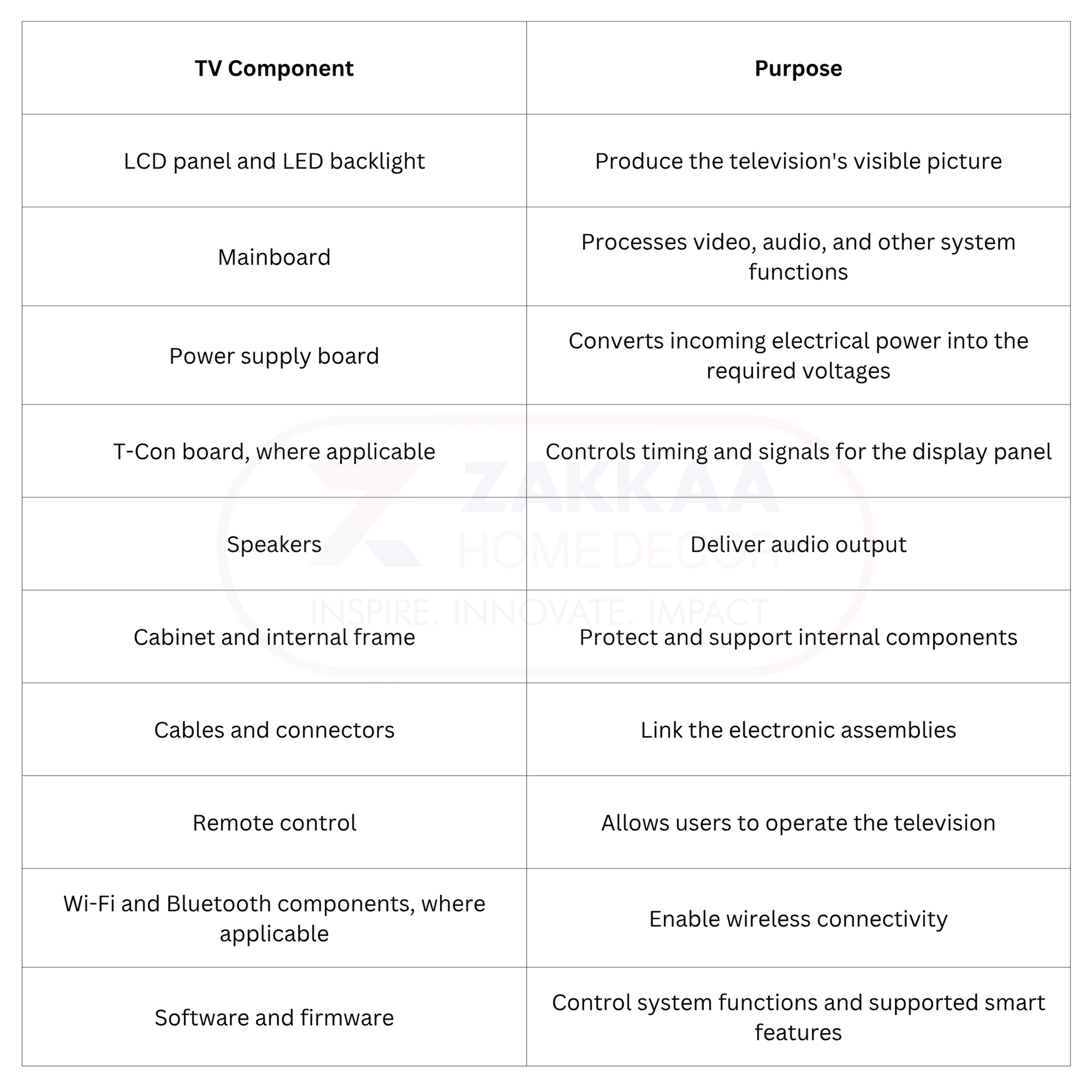
The final bill of materials depends on the TV model and its architecture. Some functions may be integrated into a single board, while other models use separate boards.
A reliable TV supplier should provide components that meet approved specifications and support repeatable production. Businesses planning OEM TV manufacturing should also confirm component availability for future orders and replacement requirements.
Step 3: Inspect Incoming Components
Before components enter production, the quality team checks deliveries against purchase orders, specifications, and approved samples. Incoming quality control helps prevent defective or incompatible parts from moving through the assembly line.
Typical checks include:
Verifying component quantities, model numbers, and specifications.
Inspecting panels for visible damage, scratches, or handling marks.
Checking circuit boards and connectors for physical defects.
Confirming that cabinets, stands, and accessories match the approved design.
Reviewing supplier documentation and applicable test records.
Separating rejected components from approved inventory.
Display panels require careful handling because damage can result in expensive material losses. Appropriate storage, protective packaging, and handling procedures help reduce avoidable defects.
Step 4: Assemble the Printed Circuit Boards To Make LED TV
The mainboard and power supply board are essential electronic assemblies in an LED TV. Depending on the factory's manufacturing model, these boards may arrive ready for integration or be assembled in-house.
Factories that perform surface-mount technology (SMT) assembly use specialized equipment to place electronic components on printed circuit boards. The process may include solder-paste application, automated component placement, reflow soldering, and inspection.
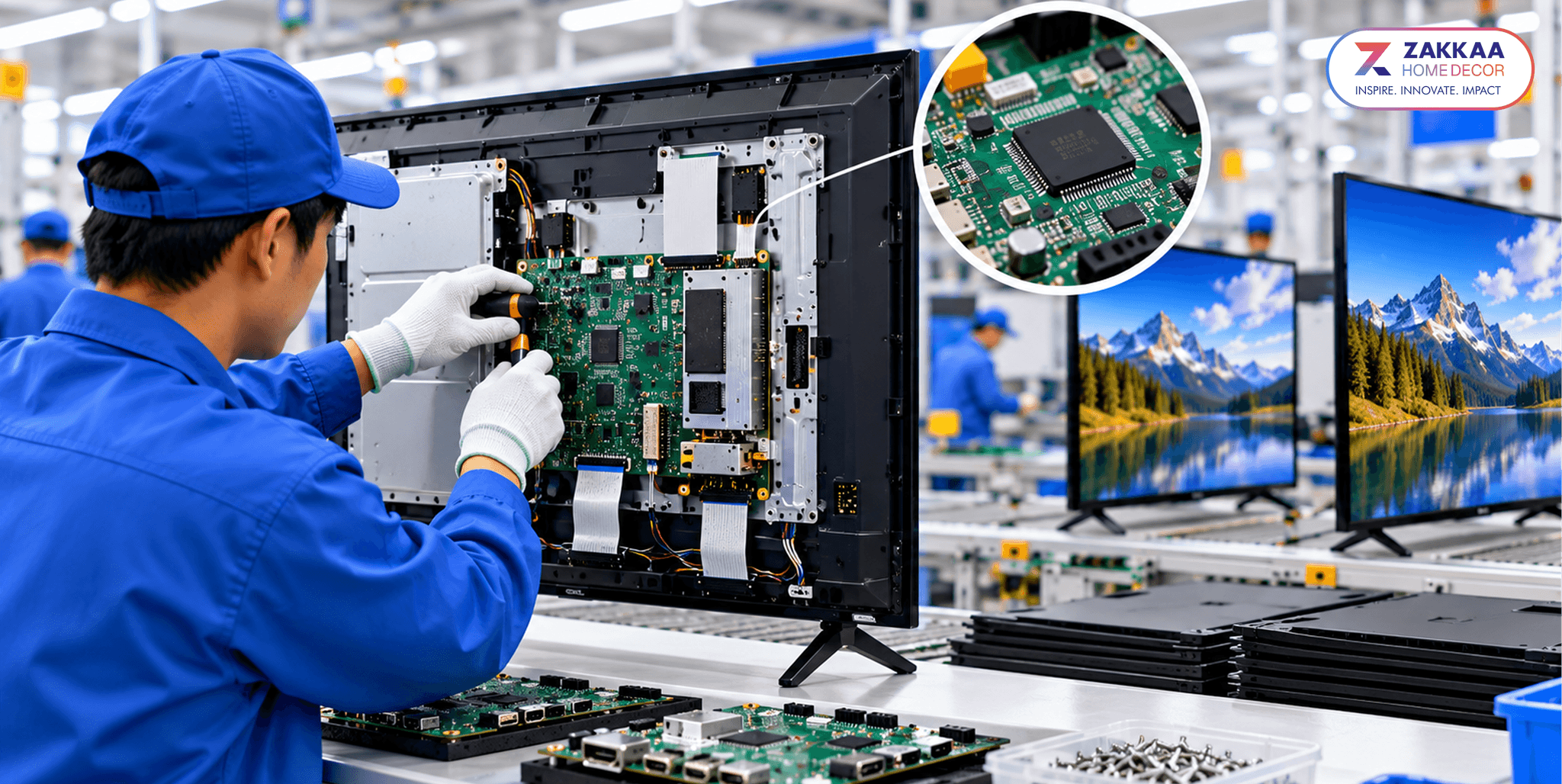
After assembly, the boards undergo electrical checks to identify soldering defects, shorts, missing components, or other problems.
Not every TV factory needs an in-house SMT line. A facility that purchases pre-assembled boards can focus on display integration, final assembly, software configuration, and product testing. The appropriate approach depends on production scale, investment, supplier access, and technical capabilities.
Step 5: Integrate the Display Panel and Backlight
Display integration is one of the most sensitive stages of LED TV manufacturing. The LCD panel, LED backlight, optical layers, frame, and associated connections must work together to produce the intended picture quality.
In a factory that assembles complete display modules, this stage may involve:
Preparing the module frame and required components.
Positioning the display panel using suitable fixtures.
Integrating the LED backlight and optical components, where these are not already assembled.
Connecting the panel to the relevant electronic circuits.
Inspecting alignment, connections, and visible surface condition.
The exact process depends on whether the manufacturer receives a finished display module or works with a less-complete panel assembly.
Clean working conditions, appropriate handling equipment, and trained operators are important because scratches, dust, pressure marks, and connection defects can affect the finished screen.
Step 6: Complete the TV Assembly
Once the display and electronic assemblies are ready, the factory brings the major components together in the television cabinet.
The assembly sequence commonly includes:
Positioning the display module within the housing.
Mounting the mainboard and power supply board.
Connecting speakers, cables, and control components.
Installing the required buttons, ports, and wireless components.
Securing the rear cover and other structural parts.
Attaching the stand or preparing the mounting arrangement.
Assembly fixtures and documented work instructions help operators follow the correct sequence. The team should use approved fasteners and tightening procedures to avoid loose parts, excessive pressure, or cabinet damage.
For OEM TV production, this stage may also involve approved branding, customized cabinet finishes, or model-specific component configurations. Any customization must remain compatible with the product design and quality requirements.
Step 7: Install Software and Configure Smart Features
Smart TVs need more than functioning hardware. Their software must support the intended user interface, applications, connectivity, and system operations.
During this stage, technicians load or configure the approved firmware and operating system, depending on the product platform. They may also configure model-specific settings, language options, remote-control functions, and connectivity features.
The quality team should verify:
The television starts and shuts down correctly.
Menus and supported applications work as intended.
Wi-Fi and Bluetooth function on models that include them.
HDMI and USB ports recognize compatible devices.
Audio, display, and remote-control functions respond correctly.
Software versions and configurations match the approved model.
Software licensing, application availability, and platform requirements should be confirmed before production. These factors are especially important when developing a private-label television range.
Step 8: Test Picture, Audio, and Electrical Performance of LED Television
Quality testing helps identify problems before televisions reach distributors, retailers, or end users. Tests should follow the manufacturer's documented quality plan and the applicable safety and regulatory requirements.
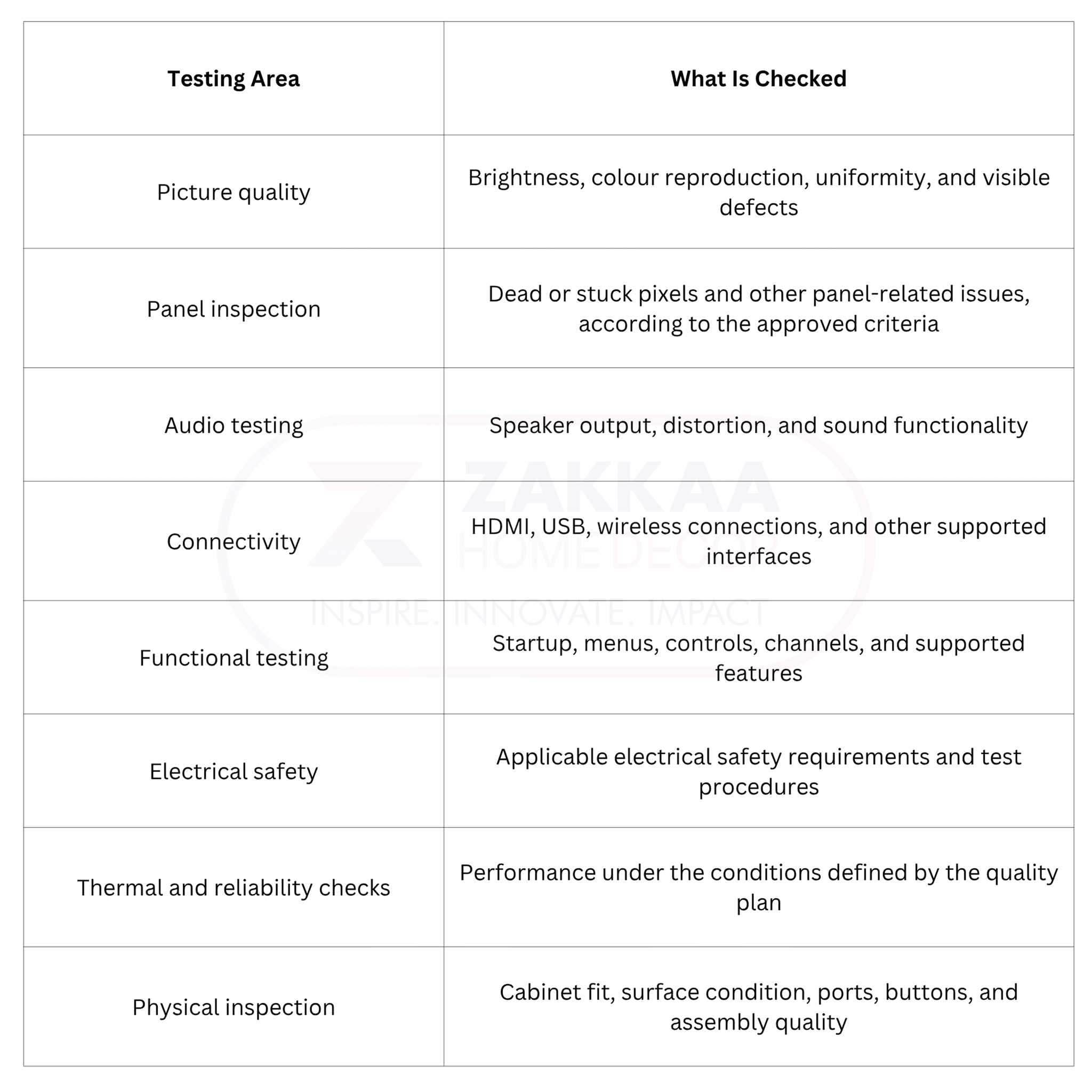
Some factories also conduct ageing or burn-in tests, in which televisions operate for a defined period to help identify early failures. The duration and test conditions depend on the product and the manufacturer's quality procedures.
Testing should not be treated as a single final checkpoint. Incoming inspections, in-process checks, and final verification each serve a different purpose in preventing defects.
Step 9: Complete Final Inspection and Packaging
After testing, the television undergoes a final inspection before it is approved for dispatch. The team verifies the model configuration, appearance, accessories, and packaging requirements.
The packaging process generally includes protective materials, a suitable carton, the remote control, power cable, stand and fasteners where supplied, documentation, and other approved accessories.
Packaging must protect the display and cabinet during handling, storage, and transportation. Carton strength, internal cushioning, product positioning, and labelling should be suitable for the planned distribution route.
For bulk orders, production teams should also maintain batch identification and dispatch records. These records help businesses trace products and manage any quality issues that arise after delivery.
What Machinery Is Required for LED TV Manufacturing?
Machinery requirements depend on the level of manufacturing performed at the facility. A factory assembling ready-made display modules needs a different setup from one that also manufactures circuit boards or display modules. Additional infrastructure may include component storage, inspection areas, repair stations, environmental testing equipment, and quality-control laboratories.
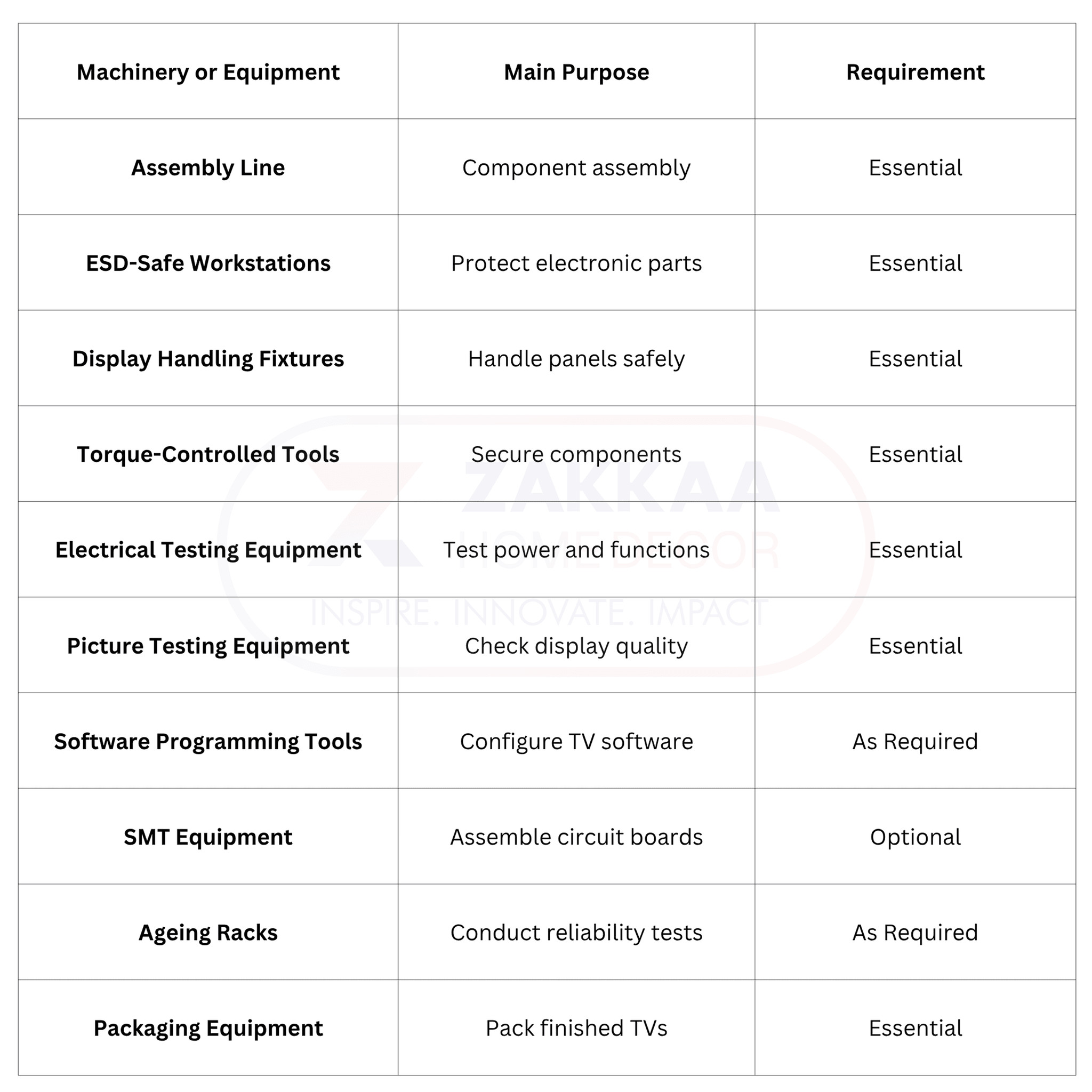
Before purchasing machinery, businesses should define the intended production process, expected capacity, required testing coverage, and available budget. Buying equipment without a clear production plan can lead to unnecessary investment or bottlenecks.
What Factors Affect LED Television Manufacturing Costs?
The main cost factors include:
1. Display panels and electronic components: The panel, mainboard, power supply, and other electronic parts form a major portion of the product's bill of materials.
2. Production model: Final assembly using sourced modules generally requires a different investment level from in-house PCB or display-module assembly.
3. Machinery and infrastructure: Assembly lines, testing equipment, storage, utilities, and factory facilities affect setup costs.
4. Labour and technical expertise: Operators, quality inspectors, engineers, maintenance staff, and production supervisors contribute to operating expenses.
5. Testing and compliance: Quality-control systems, required testing, certification processes, and documentation add to project costs.
6. Production volume: Order quantities affect purchasing terms, production planning, inventory requirements, and equipment utilization.
7. Software and customization: Smart-TV platforms, licensing, product-specific configurations, branding, and packaging can affect the total cost.
8. Warranty and after-sales support: Spare parts, repair processes, service arrangements, and product returns should be included in business planning.
For a meaningful estimate, businesses should prepare a product specification sheet, bill of materials, target monthly output, and list of required manufacturing operations before requesting supplier quotations.
OEM TV Manufacturing vs. Setting Up Your Own TV Factory
Businesses entering the television market generally need to decide whether to establish their own production facility or partner with an existing OEM TV manufacturer.
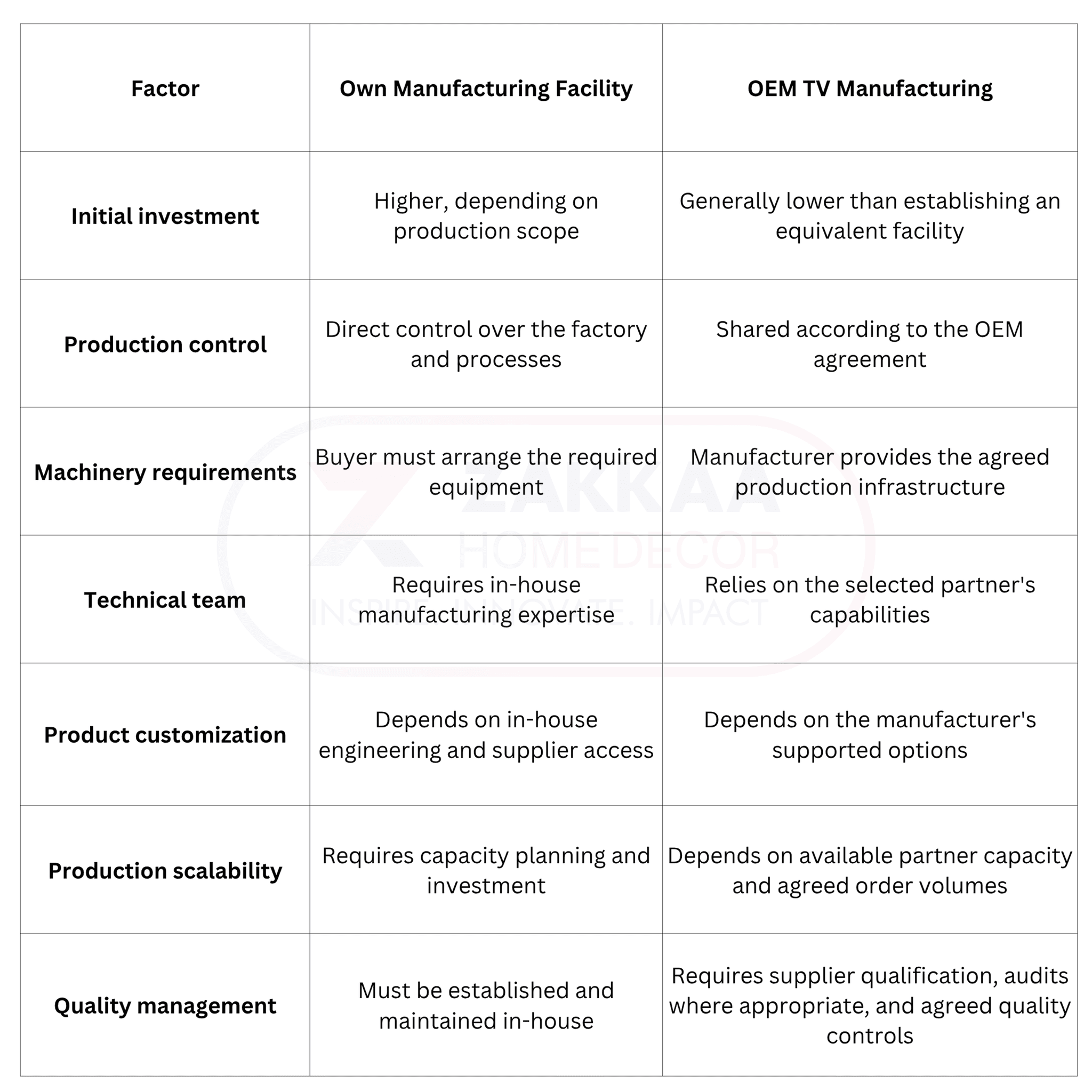
OEM manufacturing can be a practical option for businesses that want to sell televisions under their own brand without building every production capability from scratch.
However, the buyer must still evaluate the manufacturer's facilities, product quality, customization options, lead times, compliance responsibilities, and after-sales arrangements.
What Should Businesses Check Before Choosing an LED TV Manufacturer?
Selecting the right TV manufacturing partner involves more than comparing the quoted price. Buyers should confirm whether the supplier can meet their technical, commercial, and operational requirements.
Use this checklist when evaluating an LED TV manufacturer:
Manufacturing capabilities: Confirm which activities the factory performs in-house and which components it sources from other suppliers.
Product range: Check the available screen sizes, resolutions, smart features, and supported configurations.
Quality-control process: Ask how incoming components, assembly stages, finished televisions, and rejected units are managed.
Testing facilities: Verify the testing equipment and procedures relevant to your product requirements.
OEM and branding support: Confirm whether the supplier supports private labels, approved customization, and branded packaging.
Production capacity: Discuss realistic order quantities, lead times, and the ability to support repeat orders.
Compliance documentation: Identify the applicable Indian regulatory requirements for the exact product and business arrangement.
Warranty and service: Clarify responsibilities for defective products, spare parts, repairs, and customer support.
Commercial terms: Review pricing, payment terms, delivery arrangements, minimum order quantities, and change-control procedures.
Buyers should also request samples, review relevant documentation, and agree on product acceptance criteria before placing a large order.
Conclusion
LED TV manufacturing involves coordinated product planning, component sourcing, electronic and display integration, software configuration, assembly, quality testing, and packaging. Businesses can perform these operations in-house or work with an OEM TV manufacturer, depending on their investment, production requirements, and technical capabilities.
For companies entering the television market, the right manufacturing model starts with clear specifications and a careful evaluation of quality, production capacity, compliance, and supplier support.
To launch or expand your television product range, you can contact a recognized OEM manufacturer to discuss your LED TV sourcing and bulk procurement requirements.
Frequently Asked Questions (FAQs)
What Certifications Are Required For LED TV Manufacturing In India?
Required certifications and registrations depend on the product specifications and applicable Indian regulations, including relevant BIS requirements and electronic waste management obligations where applicable.
How Long Does It Take To Manufacture An LED TV?
Production time depends on component availability, order quantity, assembly-line capacity, software configuration, testing requirements, and whether the product is a standard model or a customized OEM television.
What Is The Difference Between An LED TV And An OLED TV?
LED TVs typically use LCD panels illuminated by LEDs, while OLED TVs use self-emissive pixels. Their display technologies, manufacturing processes, component requirements, and production costs differ.
Can Businesses Launch Their Own TV Brand Without Owning A Factory?
Yes, businesses can explore OEM or private-label manufacturing partnerships that provide agreed production services, allowing them to market televisions under their own brand without establishing a complete factory.
How Can Manufacturers Maintain Quality Across Large TV Production Batches?
Manufacturers can use approved component specifications, documented assembly procedures, in-process inspections, standardized testing protocols, batch traceability, and corrective-action systems to manage quality across production runs.
What Factors Should Businesses Consider When Planning LED TV Production Capacity?
Businesses should assess forecast demand, expected order volumes, assembly-line output, component supply, workforce availability, testing capacity, storage space, and delivery schedules before determining production capacity.