Nov 13, 20267 min readBy Aditya Singh
You've got a washing machine brand idea, a target customer base, and a product range in mind. Now you might be thinking,
“Do I have to establish my own production factory or contact a washing machine manufacturer?”
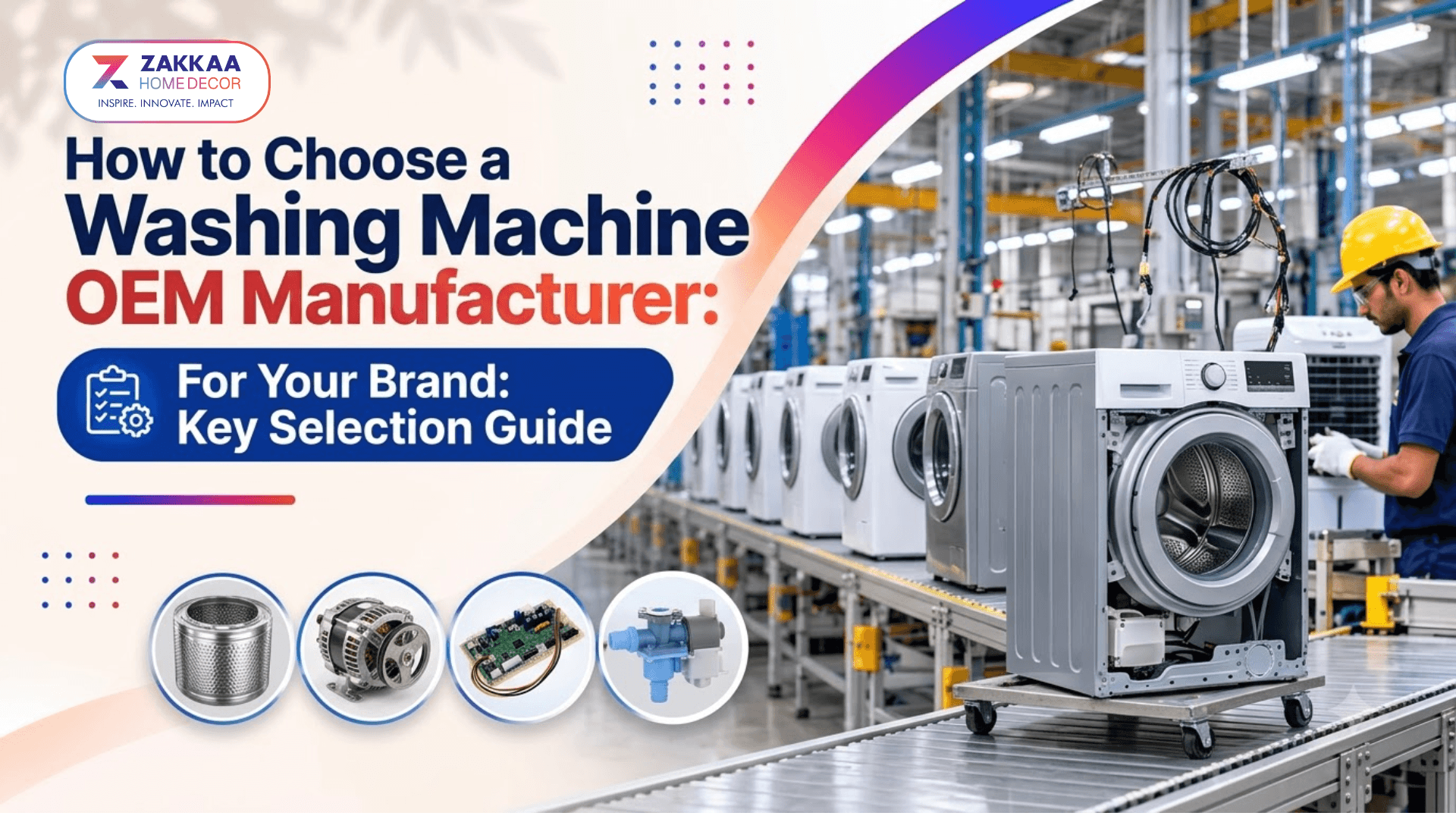
You don't necessarily need to set up a factory and manage the entire production process yourself. Partnering with the right OEM manufacturer to make washing machines can help you bring your product to market while relying on an experienced production team.
But choosing an OEM partner isn't just about finding someone who can manufacture washing machines at a competitive price. You also need to look at production capacity, technical expertise, component quality, customization options, and quality control practices.
The right partnership can make a real difference to your product's performance and brand reputation. Let's look at what you should check before choosing a washing machine OEM manufacturer for your brand.
Things To Evaluate Before Selecting Washing Machine OEM Manufacturer
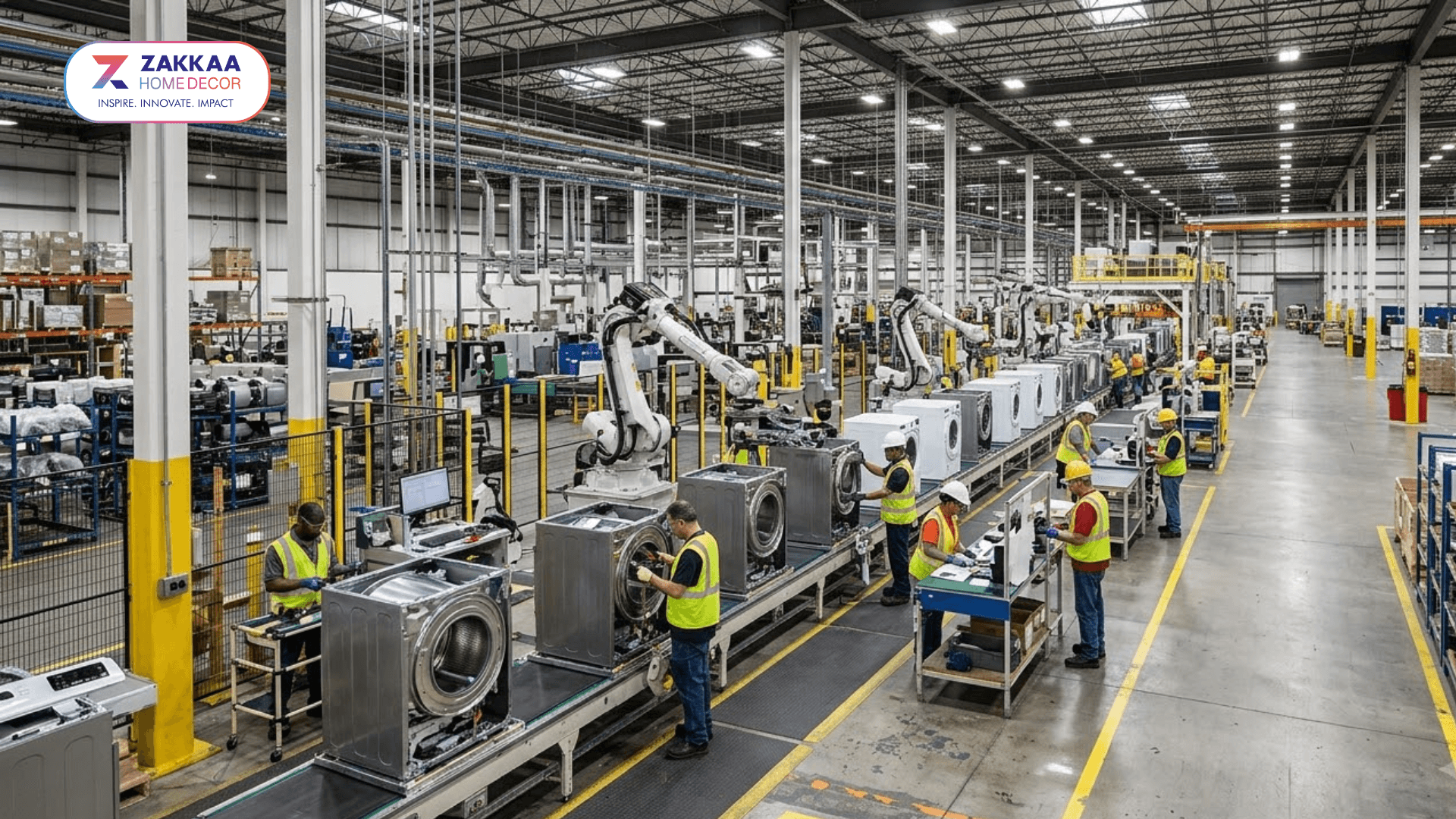
Before trusting a manufacturer with your brand's washing machine production, take a closer look at what they can actually offer. Their technical capabilities, factory setup, component sourcing, and customization options for semi- and fully-automatic washing machines can tell you a lot about their suitability. Let's explore the important factors to check before moving forward.
1. Match Its Product Expertise With Your Market
First, decide what you want to sell. A brand targeting budget-conscious households may prioritize semi-automatic models, while another may focus on fully automatic top-load or front-load machines.
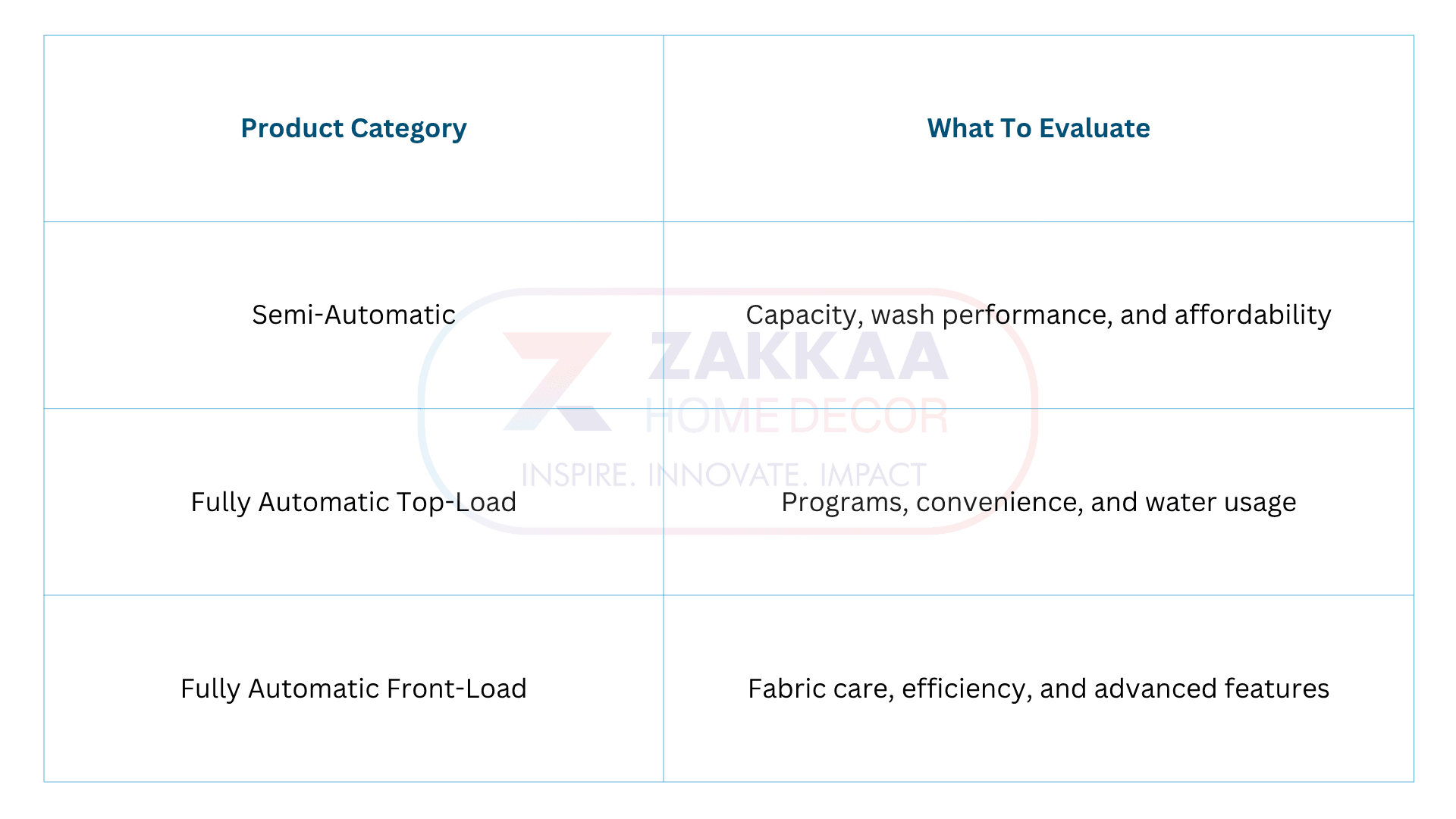
Shortlist manufacturers with relevant experience in your preferred category instead of relying on general appliance manufacturing experience.
2. Look Beyond The Factory Photographs
A modern-looking facility does not automatically prove that a manufacturer can handle your order. Ask for a factory visit, production-line walkthrough, or live video inspection.
Pay attention to assembly equipment, component handling, workforce, testing stations, and production arrangements. Also establish which operations happen in-house and which are outsourced. This helps you understand how much control the manufacturer has over production.
3. Understand Its Product Development Capabilities
Your brand may need more than an existing washing machine with a different logo. Discuss the possibility of adapting product specifications, control panels, appearance, capacity, features, and packaging.
Ask the supplier to explain the development process, available design support, and any tooling requirements. If you have a product concept, find out whether the manufacturer can work from your specifications or provide design and development assistance.
4. Treat Quality Testing As A Deal-Breaker
A product sample can look impressive and still fail during regular use. Request details of the manufacturer's testing procedures before approving production.
Important washing machine manufacturing evaluation areas include:
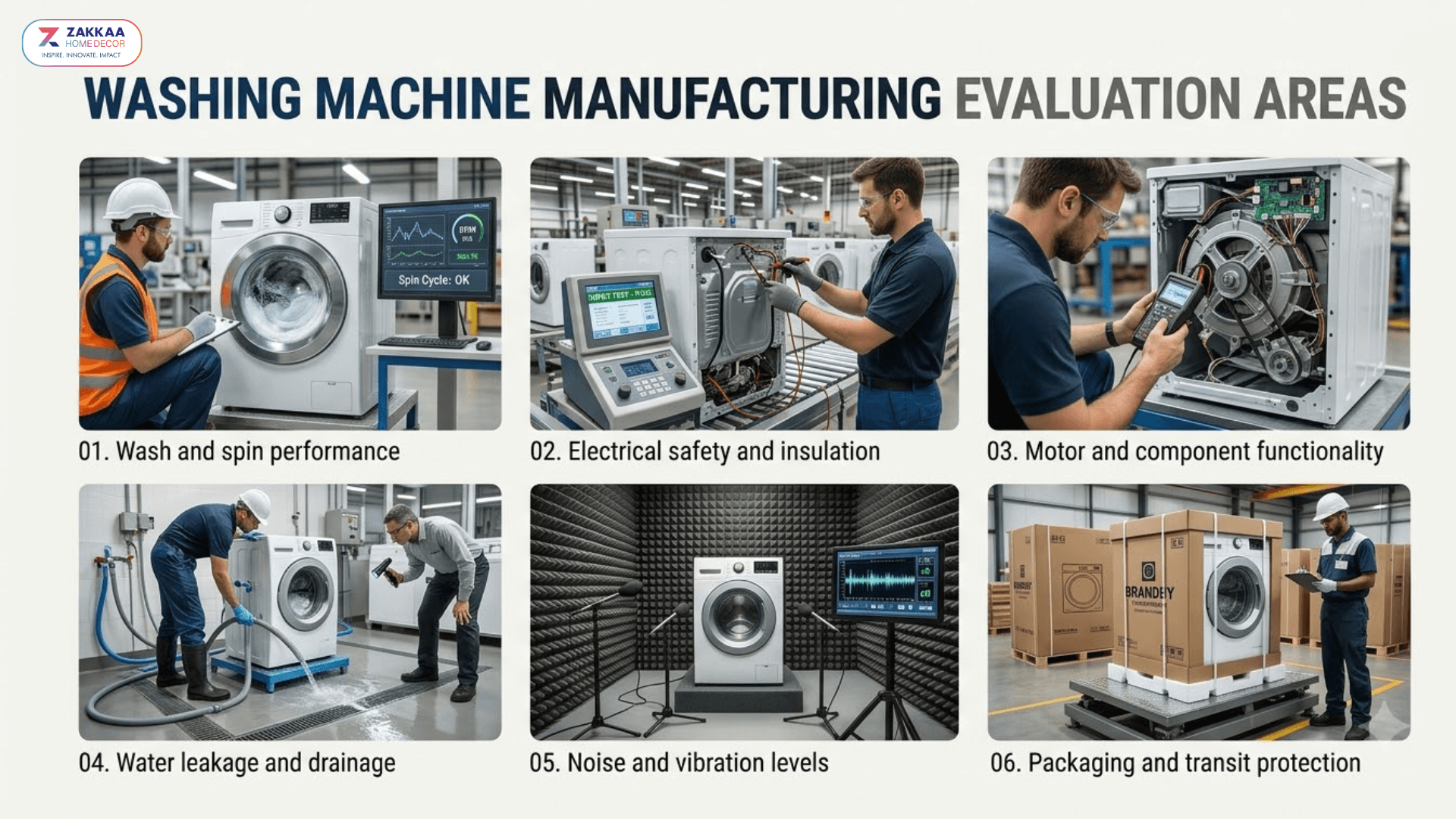
Wash and spin performance.
Electrical safety and insulation.
Motor and component functionality.
Water leakage and drainage.
Noise and vibration levels.
Packaging and transit protection.
Ask for relevant test records and understand how defective products are identified and handled.
5. Verify Product Certifications And Compliance
Regulatory documentation should be checked before commercial production, not after the machines are ready for dispatch. For domestic electric washing machines in India, verify the applicable BIS requirements and the licence covering the relevant product and manufacturing unit.
The BIS inspection and testing framework also addresses quality assurance plans and production testing records. Ask for the applicable licence, model details, and supporting documentation instead of accepting a general claim of certification.
6. Calculate Production Capacity Against Your Sales Plan
A manufacturer's total production capacity is not necessarily the capacity available for your order. Existing commitments, model availability, component supply, and production schedules can affect actual output.
Discuss monthly production availability, peak-season planning, order size, and repeat-order timelines. Your ideal partner should have enough capacity headroom to support business growth without making unrealistic delivery promises.
7. Investigate The Component Supply Chain
A washing machine brings together several important components, from motors and pumps to drums, control systems, and electrical parts. Their availability can influence both manufacturing costs and delivery schedules.
Ask which components are manufactured in-house, which come from approved vendors, and how replacements are managed. Also discuss whether component changes require your approval, particularly when they affect product specifications or performance.
8. Compare The Complete Commercial Proposal
Do not select a supplier simply because its initial quotation is lower. Request a detailed cost breakdown covering the following:
Per-unit manufacturing price.
Minimum order quantity (MOQ).
Customization and tooling charges.
Branding and packaging expenses.
Testing and inspection costs.
Payment terms and price revisions.
Compare quotations for identical specifications and quantities. This makes it easier to identify hidden expenses before committing to an order.
9. Put Brand Ownership And Responsibilities In Writing
OEM partnerships involve more than production. Your agreement should clearly define ownership of branding, product designs, tooling, technical documents, and customized specifications.
Include confidentiality terms, defect handling, warranty responsibilities, delivery commitments, and conditions for terminating the agreement. If you are developing a differentiated product, clarify whether the manufacturer can offer similar specifications to competing brands.
10. Test The Partnership With A Pilot Order
Before placing a large order, consider starting with an approved sample or pilot production batch. This gives you a chance to evaluate actual product quality, packaging, documentation, and delivery performance.
Use the pilot to finalize product specifications and acceptance criteria. Record any changes required before approving mass production. A successful sample is a useful starting point, but repeatable production quality is what matters in the long run.
Quick Read: Which Washing Machine Should You Buy? A Practical Buying Guide
Warning Signs To Watch For During Washing Machine Manufacturer Selection
Some concerns become visible only after you start asking detailed questions. Be cautious if a supplier:
Avoids factory visits or production discussions.
Cannot provide relevant product test records.
Gives unclear answers about certifications.
Changes quotations without explaining the costs.
Promises unrealistic production timelines.
Refuses to document warranty responsibilities.
A transparent manufacturer should be willing to discuss these matters before receiving your order.
Know More: Semi-Automatic Washing Machine Manufacturing: Design, Motor & Assembly
Why Choose Zakkaa For Washing Machine OEM Manufacturing?
Entering the washing machine market requires a product range that fits your brand's positioning and customer expectations. Zakkaa's washing machine offerings include OEM production, tailored design and branding options, and semi-automatic washing machine models developed for Indian conditions. Businesses can explore its OEM manufacturing and product options when planning private-label or bulk appliance requirements.
OEM washing machine options for brands
Private-label branding for selected product ranges
Support for bulk appliance sourcing requirements
Manufacturing capabilities across multiple OEM appliance categories
Product discussions aligned with brand requirements
Conclusion
Choosing a washing machine OEM manufacturer is a business decision that affects your product, reputation, and future growth. Evaluate the factory, testing systems, compliance documents, commercial terms, and long-term support before signing an agreement. Contact a trusted washing supplier in India to discuss washing machine OEM requirements for private-label and bulk orders.
Frequently Asked Questions (FAQs)
What Is The Difference Between OEM And ODM Washing Machine Manufacturing?
OEM generally involves manufacturing based on the buyer's specifications, while ODM includes product design and development by the manufacturer.
Can Startups Partner With Washing Machine OEM Manufacturers?
Yes. Startups can explore OEM or private-label arrangements, subject to the manufacturer's MOQ, product availability, customization options, and commercial terms.
What Is The MOQ For Washing Machine OEM Orders?
MOQ varies by manufacturer, model, customization level, and production requirements. Request model-specific quantities before finalizing your sourcing plan.
Which Certifications Should A Washing Machine Manufacturer Have In India?
Check the applicable BIS licence and product compliance requirements for the specific washing machine model and manufacturing unit.
6. Can I Sell Private-Label Washing Machines Under My Own Brand?
Yes. Many OEM arrangements allow businesses to sell manufactured products under their own branding, subject to agreed specifications and legal requirements.
7. How Can I Check The Quality Of An OEM Washing Machine?
Review product specifications, test reports, sample performance, electrical safety, wash functions, component quality, and packaging before approving production.
8. What Should An OEM Manufacturing Agreement Include?
It should define product specifications, pricing, MOQ, delivery schedules, branding ownership, confidentiality, quality standards, warranty responsibilities, and defect resolution procedures.