Nov 12, 20267 min readBy Aditya Singh
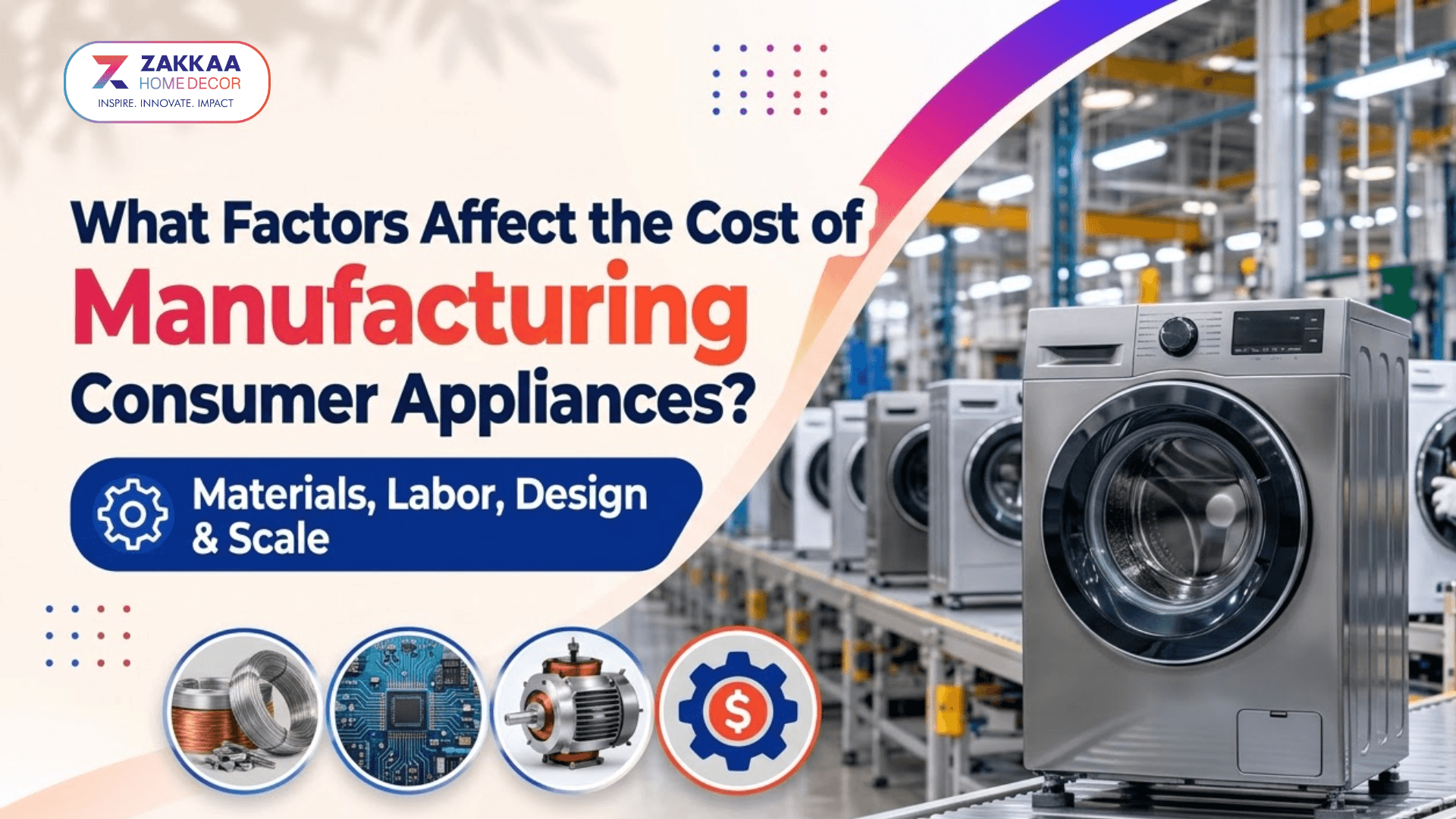
A new appliance idea may look promising on paper, but have you considered what it will take to manufacture it at scale? The answer depends on several things, including raw material prices, component availability, production capacity, and labor expenses.
For example, manufacturing an air cooler involves different materials and components than producing a refrigerator or mixer grinder. The product design, motor specifications, electrical fittings, assembly requirements, and testing process all influence the cost.
So, before finalizing your production budget, it's worth understanding where these expenses come from. This guide breaks down the major factors that affect OEM consumer appliance manufacturing costs in India.
10 Factors That Influence Appliance Manufacturing Costs
A consumer appliance manufacturing budget can change quite a bit between the initial product design and the final production run. Material choices, component specifications, factory expenses, and order quantities all have a part to play. Let's look at 10 factors that determine how much it costs to manufacture consumer appliances.
1. Raw Material And Component Selection
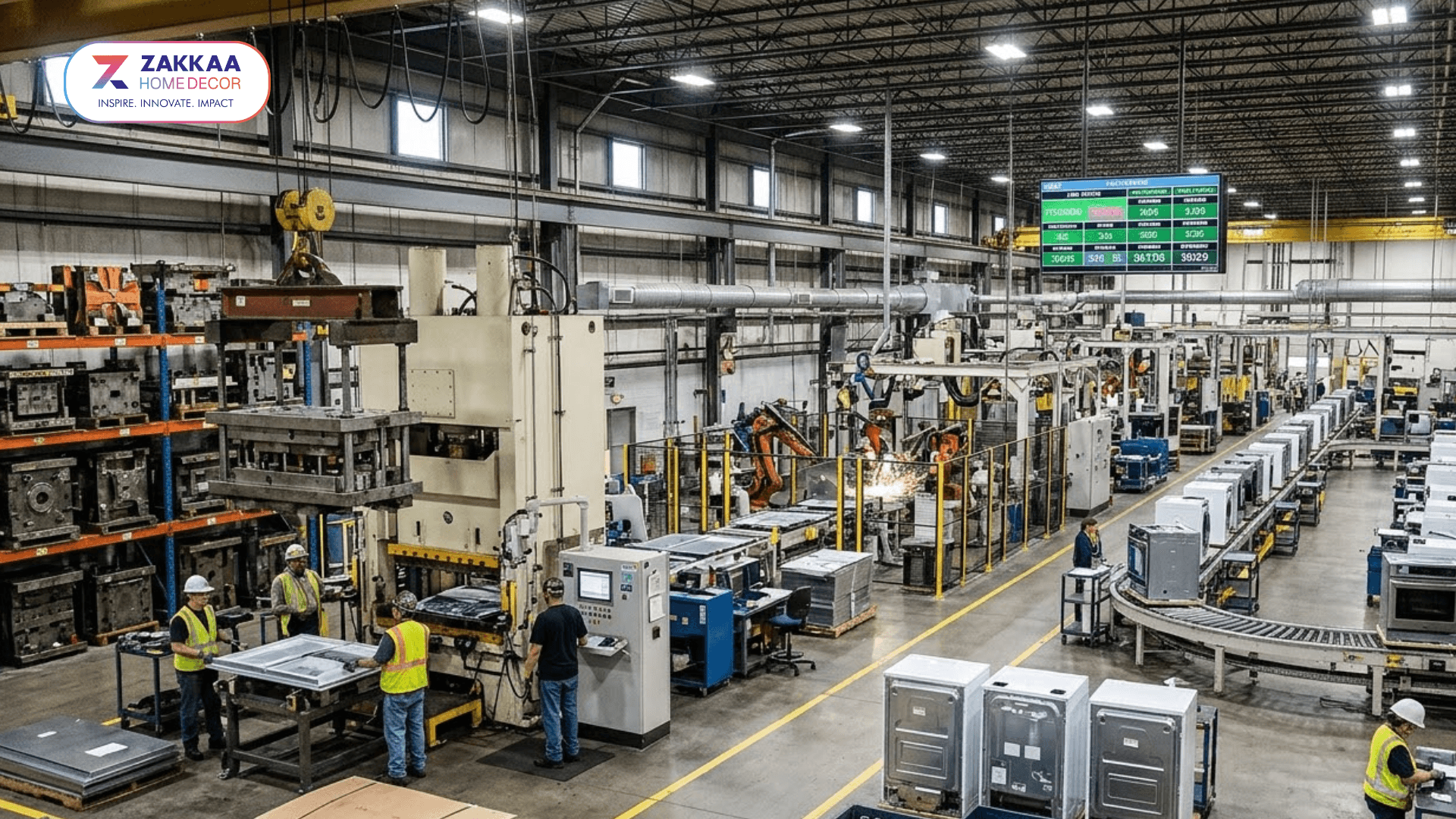
The materials used in an appliance often form a major part of its production cost. Steel, aluminium, plastic, copper, motors, heating elements, compressors, and electronic components all have different prices.
For example, a refrigerator requires components such as a compressor and cooling system, while a mixer grinder needs a motor, blades, jars, and housing. Material grade, supplier rates, and availability influence the overall bill of materials (BOM).
2. Product Design And Development
A simple appliance with a standard design generally requires less development work than a product with customised features or a complex structure.
Expenses may include product drawings, engineering, prototypes, design revisions, and performance trials. If a brand wants a unique appearance, special controls, or modified internal components, development costs may increase before regular production begins.
3. Tooling, Moulds, And Machinery
Custom product designs may require dedicated moulds, dies, fixtures, or production tools. These are used to manufacture parts such as plastic housings, metal panels, and other product components.
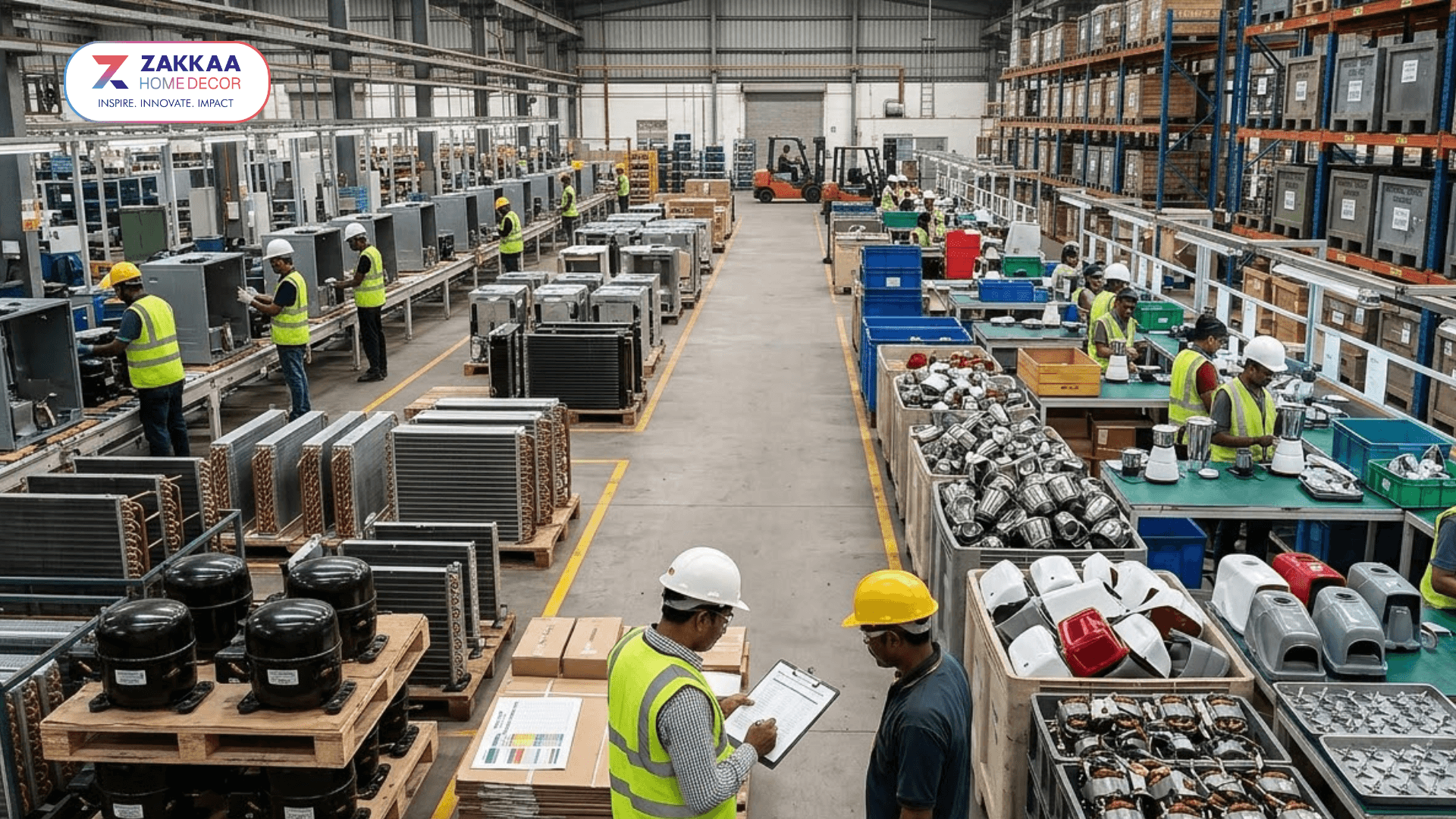
The initial investment can be significant, particularly for a new product. However, when tooling costs are spread across a larger production quantity, their contribution to each unit becomes lower.
4. Manufacturing Process And Assembly Requirements
Not every appliance follows the same production route. Some products need plastic injection moulding, metal fabrication, motor winding, or electronic board assembly, while others mainly require component fitting and final assembly.
The number of production stages, machine requirements, process time, and level of automation all affect conversion costs. A product with more intricate assembly work may require additional labour and production resources.
5. Labour And Skilled Workforce
Workers are involved in component preparation, machine operation, wiring, assembly, inspection, and packing. Products requiring specialised electrical or mechanical work may need trained technicians rather than only general assembly staff.
Manufacturers also account for supervision, training, statutory employee costs, and workforce availability. The actual labour expense per appliance depends on production time, team size, output, and the level of skill required.
6. Production Volume And Minimum Order Quantity
Order quantity has a direct bearing on the per-unit manufacturing cost. When a manufacturer produces a larger batch, fixed expenses such as setup, tooling allocation, and production preparation can be distributed across more units.
Smaller orders may have a higher unit cost because the same setup work is spread across fewer products. This is why OEM manufacturers usually discuss the minimum order quantity (MOQ) before preparing a commercial quotation.
7. Quality Testing And Certification
Quality checks are necessary to verify that an appliance works as intended and meets applicable safety requirements. Testing may cover electrical safety, performance, temperature, noise, durability, and other product-specific parameters.
Certification and compliance expenses can include laboratory testing, documentation, sample preparation, and applicable registration requirements. The exact requirements depend on the appliance category and the standards applicable to it in India.
8. Factory Overheads And Energy Consumption
The cost of home appliance manufacturing also includes expenses that cannot be linked to just one appliance. Factory rent, electricity, machine maintenance, equipment depreciation, water, consumables, and production supervision are examples.
Energy-intensive processes such as injection moulding, metalworking, and certain heating operations can increase utility expenses. Manufacturers allocate these overheads across production based on suitable factors such as machine hours or output.
9. Packaging, Storage, And Transportation
An appliance needs suitable packaging before it leaves the factory. Cartons, protective materials, labels, manuals, and accessories add to the cost of each finished unit.
Transportation also matters, particularly for bulky products such as refrigerators, coolers, and washing machines. Delivery distance, shipment size, storage requirements, and handling arrangements can change the total expense of fulfilling an order.
10. Supplier Location And Raw Material Availability
The distance between component suppliers and the manufacturing facility can affect procurement and transportation expenses. Imported components may also involve customs duties, currency fluctuations, longer lead times, and additional inventory planning.
A well-developed local supplier network can help reduce procurement delays and certain logistics expenses. However, the final decision should also consider component quality, technical specifications, and supplier reliability rather than price alone.
Read Too: Institutional Furniture Manufacturing & Bulk Buying Guide For Schools
How Is The Manufacturing Cost Per Appliance Calculated?
Manufacturers generally prepare a cost sheet to understand the expense involved in producing each unit. A basic calculation includes direct materials, labour, production expenses, and allocated factory overheads.
Manufacturing Cost Per Unit = Total Production Cost ÷ Total Good Units Produced
The following table shows the main elements considered during costing:
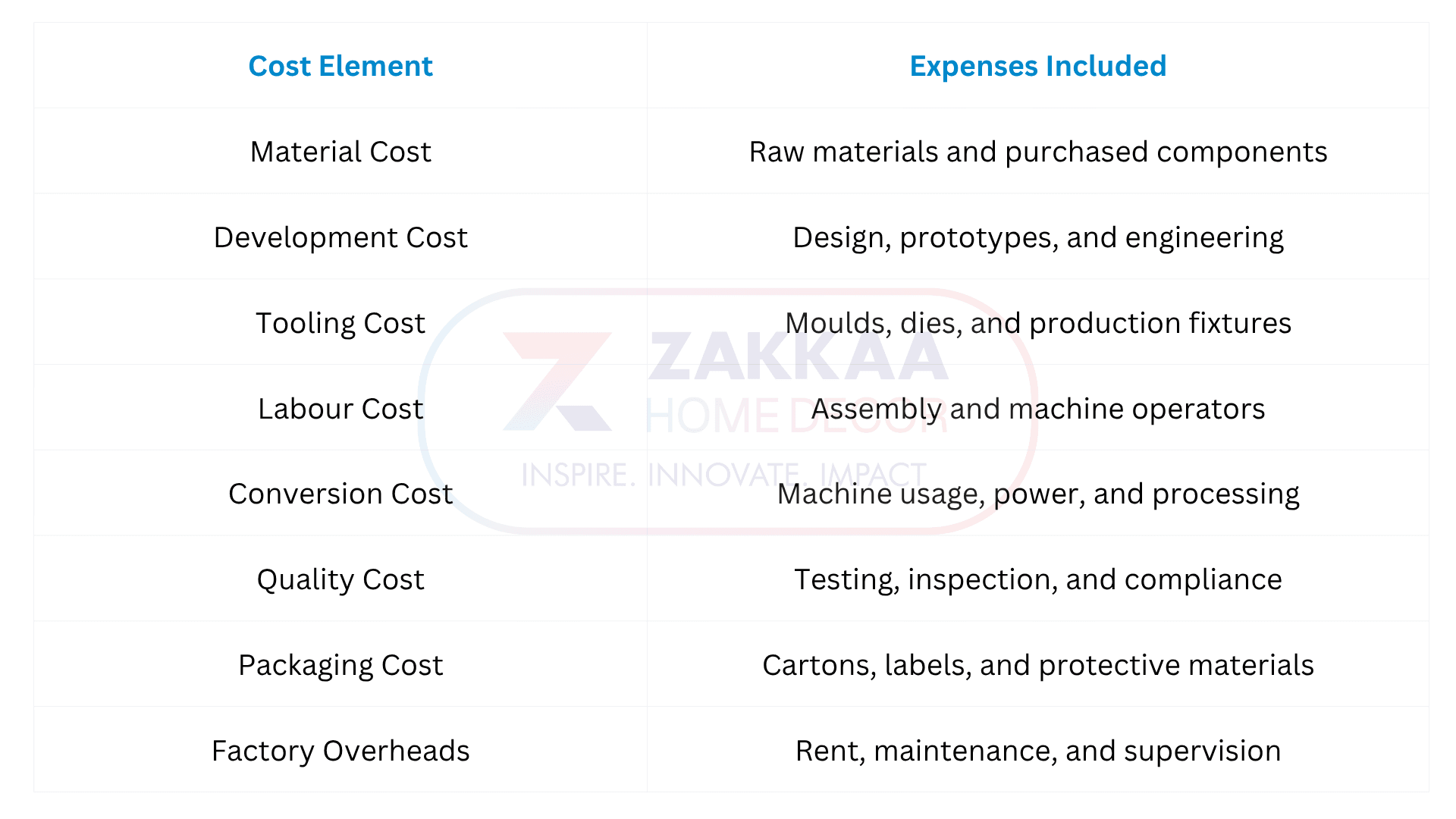
This is a basic production-cost view. A complete commercial quotation may also include freight, administration, financing expenses, warranty provisions, and the manufacturer's margin.
Explore More: Private Label Air Cooler Manufacturing: A Guide For Appliance Brands in India
What Should Businesses Consider Before Finalising An OEM Quote?
A lower per-unit quotation does not always mean a better manufacturing deal. Businesses should compare the product specifications and commercial terms behind each offer.
Before approving an OEM order, clarify:
Product specifications and approved material grades
Minimum order quantity and price slabs
Tooling ownership and development charges
Packaging, branding, and customisation expenses
Testing, certification, and inspection responsibilities
Payment terms and production timelines
A written cost breakdown makes it easier to compare manufacturers and identify expenses that may arise after production starts.
Quick Read: Commercial Steel Almirah: What To Check Before Bulk Procurement
How Zakkaa Supports Consumer Appliance Manufacturing
Zakkaa works with businesses exploring OEM and private-label appliance manufacturing, with attention to product requirements, production planning, and manufacturing support. Its manufacturing capabilities help brands discuss their requirements before moving towards bulk production.
OEM support for different appliance categories
Product development aligned with brand requirements
Manufacturing facilities supporting planned production volumes
Assembly operations for consumer appliance ranges
Bulk production support for business requirements
Aarav Homeware partnered with Zakkaa to develop and manufacture a steel almirah range for the Indian market. With OEM manufacturing and bulk production support, the brand expanded its product portfolio, reached 3X more retail buyers, and generated an additional revenue stream through almirah sales.
Conclusion
Consumer appliance manufacturing costs depend on the complete production setup, not just the price of raw materials or individual components.
Product design, tooling, labour, assembly requirements, order quantity, testing, and logistics all contribute to the final expense. Businesses should evaluate these factors together before choosing an OEM partner or approving a production budget.
A clear cost breakdown also helps prevent unexpected expenses and supports better pricing decisions as the product range grows. Connect with a leading appliance manufacturer in India to discuss your consumer appliance manufacturing, OEM, and bulk production requirements.
Frequently Asked Questions (FAQs)
What Is Included In Consumer Appliance Manufacturing Cost?
It generally includes raw materials, components, product development, tooling, labour, assembly, factory overheads, testing, and packaging.
Which Factor Has The Biggest Impact On Appliance Production Cost?
Raw materials and purchased components are often major cost contributors. Their share varies depending on the appliance category, design, and component requirements.
Does Bulk Production Reduce The Cost Per Appliance?
Yes, larger production quantities can spread setup, tooling, and other fixed expenses across more units, potentially reducing the per-unit cost.
What Is Included In OEM Manufacturing Cost?
OEM pricing may include materials, component sourcing, production labour, assembly, testing, packaging, tooling allocation, and the manufacturer's agreed charges.
Why Do Customised Appliances Cost More To Manufacture?
Customised appliances may require additional engineering, new moulds, special components, design changes, and separate testing, increasing the initial development and production expenses.