Nov 06, 202610 min readBy Aditya Singh
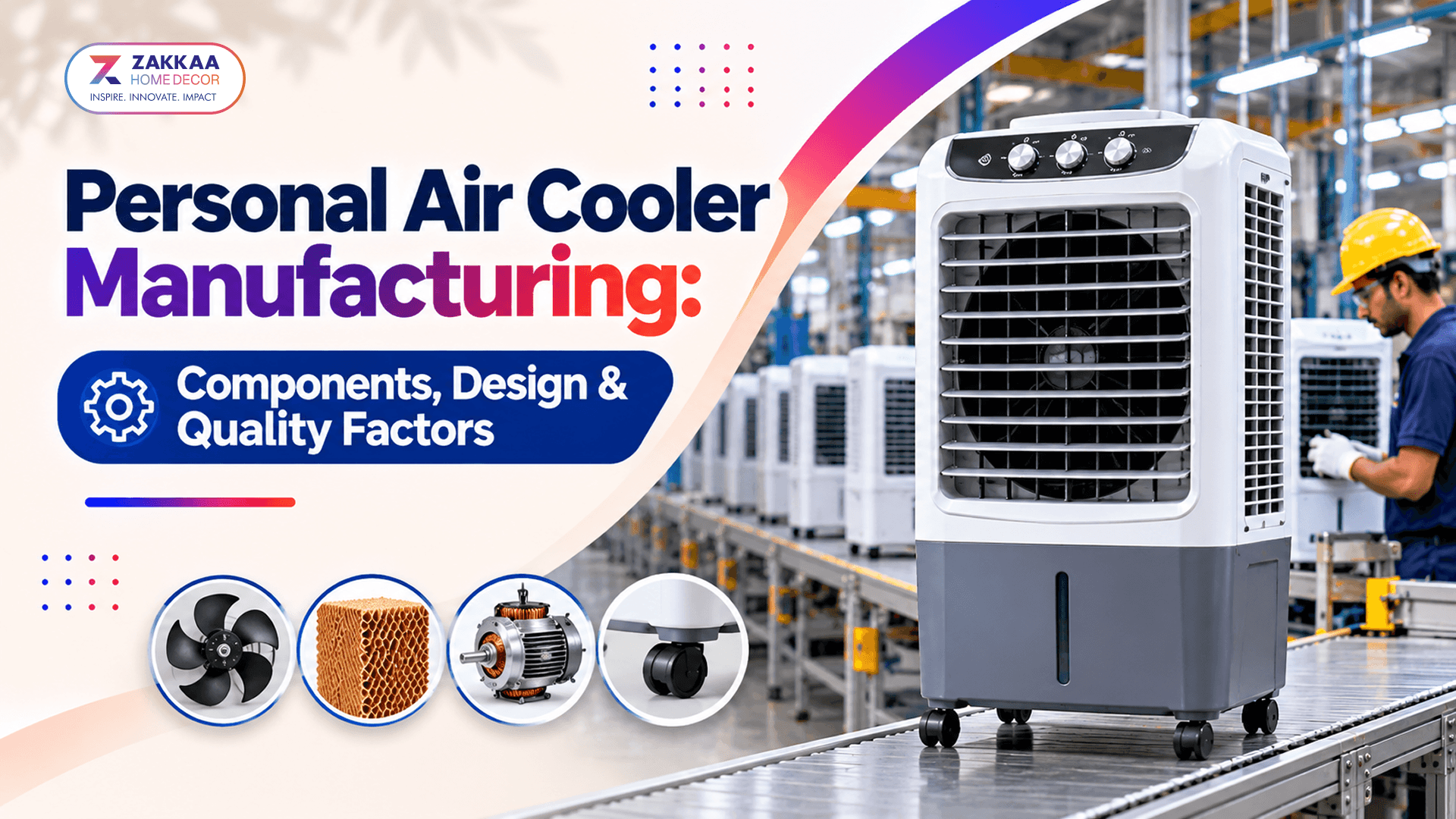
If you're planning to add personal air coolers to your appliance range, one of the first things to understand is how they are manufactured. These compact coolers may not have the size of a desert cooler, but they still require careful component selection, proper assembly, and performance testing.
Think about the parts that make the cooler work: a motor to power the fan, a pump to circulate water, cooling pads for evaporation, and a body that holds everything together. Each part has to be selected and fitted with the product's intended use in mind.
This guide takes you through the complete personal air cooler manufacturing process, from choosing components and preparing the body to assembling the cooling system and checking the finished unit.
Quick Answer: What Is Personal Air Cooler Manufacturing?
Personal air cooler manufacturing involves designing and producing compact cooling appliances for individual rooms and smaller spaces. These appliances generally use water evaporation to cool incoming air and circulate it through a fan.
Unlike larger desert coolers, personal air coolers are usually designed with a smaller body, compact water tank, and space-saving structure. Their dimensions, cooling capacity, airflow, and water storage requirements depend on the product design.
The personal air cooler manufacturing process brings together several activities, including:
Product design and engineering.
Plastic body and component manufacturing.
Motor, pump, and electrical component sourcing.
Cooling pad and water distribution integration.
Appliance assembly.
Functional and safety testing.
Packaging and dispatch.
For a personal cooler manufacturer, the objective is to produce an appliance that meets the agreed design, performance, durability, and safety requirements.
Key Components Used To Manufacture Personal Air Coolers
Before understanding the production stages, it is important to know the main cooler components. Each part contributes to the appliance's structure, airflow, water circulation, or electrical operation.
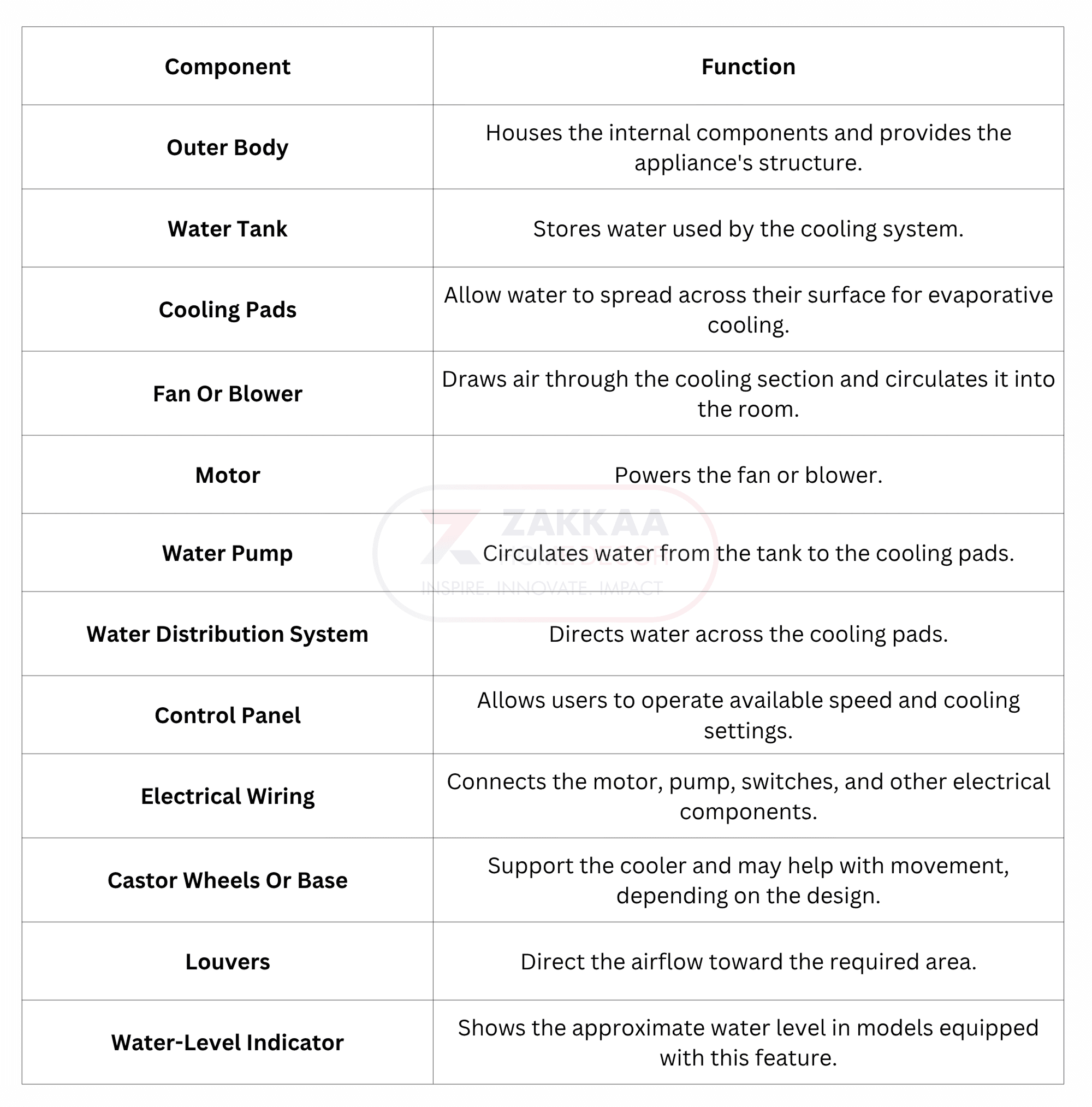
Component selection varies by model. Some personal air coolers use a fan, while others use a blower. Similarly, features such as castor wheels, remote controls, and water-level indicators depend on the product configuration.
How To Make Personal Air Cooler: Comprehensive Manufacturing Roadmap
The manufacturing process starts with product planning and ends with final inspection and packaging. Although production methods differ between factories, the following six stages explain the common workflow involved in portable cooler production.
Stage 1: Air Cooler Design And Engineering
The first stage involves planning the cooler's design, dimensions, internal layout, and expected performance. Engineers consider how the appliance will fit into smaller spaces while accommodating the water tank, cooling pads, motor, pump, and airflow system.
Key activities include:
Size Planning: Finalize the height, width, depth, and overall body proportions.
Component Placement: Decide where the motor, pump, cooling pads, and water tank will fit.
Airflow Design: Plan the air intake, cooling section, fan position, and air outlet.
Water System Design: Determine tank capacity, pump placement, and water distribution arrangements.
Control Selection: Define the available fan speeds, pump controls, and operating functions.
Design Validation: Review the design for assembly access, usability, and production feasibility.
At this stage, the manufacturer may prepare technical drawings, 3D models, and prototypes. These help evaluate the product layout before regular production begins.
Stage 2: Raw Material Selection And Component Procurement
Once the design is finalized, the factory identifies the materials and components required for production. Material selection depends on the appliance's construction, operating conditions, and target price range.
Common procurement activities include:
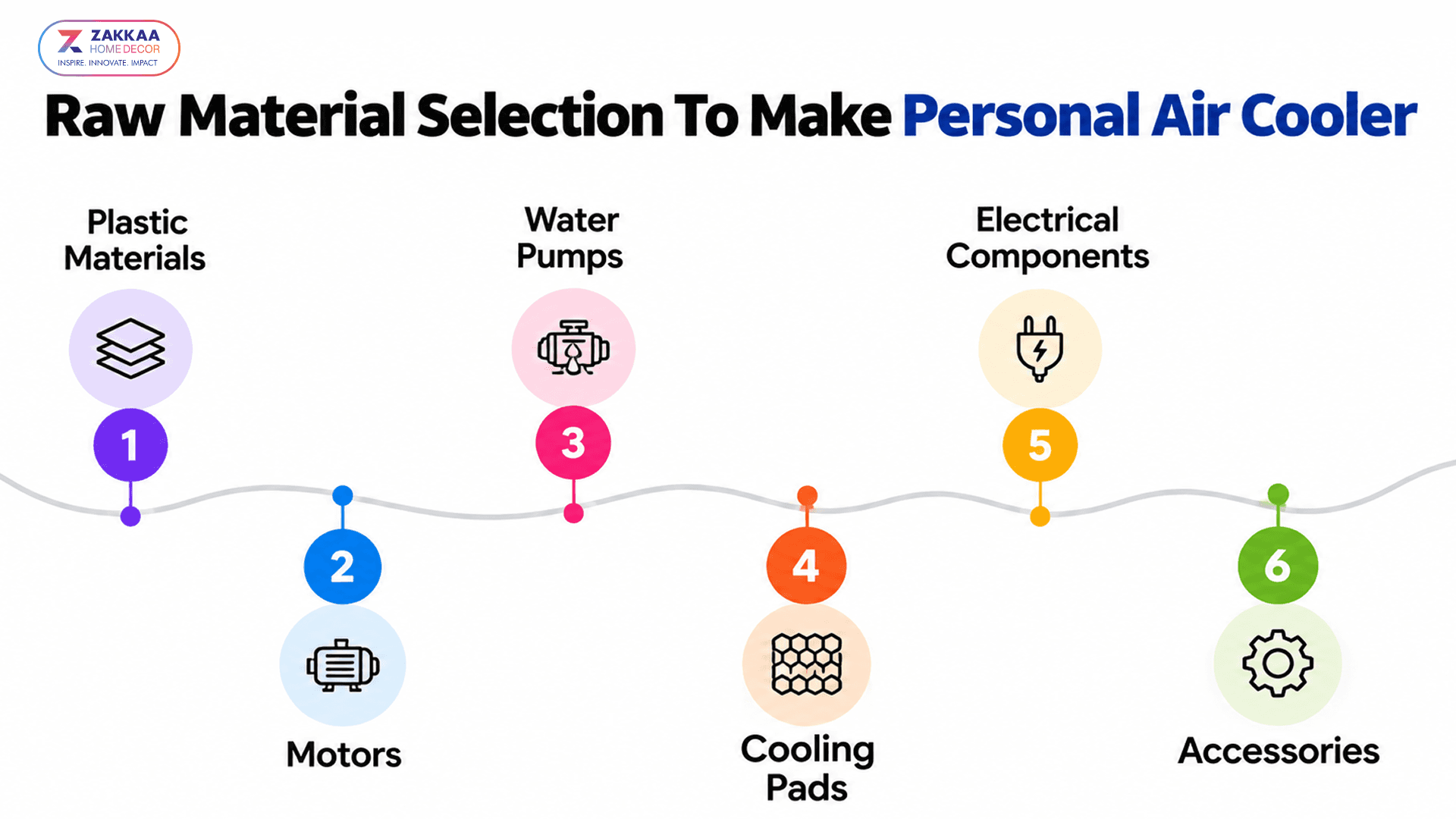
Plastic Materials: Select suitable plastic grades for the outer body, tank, panels, and internal supports.
Motors: Source motors that match the required airflow and operating specifications.
Water Pumps: Select pumps with suitable water circulation capacity.
Cooling Pads: Procure pads with the required dimensions and water absorption characteristics.
Electrical Components: Arrange switches, wiring, connectors, and control parts.
Accessories: Source louvers, wheels, grills, fasteners, and other model-specific components.
A personal cooler supplier or manufacturer should check component specifications before accepting materials for production. Incoming inspection may include visual checks, dimensional verification, and review of supplier documentation.
Stage 3: Plastic Body Manufacturing And Component Preparation
The outer body is an important part of compact air cooler production. It houses the internal components, supports the water tank, and provides the appliance's overall appearance.
Depending on the product design, the body and plastic parts may be manufactured through injection molding or other suitable plastic-forming processes.
The main activities include:
Mold Preparation: Prepare and inspect the molds required for the selected body design.
Plastic Molding: Process the selected plastic material into the required components.
Trimming And Finishing: Remove excess material and finish molded edges.
Dimensional Inspection: Check whether the parts match the approved design dimensions.
Component Preparation: Prepare panels, grills, louvers, tanks, and internal supports for assembly.
Factories may also source selected plastic parts from external vendors. The manufacturing arrangement depends on the factory's equipment and production capabilities.
Stage 4: Motor, Pump, Cooling Pad And Electrical Integration
After the body components are ready, the functional parts are prepared for installation. This stage is important because the motor, pump, cooling pads, and electrical system work together to produce the cooling effect.
The process generally includes:
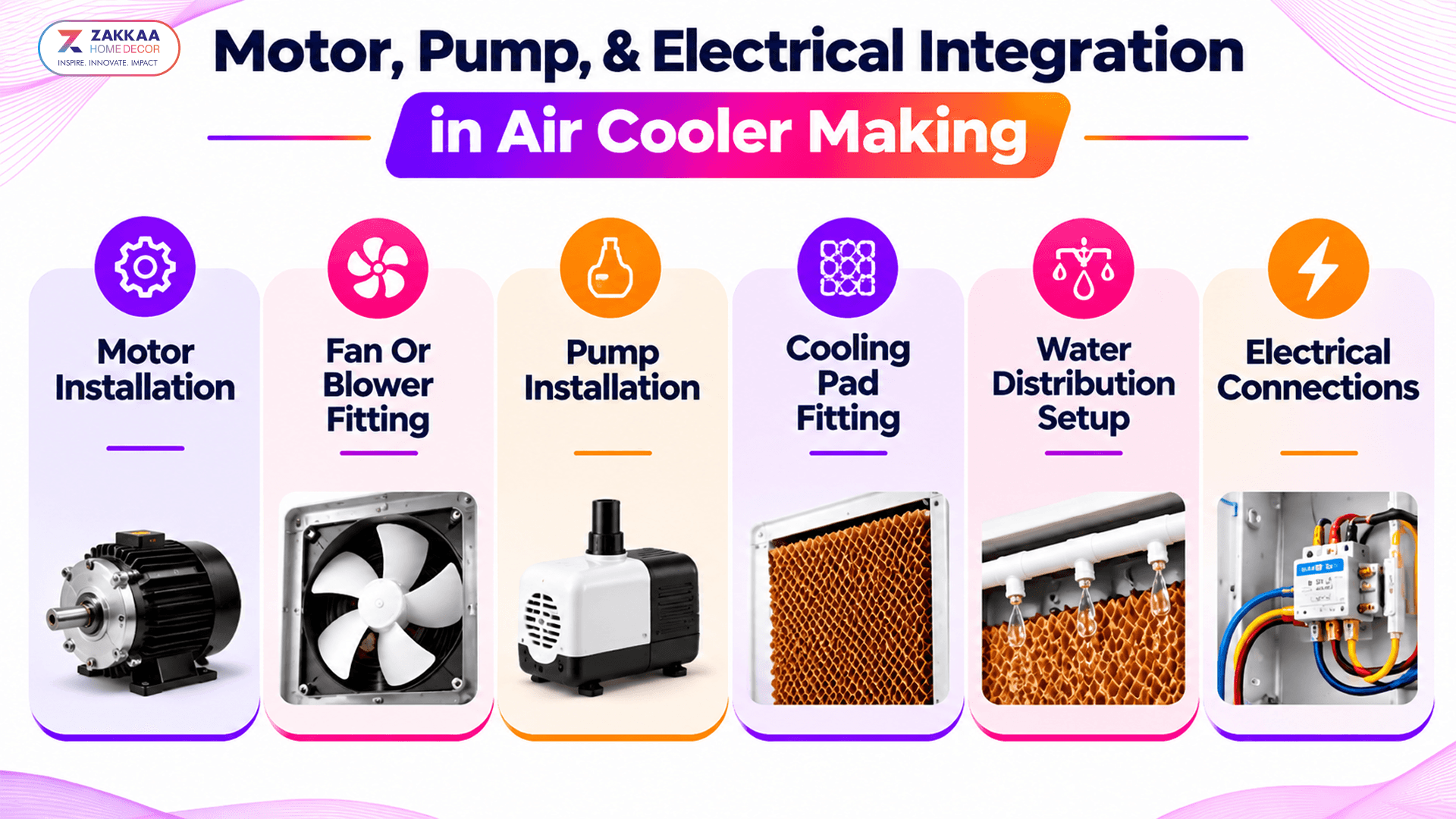
Motor Installation: Fit the motor into its designated mounting position.
Fan Or Blower Fitting: Connect the fan or blower according to the approved design.
Pump Installation: Position the water pump inside the designated water tank area.
Cooling Pad Fitting: Install cooling pads in the allocated sections.
Water Distribution Setup: Connect the pipes or distribution channels that carry water to the pads.
Electrical Connections: Connect the motor, pump, switches, and control components according to the wiring design.
The factory must ensure that components are fitted correctly and that wiring is routed securely. Proper alignment also helps prevent interference between moving parts and the cooler body.
Stage 5: Final Assembly And Product Integration
The next stage brings the prepared parts together to form a complete personal air cooler. Assembly may be performed manually, through dedicated workstations, or with a combination of both.
Typical assembly activities include:
Body Assembly: Join the molded body sections and secure the required panels.
Tank Integration: Fit the water tank and check its placement.
Cooling System Assembly: Secure the cooling pads and water distribution arrangement.
Fan Assembly: Install the fan or blower and its protective grill.
Control Panel Fitting: Attach switches, knobs, or electronic controls.
Accessory Installation: Fit louvers, handles, wheels, and other model-specific parts.
Final Wiring Check: Inspect electrical connections and component placement before testing.
During assembly, workers should follow the approved product specifications. The completed unit should have properly aligned panels, secure fittings, and accessible controls.
Stage 6: Quality Testing, Inspection And Packaging
The final production stage checks whether the assembled appliance meets the required specifications. Testing procedures depend on the product design, applicable standards, and the manufacturer's quality plan.
Common inspection activities include:
Visual Inspection: Check the body, finish, joints, and overall appearance.
Electrical Safety Checks: Perform applicable electrical safety and insulation tests.
Motor Operation: Check fan or blower operation at the available speed settings.
Water Pump Testing: Verify that water circulates through the distribution system.
Leakage Inspection: Check the tank and water connections for unwanted leakage.
Airflow Assessment: Evaluate air circulation against the product's defined specifications.
Control Testing: Verify the operation of switches, indicators, and other available controls.
After passing the required inspections, the cooler is cleaned, packed, and prepared for dispatch. Packaging should protect the appliance against movement, impact, dust, and handling damage during transportation.
Factors That Affect Personal Air Cooler Quality
A compact air cooler's performance depends on more than its motor or cooling pad. The quality of several components and their integration can affect its overall operation.
Motor And Fan Performance
The motor should match the fan or blower design and the intended airflow requirements. Buyers should check the motor specifications, available speed settings, operating noise, and performance test results.
Cooling Pad Quality
Cooling pads provide the surface through which water evaporates. Their material, dimensions, structure, and water distribution can affect cooling performance.
Water Pump And Distribution
A suitable pump should deliver water across the cooling pads according to the product design. Uneven water distribution may reduce the usable wet surface and affect performance.
Water Tank Design
The tank should have a practical capacity, secure construction, and a design that supports filling and cleaning. Its placement should also allow proper integration with the pump and other internal components.
Body Strength And Finishing
The outer body should have suitable material strength, well-finished edges, and secure joints. Poor fitting or uneven finishing can affect the product's appearance and assembly quality.
Electrical And Control System
Wiring, switches, connectors, and control components should meet the approved specifications. Their installation and operation should be checked during production and final inspection.
What To Check Before Choosing A Personal Air Cooler Manufacturer?
For retailers, distributors, and brands planning to source compact air coolers, selecting the right manufacturing partner is an important decision. A suitable supplier should be able to explain its product specifications, production process, and quality procedures.
Consider the following factors before finalizing a manufacturing arrangement.
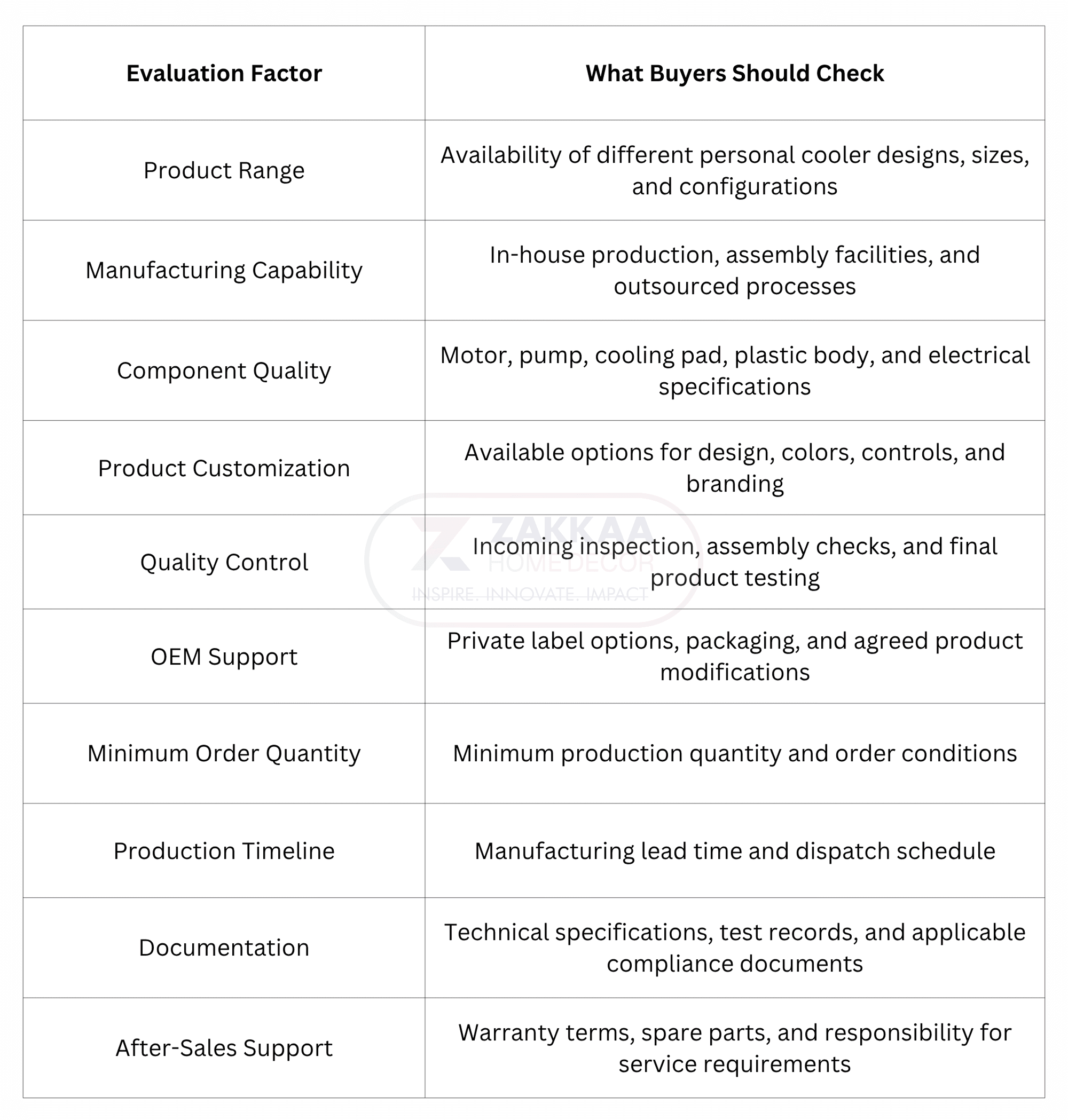
Request a product sample and review it against the technical specifications before approving a bulk order. Also clarify which production and quality activities are handled by the manufacturer and which remain your responsibility.
OEM Personal Air Cooler Manufacturing: What Brands Should Know
OEM cooler manufacturing allows a business to source products from an external manufacturer under an agreed product and branding arrangement. This can help retailers, distributors, and appliance brands introduce personal air coolers without setting up their own production facilities.
However, OEM arrangements can differ significantly. Some manufacturers offer ready-to-brand models, while others may support selected design changes or customized specifications.
How Zakkaa Fits Into Personal Air Cooler Manufacturing
For businesses exploring home appliance manufacturing, selecting a suitable production partner is an important part of product planning. Zakkaa operates in the home appliance and furniture manufacturing space, making it relevant to businesses evaluating appliance sourcing and manufacturing requirements.
Before discussing a personal air cooler project, buyers should define the intended product category, design requirements, component specifications, branding expectations, and order quantity.
A clear discussion about production capabilities, customization, quality checks, and commercial terms can help determine whether a manufacturing arrangement matches the project's needs.
Conclusion
Personal air cooler manufacturing involves several connected stages, from product design and material selection to body production, component integration, assembly, and final testing. Each stage contributes to the appliance's construction, airflow, water circulation, and overall quality.
For businesses planning to source compact air coolers, understanding these stages makes it easier to evaluate a personal cooler manufacturer, review product specifications, and plan OEM production requirements. Contact a trusted air cooler manufacturer in India to discuss your home appliance bulk order needs.
Frequently Asked Questions (FAQs)
How Does A Personal Air Cooler Produce Cool Air?
A personal air cooler circulates water over cooling pads. A fan or blower draws air through the wet pads, allowing some water to evaporate and reducing the air temperature under suitable conditions.
Which Plastic Is Used In Personal Air Cooler Manufacturing?
Plastic selection depends on the product design, component requirements, and manufacturing specifications. Manufacturers may use suitable grades of engineering or general-purpose plastics for different body and internal parts.
What Is The Role of A Water Pump In A Personal Air Cooler?
The water pump moves water from the tank to the cooling pads through a distribution system. This helps maintain the wet surface needed for evaporative cooling.
Can Personal Air Coolers Be Customized For Private Label Brands?
Yes, depending on the manufacturer's capabilities. Customization may include product colors, branding, packaging, selected features, and agreed design modifications.