Nov 11, 20266 min readBy Aditya Singh
When summer temperatures rise across India, an air cooler becomes a practical choice for many households. But have you ever thought about what goes into making a domestic air cooler? Its cooling performance depends on several components, their quality, and how well they work together.
A domestic air cooler is built through a series of manufacturing stages, starting with the body and extending to the motor, fan, cooling pads, and water pump. Each part has a specific job, and its selection can affect the finished product.
If you're curious about how an air cooler manufacturer brings all these parts together, there's quite a bit to explore. Let's look at the domestic air cooler manufacturing process in India, one stage at a time.
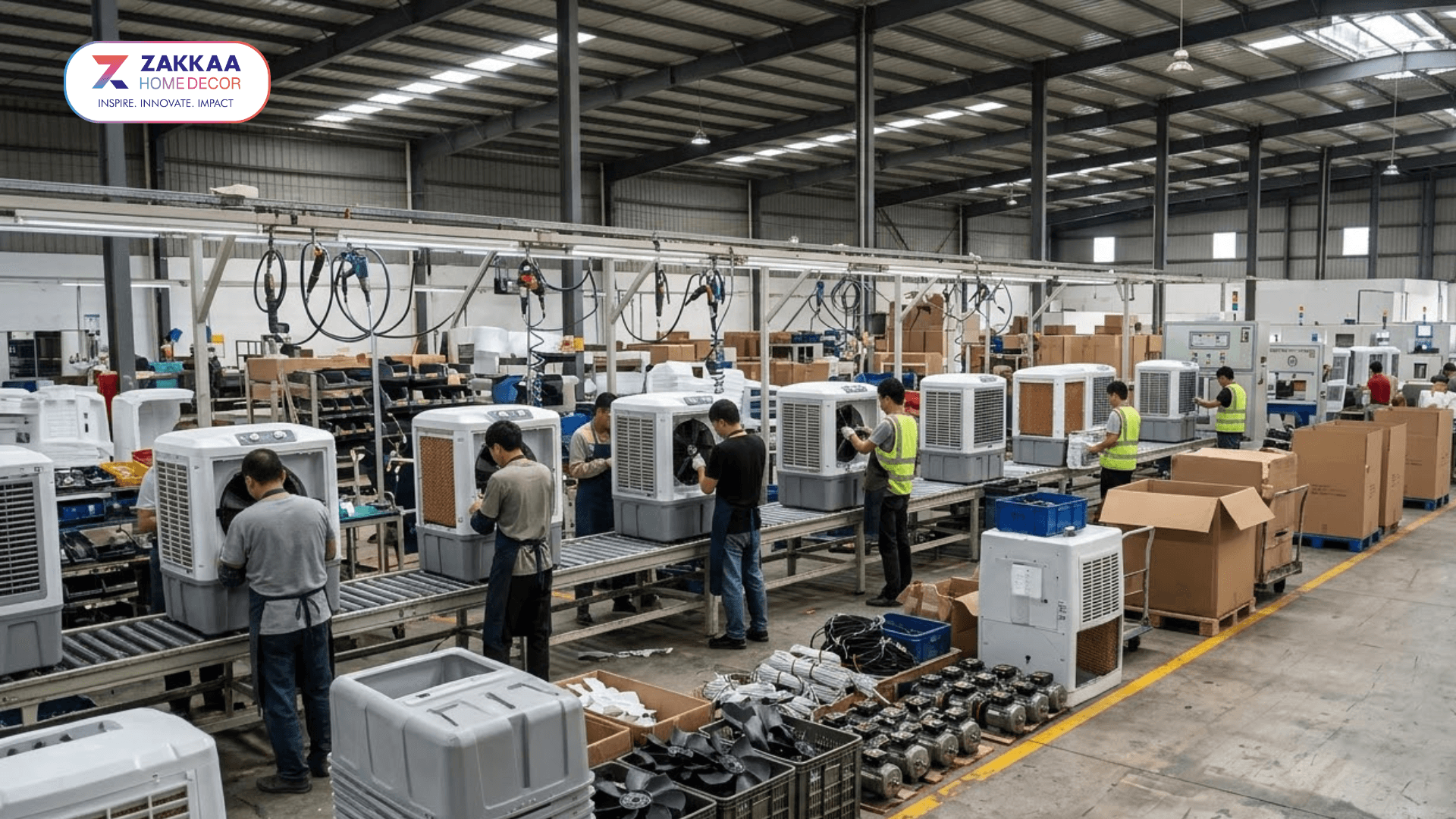
How To Manufacture Domestic Air Cooler: Step-By-Step Process
If you're planning to manufacture a domestic air cooler, knowing the production sequence can make the entire process easier to understand. Each stage, from body fabrication and component fitting to wiring and testing, has its own requirements. Let's walk through how these steps of domestic air cooler manufacturing come together during production.
Step 1: Identifying The Right Domestic Air Cooler Category
Manufacturing begins with deciding which type of customer the air cooler will serve. A personal air cooler is designed for smaller rooms, whereas desert air coolers generally cater to larger spaces. Window air coolers suit homes where installation space is limited.
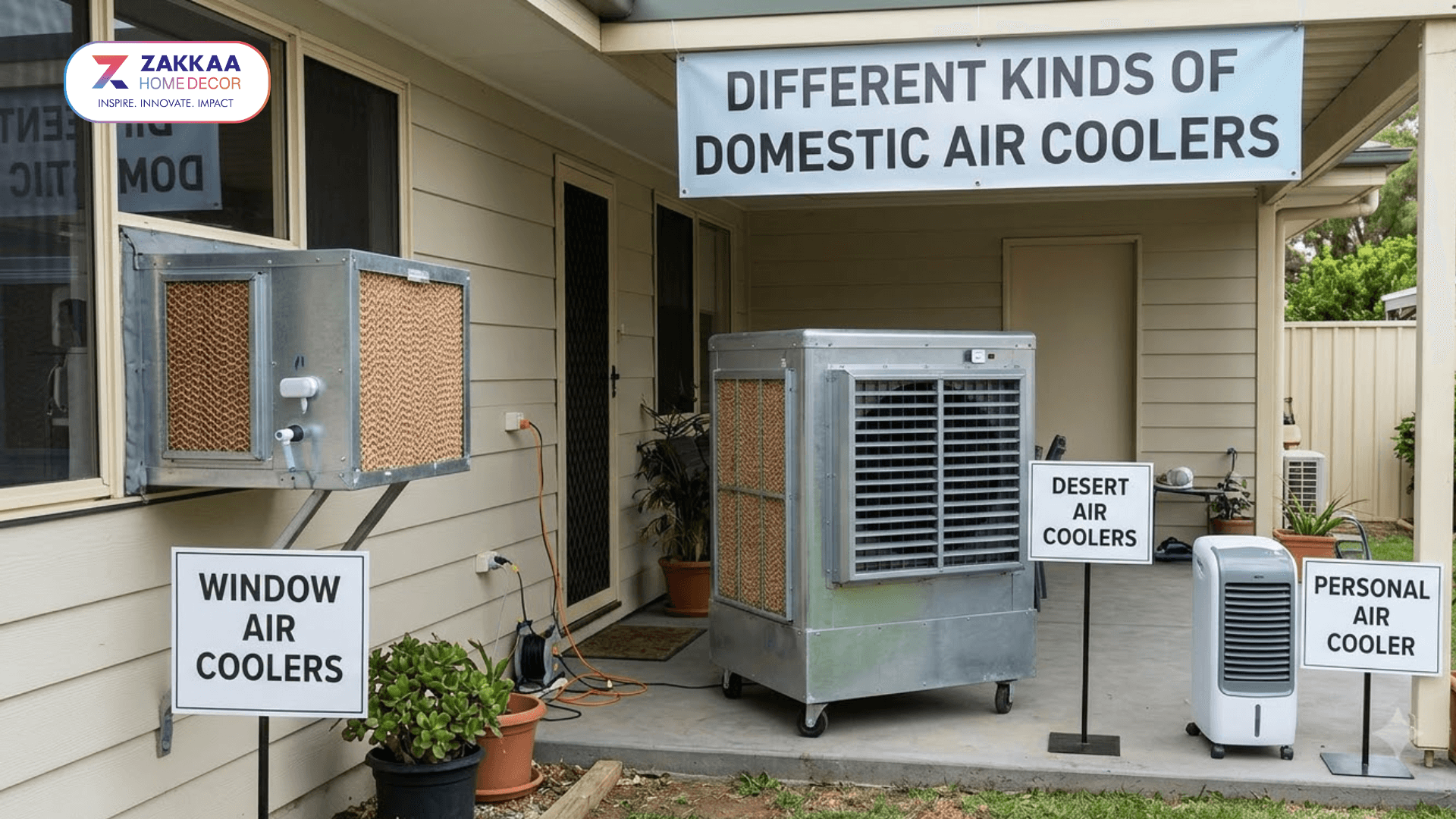
This decision influences the cooler's dimensions, tank capacity, air delivery, design, and price range.
Step 2: Designing The Air Cooler Body
The outer body of air coolers gives the appliance its shape and houses the internal components. Residential coolers commonly feature plastic bodies, while certain models use metal construction.
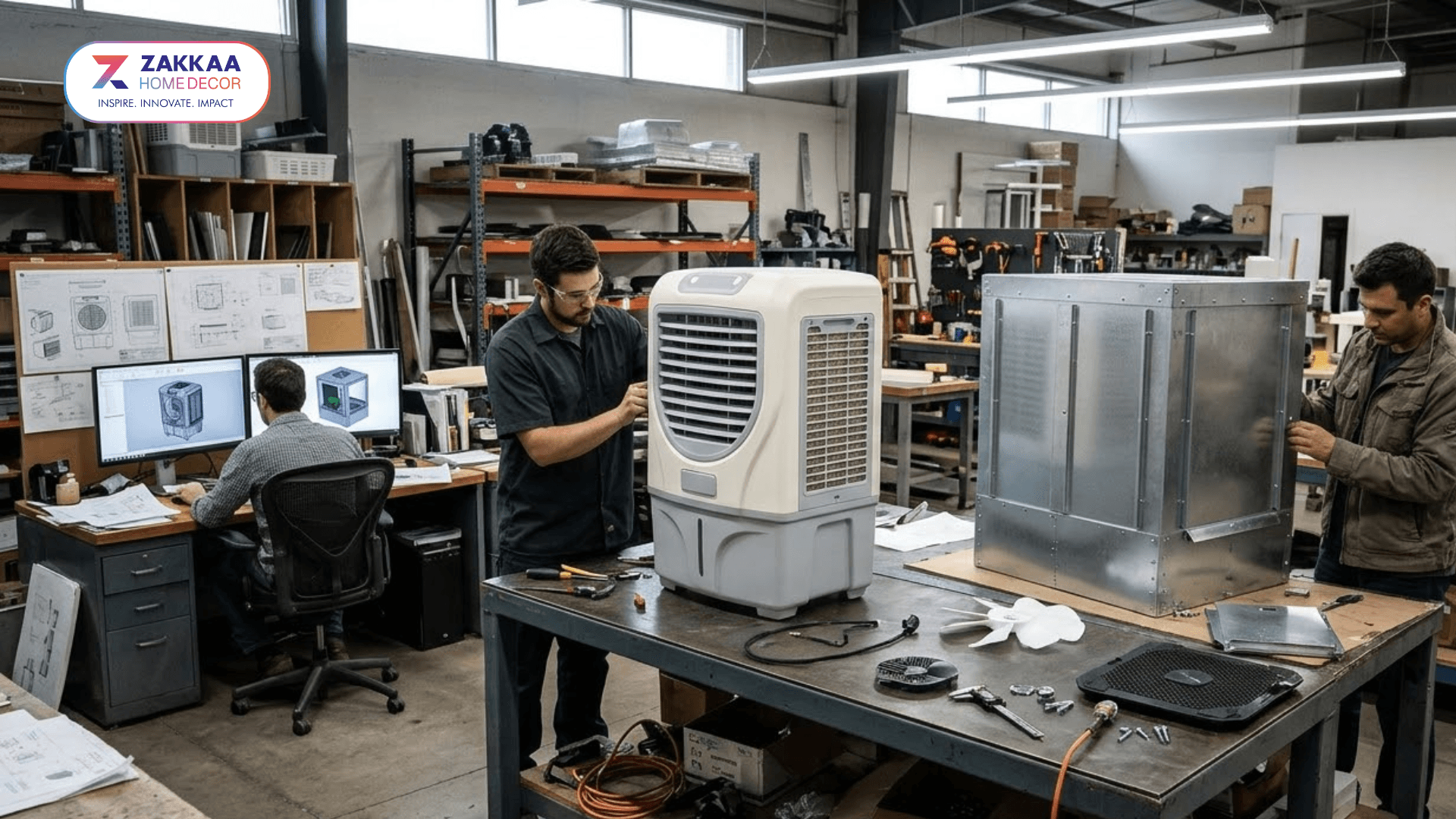
Plastic bodies are generally produced through injection moulding. Metal versions involve sheet cutting, bending, joining, and finishing. The design should also allow easy access to the water tank, cooling pads, and control panel.
Step 3: Selecting The Essential Components
A cooler's performance depends on how well its individual parts work together. Manufacturers select components according to the model's specifications and intended usage.
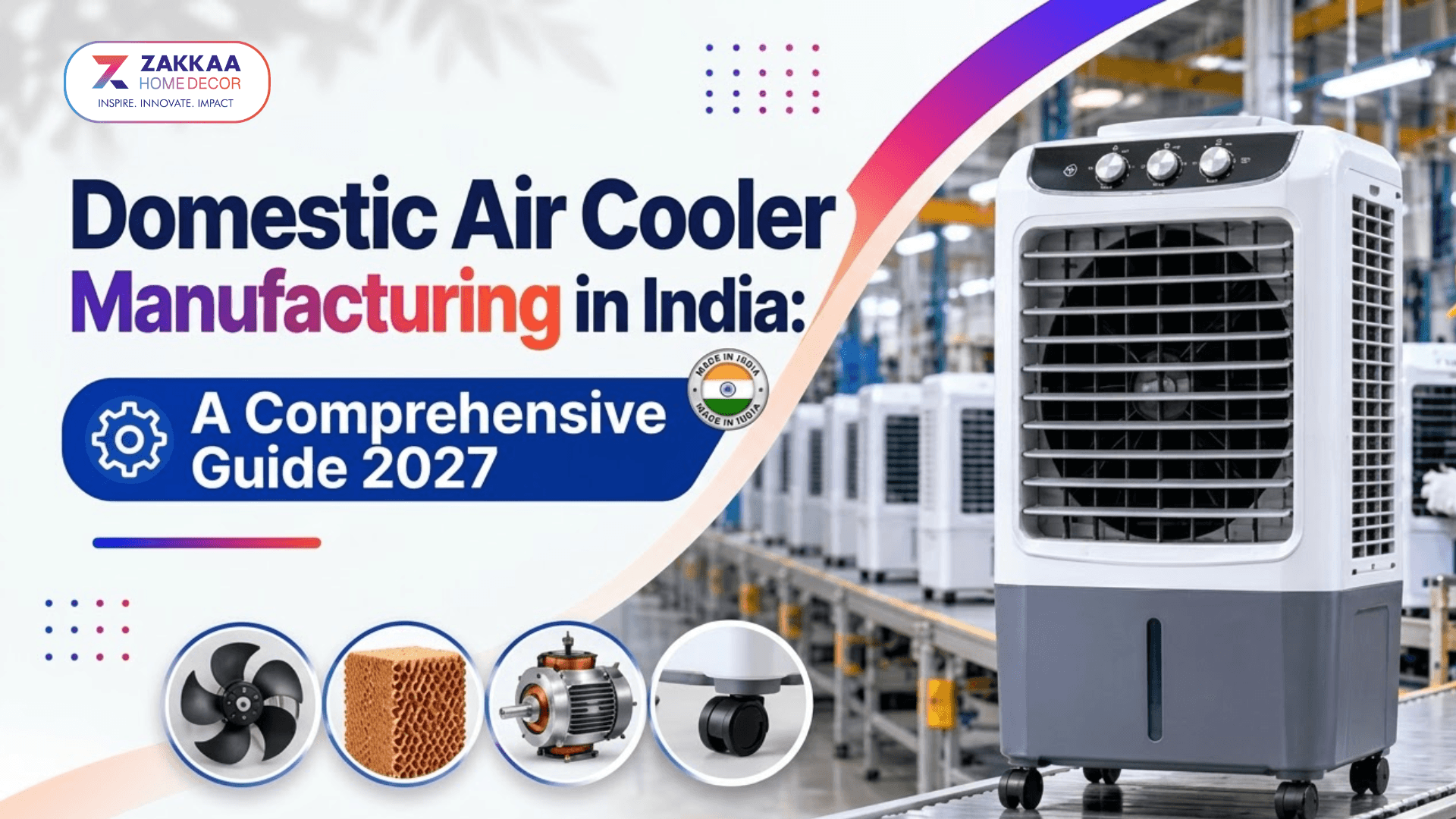
The main parts include:
Motor and fan or blower
Honeycomb or wood-wool cooling pads
Water pump and distribution pipes
Water tank and float mechanism
Body panels, grills, and louvers
Switches, wiring, and control units
Component compatibility is important when planning the product.
Step 4: Preparing Air Cooler Body And Moulded Parts
For plastic models, injection moulding machines shape the body, tank, grills, and other plastic components. The moulds need to produce parts with accurate dimensions and a proper finish.
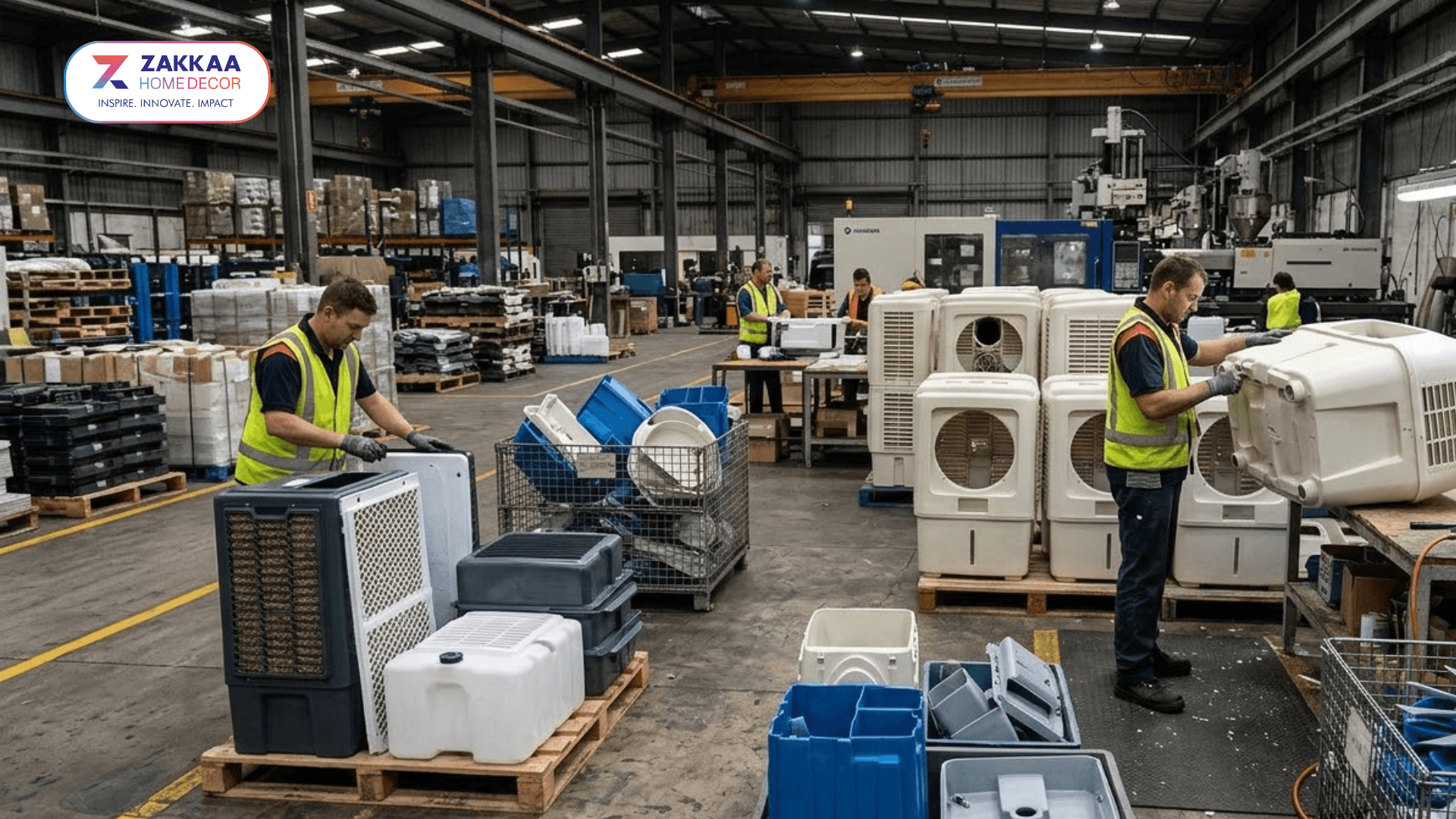
Metal air cooler bodies follow a different route. GI sheets are cut, punched, bent, and joined through suitable fabrication methods. Both processes require dimensional checks before the parts move to assembly.
Step 5: Matching The Motor With Airflow Requirements
The motor and fan determine how air is circulated through the cooler. Their specifications should match the product's intended air delivery and room application.
Blade design, motor capacity, fan size, and outlet dimensions all influence airflow. Simply fitting a higher-capacity motor does not guarantee better cooling if the overall air circulation design is unsuitable.
Quick Read: How To Choose A Domestic Air Cooler For Home Based On Your Needs
Step 6: Fitting Cooling Pads And Water Circulation To Make Air Cooler
Cooling pads are responsible for the evaporative cooling process. Hot air passes through water-soaked pads, allowing evaporation to absorb heat before the fan circulates the air.
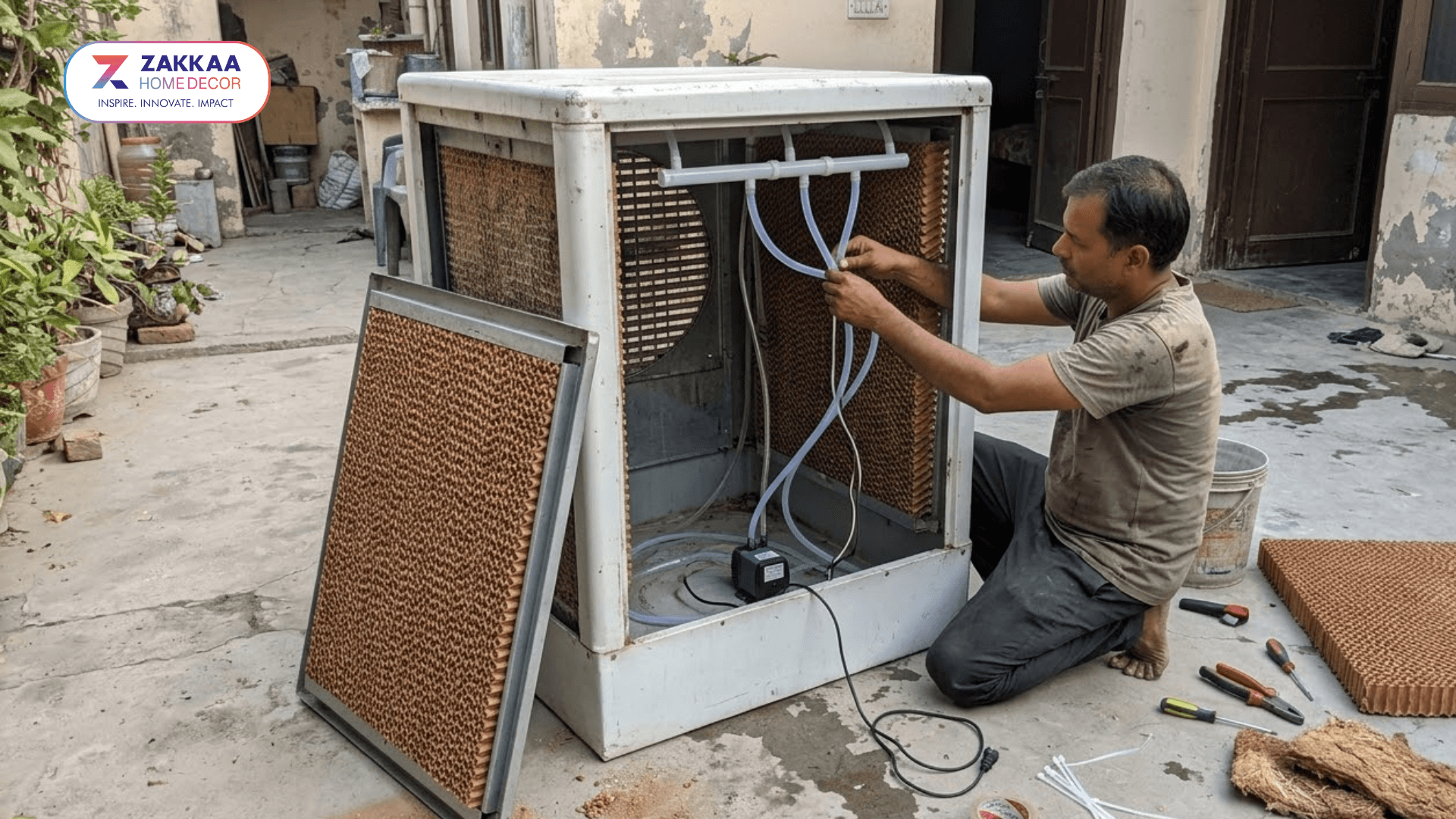
Honeycomb cellulose and wood-wool pads are commonly used. Along with selecting the suitable pad, manufacturers need to ensure that water reaches its surface properly through the distribution pipes.
Step 7: Completing Electrical Connections
The electrical system connects the motor, pump, switches, and other controls. Depending on the model, the appliance may also include a remote control, speed settings, or an electronic control panel.
Proper wiring, suitable component ratings, insulation, and secure connections are essential. Electrical assembly should follow the applicable product safety requirements.
Step 8: Bringing All Parts Together
Once the body and components are ready, the assembly team fits the motor, fan, pump, cooling pads, water pipes, grills, and control system.
The arrangement may vary between personal, desert, and window models. During assembly, teams should check component fitting, fastening, alignment, and water connections to avoid problems during operation.
Step 9: Checking Cooling Performance And Safety
Before a cooler is approved for dispatch, its main functions need to be tested. These checks help identify problems that may not be visible during a basic visual inspection.
Manufacturers commonly examine:
Fan and motor operation
Airflow and speed settings
Water circulation and leakage
Noise and vibration levels
Electrical connections and safety
Overall fit and finish
Applicable BIS requirements and certification should also be verified for the product category.
Step 10: Packing And Preparing Air Coolers For Dispatch
The final product is cleaned, labelled, and packed for transportation. Protective packaging helps prevent damage to the body, grills, control panel, and other exposed parts.
Since domestic air cooler sales are seasonal in India, manufacturers also need to plan raw material procurement, production schedules, inventory, and dealer dispatches ahead of the summer season.
Read Too: How To Buy Air Cooler: Features, Types & Tips For Indian Homes & Businesses
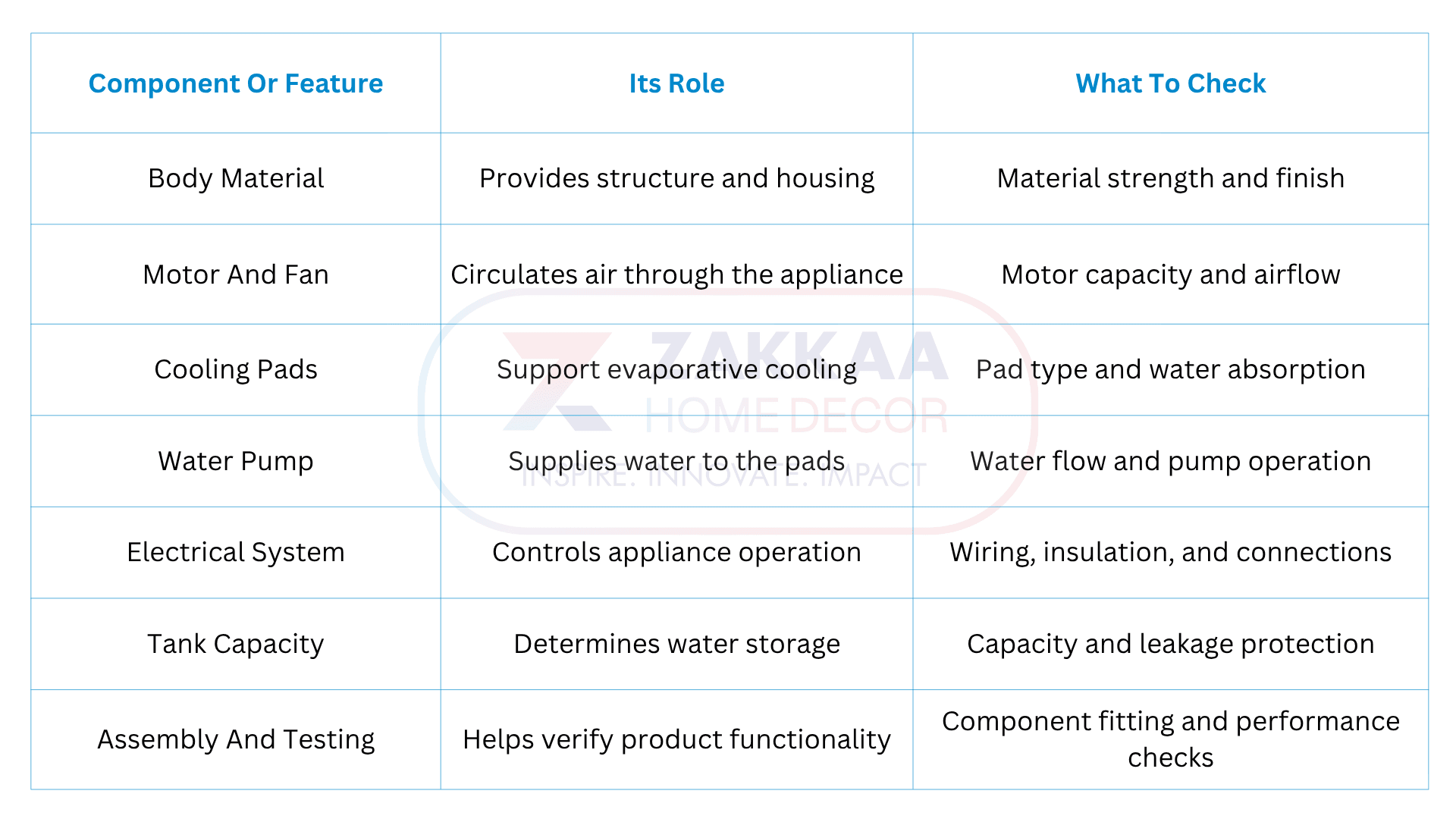
What Determines The Quality of A Home Air Cooler After Its Manufacturing?
A well-manufactured cooler needs a suitable combination of components and design features. These are some important areas to evaluate:
Why Choose Zakkaa For Domestic Air Cooler Manufacturing?
Developing a residential air cooler range requires more than sourcing components and putting them together. Domestic air cooler manufacturing infrastructure, engineering support, and planned assembly operations all matter when a business wants to build its own appliance range. Zakkaa offers OEM manufacturing capabilities for brands exploring domestic air cooler production and private-label opportunities.
Six factories support integrated appliance manufacturing.
Four cooler assembly lines support production.
Engineering teams support product design refinement.
Production capacity supports large-volume OEM orders.
Wrap Up
Domestic air cooler manufacturing brings together product design, component selection, body production, assembly, and performance checks. For businesses entering this category, the choice of manufacturing partner can also influence product development and production planning. A well-planned air cooler manufacturing approach can help brands develop products that meet market requirements and prepare for seasonal demand. You can reach out to a trusted domestic air cooler manufacturer for bulk production requirements.
Frequently Asked Questions (FAQs)
What Are The Main Components of A Domestic Air Cooler?
The main components include the body, motor, fan or blower, cooling pads, water pump, tank, pipes, wiring, and control panel.
Which Cooling Pads Are Used In Domestic Air Coolers?
Honeycomb cellulose pads and wood-wool pads are commonly used. The choice depends on the cooler design, maintenance requirements, and price range.
What Affects The Cooling Performance of An Air Cooler?
Airflow, motor and fan specifications, cooling pad quality, water distribution, and surrounding humidity all influence cooling performance.
What Is OEM Air Cooler Manufacturing?
OEM manufacturing allows a business to get air coolers produced according to agreed specifications, product requirements, and branding arrangements.
How Can I Select A Domestic Cooler Manufacturer In India?
Evaluate the manufacturer's production facilities, component sourcing, assembly process, testing arrangements, customisation support, and ability to handle bulk orders.