Aug 24, 202615 min readBy Aditya Singh
There is a particular kind of summer frustration: you buy an air cooler for your bedroom, fill the tank, turn it on, and then realise it is either too noisy to sleep beside or too weak to cool the space properly. A cheaper price tag on a domestic air cooler does not feel like a bargain when the appliance spends the season gathering dust.
For a small room, you usually do not need an air cooler that supports maximum cooling power. You need the right amount of airflow, a manageable water tank, reasonable power consumption, low operating noise, and a design that fits where you actually have space.
That is why the smartest way to buy a personal cooler is to start with your room and routine, not the product box. This guide breaks down the personal air cooler buying factors that matter so you can choose a cooler that works in your space, not just one that looks good on paper.
What Is A Personal Air Cooler?
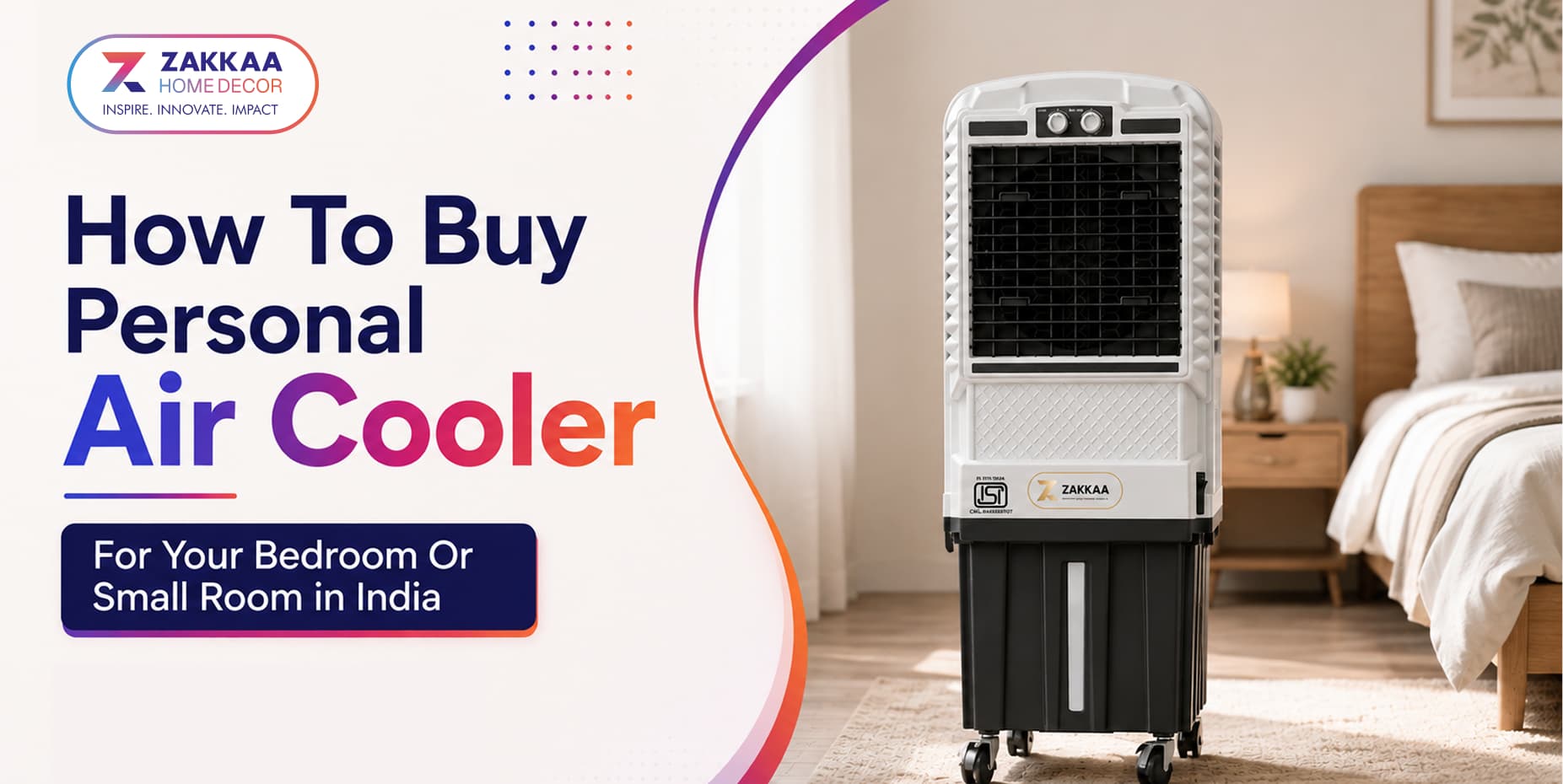
A personal air cooler is a compact evaporative cooling appliance designed to provide focused cooling in smaller rooms. It draws warm air through water-saturated cooling pads, where evaporation helps cool the air before the fan circulates it into the room.
Unlike an air conditioner, an air cooler does not use a compressor or refrigerant to cool the room. It works best when there is enough fresh-air movement, so keeping a window or door partially open can improve its performance.
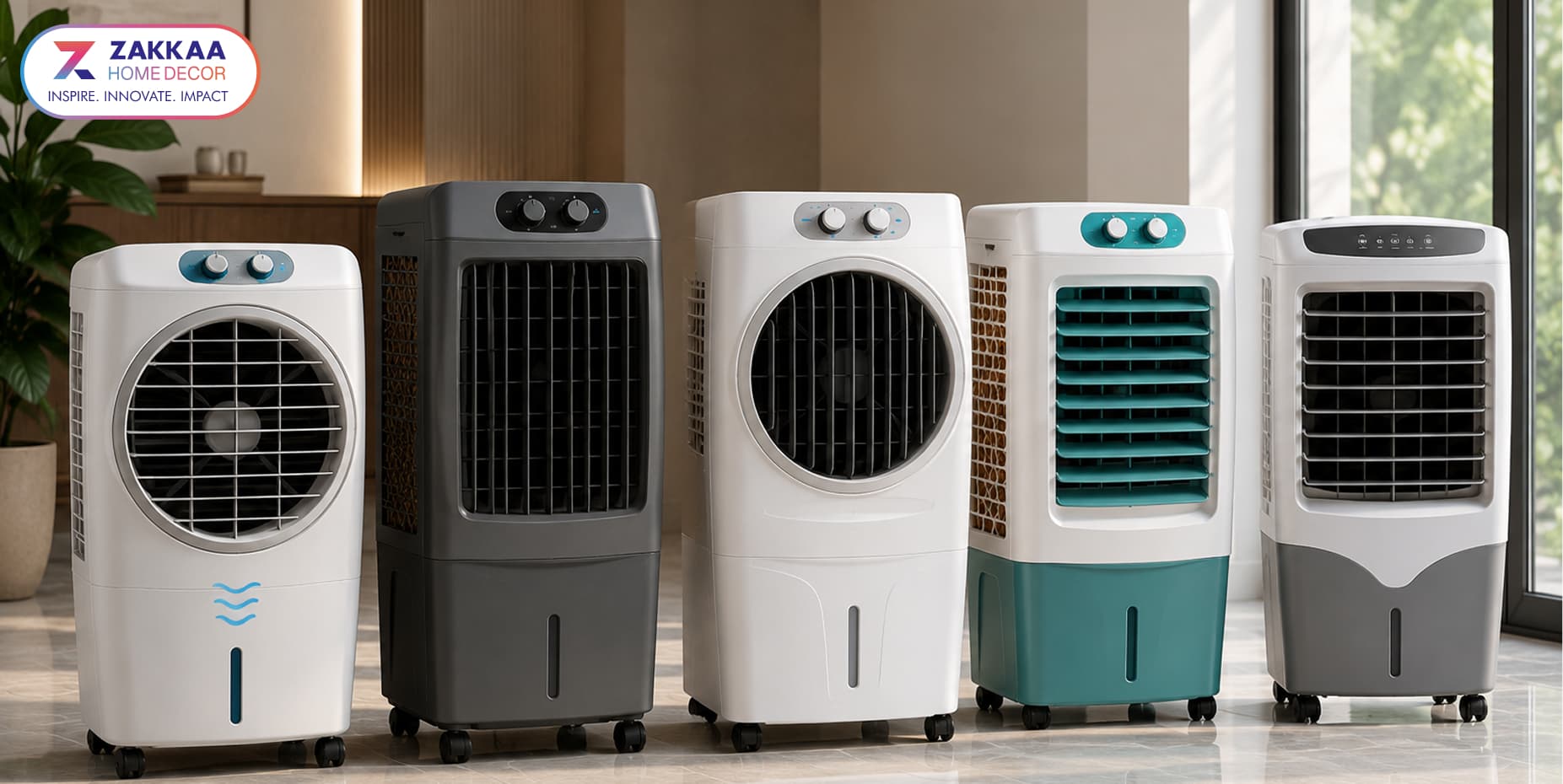
For a bedroom, this makes a personal cooler particularly useful when you want targeted cooling, portability, and relatively low power consumption rather than whole-room refrigerated cooling.
Is A Personal Air Cooler Suitable For Your Room?
Before checking models, first consider whether evaporative cooling is suitable for your room.
Personal air coolers work by passing air through water-moistened cooling pads and circulating the cooled air into the room. They perform best when there is some ventilation, such as an open window, door, or another outlet for warm air.
A completely closed room can feel humid because the moisture introduced by the cooler has nowhere to escape. This is particularly important during India's humid summer weather.
If your bedroom has a window that can remain partly open, cross-ventilation, or another way for warm air to leave, a personal cooler can be a practical option. Reliance Digital also recommends matching the cooler type to the space, with personal coolers generally suited to smaller rooms.
Personal Cooler Buying Steps: How To Choose The Best One
Before comparing brands and prices, figure out what your room actually needs from a cooler. The right choice comes down to a handful of practical details that affect comfort, running cost, and everyday convenience. These steps will help you make the comparison with a clearer idea of what to look for.
1. Choose The Right Type of Personal Air Cooler
Not every small air cooler has the same design. Consider where you will place it and how you want to use it.
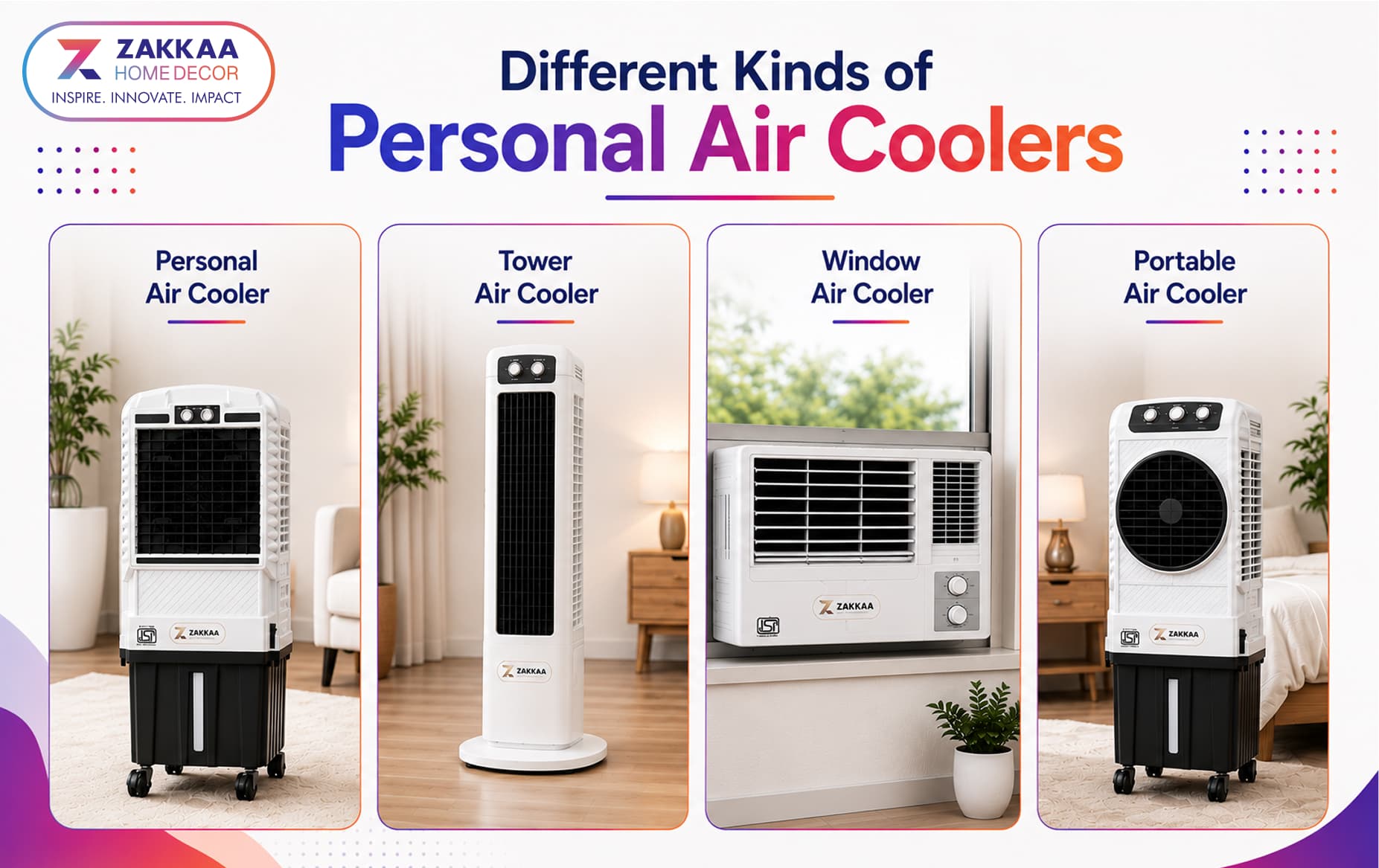
a) Personal Air Cooler
A personal cooler is designed for smaller rooms and focused cooling. It is generally compact enough for bedrooms, study rooms, and small living spaces.
Best For: Bedrooms, study rooms, and compact personal spaces.
Pros: Compact size, focused airflow, easy placement, and lower space requirements.
Cons: Limited cooling coverage and less suitable for larger rooms.
b) Tower Air Cooler
A tower cooler has a vertical design and can be useful when floor space is limited. It can fit more easily into narrow corners while providing airflow at a suitable height.
Best For: Bedrooms, study rooms, and compact personal spaces.
Pros: Compact size, focused airflow, easy placement, and lower space requirements.
Cons: Limited cooling coverage and less suitable for larger rooms.
c) Window Air Cooler
Window-mounted coolers are installed near a window and can be useful where you want to save floor space. However, installation requirements make them less flexible than portable models.
Best For: Bedrooms, study rooms, and compact personal spaces.
Pros: Compact size, focused airflow, easy placement, and lower space requirements.
Cons: Limited cooling coverage and less suitable for larger rooms.
d) Portable Air Cooler
A portable model with wheels can be moved between a bedroom, study room, or another small space. This is useful if you don't need cooling in the same room throughout the day.
Best For: Bedrooms, study rooms, and compact personal spaces.
Pros: Compact size, focused airflow, easy placement, and lower space requirements.
Cons: Limited cooling coverage and less suitable for larger rooms.
2. Match The Cooler To Your Room Size
Room size should be one of the first things you check before buying a personal air cooler. A cooler designed for a small bedroom does not need the same airflow capacity as one intended for a large living room.
As a general starting point, 1,500–2,000 CFM can be suitable for many small bedrooms, but the actual requirement depends on the room's dimensions, ceiling height, ventilation, sunlight exposure, humidity, number of occupants, and cooler placement.
Use these ranges as a starting point rather than a fixed formula:
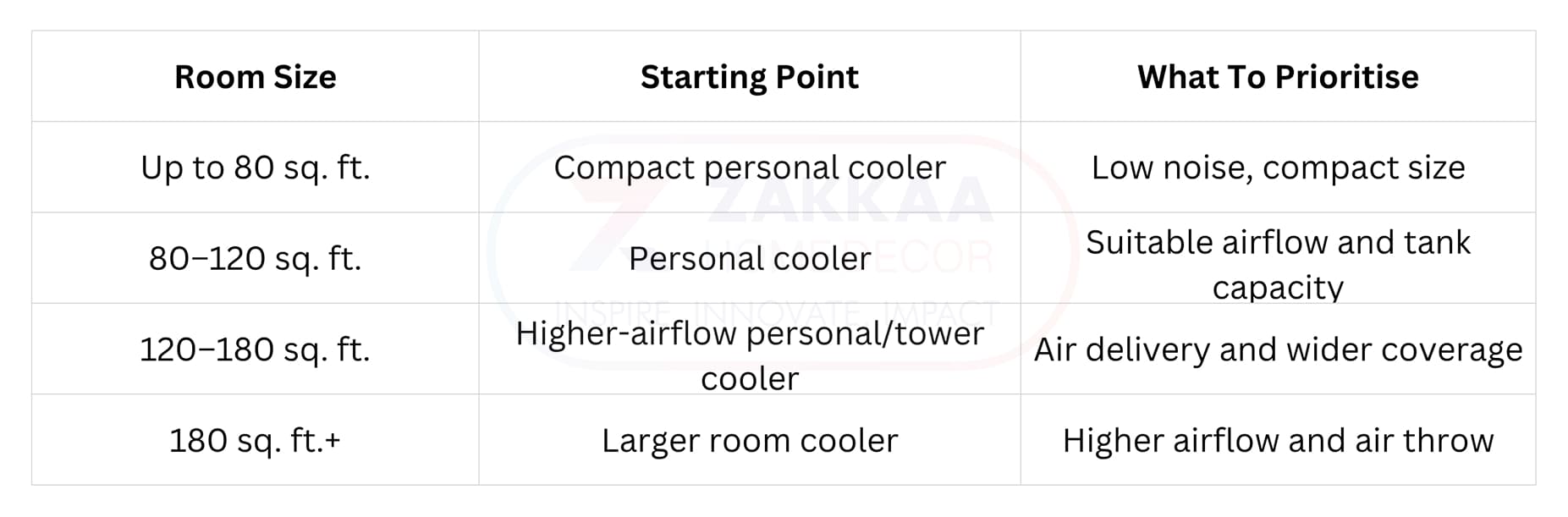
For example, a 100 sq. ft. bedroom with good ventilation may need less cooling capacity than a 100 sq. ft. room that receives strong afternoon sunlight. So, don't select the cooler based on room area alone, look at the complete cooling environment.
👉 Note: Ceiling height, sunlight entering the room, number of occupants, ventilation, and local climate can change the actual requirement. A room on the top floor with direct afternoon sunlight may need more cooling than a shaded room of the same size.
3. Check Airflow And Air Throw of Personal Cooler
Don't judge cooling performance by water tank capacity alone.
Airflow tells you how much air the cooler can circulate, while air throw indicates how far that air can travel. For a bedroom, you want the airflow to reach your sleeping or seating area without needing to keep the cooler immediately beside you.
Check the manufacturer's specifications for:
Airflow/CFM: Shows how much air the cooler circulates every minute.
Air Throw: Indicates how far cooled air can travel comfortably.
Fan Speed Options: Let you adjust airflow according to comfort.
Air Direction: Helps direct cooled air toward desired areas.
Swing Function: Distributes airflow across a wider room area.
Cooling Pad Coverage: Larger coverage can improve evaporative cooling performance.
For a small room, extremely high airflow is not necessarily better. Strong air movement can be uncomfortable if the cooler is placed too close to the bed.
4. Choose The Right Water Tank Capacity
A larger water tank means you can generally run the cooler for longer before refilling it, but bigger is not automatically better. For a personal air cooler, choose a tank that gives you enough runtime without making the appliance unnecessarily bulky.
As a practical starting point:
Up to 10 litres: Suitable for compact rooms and shorter cooling periods.
10–20 litres: A good middle range for bedrooms and regular evening use.
20–30 litres: Better for longer operation during hot afternoons and nights.
30 litres and above: More suitable when the cooler runs for extended periods or requires fewer refills.
These ranges are only guidelines. A 15-litre cooler may last longer than another 20-litre model depending on its pump, cooling-pad design, fan speed, and water consumption.
For a bedroom cooler, think about how you use it. If you run the cooler for only a few hours at night, a moderate tank may be enough. If you use it throughout the afternoon and night, a larger tank can reduce the need for frequent refilling.
Also check whether the tank is:
Easy to fill
Easy to clean
Accessible without moving the cooler
Equipped with a water-level indicator
Designed for convenient drainage
A drain outlet is especially useful because it makes it easier to empty old water before cleaning the cooler or storing it after summer.
5. Check Power Consumption Before Buying
Electricity consumption matters because you may run your personal cooler for several hours every day during summer.
Current consumer buying guidance indicates that many personal air coolers are around 100–200 watts, although actual power ratings vary by model and operating mode.
You can estimate your daily electricity consumption with a simple calculation:
Power consumption × operating hours ÷ 1,000 = daily kWh
For example, a 150-watt cooler running for 8 hours would theoretically consume:
150 × 8 ÷ 1,000 = 1.2 kWh per day
Your actual electricity cost depends on your tariff and the cooler's operating mode.
Also, don't assume that every air cooler carries a BEE star rating. BEE's current material lists air coolers separately from mandatory star-labelled appliance categories, and its residential energy survey records air coolers as having no applicable BEE star rating in that context.
Instead, check the wattage printed on the product or specification sheet and compare models based on actual power consumption to reduce your electricity bill.
6. Consider Noise If You Use It In A Bedroom
Noise becomes much more noticeable when you're trying to sleep.
If you are buying a cooler specifically for your bedroom, check whether it offers:
Multiple fan speeds
Lower-speed operation
Quiet or sleep mode
Balanced fan operation
Timer function
Don't select a model only because it has a powerful fan. During the afternoon, you may prefer stronger airflow, while at night you may want a lower setting.
If possible, check the cooler's noise level specification before purchasing.
7. Look For Cooling Pads That Are Easy To Maintain
Cooling pads are an important part of evaporative cooling because air passes through the wet pad before entering the room. Honeycomb cooling pads are commonly preferred for personal air coolers because their larger surface area allows better contact between air and water, supporting effective evaporative cooling.
Dust, mineral deposits, and moisture can build up over time, particularly when the cooler is used regularly. Before buying, check the pad material, size, water distribution, replacement availability, and how easily you can access the pads for cleaning.
A cooler with easy-to-remove and clean cooling pads can make regular maintenance much simpler, especially when the appliance is used throughout India's long summer season.
8. Don't Ignore Water Quality
Water quality can affect maintenance.
If your area's water has high mineral content, deposits can accumulate inside the tank, pump, and cooling system over time. Regularly draining and cleaning the cooler becomes particularly important in such conditions.
Use the water recommended by the manufacturer and follow its cleaning instructions.
Never leave old water sitting inside the cooler for long periods when it is not being used. Drain and clean the tank before storing the appliance after the summer season.
9. Check Useful Features of Personal Air Cooler Instead of Chasing Every Feature
Modern personal coolers can come with many convenience features. You don't need all of them.
Focus on features that match your routine.
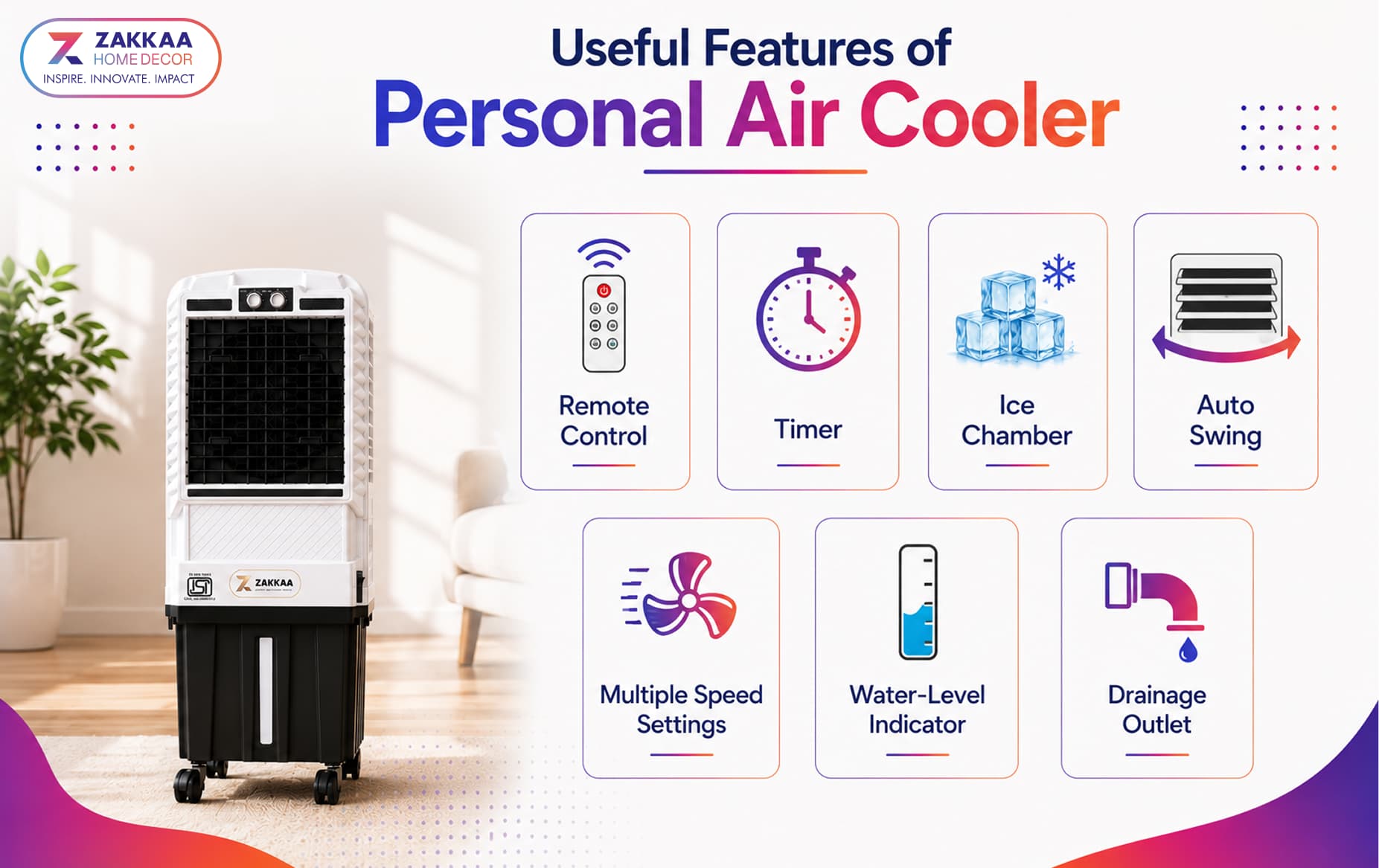
Remote Control: Useful when you want to change fan speed or cooling settings without getting out of bed.
Timer: Helpful for nighttime use when you don't want the cooler running continuously.
Ice Chamber: Some models provide a dedicated area for adding ice. It may provide a temporary boost in cooling under suitable conditions, but it does not turn an air cooler into an AC.
Auto Swing: Helps distribute airflow across a wider area instead of directing air continuously in one direction.
Multiple Speed Settings: Useful because you can use stronger airflow during the day and a lower setting while sleeping.
Water-Level Indicator: Makes it easier to know when the tank needs refilling.
Drainage Outlet: Makes routine cleaning and water replacement easier.
10. Think About Where You Will Place The Cooler
Placement can make a noticeable difference to how comfortable the cooling feels.
For a bedroom, avoid pushing the cooler tightly against a wall or placing it where furniture blocks the airflow.
If possible, position it near a window or opening so it can draw fresh air and help move cooled air into the room.
You should also avoid placing it directly next to moisture-sensitive electronics or in a position where water could accidentally spill onto electrical equipment.
Personal Air Cooler Vs AC: Which Should You Choose?
A personal air cooler is a better choice for small, well-ventilated rooms when you want affordable cooling with lower power consumption, while an AC is more suitable for enclosed rooms where you need stronger and more controlled cooling. Your local climate, room ventilation, usage hours, and electricity budget should guide the decision.
An air cooler uses water-based evaporative cooling, so it works particularly well in hot and dry conditions but can feel less comfortable when humidity is high. An AC uses refrigeration-based cooling and can reduce both temperature and humidity, making it more suitable for humid Indian cities or rooms that need consistent cooling throughout the day.
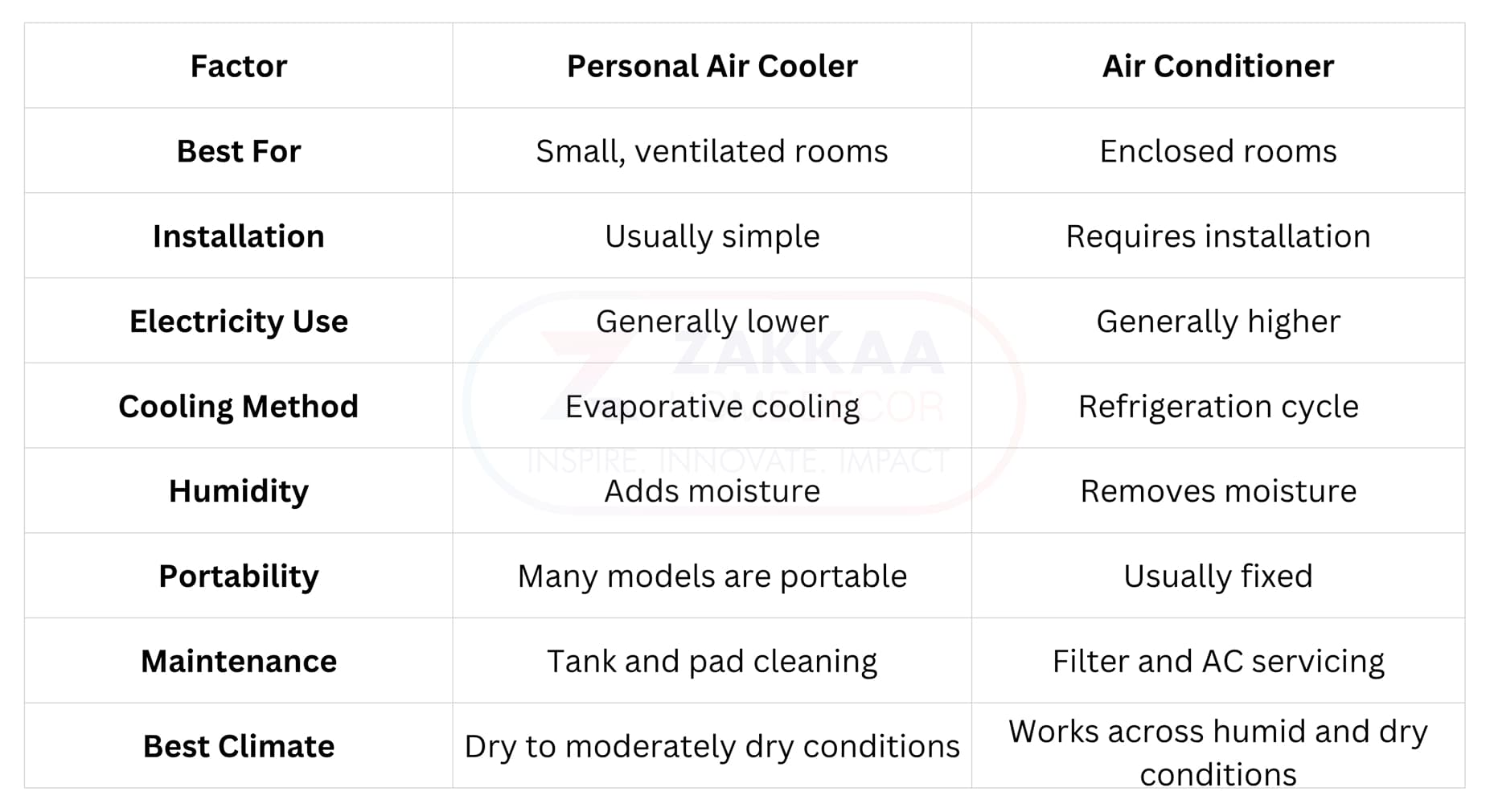
If your room is hot and relatively dry with reasonable ventilation, a personal cooler can be a practical choice. If the room is closed and humid, an AC may provide more predictable comfort.
What Is The Best Personal Air Cooler For A Bedroom?
The best personal air cooler is not necessarily the largest or most expensive model. For a typical Indian bedroom, look for appropriate airflow, manageable tank capacity, low power consumption, easy cleaning, multiple speed settings, convenient drainage, and acceptable noise levels.
If your room is small, prioritise compactness and quiet operation. If the room receives strong afternoon sunlight, give greater importance to airflow. If you use the cooler for long hours, check its wattage and tank capacity carefully.
What Should You Check Before Buying A Personal Air Cooler?
Check these practical factors to find a personal cooler that suits your room, routine, comfort, and budget.
Measure Room: Match the cooler's airflow capacity with your room size.
Check Ceiling Height: Higher ceilings may require stronger air circulation for comfort.
Consider Ventilation: Ensure warm air and excess moisture can escape.
Check Airflow/CFM: Compare airflow ratings to understand cooling capacity better.
Compare Air Throw: Check whether cooled air can reach your seating.
Choose Tank Capacity: Select enough water capacity for your daily usage.
Check Power Consumption: Compare wattage to estimate your potential electricity costs.
Consider Operating Hours: Choose suitable capacity for your expected daily runtime.
Check Noise Levels: Prefer quieter operation for bedrooms and nighttime use.
Check Speed Settings: Multiple speeds let you adjust airflow throughout different conditions.
Check Swing Function: Wider oscillation helps distribute air across more of the room.
Check Water-Level Indicator: Easily monitor remaining water before the tank becomes empty.
Look For Easy Drainage: A drain outlet makes cleaning and water replacement easier.
Check Cooling-Pad Accessibility: Easy access simplifies regular cleaning and maintenance.
Consider Portability: Wheels and compact dimensions make room-to-room movement easier.
Check Warranty and Service: Reliable support can make ownership easier after purchase.
Compare Overall Value: Choose useful features instead of paying for unnecessary additions.
Why Choose A Reliable Air Cooler Manufacturer?
For consumers, product specifications and service support are important. For retailers, brands, distributors, and businesses looking to develop their own cooling products, the manufacturer behind the air cooler becomes equally important.
An Indian OEM manufacturer for coolers can help businesses create personal coolers around specific requirements such as dimensions, airflow, tank capacity, features, colour, finish, packaging, and production quantity.
Zakkaa manufactures air cooling products for Indian market requirements and can support OEM air cooler manufacturing for businesses looking for customised product specifications and bulk production. This can be particularly useful for brands that want to create their own range rather than simply source an existing retail model.
Final Personal Air Buying Advice
If you're buying a personal air cooler for a bedroom or small room, start with the room and your daily routine, not the product's biggest specification. A suitable airflow, manageable tank, lower power requirement, quiet operation, easy cleaning, and proper ventilation will matter far more than having features you rarely use.
For Indian summers, also remember that an air cooler is not a universal replacement for an AC. Its performance depends heavily on ventilation and humidity. Compare the actual room conditions, running hours, electricity consumption, and maintenance requirements before deciding.
For brands and businesses, choosing the right Indian OEM air cooler manufacturer can also make a difference in product customisation, quality control, and production scalability.
Frequently Asked Questions (FAQs)
How Much Electricity Does A Personal Air Cooler Use?
Most personal coolers consume relatively little electricity compared with ACs, but actual usage varies by model. Check the rated wattage and multiply it by your daily operating hours.
Can A Personal Air Cooler Cool A Closed Bedroom?
It works best when the room has some ventilation. Keep a window or door partly open so warm air and excess moisture can move outside instead of building up indoors.
Can I Keep A Personal Air Cooler Beside My Bed?
You can place it near the bed, but avoid directing very strong airflow continuously toward your face or body. Keep enough distance for comfortable air circulation.
Does An Air Cooler Need Ice To Give Cold Air?
No, ice is not necessary for normal operation. A properly maintained cooler can provide evaporative cooling using water, while ice may offer only a temporary additional cooling effect.
How Often Should Personal Air Cooler Water Be Changed?
Change the water regularly during frequent use and avoid leaving stagnant water inside for extended periods. Drain and clean the tank more thoroughly when the cooler remains unused.
Can A Personal Air Cooler Be Used Without Water?
Yes, the fan function may work without water on models that support it. However, without water, the appliance will not provide evaporative cooling and will operate mainly as an air circulator.
Is A Personal Air Cooler Good For Humid Weather?
Performance can be less comfortable when humidity is already high because evaporative cooling adds moisture to the air. ACs generally provide more predictable cooling in humid conditions.