Aug 07, 202611 min readBy Aditya Singh
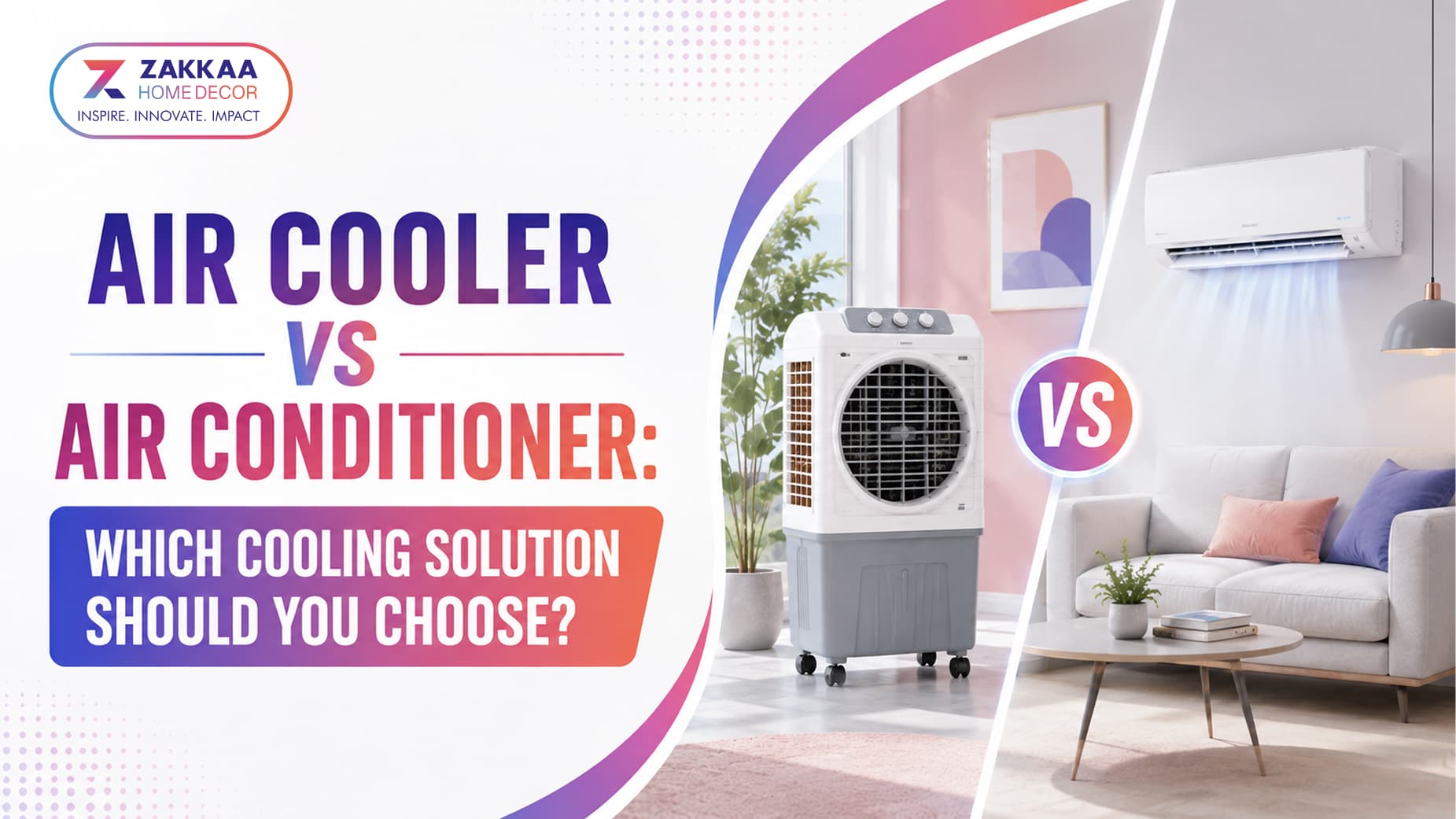
When summer temperatures rise, choosing the right cooling appliance becomes essential for maintaining comfort at home or in the workplace. While both air coolers and air conditioners are designed to cool indoor spaces, they operate differently and offer distinct advantages depending on your budget, room size, climate, and cooling requirements.
An air cooler uses water-based evaporative cooling to circulate fresh air, whereas an air conditioner relies on refrigerant technology to lower room temperature. Factors such as electricity consumption, installation costs, maintenance, and portability also play an important role in deciding which option is best for you.
This guide compares air coolers vs air conditioners across the most important buying factors, helping you understand their differences and choose the best cooling solution for your home.
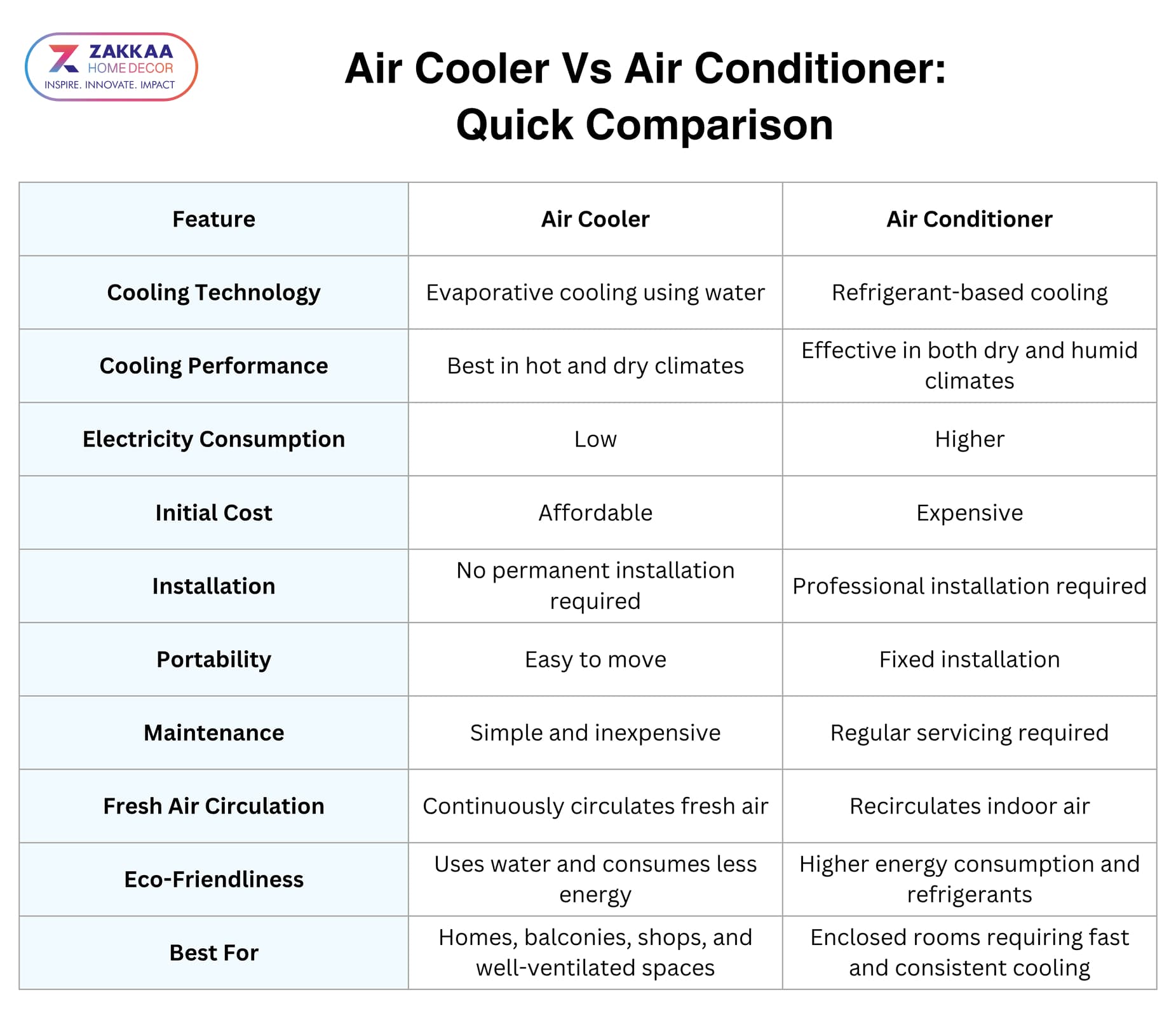
Air Cooler Vs Air Conditioner: Quick Comparison
If you're short on time, here's a quick overview of how an air cooler compares with an air conditioner across the factors that matter most.
What Is An Air Cooler?
An air cooler is a cooling appliance that lowers room temperature through evaporative cooling. It draws warm air through water-soaked cooling pads, where the air absorbs moisture and becomes cooler before being circulated into the room. Unlike an air conditioner, an air cooler doesn't use refrigerants or compressors, making it a more energy-efficient and environmentally friendly cooling option.
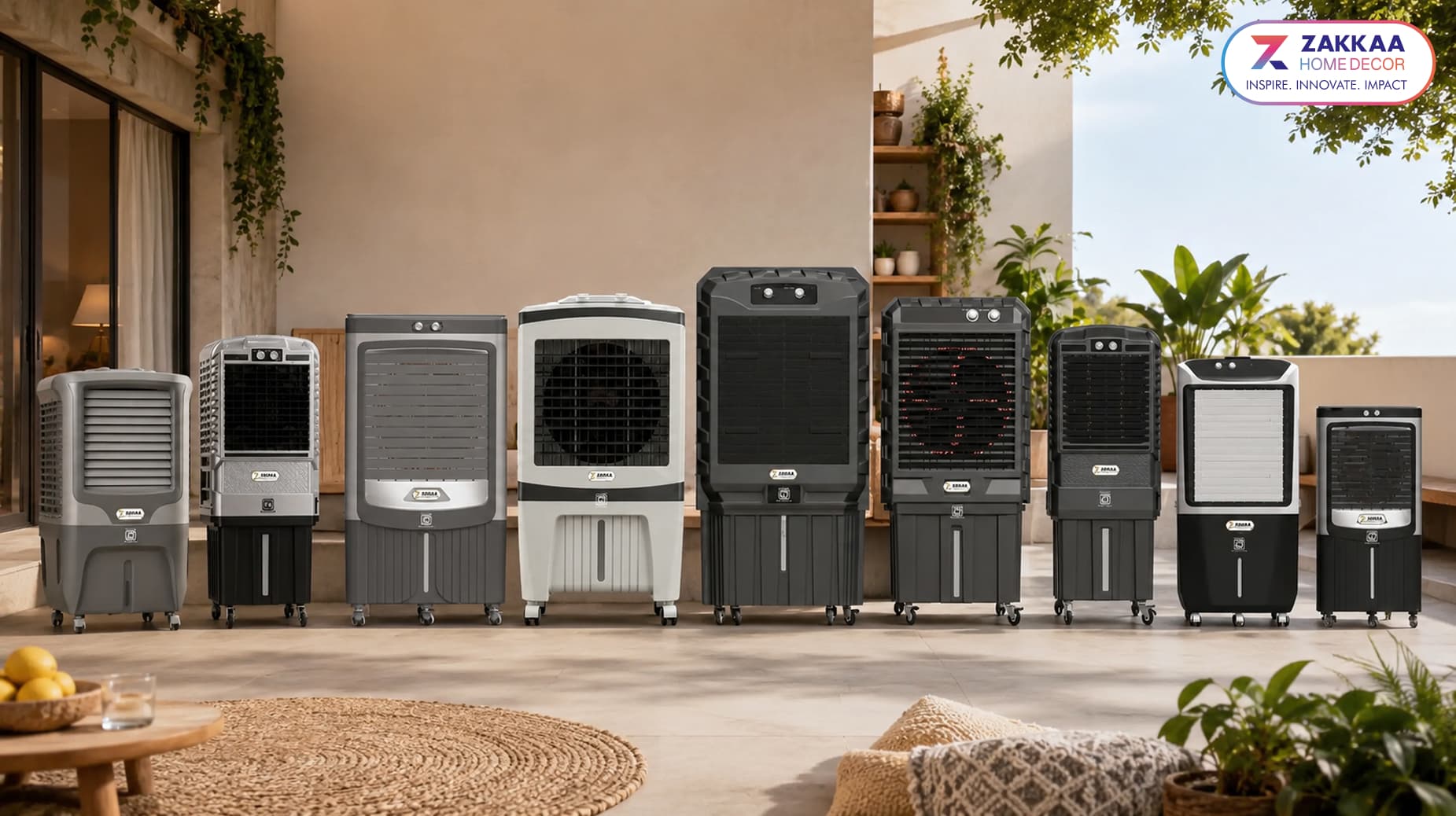
Whether it is domestic, industrial, or commercial, every air cooler performs best in hot and dry climates, where low humidity allows water to evaporate more effectively. They also require proper ventilation, as a continuous flow of fresh air improves cooling performance.
Depending on your cooling needs, air coolers are available in different types:
Personal Air Coolers: Suitable for bedrooms, study rooms, and small spaces.
Tower Air Coolers: Designed for compact spaces with a modern, space-saving design.
Desert Air Coolers: Built for larger rooms and open areas, offering powerful airflow and higher water tank capacity.
For homeowners looking for an affordable, portable, and energy-efficient cooling solution, an air cooler is often a practical choice for everyday summer comfort.
What Is An Air Conditioner?
An air conditioner (AC) is a cooling appliance that uses a refrigerant and compressor-based system to remove heat and humidity from indoor air. Unlike an air cooler, which relies on water evaporation, an air conditioner cools the air by circulating refrigerant through its internal components before distributing chilled air throughout the room.
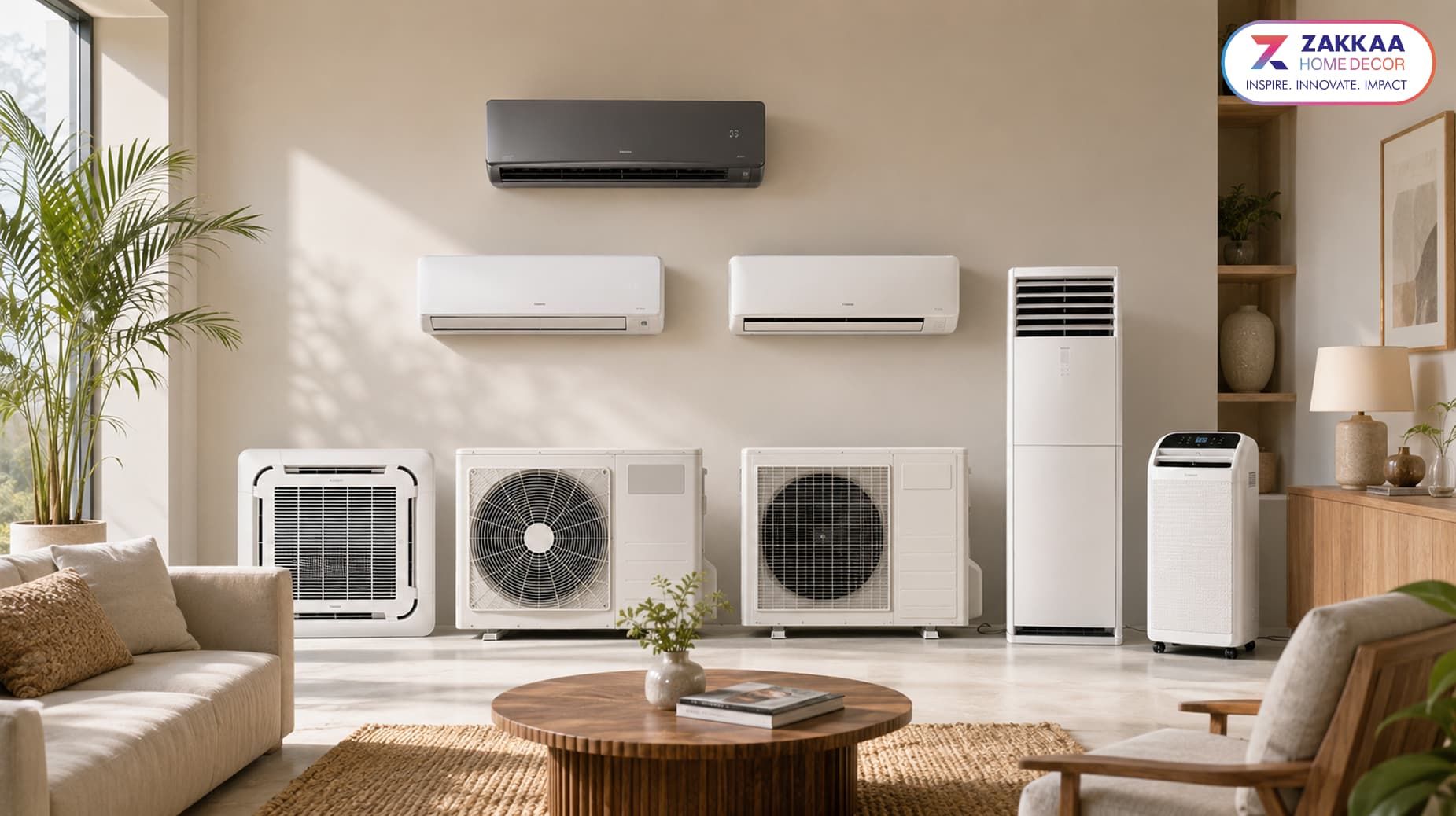
Air conditioners are particularly effective in hot and humid climates, where air coolers may not deliver the desired cooling performance. Since they work best in enclosed spaces, keeping doors and windows closed helps maintain cooling efficiency while reducing energy loss.
The two most common types of air conditioners are:
Split Air Conditioner: Consists of an indoor and outdoor unit, offering quiet operation, efficient cooling, and a modern appearance. Split AC is suitable for homes, offices, and commercial spaces.
Window Air Conditioner: A single-unit system installed in a window or wall opening. Window AC is generally more affordable and works well for cooling small to medium-sized rooms.
Although air conditioners require a higher initial investment and consume more electricity than air coolers, they provide precise temperature control, effective humidity reduction, and year-round comfort, making them a preferred choice for users seeking premium cooling performance.
Key Differences Between Air Cooler And AC (Air Conditioner)
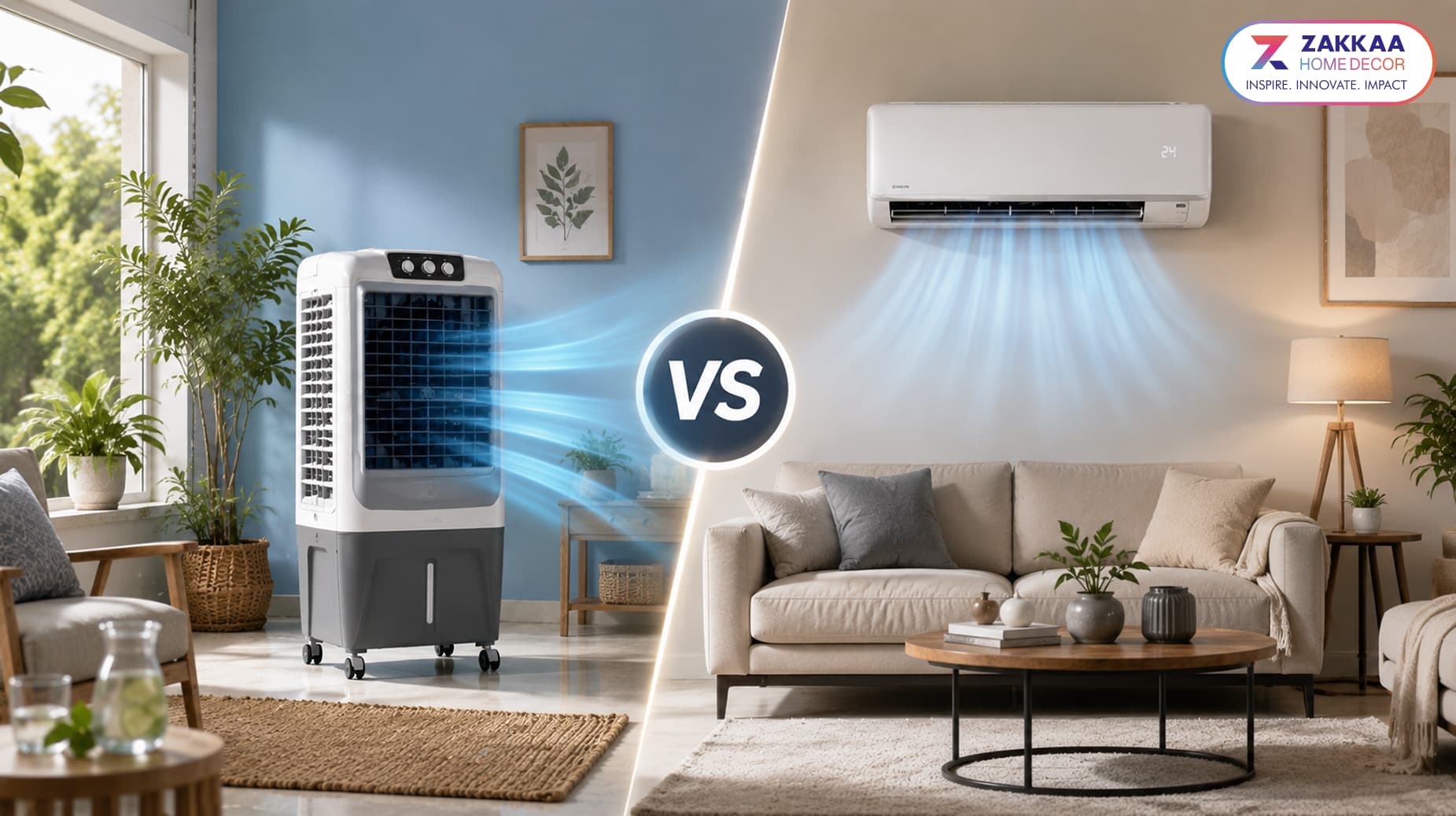
Both appliances are designed to keep indoor spaces comfortable, but they differ significantly in how they operate, their running costs, and the environments where they perform best. Understanding these differences will help you choose the right home cooling system for your needs.
Cooling Performance
Air conditioners provide faster and more consistent cooling by lowering the room temperature to a set level. Air coolers offer comfortable cooling by circulating cool air, but their performance depends on proper ventilation and works best in dry climates.
Electricity Consumption
An air cooler consumes significantly less electricity because it only powers a fan and water pump. In contrast, an air conditioner uses a compressor and refrigerant system, resulting in higher energy consumption. If reducing electricity bills is a priority, an air cooler is the more energy-efficient cooling option.
Installation
Most air coolers are ready to use with minimal setup and can be placed wherever cooling is needed. Air conditioners require professional installation, proper electrical connections, and adequate indoor and outdoor space.
Portability
Air coolers are lightweight and fitted with castor wheels, allowing them to be moved between rooms as needed. Air conditioners are permanently installed and cannot be relocated without professional assistance.
Maintenance
Maintaining an air cooler is relatively simple and involves cleaning the cooling pads, water tank, and filters regularly. Air conditioners require periodic servicing, filter cleaning, refrigerant checks, and professional maintenance to ensure optimal performance.
Air Quality
Air coolers continuously circulate fresh outdoor air while adding moisture to the environment, creating a more natural cooling experience. Air conditioners recirculate indoor air and reduce humidity, making them particularly effective in humid regions.
Environmental Impact
Air coolers are considered more environmentally friendly because they use water for cooling and consume less electricity. Air conditioners rely on refrigerants and higher power consumption, resulting in a larger environmental footprint.
Overall Cost
When comparing the overall cooling cost, air coolers are generally more economical due to their lower purchase price, minimal installation requirements, and reduced electricity consumption. Air conditioners offer superior cooling performance but involve higher upfront and long-term operating expenses.
Cost of Air Cooler Vs Air Conditioner: Which Cooling Option Is More Affordable?
When comparing an air cooler and an air conditioner, it's important to look beyond the purchase price. The total cost of ownership includes installation, electricity consumption, regular maintenance, and long-term operating expenses. While both appliances offer effective cooling, the overall investment varies significantly depending on the type of cooling system you choose.
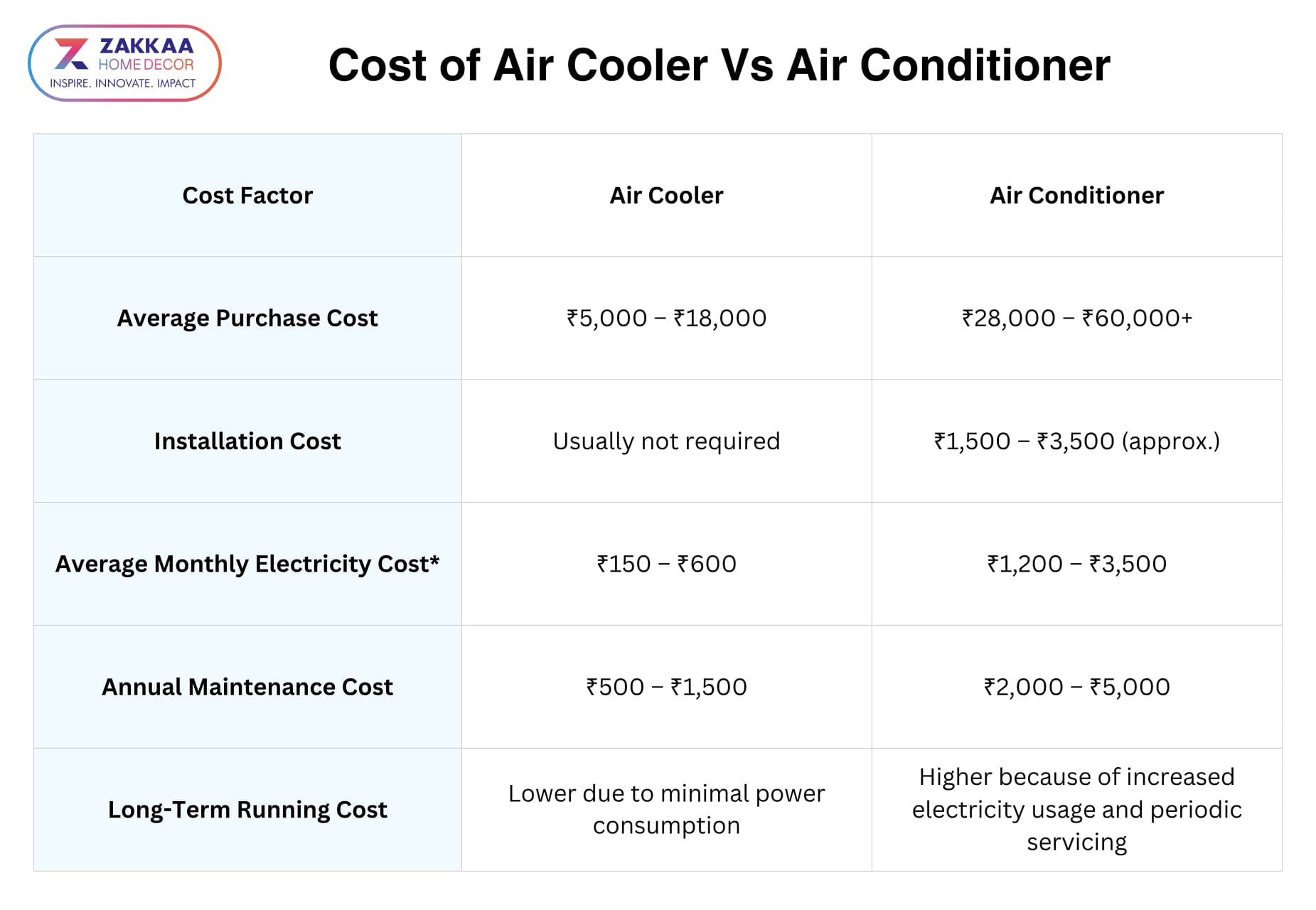
Note: Monthly electricity costs are approximate and may vary depending on the appliance's capacity, daily usage, electricity tariff, and local climate.
If affordability and lower electricity bills are your priorities, an air cooler is generally the more cost-effective solution. Its lower purchase price and energy-efficient operation make it suitable for everyday cooling without significantly increasing monthly utility expenses.
An air conditioner, on the other hand, requires a higher upfront investment and consumes more electricity. However, it offers faster cooling, precise temperature control, and better performance in humid climates, making it worthwhile for users who prioritize maximum indoor comfort.
Which Cooling Solution Is Right For Your Home?
The best cooling solution depends on where you live, the size of your room, your cooling expectations, and your budget. Here's a quick guide to help you choose the right option for your needs.
Buy An Air Cooler If:
You live in a hot and dry climate.
You want a budget-friendly cooling appliance.
Lower electricity consumption is important.
You need a portable cooling solution for different rooms.
Your room has good ventilation and airflow.
You prefer fresh air circulation over recirculated indoor air.
Buy An AC (Air Conditioner) If:
You live in a humid or coastal region.
You want faster and more consistent cooling.
You need precise temperature control.
Your room remains closed for most of the day.
You're comfortable with higher installation and running costs.
You require uninterrupted cooling during extremely hot weather.
For many Indian households in dry and semi-dry regions, an air cooler provides an excellent balance of cooling performance, affordability, and energy efficiency. However, if you live in a humid area or need powerful cooling for enclosed spaces, an air conditioner may be the better choice.
Benefits of Selecting An Air Cooler
Air coolers continue to be a popular choice for homes and small businesses because they offer effective cooling with lower operating costs. Here are some of their key benefits.
Lower Electricity Consumption: Air coolers consume significantly less electricity than air conditioners, helping reduce monthly energy bills.
Affordable Cooling Solution: With lower purchase and maintenance costs, air coolers provide an economical way to stay comfortable during summer.
Fresh Air Circulation: Unlike air conditioners, air coolers continuously circulate fresh air, creating a more natural and comfortable indoor environment.
Portable & Easy To Move: Most air coolers feature castor wheels, allowing you to move them easily between bedrooms, living rooms, or workspaces.
Environmentally Friendly: Air coolers use water-based evaporative cooling instead of refrigerants, making them a more sustainable and eco-friendly cooling solution.
Why Choose An Air Conditioner For Your Space: Key Advantages of AC
Air conditioners are designed to provide fast, consistent, and controlled cooling, making them a preferred choice for homes and commercial spaces in regions with high temperatures and humidity. Here are some of the key advantages of choosing an air conditioner.
Fast & Consistent Cooling: Air conditioners quickly reduce room temperature and maintain it at the desired level, ensuring consistent comfort even during extremely hot summer days.
Effective In Humid Climates: Unlike air coolers, air conditioners remove excess moisture from the air, making indoor spaces feel cooler and more comfortable in humid or coastal regions.
Precise Temperature Control: Most air conditioners allow you to set a specific temperature, providing greater control over your indoor environment and ensuring consistent cooling throughout the day.
Better For Enclosed Spaces: Air conditioners perform best in rooms with closed doors and windows, making them ideal for bedrooms, offices, conference rooms, and other enclosed areas.
Improved Indoor Comfort: In addition to cooling the air, many modern air conditioners include air filtration systems that help reduce dust and airborne particles, creating a cleaner and more comfortable indoor environment.
Common Mistakes To Avoid When Choosing A Cooling Appliance
Choosing the right cooling appliance involves more than comparing prices. Avoiding these common mistakes can help you invest in a solution that meets your cooling needs while keeping operating costs under control.
1. Buying Based Only On Price
A lower purchase price doesn't always mean better value. Consider cooling performance, electricity consumption, maintenance, and long-term operating costs before making a decision.
2. Ignoring Your Local Climate
Air coolers work best in hot and dry climates, while air conditioners perform efficiently in both dry and humid conditions. Choosing the wrong appliance for your region can affect cooling performance.
3. Overlooking Room Size
Select a cooling appliance that matches the size of your room. A small cooler or AC may struggle to cool a large space, while an oversized unit can increase unnecessary energy consumption.
4. Not Considering Electricity Consumption
Running costs can add up over time. Comparing electricity consumption before buying helps you choose a more energy-efficient cooling solution for long-term savings.
5. Choosing The Wrong Type of Air Cooler
Personal, tower, and desert air coolers are designed for different room sizes and cooling requirements. Selecting the right type ensures better airflow and improved cooling efficiency.
6. Ignoring Maintenance Requirements
Regular cleaning and servicing are essential for maintaining cooling performance. Understanding the maintenance needs of your chosen appliance helps avoid unexpected repair costs and extends its lifespan.
Why Choose Zakkaa For Air Coolers And Air Conditioners?
At Zakkaa, we manufacture air coolers and air conditioners designed to meet the diverse cooling needs of Indian homes, offices, and commercial spaces. Every product is built with a focus on efficient cooling, durability, and user-friendly features to deliver reliable performance season after season.
Our product range includes personal, commercial, industrial, tower, desert air coolers, and sheet metal coolers, along with energy-efficient air conditioners that cater to different room sizes, climates, and budgets. Whether you're looking for an affordable OEM cooling manufacturing solution with low electricity consumption or powerful temperature-controlled cooling, Zakkaa offers products engineered for comfort, efficiency, and long-term value.
Backed by modern OEM manufacturing processes and stringent quality checks, we ensure every cooling appliance meets high standards of performance and reliability. Explore Zakkaa's range of air coolers and air conditioners to find the ideal cooling solution for your home or business.
Final Remarks
Both air coolers and air conditioners offer effective cooling, but the right choice depends on your climate, room size, cooling expectations, and budget. Air coolers are ideal for energy-efficient, cost-effective cooling in well-ventilated spaces, while air conditioners provide faster and more consistent cooling for enclosed rooms, especially in humid regions. By comparing their features, operating costs, and performance, you can confidently choose the cooling solution that best suits your needs. Explore Zakkaa's range of air coolers and air conditioners to enjoy reliable, high-performance cooling for every season.
Frequently Asked Questions (FAQs)
Does An Air Cooler Consume Less Electricity Than An Air Conditioner?
Yes, air coolers use only a fan and water pump, making them significantly more energy-efficient than air conditioners, which operate using a compressor and refrigerant.
Are Air Coolers Effective In Humid Weather?
Air coolers perform best in hot and dry climates. In areas with high humidity, their cooling efficiency decreases, making air conditioners a more effective choice.
Which Cooling Solution Is More Affordable?
Air coolers are generally more affordable in terms of purchase price, installation, maintenance, and electricity consumption. Air conditioners require a higher initial investment and running cost.
Can An Air Cooler Cool A Closed Room?
Air coolers work best in well-ventilated spaces with proper airflow. Keeping doors or windows slightly open helps achieve better cooling performance.
How Do I Choose The Right Cooling Appliance For My Home?
Consider your local climate, room size, budget, electricity consumption, and cooling requirements. Air coolers are suitable for economical cooling, while air conditioners are ideal for consistent temperature control.
Which Is More Environmentally Friendly: An Air Cooler Or An Air Conditioner?
Air coolers are generally considered more environmentally friendly because they use water-based evaporative cooling and consume less electricity than air conditioners.