Nov 03, 202611 min readBy Aditya Singh
Freshly washed curtains, clean sofa covers, spotless bedsheets, and neatly arranged clothes are all part of getting your home ready for Diwali. But have you thought about the appliance doing most of that laundry? Your washing machine also needs attention before the festive cleaning workload picks up.
Regular use can leave detergent deposits, lint, moisture, and dirt inside different parts of the machine. The drum, filter, detergent compartment, and door seal are some areas that often need cleaning to keep the appliance in good condition.
Before starting your festive laundry, take some time to inspect and clean your washing machine. Here are the practical steps to help you prepare it for Diwali cleaning.
Why Include Your Washing Machine In Diwali Home Cleaning?
Your washing machine handles dirty clothes regularly, but that does not mean its interior stays clean. Detergent residue can settle inside the drawer, lint can collect around the filter, and moisture can leave unpleasant smells around the drum and door.
As part of festive home cleaning, give attention to these commonly overlooked areas:
Visible Dirt: Dust, water marks, and detergent splashes can accumulate on the machine's outer body.
Detergent Buildup: Liquid detergent, powder, and fabric softener can leave sticky residue inside the dispenser.
Trapped Lint: Fibres and small debris may collect in accessible filters and drain areas.
Moisture And Odors: Dampness around the drum, gasket, and door can contribute to musty smells.
A complete washing machine cleaning routine should cover both visible surfaces and areas where dirt tends to collect.
Quick Read: Washing Machine Buying Guide
12 Practical Ways To Clean Your Washing Machine Before Diwali
A few basic cleaning tools and the right approach can help you clean different parts of your laundry appliance. Before starting, switch off and unplug the machine. Check its user manual for instructions on removing drawers, filters, and other detachable parts.
1. Clean The Outer Body And Side Panels
Start with the washing machine's exterior, including its front, sides, and top surface. These areas often collect dust, fingerprints, and detergent splashes.
Wipe the body with a soft microfiber cloth.
Use a slightly damp cloth for dried stains, then wipe again with a dry one.
Clean the gaps around the machine where dust tends to settle.
Avoid pouring water directly onto the body or electrical controls.
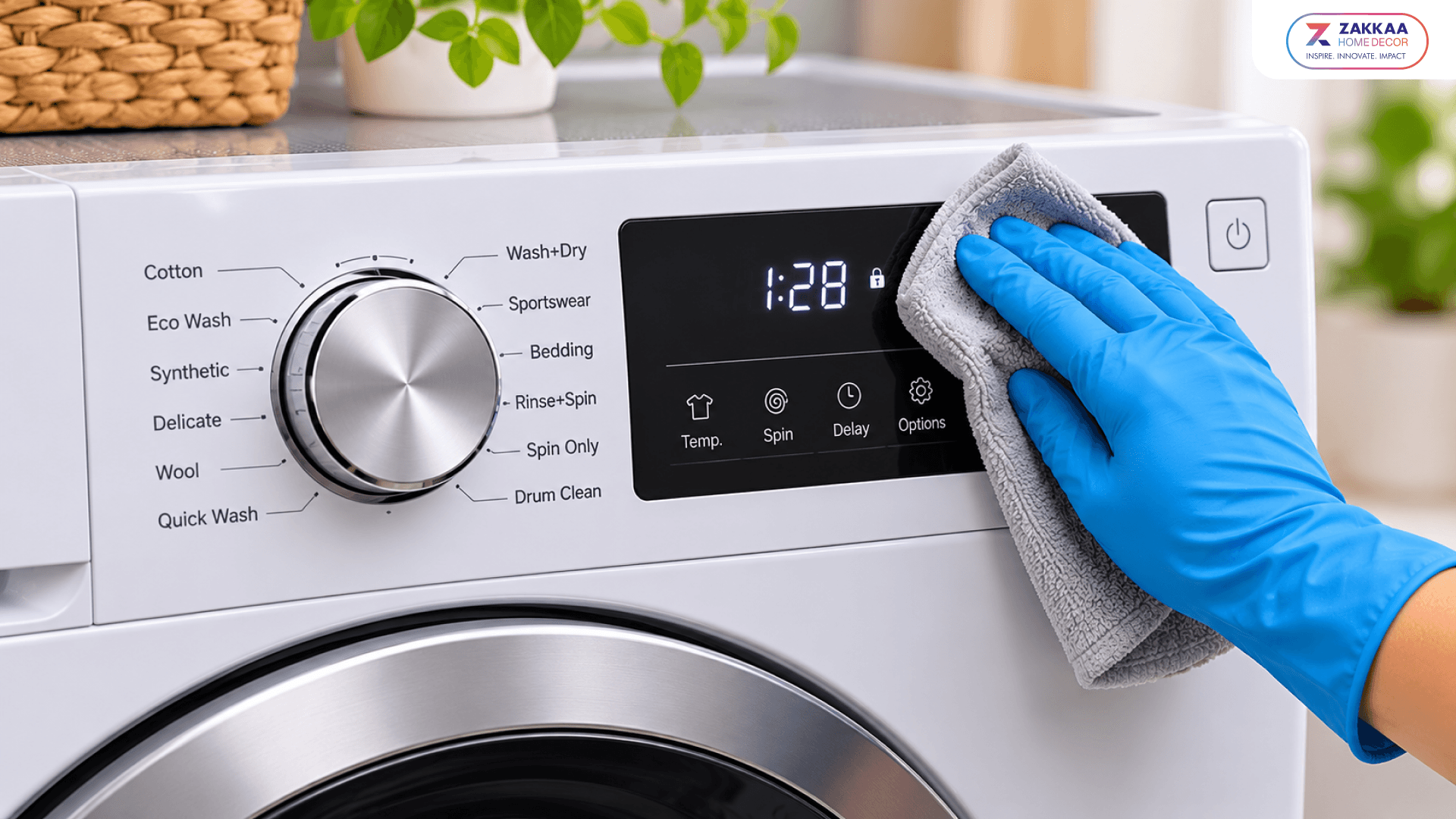
2. Remove Stains From The Control Panel
Buttons, display panels, and control knobs can collect fingerprints and detergent marks. Clean them gently to avoid damaging the markings or allowing moisture to enter the controls.
Use a dry microfiber cloth for loose dust.
For stubborn marks, lightly dampen the cloth rather than spraying the panel.
Wipe around buttons and knobs carefully.
Finish with a dry cloth before using the machine.
3. Wash The Detergent Drawer
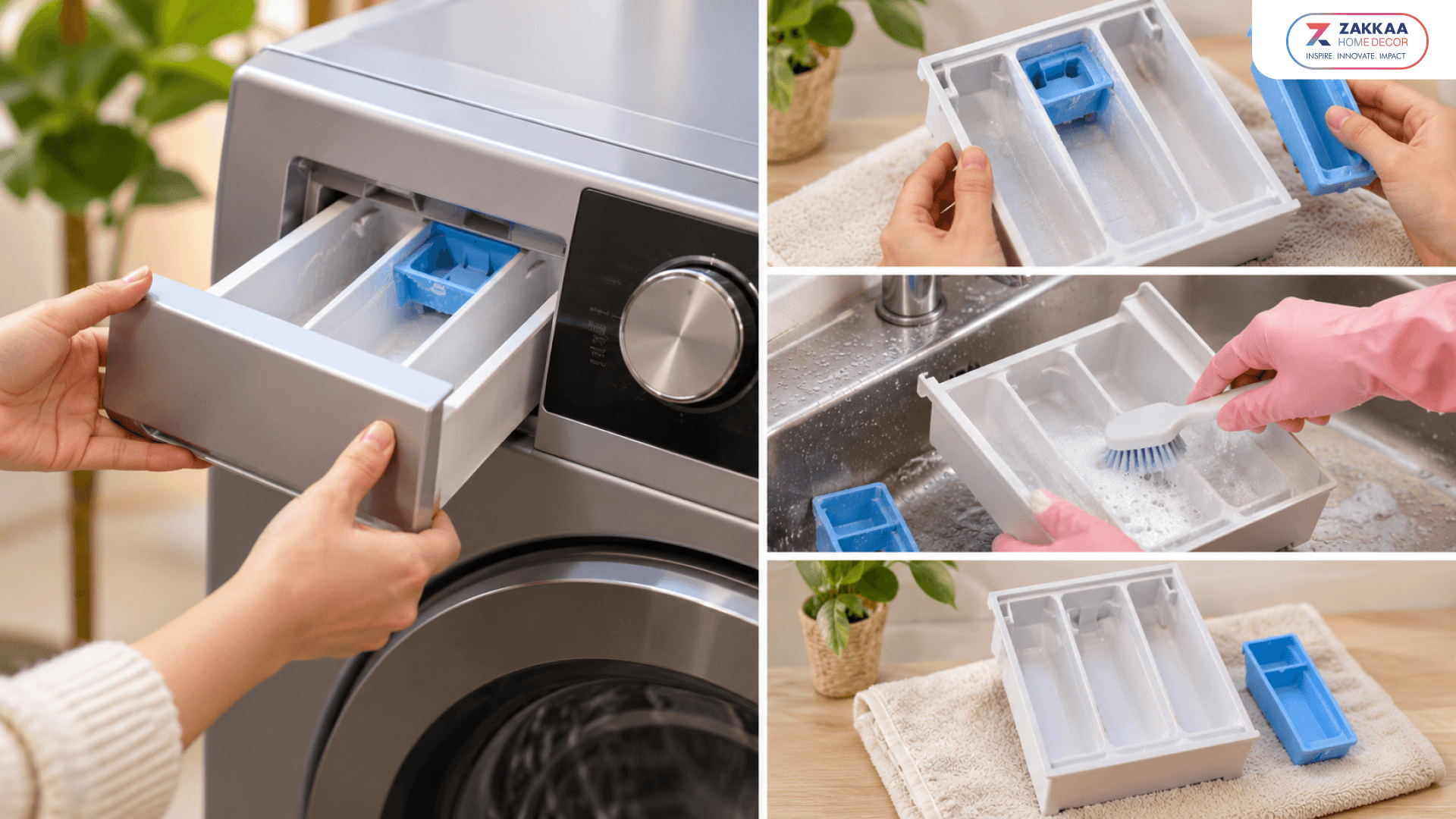
The detergent drawer is one of the most common places for residue to accumulate. Powder detergent, liquid detergent, and fabric softener can leave deposits that become difficult to remove if ignored.
Remove the drawer according to the manufacturer's instructions.
Separate removable compartments if the design allows it.
Wash the parts with warm water and a soft brush.
Clean the corners and narrow sections where residue collects.
Rinse thoroughly and let the drawer dry before putting it back.
4. Clean The Washing Machine Drum
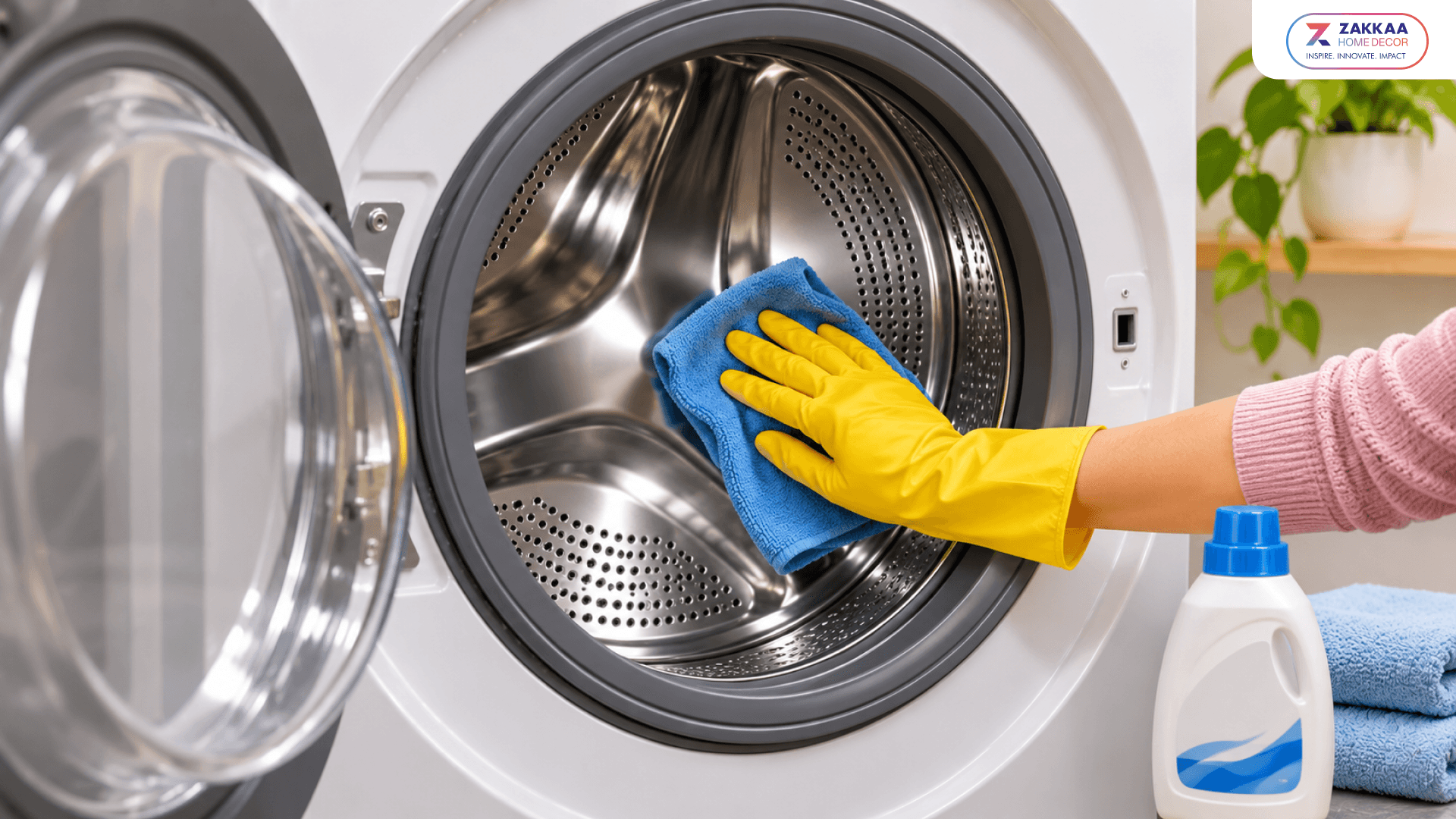
The drum comes into contact with clothes, detergent, and water during every wash. Residue and moisture can build up inside it, so give the drum a proper cleaning before Diwali.
Remove clothes and any visible debris from the drum.
Wipe the inner surface with a soft, damp cloth.
Use the machine's dedicated drum-cleaning or tub-cleaning cycle if available.
Follow the manual for the recommended cleaning product and cycle.
Leave the door or lid open after cleaning to allow the interior to dry.
Avoid adding random household chemicals to the drum. Use only products approved for your machine.
5. Scrub The Front-Load Rubber Gasket
Front-load washing machines have a rubber gasket around the door. Its folds can trap lint, hair, detergent residue, and moisture.
Gently pull back the accessible folds of the gasket.
Remove trapped hair, lint, and small debris by hand.
Wipe the folds with a soft cloth and a suitable mild cleaning solution.
Clean the lower section carefully, where water may collect.
Dry the gasket with a clean cloth before closing the door.
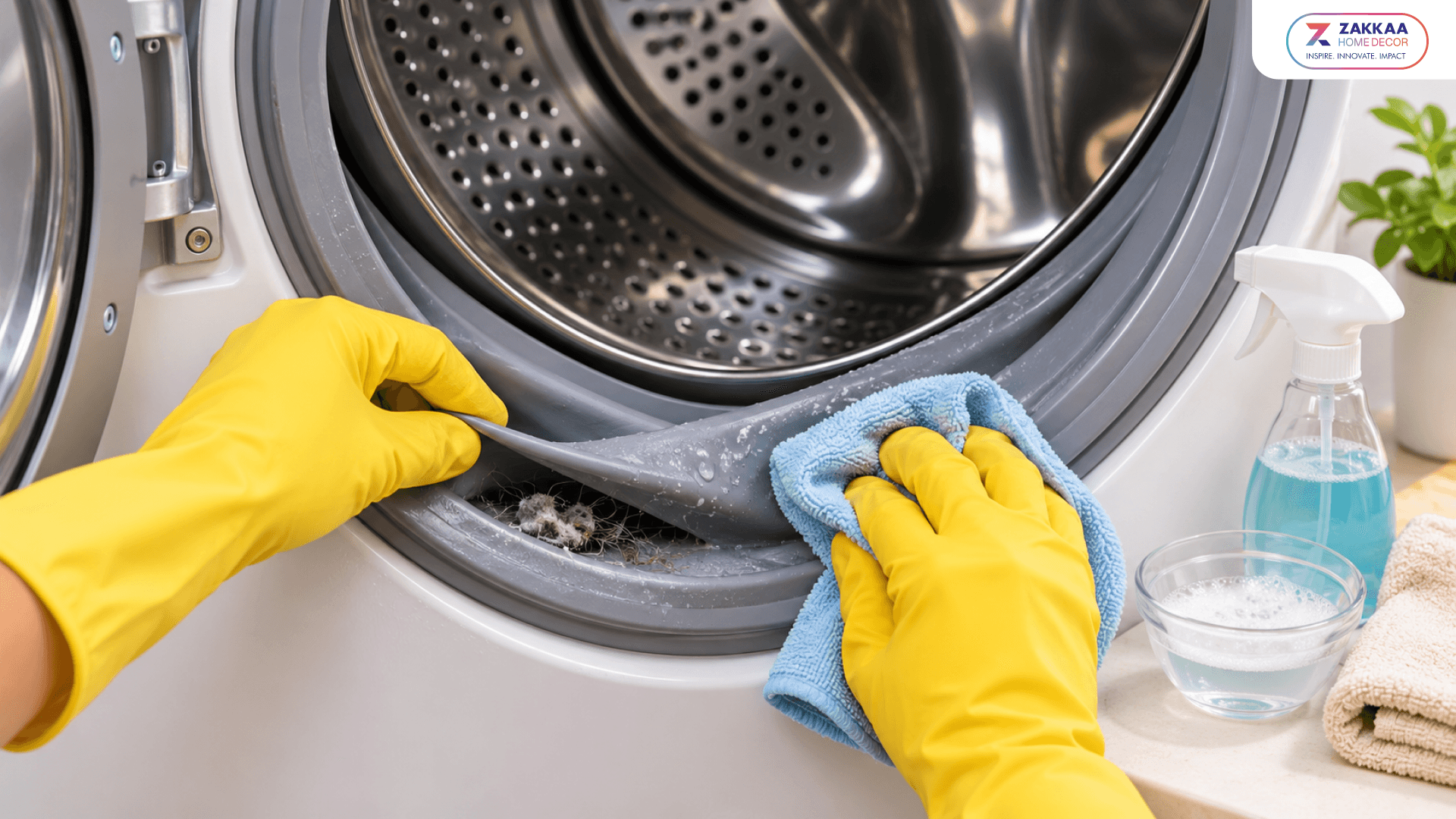
Do not use sharp objects or abrasive scrubbers, as they can damage the rubber seal.
6. Wipe The Door Glass And Lid
The door glass of a front-load machine and the lid of a top-load model can collect fingerprints, water spots, and detergent marks.
Clean the inside and outside of the door glass with a soft cloth.
Wipe the lid and its edges on top-load models.
Pay attention to the handle and surrounding frame.
Dry the surfaces to prevent water marks.
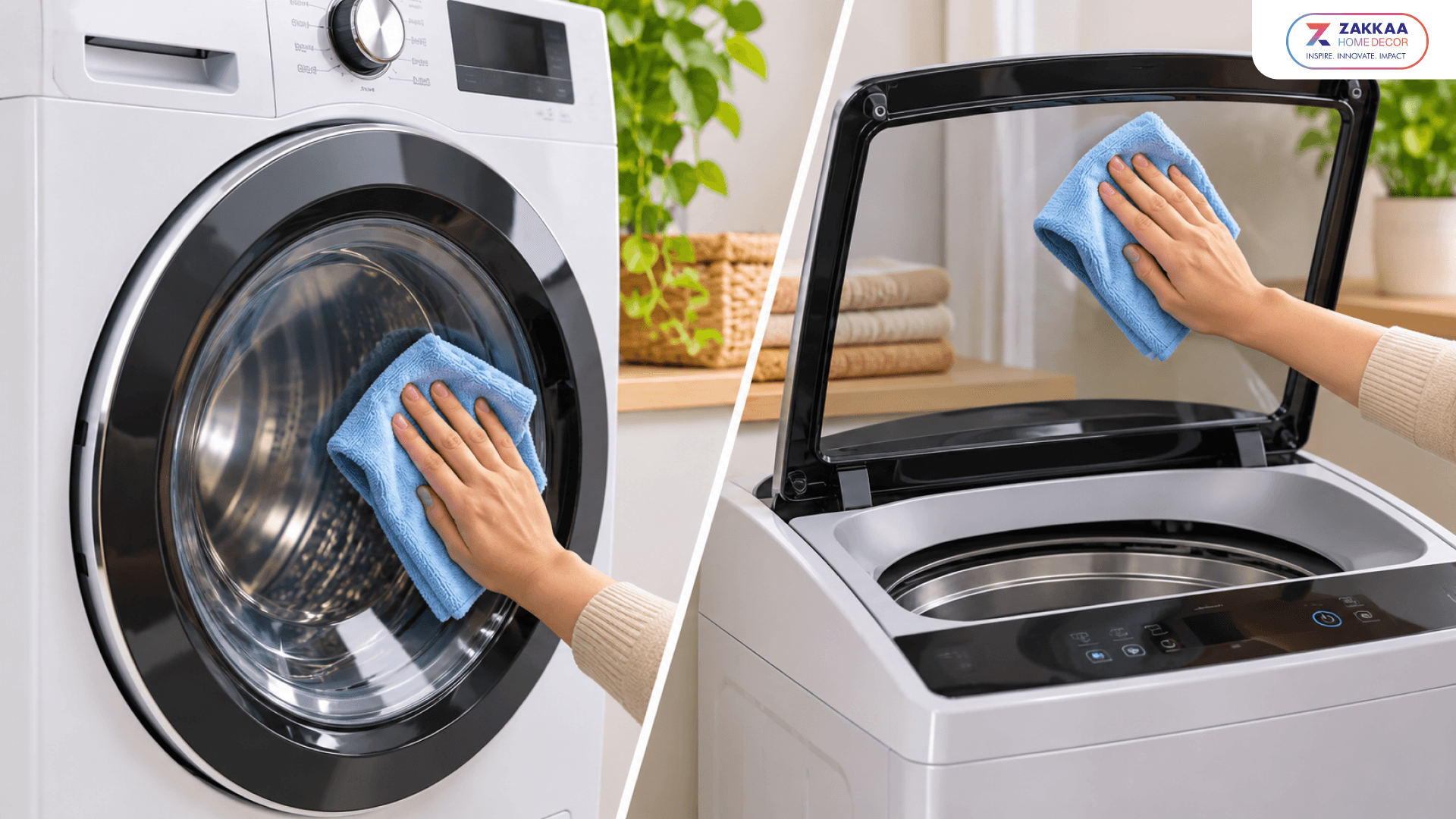
For glass surfaces, use a cleaner that is suitable for the material and permitted by the manufacturer.
7. Remove Lint From The Accessible Filter
Some washing machines have accessible lint filters or lint-catching components. These can collect fibres, threads, and small particles from clothes.
Locate the filter using the machine's manual.
Remove it only if the design allows user access.
Take out trapped lint and rinse the removable component if permitted.
Use a soft brush for residue that remains around the filter.
Reinstall it correctly before operating the machine.
Not every washing machine has the same filter arrangement. Avoid opening sealed or service-only components.
8. Clean The Water Inlet Filter
The inlet filter may collect small particles from the water supply. If the filter is designed for user cleaning, it can be checked during your routine cleaning.
Turn off the water supply before accessing the inlet connection.
Follow the manual to locate and remove the accessible filter.
Gently clean it with water and a soft brush, if permitted.
Refit it properly and check for leaks after reconnecting.
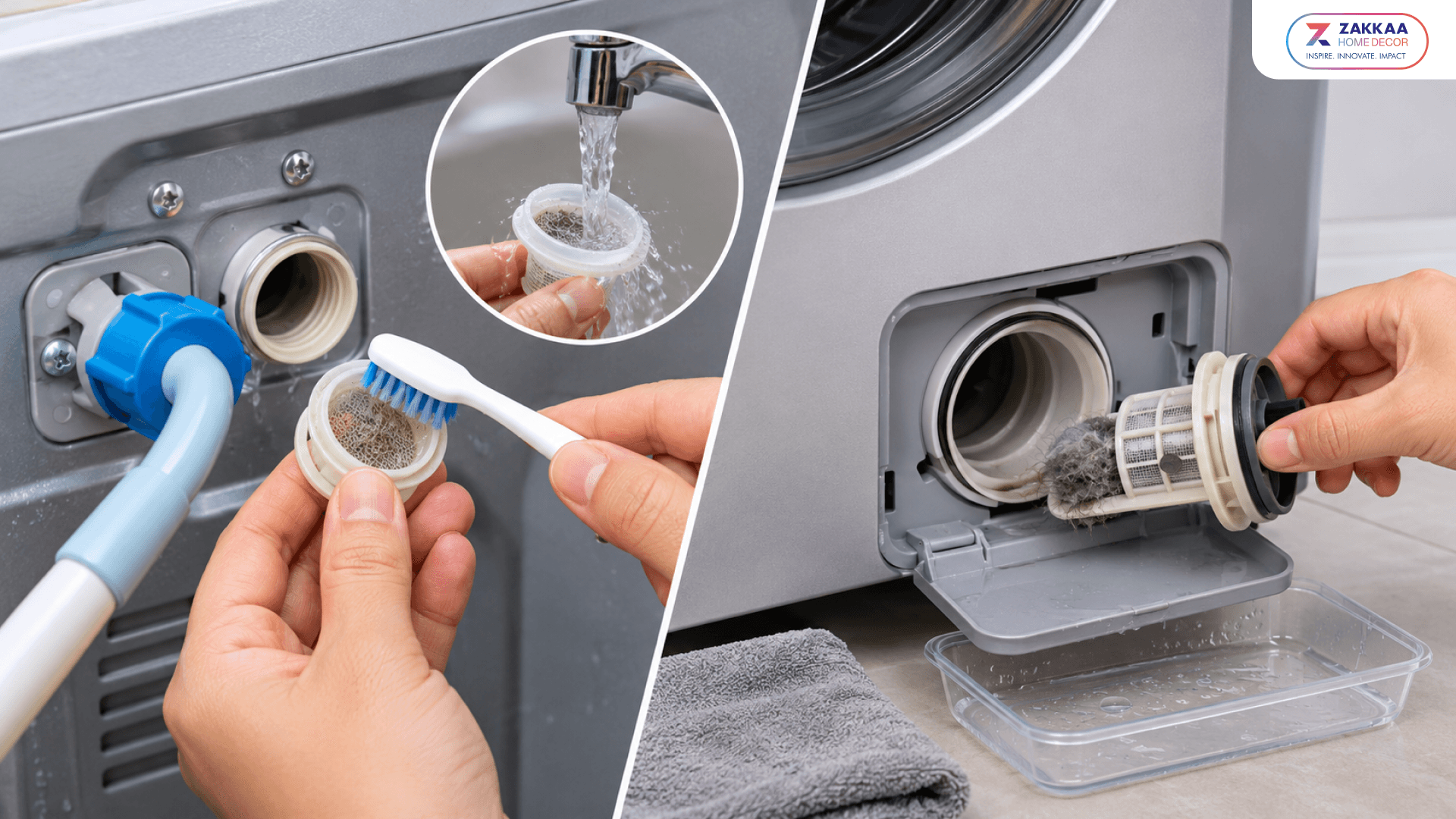
If the filter is difficult to access, leave the task to a qualified technician rather than forcing it open.
9. Wipe The Drain Filter Compartment
Some front-load and fully automatic washing machines have a drain filter compartment that can collect lint, coins, buttons, and other small debris.
Check the manual for the filter's location and cleaning procedure.
Place a shallow tray and cloth underneath before opening it.
Release any remaining water slowly, following the instructions.
Remove accessible debris and clean the filter as directed.
Secure the filter cover properly after cleaning.
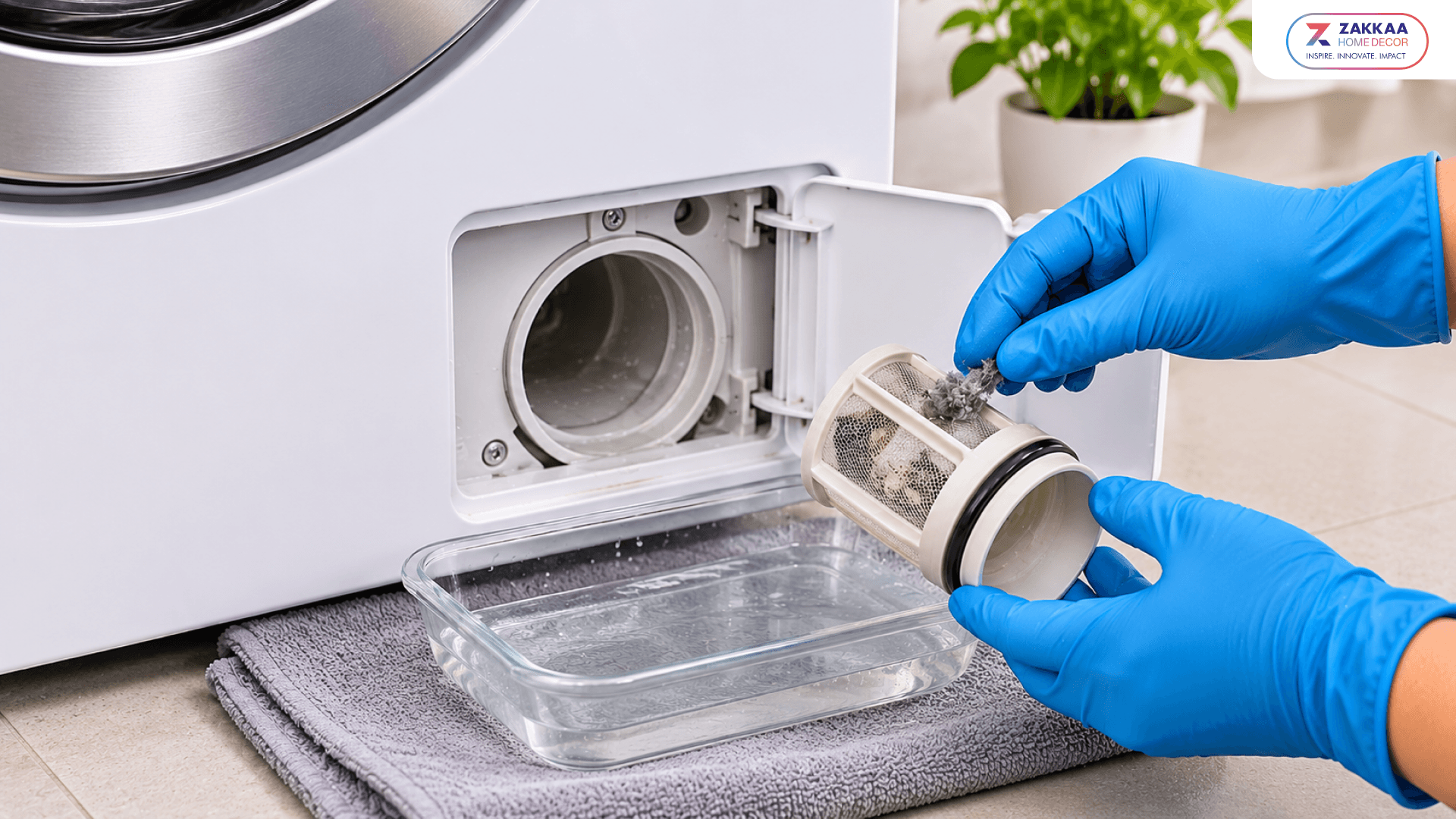
The compartment may contain residual water, so open it carefully. Do not force the cover or remove components that are not intended for user access.
10. Clean Around The Detergent Dispenser Opening
Cleaning the drawer alone may not remove all detergent buildup. The opening and surrounding area can also hold sticky residue.
Inspect the space behind the removed detergent drawer.
Wipe accessible surfaces with a damp cloth.
Use a soft brush to reach corners and narrow edges.
Remove loose residue without pushing it deeper into the machine.
Dry the area before replacing the drawer.
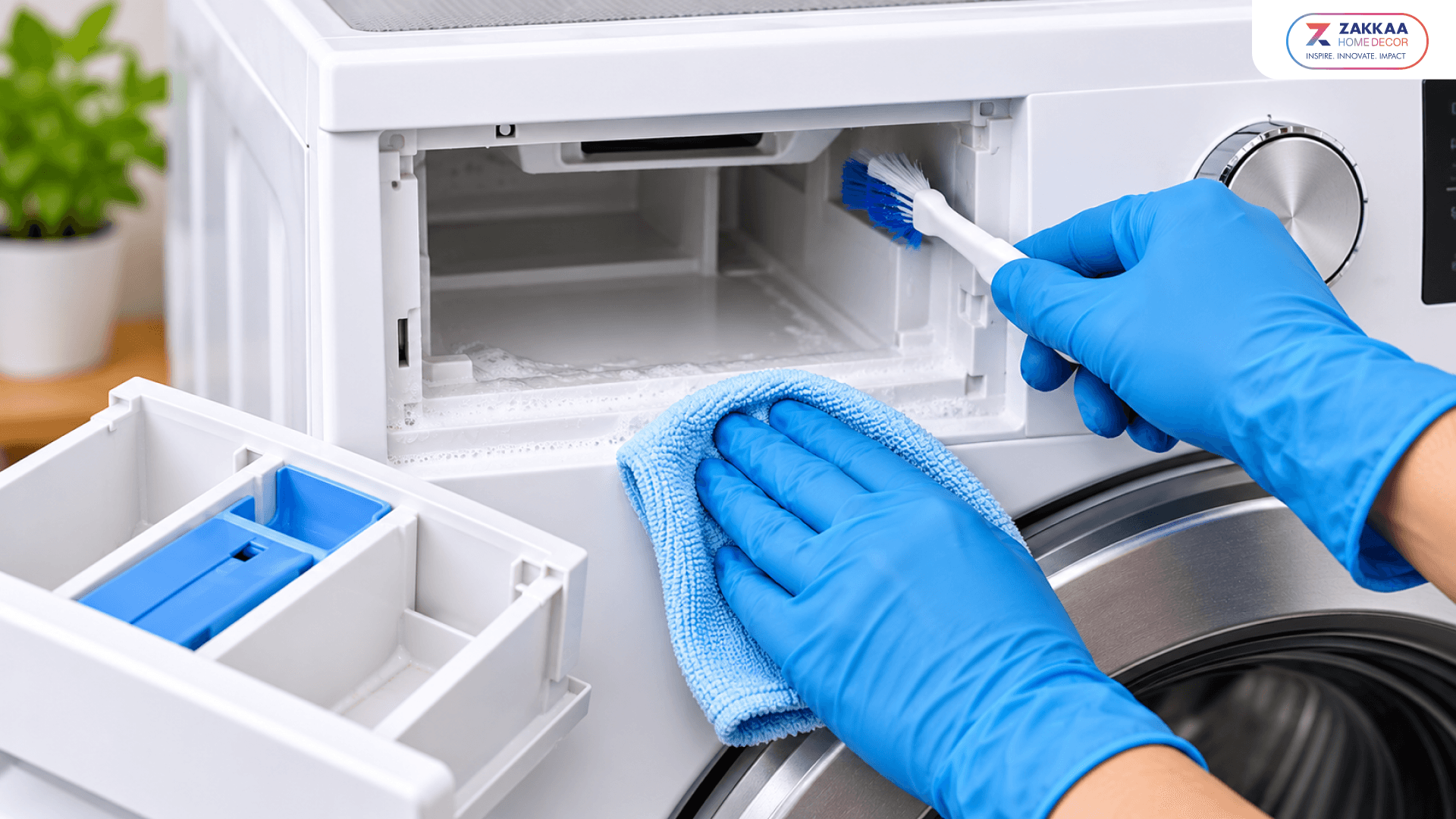
This small step helps complete detergent drawer cleaning instead of leaving residue behind.
11. Remove Dust From The Machine's Base And Surrounding Area
Dust and lint can collect around the washing machine's feet, lower edges, and nearby floor. This area is easy to miss during regular home cleaning.
Move the machine only if it can be done safely.
Sweep or vacuum dust around the base and behind accessible areas.
Wipe the floor and nearby wall surfaces.
Clean the machine's feet with a dry cloth.
Avoid pulling the appliance by its door, lid, or hoses.
If the machine is difficult to move, clean the accessible surrounding area instead.
12. Dry Moisture-Prone Areas
After cleaning, check the areas that can remain damp, especially the drum, gasket, detergent drawer, and door edges.
Wipe away visible water with a dry microfiber cloth.
Leave the detergent drawer slightly open if the design allows it.
Keep the front-load door or top-load lid open for ventilation.
Make sure removable parts are completely dry before reinstalling them.
This final step supports washing machine hygiene and helps reduce musty smells caused by trapped moisture.
Explore More: Which Washing Machine Should You Buy? A Practical Buying Guide
How To Clean Front-Load And Top-Load Washing Machines Differently
Front-load and top-load washing machine types need regular cleaning, but their designs have different areas where residue and moisture can collect.
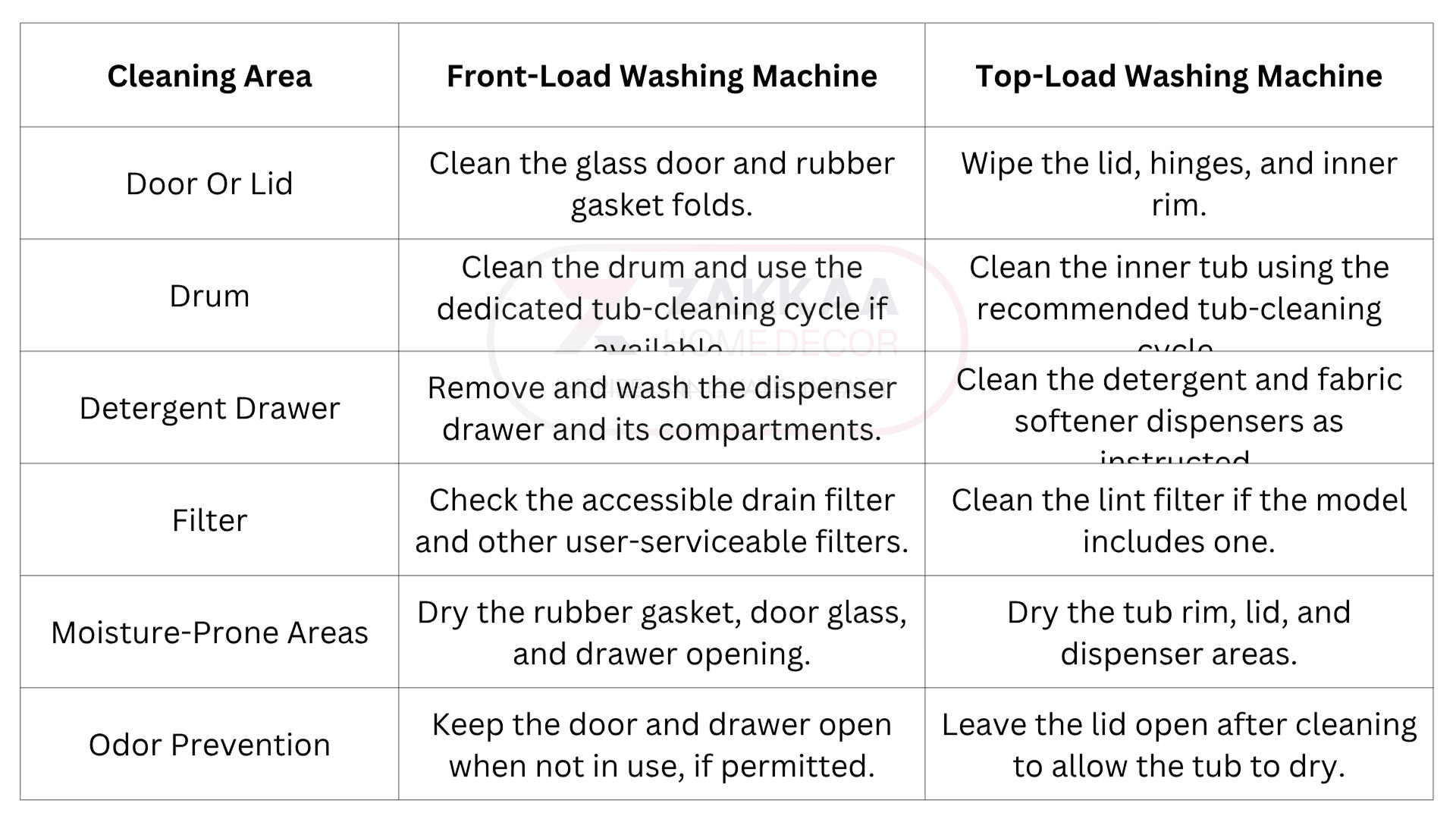
Always follow the cleaning instructions for your specific model. Filter locations, removable parts, and cleaning cycles can vary.
Read Too: Top-Load Vs Front-Load Washing Machine: Key Differences Explained
How To Remove Bad Smells And Detergent Buildup
A washing machine may develop an unpleasant smell even when its outer body looks clean. The cause can be trapped moisture, detergent residue, lint, or dirt in less visible areas.
Use these steps to address common sources:
For Drum Odors: Run the recommended drum-cleaning cycle using a manufacturer-approved cleaner.
For Detergent Smells: Remove and wash the detergent drawer, including its compartments and opening.
For Musty Gasket Folds: Remove trapped debris, wipe the rubber seal, and dry it completely.
For Drain-Related Odors: Check the user-accessible drain filter and clean it according to the manual.
For Lingering Dampness: Leave the door or lid open after cleaning to improve ventilation.
Never mix bleach, vinegar, ammonia, or different cleaning products. Such combinations can release harmful fumes or damage machine components. If the smell continues after cleaning, check the manual or contact a qualified service professional.
Discover More: Is A Fully Automatic Washing Machine Worth Buying? Key Factors To Consider
Products And Tools You Need To Clean Your Washing Machine
You do not need an extensive collection of products for washing machine cleaning. A few suitable tools can help you reach different surfaces without scratching or damaging them.
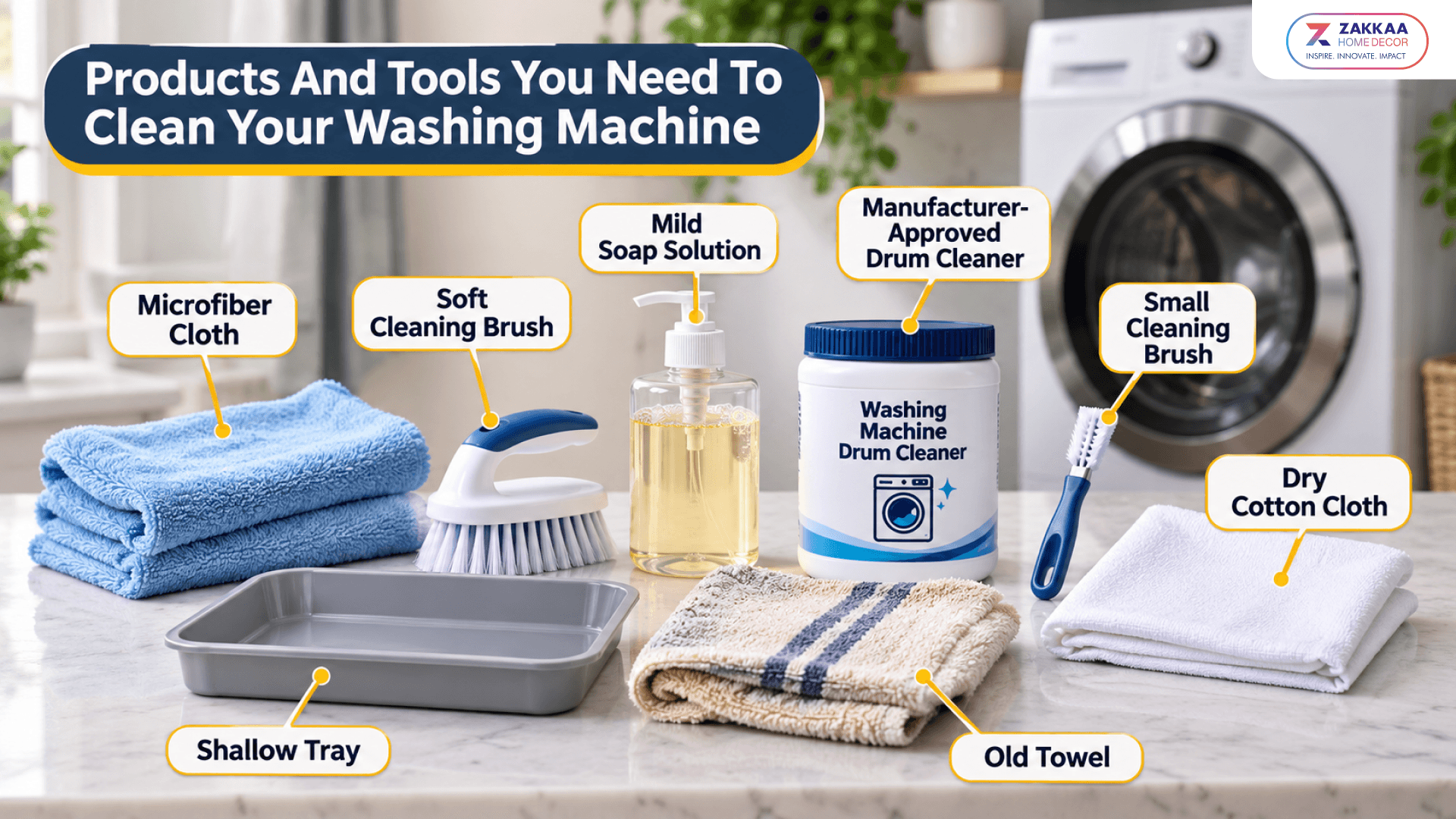
Microfiber Cloth: Cleaning the outer body, control panel, door, and drum surfaces.
Soft Cleaning Brush: Cleaning detergent drawer corners and accessible filter areas.
Mild Soap Solution: Cleaning exterior surfaces and removable parts where permitted.
Manufacturer-Approved Drum Cleaner: Cleaning the drum or tub using the designated cleaning cycle.
Small Cleaning Brush: Cleaning narrow dispenser openings and accessible gaps.
Dry Cotton Cloth: Wiping gasket folds, door edges, and moisture-prone areas.
Shallow Tray And Old Towel: Collecting residual water from an accessible drain filter.
Choose cleaning products according to the manufacturer's instructions. Avoid steel wool, hard brushes, sharp tools, and strong chemicals that may damage plastic, rubber, or coated surfaces.
Common Washing Machine Cleaning Mistakes To Avoid
A rushed cleaning routine can damage parts or leave residue behind. Keep these mistakes in mind while preparing your washing machine for the festive season.
Using Excessive Water: Pouring water over the control panel or electrical areas can damage the machine.
Scrubbing With Abrasive Tools: Hard scrubbers can scratch surfaces and damage rubber seals.
Ignoring Drawer Opening: Cleaning only the removable drawer leaves buildup behind.
Forgetting Gasket: Dirt and moisture can remain trapped inside front-load gasket folds.
Using Too Much Detergent: Excess detergent can leave additional residue inside the drum and dispenser.
Mixing Cleaning Chemicals: Combining products such as bleach and vinegar can create harmful fumes.
Forcing Filters Open: Some filters are not designed for user removal, so always check the manual.
Closing Door Immediately: Trapped moisture can contribute to unpleasant smells after cleaning.
Final Thoughts
A clean washing machine makes your Diwali home-cleaning routine more complete. From the detergent drawer and drum to the rubber gasket, filters, and exterior surfaces, each area deserves attention. Regular washing machine cleaning also helps prevent residue and moisture from accumulating between wash cycles.
Include these washing machine care tips in your festive home cleaning checklist, follow your appliance manual, and give your laundry area the attention it needs. To explore the home appliance range, you can contact a reliable OEM washing machine manufacturer in India to discuss your appliance requirements.
Frequently Asked Questions (FAQs)
How Often Should I Clean My Washing Machine?
Clean visible surfaces and the detergent drawer regularly, and check filters according to the manufacturer's instructions. Run the recommended drum-cleaning cycle at the interval specified in your user manual.
What Is The Best Way To Clean A Washing Machine Drum?
Use the dedicated drum or tub-cleaning cycle if your machine has one. Follow the manufacturer's instructions for the recommended cleaning product and cycle settings.
How Do I Clean A Washing Machine Detergent Drawer?
Remove the drawer as instructed, wash its removable compartments with warm water, and use a soft brush to clean corners. Rinse, dry, and reinstall it properly.
How Can I Remove Bad Smells From My Washing Machine?
Clean the drum, detergent drawer, gasket, and accessible filters. Remove trapped residue, dry moisture-prone areas, and leave the door or lid open when the machine is not in use, if permitted.
Is It Necessary To Clean The Washing Machine Filter?
Yes, accessible filters may collect lint, hair, and small debris. Check the user manual for the correct cleaning frequency and procedure, as filter designs vary between models.
Can I Use Vinegar To Clean My Washing Machine?
Do not use vinegar unless your washing machine manufacturer specifically permits it. Some cleaning substances may affect rubber seals or other components, so use an approved product instead.