Oct 26, 202611 min readBy Aditya Singh
Your washing machine runs almost every other day, but have you ever wondered whether you’re using the right type for your home? A top-load model lets you drop clothes in from above, while a front-load washing machine works differently, especially in how it uses water, runs cycles, and handles delicate fabrics.
For a family with school uniforms, office wear, bedsheets, and daily laundry, these differences can affect both convenience and monthly expenses. The space available in your utility area and your budget also factor into the decision.
Before spending your money, it helps to know what each machine offers beyond its design. Let’s compare front-load and top-load washing machines to see how they differ in cleaning, running costs, maintenance, and everyday use.
Top-Load Vs Front-Load Washing Machine: Key Differences At A Glance
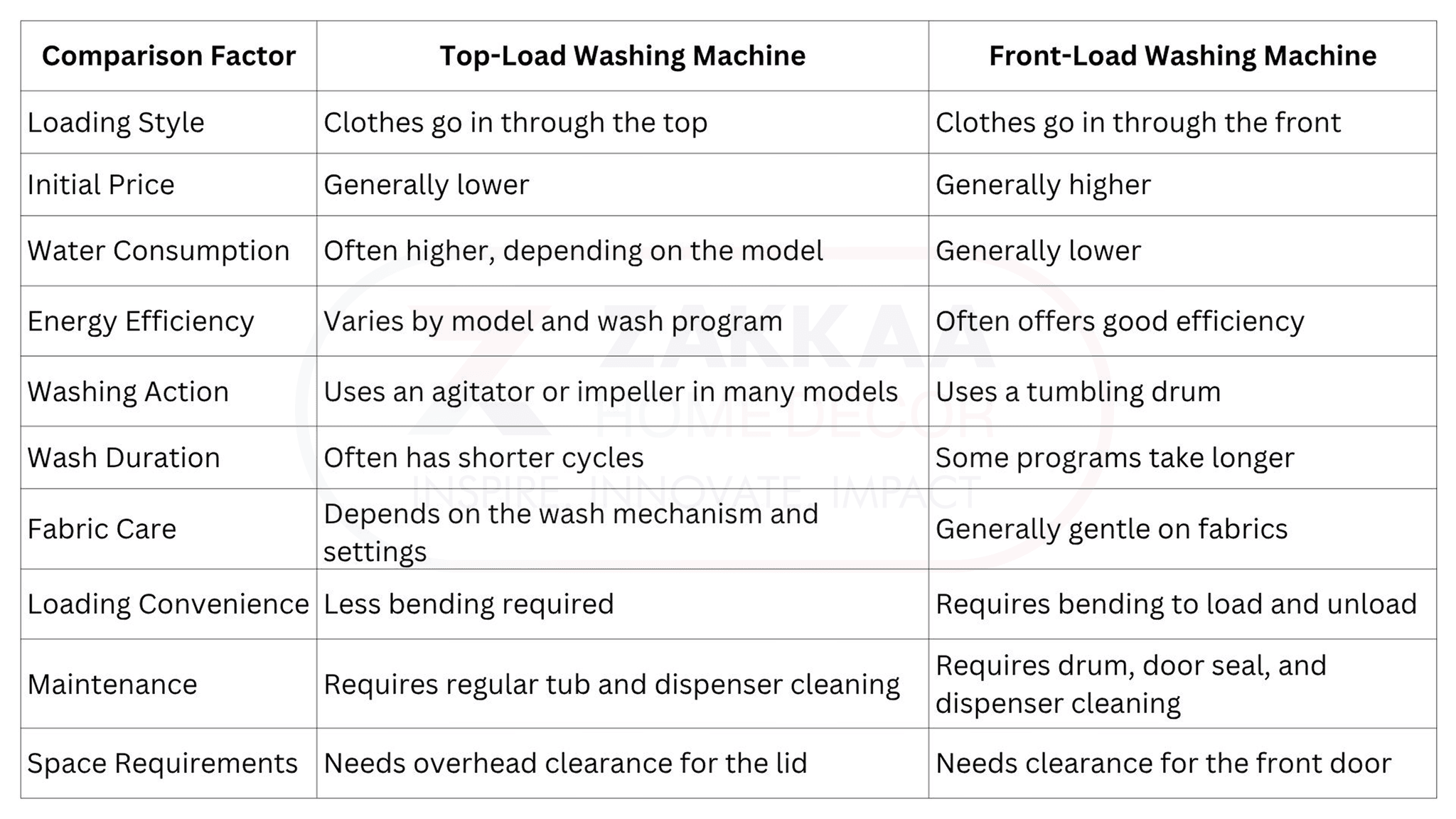
This comparison gives you a starting point, but the best choice depends on how you use your washing machine. Capacity, energy ratings, wash programs, and the manufacturer's specifications also matter.
What Is The Difference Between Top-Load And Front-Load Washing Machines?
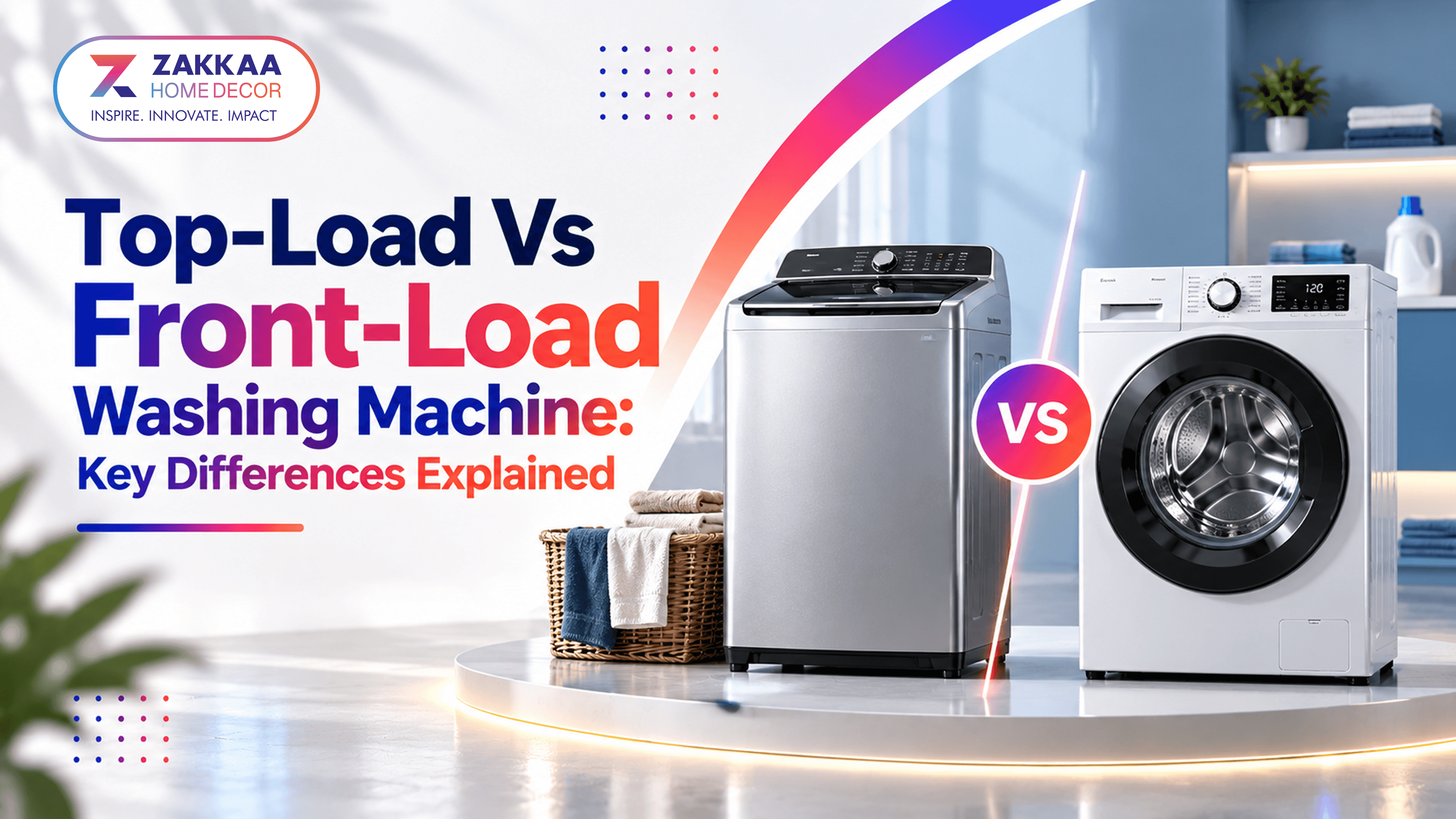
The main difference is how you load clothes and how the machine washes them. A top-load washing machine has a top opening, so you can add laundry from above. A front-load washing machine has a front-facing door and uses a rotating drum to move clothes through water and detergent.
For example, a family that washes clothes every day may prefer a top loader because loading and unloading are straightforward. Another household may choose a front loader to reduce water consumption and treat delicate garments more gently.
1. Initial Price And Long-Term Costs
The purchase price is often the first thing buyers compare. Top-load washing machines generally have a lower starting price, making them attractive to budget-conscious households and customers looking for basic laundry features.
Front-load models often cost more because of their design, available features, and product specifications. However, a higher initial price does not automatically mean a better machine, just as a lower price does not guarantee better value.
The running cost deserves attention, too. Water and electricity consumption, detergent requirements, maintenance, and service expenses all contribute to the total cost of ownership.
Which Should You Choose?
A top loader may suit you if your immediate budget is limited. A front loader may be worth considering if lower water consumption and fabric care are higher priorities. Compare similarly sized models and their energy ratings before deciding.
2. Water Consumption And Energy Efficiency
Water and electricity bills can add up when you wash clothes several times a week. This makes resource consumption an important factor when choosing between these two laundry appliances.
Front-load washing machines generally use less water because their wash action does not require the drum to fill in the same way as many traditional top loaders. Top-load machines can use more water, although consumption varies with the design, load size, and selected program.
Electricity consumption is more complicated. The motor, spin cycle, wash temperature, and program duration all affect energy use. A longer cycle does not necessarily consume more electricity overall, and a front loader is not automatically more efficient than every top loader.
What Should You Check?
Compare the energy ratings and published consumption figures.
Look at water use for similar capacities and wash programs.
Consider how frequently you run the machine.
Check whether the machine offers suitable quick-wash and eco programs.
These details provide a more realistic picture of running costs than the loading style alone.
3. Cleaning Performance And Fabric Care
Both washing machine types can handle everyday laundry, including shirts, towels, bedsheets, and school uniforms. The difference lies in how they move clothes during the wash cycle.
A front-load washing machine rotates its drum, lifting clothes and allowing them to tumble through the wash water. This action can clean clothes thoroughly while being gentler on many fabrics.
Top-load washing machines commonly use an agitator or impeller to move clothes through water. An agitator creates movement using a central mechanism, while an impeller uses a lower-profile design. Cleaning performance and fabric treatment depend on the particular wash system.
For everyday family laundry, either type can work well. If you regularly wash delicate garments, embroidered clothing, or items with specific care instructions, check the available programs and follow the garment labels.
4. Washing Machine Capacity And Family Size
Capacity determines how much dry laundry a machine can handle in one load. Choosing the right size can reduce unnecessary wash cycles and make laundry easier to manage.
A smaller household may be comfortable with a compact-capacity washer, while a larger family may need more room for daily clothes, towels, and bedsheets. People who wash bulky items should also check the drum dimensions and the manufacturer's guidance for those items.
Both top-load and front-load washing machines are available in different capacities. The loading style alone does not tell you which model can handle the larger load.
These are general starting points, not fixed rules. Your laundry habits, clothing types, and frequency of washing should guide the final decision.
5. Loading Convenience And Everyday Use
The loading design can make a noticeable difference to your daily routine. Top-load machines allow you to place clothes inside from above, so you generally do not need to bend as far when loading or unloading.
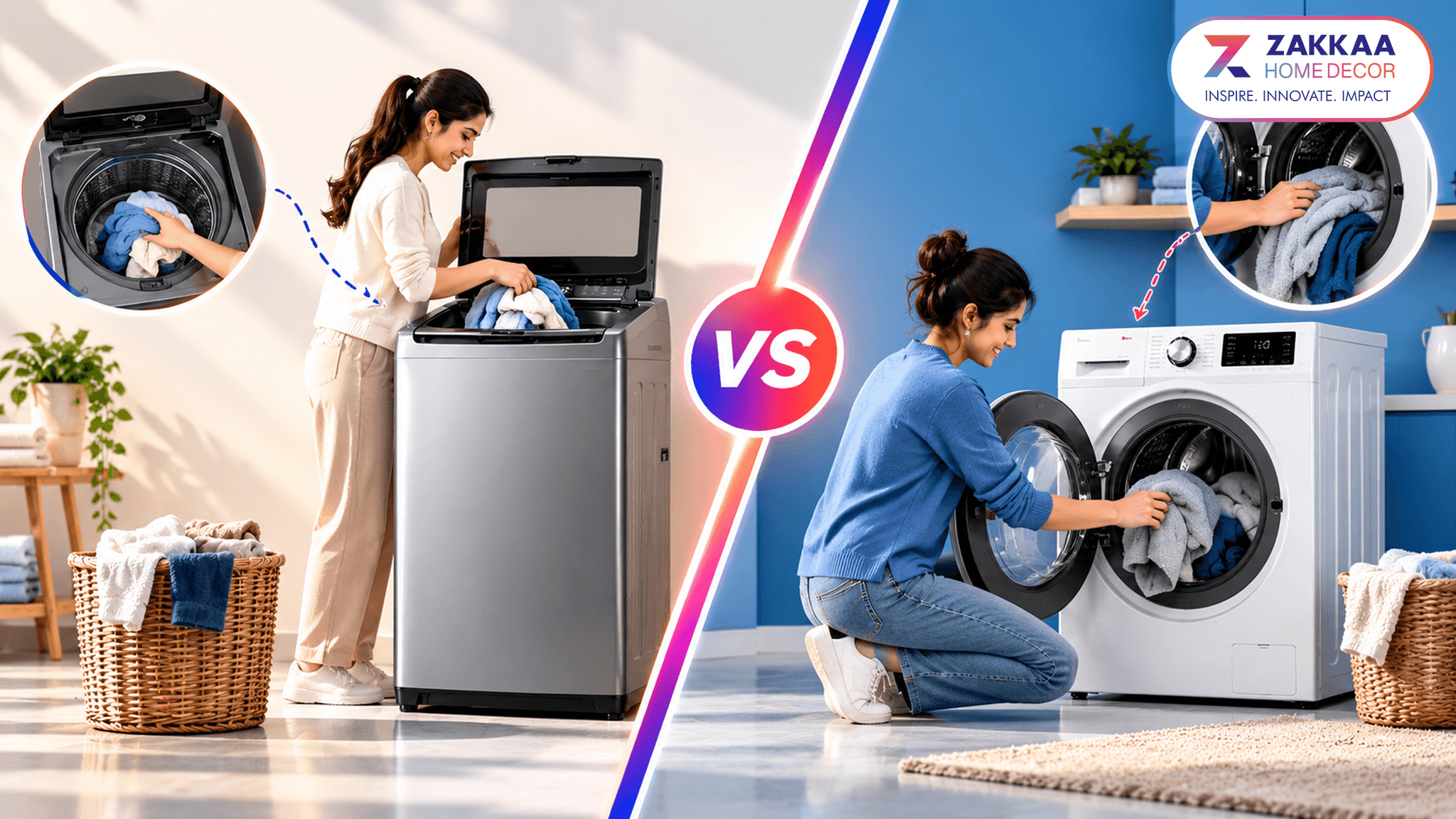
Front-load models require you to reach the drum through a front-facing door. A raised platform or suitable stand may make access more comfortable, provided the installation follows the manufacturer's instructions.
Adding forgotten clothes is another consideration. Some top-load models allow users to pause a cycle and add laundry, while certain front-load models also provide this option. The availability and timing depend on the machine's design and safety controls.
Think about who will use the washing machine most often. A machine that feels comfortable to operate can be a better everyday choice than one with extra features that your household rarely needs.
6. Wash Cycle Duration
Laundry time matters when you have work, school, and household responsibilities to manage. Top-load washing machines often offer shorter wash programs, but the duration depends on the model and settings you choose.
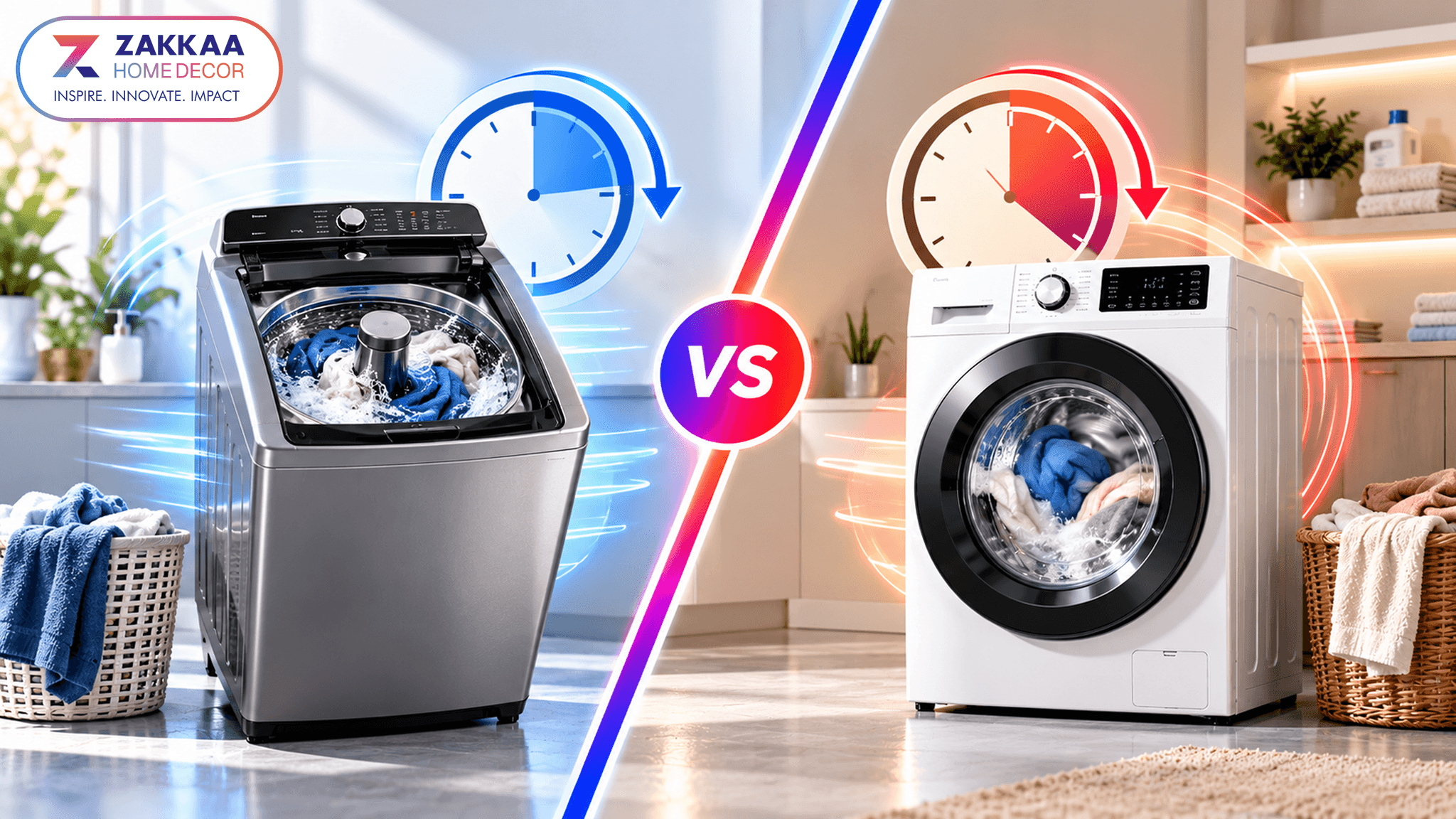
Front-load washing machines may take longer on certain cycles because they use different washing actions and program settings. Many models offer quick-wash options for lightly soiled clothes, but these programs may have load-size restrictions.
A longer wash cycle is not automatically a disadvantage. If you usually wash a full load overnight or while working, duration may matter less than water consumption, cleaning performance, or fabric care.
Before purchasing, check the cycle times for the programs you expect to use most frequently. This is more useful than comparing only the fastest cycle advertised for each machine.
7. Installation Space And Maintenance
The available space can narrow your options before you even compare features. A top-load washing machine needs enough room above it for the lid to open fully. Avoid placing shelves or cabinets where they could block access.
A front-load washing machine needs sufficient space in front for the door to open and for clothes to be loaded comfortably. Some models may fit beneath a suitable countertop or work with a compatible stacking arrangement, subject to installation requirements.
Maintenance also differs slightly. Front loaders need regular cleaning around the door seal, where moisture or detergent residue may collect. Leaving the door open after use, when safe and practical, helps the interior dry. Top loaders need regular tub, filter, and dispenser cleaning according to the manual.
Both types benefit from suitable detergent, correct loading, and routine cleaning. Good maintenance helps prevent unpleasant odors and supports reliable everyday operation.
Which Washing Machine Is Better For Your Home?
There is no single winner for every household. The right choice depends on the trade-offs you are comfortable making.
Choose A Top-Load Washing Machine If:
You prefer loading clothes from a standing position.
A lower initial purchase price is important.
You want convenient access to the drum.
You often use shorter wash programs.
Your available space provides enough clearance for the lid.
Choose A Front-Load Washing Machine If:
Lower water consumption is a priority.
You want wash programs suited to different fabrics.
You prefer a tumbling wash action.
You want to compare models with higher spin speeds.
Your laundry area provides enough space for the front door.
Whichever type you choose, compare the actual specifications rather than relying on general assumptions. A well-designed top loader may suit your needs better than an unsuitable front loader, and the reverse can also be true.
What Retailers And OEM Buyers Should Consider
The top-load vs front-load washing machine comparison also matters for retailers, distributors, and businesses planning their appliance product ranges.
Retailers should understand the customer groups they serve. Buyers focused on affordability and loading convenience may prefer top-load models, while customers prioritizing water use and fabric care may show greater interest in front-load options.
For OEM manufacturing, the decision involves more than choosing a product category. Product capacity, motor specifications, control panels, wash programs, cabinet design, component availability, packaging, warranty arrangements, and quality checks all need careful evaluation.
Before finalizing a manufacturing or sourcing partnership, ask suppliers about:
Available models and customization options.
Minimum order quantities and production timelines.
Component sourcing and quality inspection procedures.
Product testing and applicable compliance requirements.
Spare parts, warranty terms, and after-sales support.
These questions help businesses assess whether a product range matches their target customers and operating plans. Actual washing machine manufacturing capabilities and customization options should always be confirmed with the supplier.
How Zakkaa Fits Into Your Buying Research As Leading Washing Machine Manufacturer in India
For retailers and businesses exploring home appliance opportunities, comparing product categories is a useful first step toward understanding customer demand. Top-load and front-load washing machines appeal to different needs, so product selection should reflect the customers you want to serve.
Zakkaa can be considered part of your home appliance sourcing research. Before proceeding with any OEM or supply arrangement, discuss the available washing machine models, production capabilities, customization requirements, order quantities, quality processes, and commercial terms directly with the company.
A clear understanding of these details helps buyers assess whether a potential partnership aligns with their product range and business goals. Confirm the relevant specifications and service arrangements before making a purchasing commitment.
Final Thoughts
In short, choosing between a top-load and front-load washing machine depends on your budget, laundry habits, available space, and priorities. Top-load models often offer easier loading and a lower starting price, while front-load models generally use less water and provide a gentler tumbling wash action. However, individual models can differ considerably in performance, energy consumption, capacity, and features.
For households, comparing these factors helps narrow the options. For retailers and OEM buyers, understanding customer preferences can guide product selection and sourcing decisions.
If you are looking for the right washing machine range for your business, you can reach out to a trusted washing machine supplier in India to discuss your appliance sourcing requirements and explore suitable options.
Frequently Asked Questions (FAQs)
Which Is Better, A Top-Load Or Front-Load Washing Machine?
A top-load washing machine may suit buyers who prioritize easy loading, shorter cycles, and a lower initial price. A front-load model may be a better fit for those who prioritize water savings and fabric care. Compare individual models before deciding.
Which Washing Machine Uses Less Water?
Front-load washing machines generally use less water than traditional top-load models. However, actual consumption depends on capacity, wash settings, load size, and the specific machine.
Are Front-Load Washing Machines More Expensive?
Front-load models generally have a higher initial price than many top-load models. The final cost depends on capacity, features, brand, and specifications.
Which Washing Machine Is Better For A Large Family?
Both types can suit large families if the capacity matches their laundry needs. Compare drum size, maximum load, wash programs, and the frequency of your laundry before buying.
Do Top-Load Washing Machines Clean Clothes Properly?
Yes, top-load washing machines can clean everyday laundry effectively. Results depend on the wash mechanism, detergent, load size, program, and level of soiling.
Are Front-Load Washing Machines Harder To Maintain?
Front-load models need regular attention to the door seal and drum to prevent moisture and detergent residue from building up. Top-load models also require routine tub, filter, and dispenser cleaning.
Can I Add Clothes After Starting A Wash Cycle?
Some top-load and front-load models allow you to pause a cycle and add forgotten clothes. Check the specific machine's instructions because this feature is not available under every condition.
What Should OEM Buyers Check Before Choosing A Washing Machine Supplier?
OEM buyers should evaluate product specifications, minimum order quantities, customization options, component availability, quality testing, production timelines, warranty terms, and after-sales support before finalizing a supplier.