Nov 04, 202610 min readBy Aditya Singh
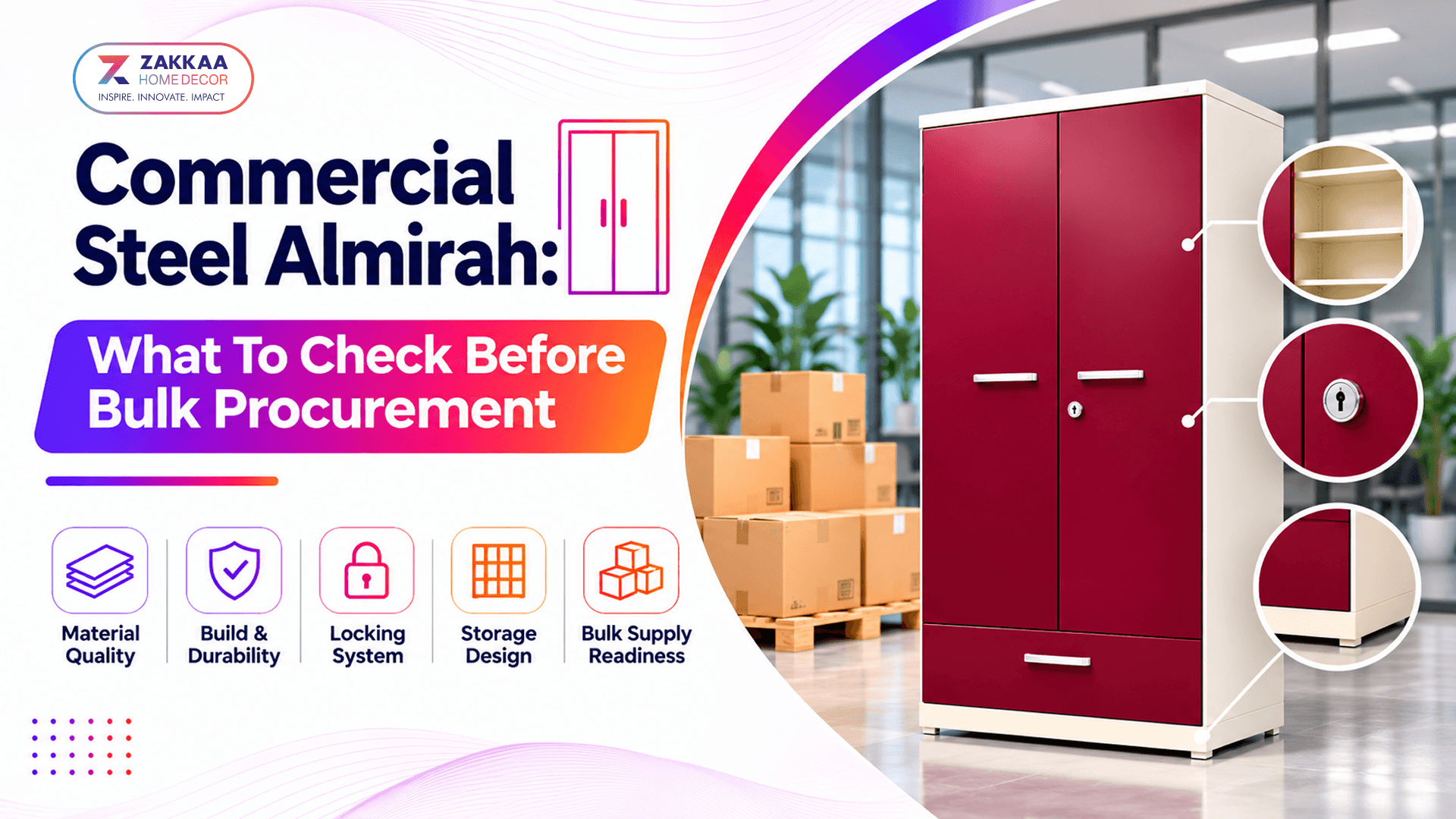
Planning to purchase commercial steel almirahs for an office, institution, or commercial facility? Ordering several units at once requires careful planning because even small differences in dimensions, material quality, or storage design can affect how well the furniture serves your space. A lower bulk price may look attractive, but product specifications deserve equal attention.
Start by checking the steel gauge, cabinet structure, shelf arrangement, door hinges, locks, and overall finish. Production capacity, delivery schedules, warranty terms, and customization options also matter when sourcing almirahs in larger quantities.
Before finalizing your procurement, it's worth understanding what separates a suitable commercial almirah from an ordinary storage cabinet. Let's explore the key checks to make before placing a bulk order.
Things To Check Before Bulk Procurement of Commercial Steel Almirahs
A bulk commercial steel almirah furniture order should be evaluated across construction, usability, security, and supply requirements. The following checks can help procurement teams make a more informed decision.
1. Check The Steel Sheet Quality And Thickness
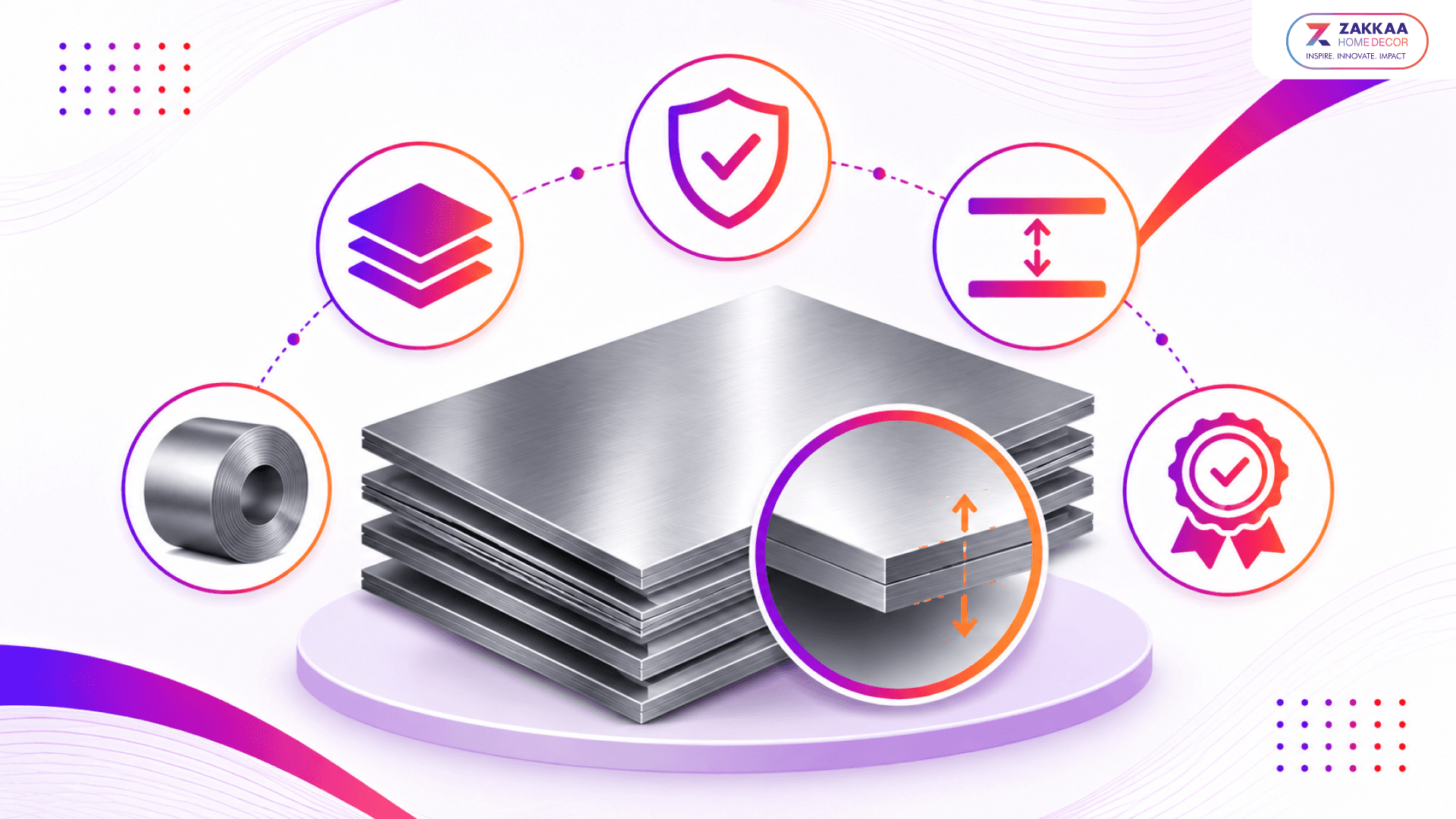
The quality of steel used in an almirah affects its strength, weight, and resistance to everyday wear. Before ordering, ask the manufacturer about the sheet material and thickness used for different cabinet components.
Check these details:
Steel grade and material specifications.
Sheet thickness used for the body, doors, shelves, and back panel.
Whether the thickness is suitable for the intended storage load.
Protection against corrosion, particularly in humid environments.
Do not judge an almirah only by its external appearance. Request technical specifications and inspect a sample unit to understand its actual construction.
2. Evaluate Overall Construction And Structural Strength
Buying commercial steel almirahs and storage cabinets may be opened, closed, and accessed several times throughout the day. Their construction should support regular use without becoming unstable or difficult to operate.
Inspect the following areas:
Door Alignment: Doors should fit properly without unnecessary gaps or uneven positioning.
Welded Joints: Check whether joints are properly finished and secure.
Body Stability: The cabinet should stand firmly on a level surface.
Edge Finishing: Exposed edges should not have sharp or rough sections.
Reinforcement: Check whether structural support is provided where required.
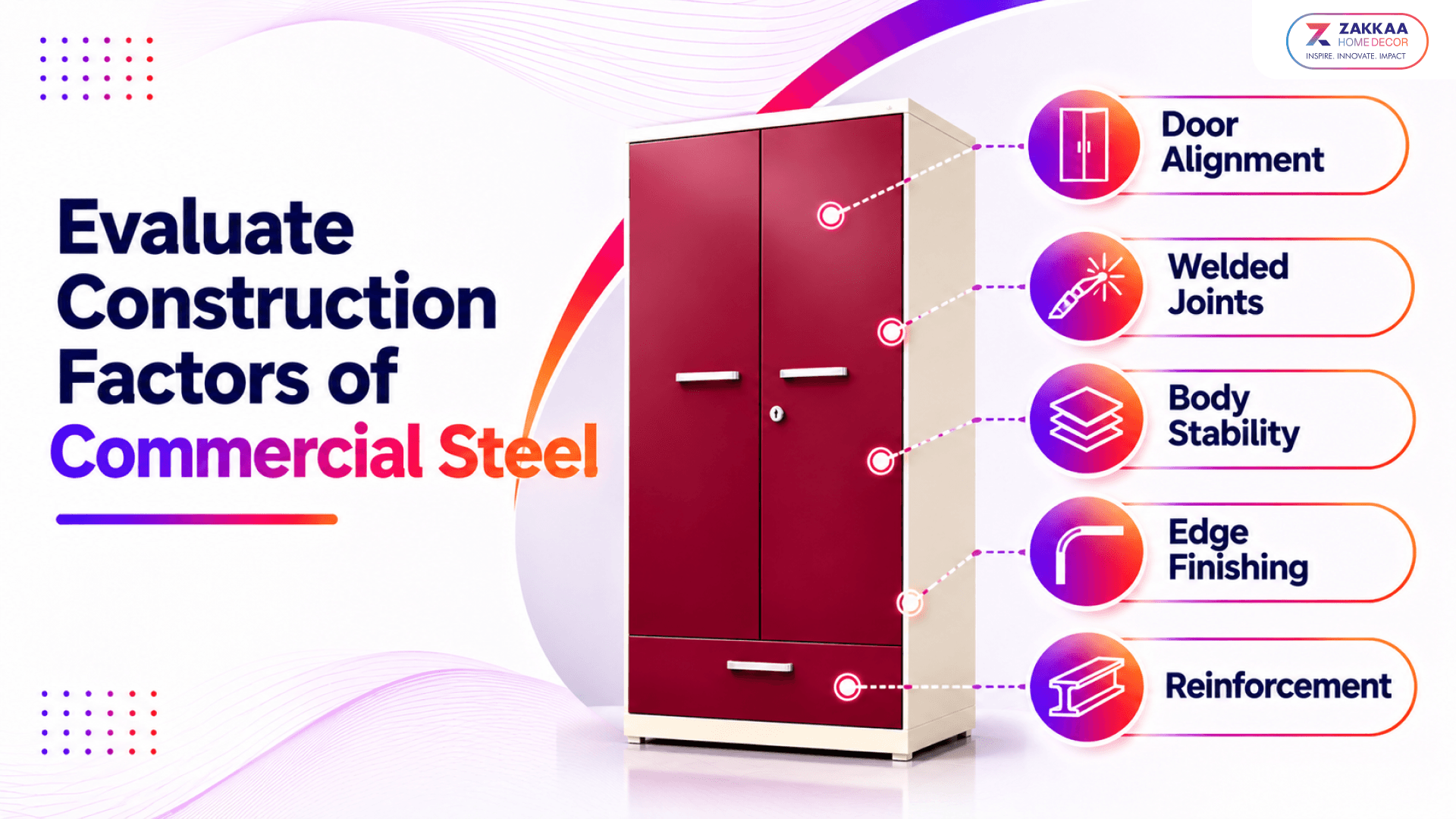
For bulk storage procurement, construction quality should remain uniform across all units.
3. Match Storage Capacity With Actual Requirements
A commercial almirah should provide enough usable space for the items employees or staff members need to store. Selecting cabinets without considering their contents can lead to wasted space or overcrowded shelves.
Evaluate:
Overall cabinet dimensions and available floor space.
Number of shelves and compartments.
Shelf depth and usable internal height.
Space for files, documents, uniforms, supplies, or equipment.
Whether adjustable shelves are needed for different storage requirements.
For example, an office storage cabinet used for files may need different shelf spacing from a cabinet used for uniforms or general supplies.
4. Inspect The Shelves And Load-Bearing Capacity
Shelves carry the actual storage load, so their construction deserves separate attention. A cabinet with several shelves may still be unsuitable if they cannot support the weight of the intended items.
Ask the manufacturer about:
Load capacity per shelf.
Shelf material and thickness.
Support brackets or reinforcement.
Fixed or adjustable shelf arrangements.
Recommended weight distribution.
Avoid assuming that all shelves can support the same weight. Ask for documented load specifications and confirm that they match your storage requirements.
5. Review The Locking System And Security Features
Commercial steel almirahs often store employee records, financial documents, stationery, uniforms, and other workplace materials. The locking arrangement should suit the level of access control required.
Common options include:
Key Lock: A straightforward option for general-purpose storage.
Multi-Point Lock: Provides locking at more than one point on the door.
Central Locking: Allows the locking mechanism to operate through a central arrangement, depending on the design.
Separate Compartments: Helps organize storage and restrict access to selected sections where supported.
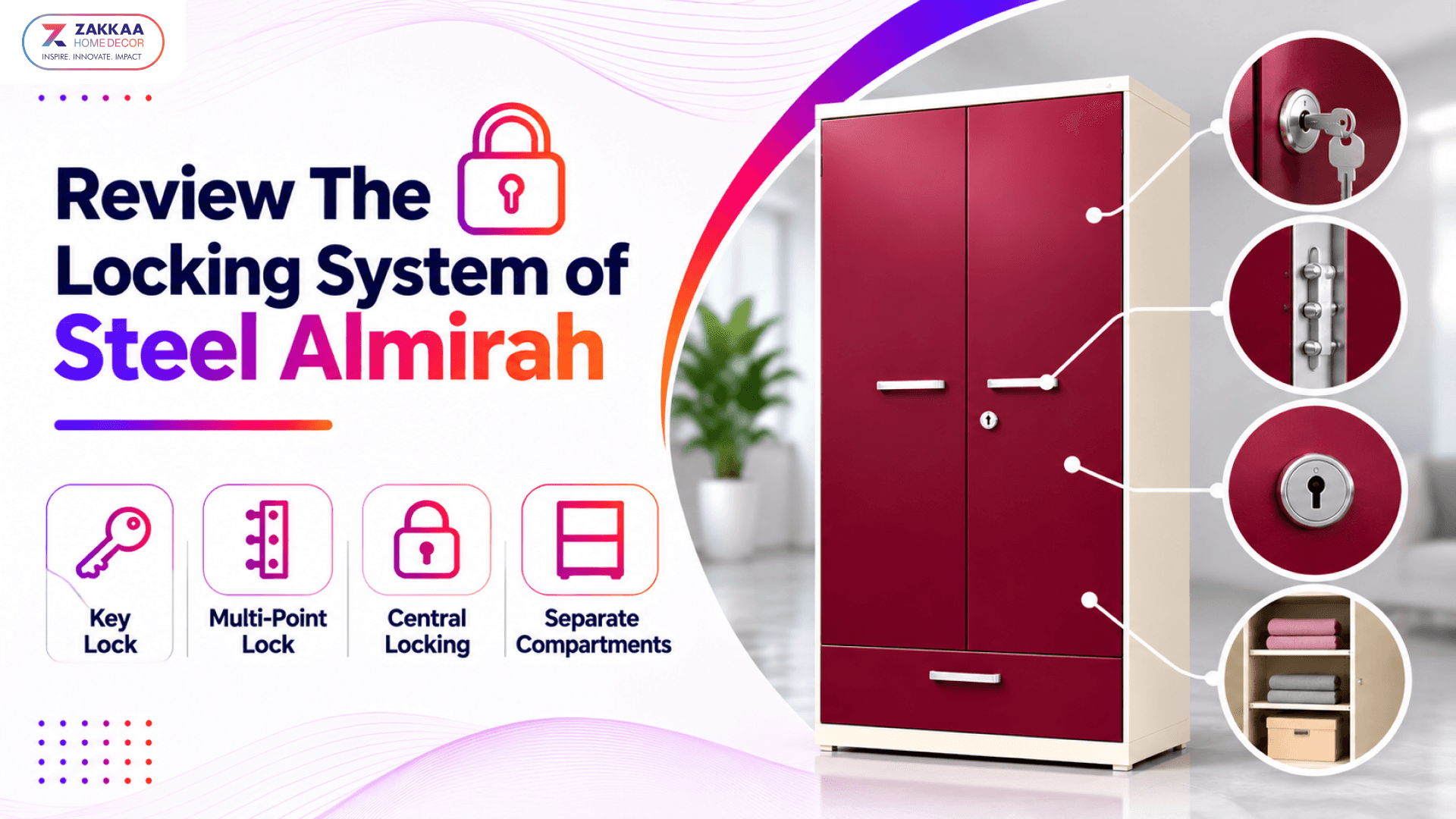
Check the lock quality, key operation, door alignment, and availability of replacement keys. For sensitive documents, consider whether additional access-control arrangements are necessary.
6. Check The Surface Finish And Corrosion Protection
Commercial almirahs may be used in different environments, including offices, schools, factories, and institutional buildings. Their surface finish should be suitable for the expected conditions and cleaning frequency.
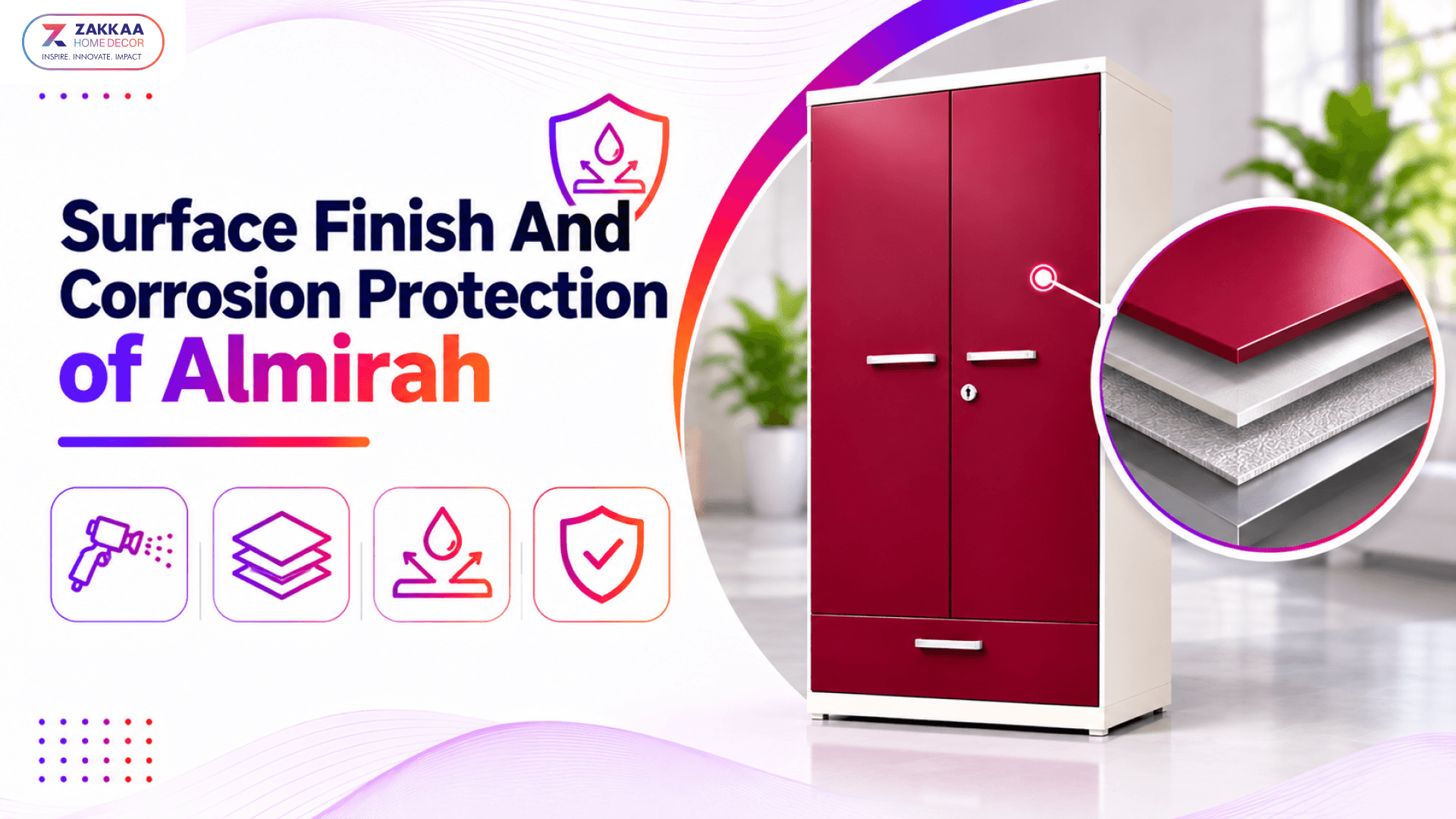
Check whether the manufacturer provides:
Powder-coated or other specified finishes.
Proper surface preparation before coating.
Even coverage across doors, panels, and edges.
Resistance to ordinary scratches and surface wear.
Suitable corrosion protection for the installation environment.
Also confirm the available finish and color options before finalizing the purchase. A consistent finish across all units can help maintain a uniform appearance in large workplaces.
7. Consider Dimensions, Space And Installation Requirements
The right cabinet must fit the available space without obstructing movement or access. This becomes especially important when several almirahs are installed together.
Before placing an order, measure:
Available wall and floor space.
Doorways, corridors, staircases, and lifts used for transportation.
Required clearance for opening cabinet doors.
Space between multiple cabinets for access.
Ceiling height and any installation restrictions.
Share the site measurements with the commercial almirah manufacturer. This helps reduce the risk of receiving cabinets that are difficult to transport or position.
8. Evaluate Customization And OEM Requirements
Not every organization needs the same storage configuration. Businesses and institutions may require specific dimensions, shelf arrangements, compartments, finishes, or branding.
Ask the steel furniture manufacturer whether the order can accommodate requirements such as:
Custom cabinet dimensions.
Additional shelves or compartments.
Specific locking arrangements.
Organization-specific colors and finishes.
Branding or identification labels, where available.
For large projects, discuss customization requirements before production begins. Confirm the final drawings and specifications in writing to avoid differences between the approved design and delivered units.
9. Verify Manufacturing Capacity And Quality Control
A supplier's ability to provide one sample cabinet does not automatically confirm its ability to fulfill a large order. Procurement teams should evaluate the manufacturer's production capacity and quality-control process.
Important questions include:
Does the almirah factory have the capacity to handle the required quantity?
Are material specifications maintained across production batches?
Are dimensions and door alignment checked during inspection?
Is the surface finish reviewed before dispatch?
Are locking systems and moving parts tested?
Can the supplier provide product samples or inspection arrangements?
A clear quality-control process helps reduce inconsistencies between units supplied in the same bulk order.
10. Compare Quotations, Delivery And After-Sales Support
The lowest quotation may not offer the best value if it excludes important specifications, packaging, transportation, or support arrangements.
Compare supplier quotations based on:
Product dimensions and material specifications.
Steel thickness and shelf load capacity.
Locking system and surface finish.
Customization charges, if applicable.
Packaging and transportation costs.
Expected delivery schedule.
Warranty terms and service support.
Replacement arrangements for damaged or defective units.
Request a detailed quotation instead of relying on a single per-unit price. This makes it easier to compare commercial storage solutions on the same basis.
Why Does Bulk Procurement Require Careful Planning?
Commercial steel almirahs are used in offices, schools, hospitals, factories, warehouses, and other institutions. Unlike individual purchases, bulk orders involve multiple units that must meet the same functional and quality requirements.
A small specification mismatch can affect an entire order. For example, an office may need separate compartments for employee files, while an educational institution may require secure storage for records and supplies.
Before approaching a steel cabinet supplier, consider these procurement priorities:
Storage Requirements: Identify what needs to be stored and how much space is required.
Usage Conditions: Consider whether the cabinets will be used in offices, staff rooms, classrooms, or industrial environments.
Quantity Planning: Estimate the number of units required for each department or location.
Budget Allocation: Compare product specifications and overall costs rather than selecting the lowest quotation.
Supplier Capability: Check whether the commercial almirah manufacturer can meet the required quantity and specifications.
Commercial Steel Almirah Requirements Across Different Industries
The right storage configuration depends on the workplace and the items being stored. A single cabinet design may not suit every department or institution.
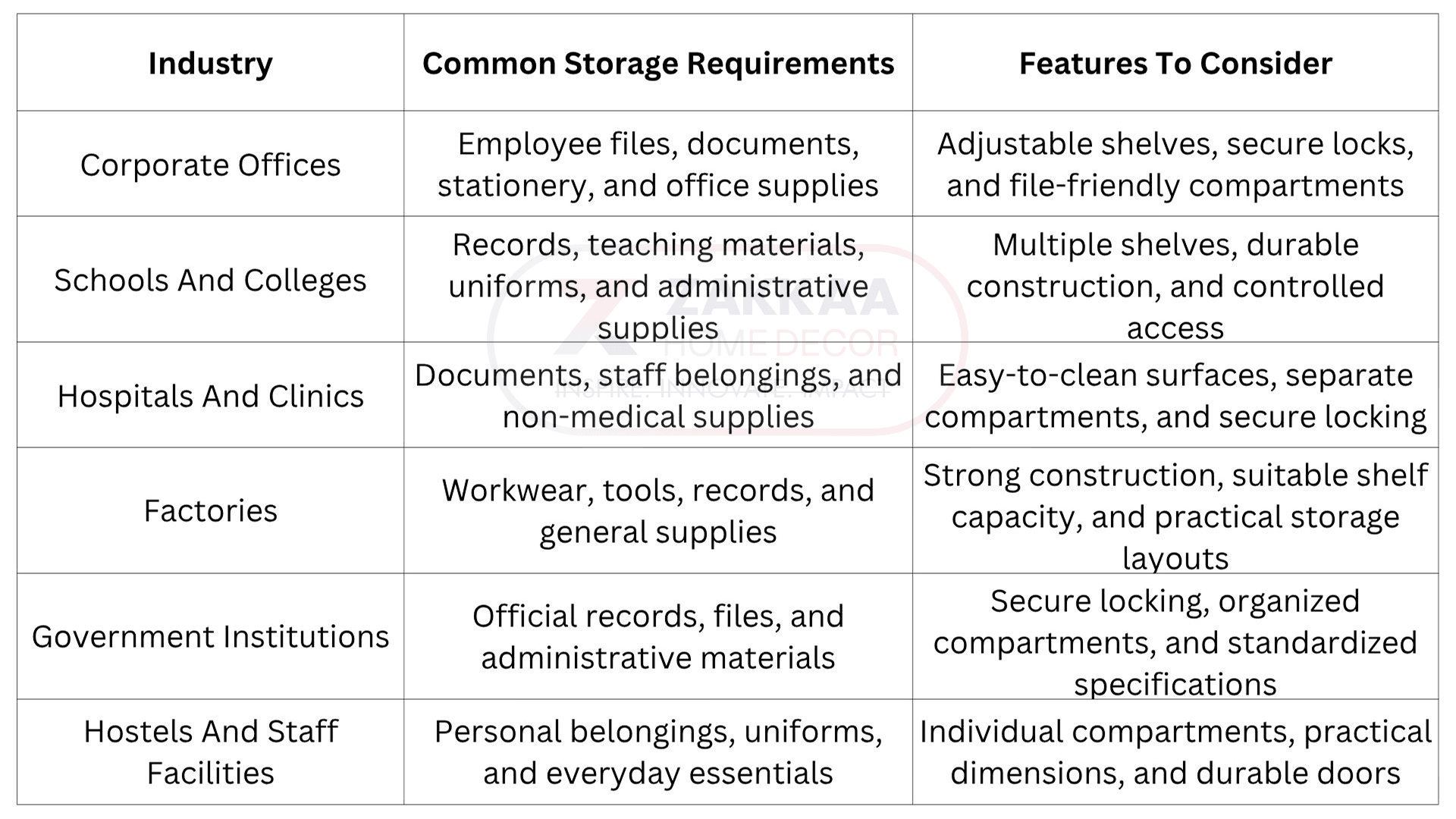
Before selecting a design, identify the actual storage purpose of each department. This helps prevent unnecessary customization and improves space planning.
Commercial Steel Almirah Vs. Regular Domestic Almirah
Commercial and domestic almirahs may look similar, but their intended use and configuration can differ. Procurement teams should select based on workplace requirements rather than appearance alone.
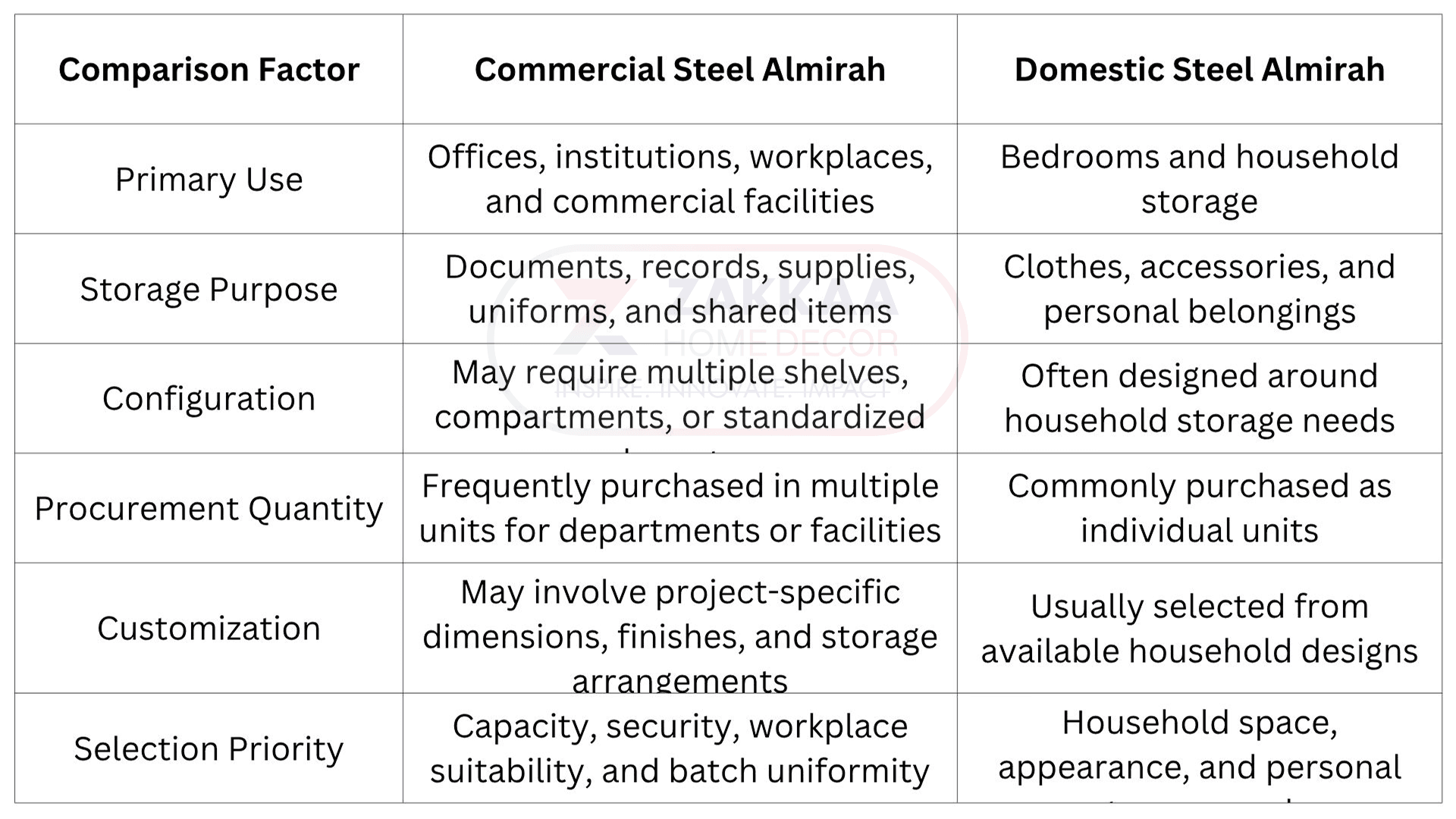
The distinction is not absolute. Some domestic models may suit small offices, while some commercial designs may also work in residential settings. The intended use should guide the final choice.
How To Evaluate A Commercial Almirah Manufacturer
The manufacturer plays an important role in bulk procurement because product quality, production planning, and delivery depend on its capabilities.
Before finalizing a steel cabinet supplier, review these factors:
Manufacturing Experience
Check the manufacturer's experience in producing steel storage furniture. Ask about its product range and whether it has handled orders with similar specifications and quantities.
Production And Inspection Facilities
Understand how the manufacturer handles cutting, forming, welding, assembly, finishing, and final inspection. A defined production process can help maintain uniformity across units.
Product Samples And Specifications
Request a sample or product demonstration where possible. Compare the physical product with the technical specifications and approved drawings.
Order And Delivery Planning
Discuss production timelines, batch dispatches, packaging, transportation, and delivery locations before confirming the order.
Documentation And Support
Ask for written specifications, quotation details, warranty conditions, and a clear process for reporting damaged or defective products.
A reliable commercial almirah manufacturer should be able to explain its product specifications and procurement terms clearly.
Commercial Steel Almirah Bulk Procurement Checklist For Buyers
Before issuing a purchase order, use this checklist to review the main requirements.
Confirm the total number of almirahs required.
Finalize cabinet dimensions and internal storage layout.
Verify steel grade and sheet thickness.
Check shelf load capacity and reinforcement.
Select the required locking arrangement.
Confirm surface finish and color.
Review customization requirements, if any.
Inspect a sample or approve technical drawings.
Compare detailed supplier quotations.
Confirm packaging, transportation, and delivery timelines.
Review warranty and after-sales support.
Document final specifications before production.
This checklist can help procurement teams compare suppliers using the same requirements and reduce the chances of missing important details.
How Zakkaa Supports Commercial Steel Almirah Orders
For businesses planning large storage purchases, selecting the right manufacturing partner is an important part of procurement. Zakkaa works in the home appliance and furniture manufacturing space, making it relevant for buyers exploring organized storage and furniture requirements.
When evaluating any manufacturer for a commercial steel almirah order, buyers should discuss product dimensions, material specifications, storage configurations, finishing requirements, quantity, and delivery expectations.
Clear communication before production helps both parties understand the order requirements and the expected product specifications.
Conclusion
Bulk procurement of commercial steel almirahs requires more than comparing prices and selecting a suitable design. Material quality, construction, shelf capacity, locking systems, surface finish, manufacturing capability, and delivery terms all affect the purchase decision.
A clear specification sheet and a detailed supplier evaluation can help businesses choose storage furniture that meets their workplace requirements. Contact Zakkaa to discuss your steel furniture and bulk procurement requirements.
Frequently Asked Questions (FAQs)
Can Commercial Steel Almirahs Be Customized For Institutional Storage?
Customization may include dimensions, shelf arrangements, compartments, locking systems, and finishes. Confirm the available options and approve the final specifications before production begins.
Are Commercial Steel Almirahs Suitable For Office Storage?
Yes, commercial steel almirahs can store office files, documents, stationery, and other workplace supplies. The required dimensions, shelves, and locking arrangements depend on the storage purpose.
What Documents Should Buyers Request During Bulk Storage Procurement?
Buyers should request a detailed quotation, product specifications, approved drawings where applicable, delivery schedule, warranty terms, and written confirmation of customization requirements.
Why Is Sample Inspection Important Before A Bulk Order?
Sample inspection allows buyers to check dimensions, material finish, door alignment, locking operation, and overall construction. It also helps confirm whether the proposed product matches the approved specifications.