Aug 14, 202610 min readBy Aditya Singh
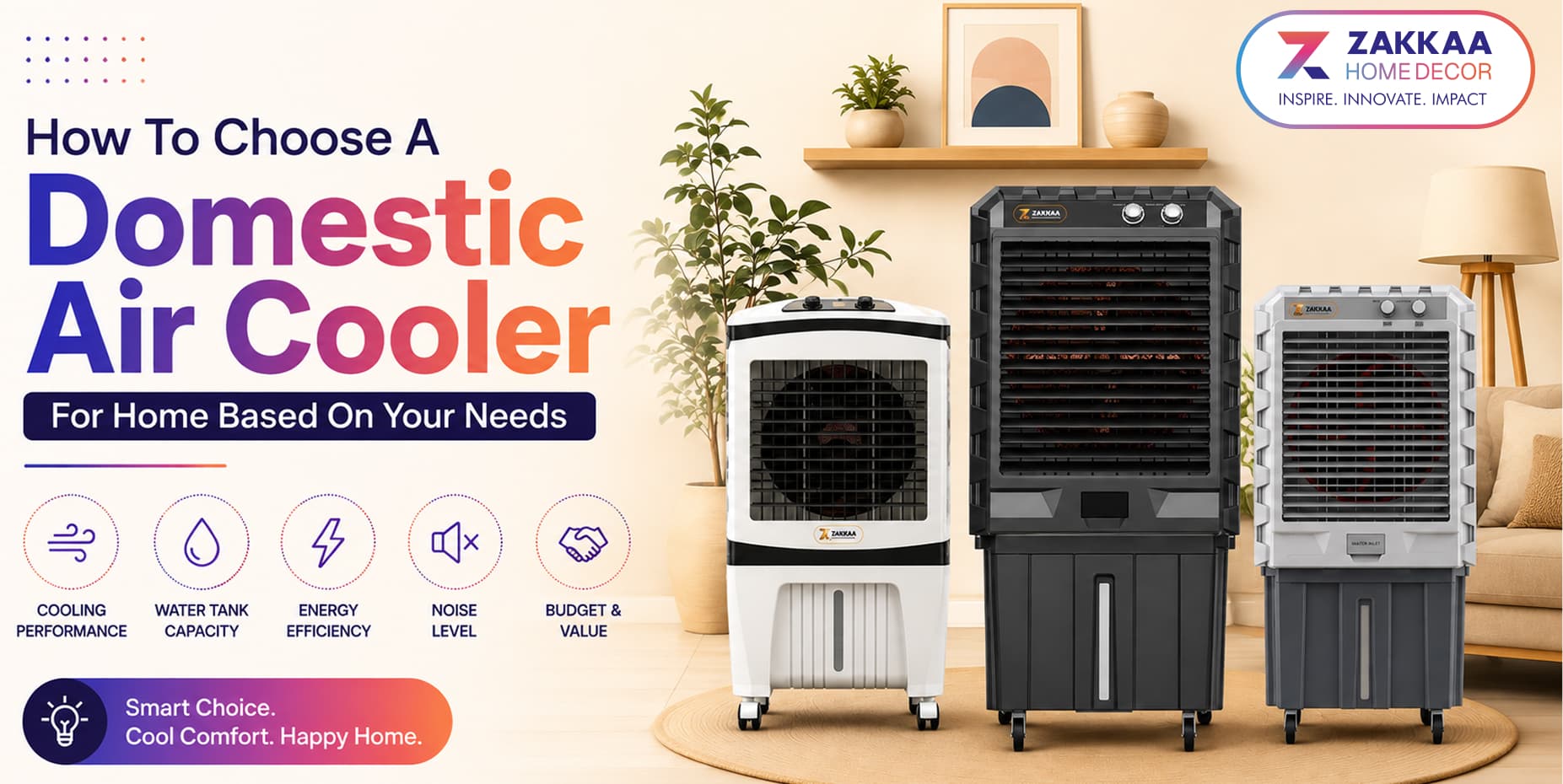
Buying an air cooler for home? That’s quite a confusing process. Isn’t it? So, let us clear one thing: selecting a domestic air cooler for your home is not simply about picking the largest tank or the most powerful model.
The right air cooler should match your room size, local weather, ventilation, daily usage, and budget. A small bedroom, spacious living room, and semi-open balcony can each require a different type of cooling.
For Indian homes, an air cooler can be a practical and affordable cooling appliance, especially in hot and dry summer conditions. However, choosing the right capacity, cooler type, airflow, water tank, and useful features can make a big difference to your everyday comfort.
This guide explains what to check before buying a domestic air cooler and how to select a model that suits your home.
How To Select The Right Domestic Air Cooler For Your Home?
Start by looking at your actual cooling requirements instead of choosing a cooler based only on its appearance or price. Consider the room, climate, ventilation, operating hours, and number of people using the space before making your decision.
1. Consider The Size of Your Room
Room size is one of the first things to consider when buying a domestic air cooler. A cooler designed for a small bedroom may not provide enough airflow for a large living room.
For smaller rooms, a compact personal air cooler or tower cooler may be sufficient. Larger rooms may require a higher-capacity cooler with stronger airflow and wider air circulation.
Also consider the ceiling height and furniture arrangement. A cooler should be able to circulate air around the room rather than cooling only one small area.
2. Choose The Right Type of Domestic Air Cooler
Different types of domestic air coolers are designed for different spaces and usage requirements.
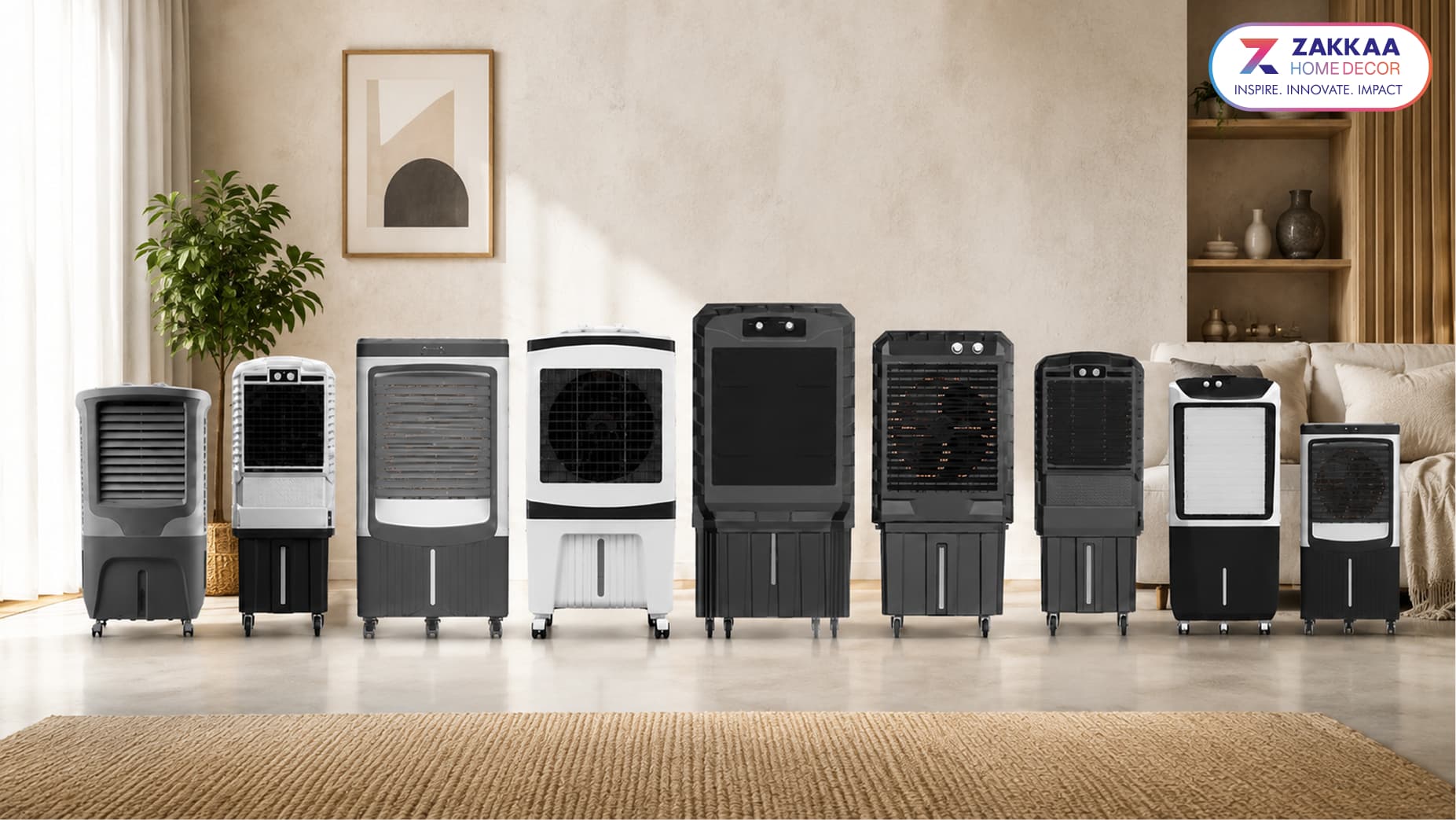
Personal Air Cooler: A personal air cooler is suitable for bedrooms, study rooms, and other smaller spaces where focused cooling is required.
Tower Air Cooler: A good option for compact homes because its vertical design takes up less floor space while providing comfortable airflow.
Desert Air Cooler: Unlike personal coolers, desert coolers are designed for larger rooms and hotter, drier conditions. These coolers generally have larger water tanks and stronger airflow.
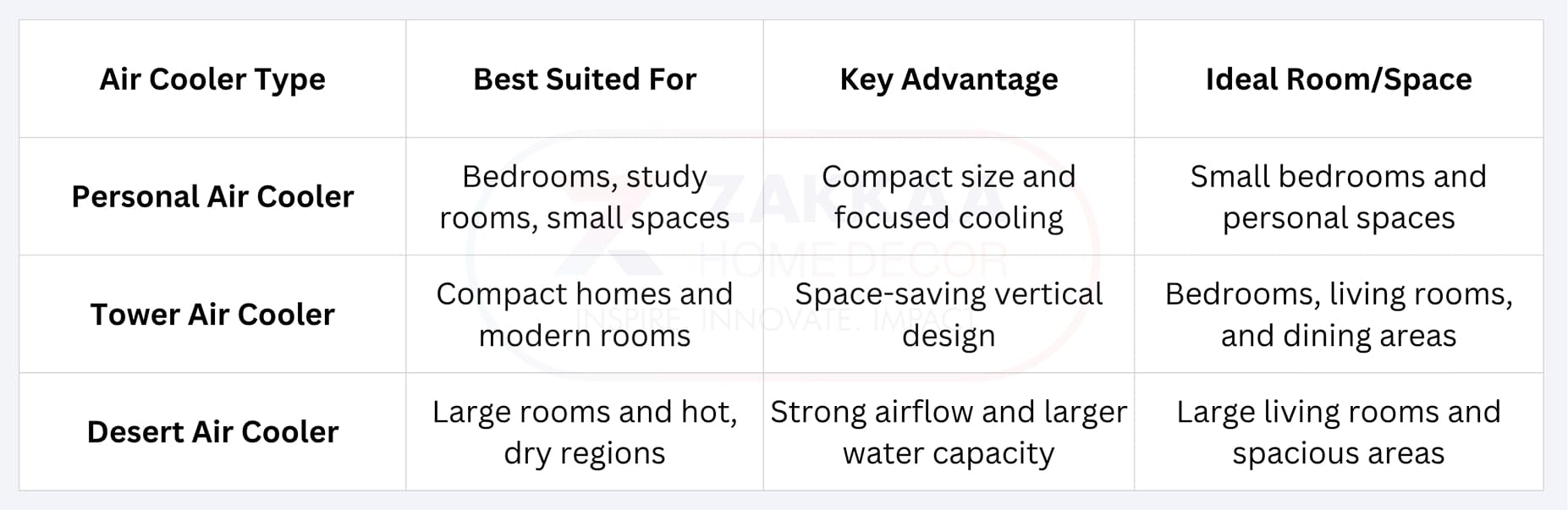
The best type depends on where you plan to use the cooler and how much area needs cooling.
3. Check Your Local Climate
An air cooler works through evaporative cooling, so climate plays an important role in its performance. Coolers generally work best in hot and dry weather because water evaporates more easily in low-humidity conditions.
If you live in a dry or semi-dry part of India, an air cooler can provide effective and economical summer cooling. In areas with consistently high humidity, you may need to consider whether an air cooler will provide the level of comfort you expect.
4. Look At Airflow of Cooler
Water tank capacity is important, but airflow should not be ignored. A cooler with good airflow can distribute cooled air across the room and provide better comfort.
When comparing models, consider the size of the room and how far you want the cool air to travel. For larger living rooms, choose a model designed to provide wider air circulation rather than relying only on a high water capacity.
5. Select A Suitable Water Tank Capacity
A larger water tank can reduce the need for frequent refilling, which is useful when you want to run the cooler for several hours.
However, a bigger tank does not automatically mean better cooling. Match the tank capacity with the cooler's size, airflow, and expected usage.
For example, a small bedroom may not need the same tank capacity as a large living room where the cooler operates throughout the afternoon.
6. Check Electricity Consumption
One of the main reasons homeowners choose an air cooler is its relatively low electricity consumption compared with an air conditioner. However, different models can have different power requirements.
Before buying, check the cooler's rated power consumption and consider how many hours you expect to use it every day. An energy-efficient cooler with suitable capacity can help provide comfortable cooling while keeping electricity usage under control.
7. Think About Ventilation
Proper ventilation is important for an air cooler to work effectively. Unlike an air conditioner, a cooler works best when there is enough fresh-air movement in the room.
A window, door, or ventilator can help warm air escape while allowing the cooler to circulate air more effectively. Avoid placing the cooler where furniture or walls completely block its air intake or outlet.
8. Consider How You Will Use The Cooler
Think about when and where the cooler will be used. If you need cooling only at night in a bedroom, a compact model may be enough. If the cooler will run throughout the afternoon in a living room, you may need a larger tank and stronger airflow.
Your daily routine can help determine the right size and features without spending more than necessary.
Which Type of Domestic Air Cooler Is Best For Different Rooms?
Different rooms have different cooling requirements. Here's a simple way to approach your choice. The right cooler should match the room size, ventilation, and number of people using the space.
A compact model may work well for a bedroom, while larger rooms may need stronger airflow and higher water capacity. Considering these factors before buying can help you get better cooling without spending more than necessary.
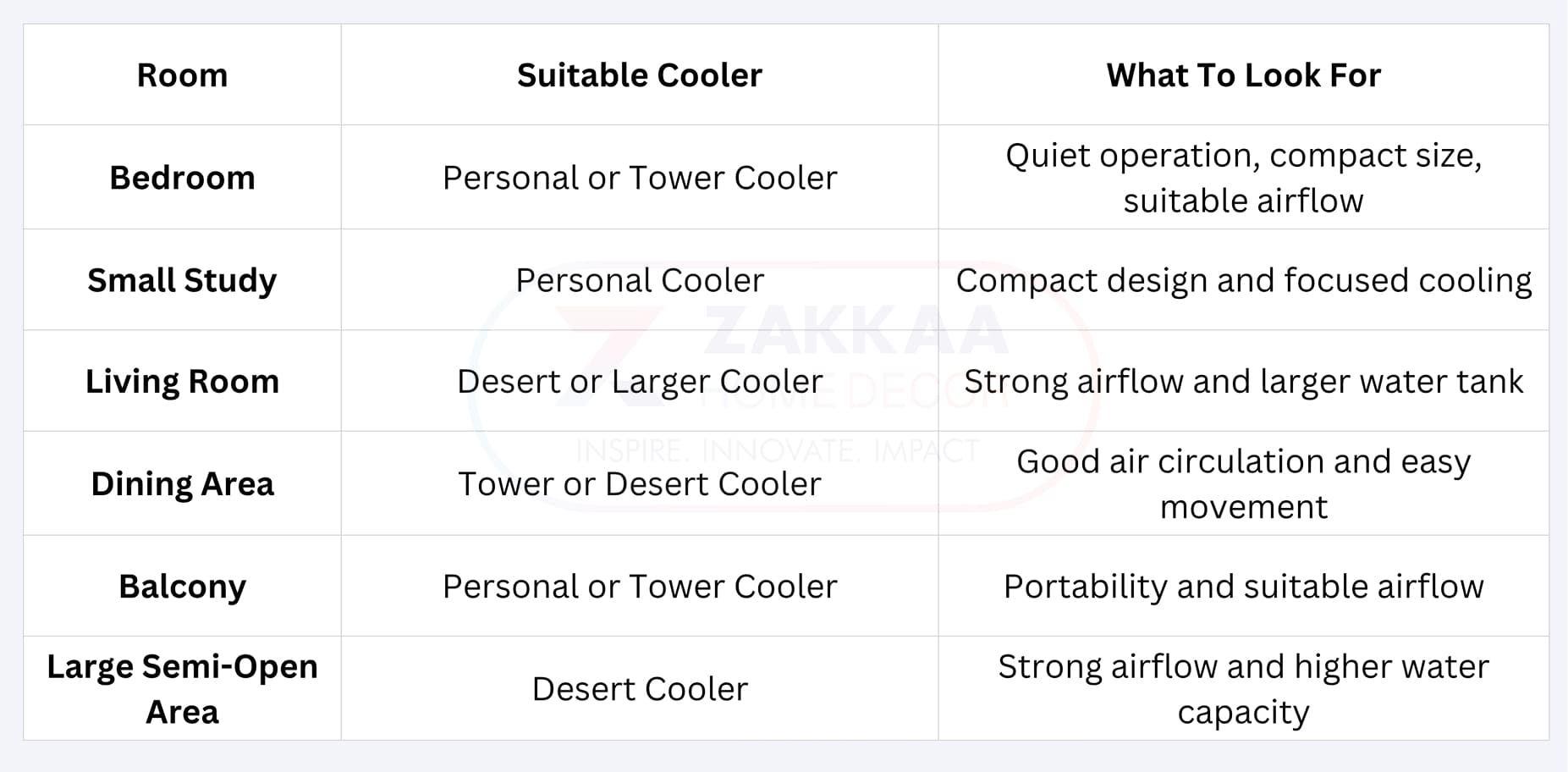
These are general recommendations. Your home's ventilation, room layout, climate, and daily usage should also influence the final choice.
What Features Should You Look For In A Domestic Air Cooler?
You don't need to buy a cooler with every available feature. Focus on functions that will make everyday use easier.
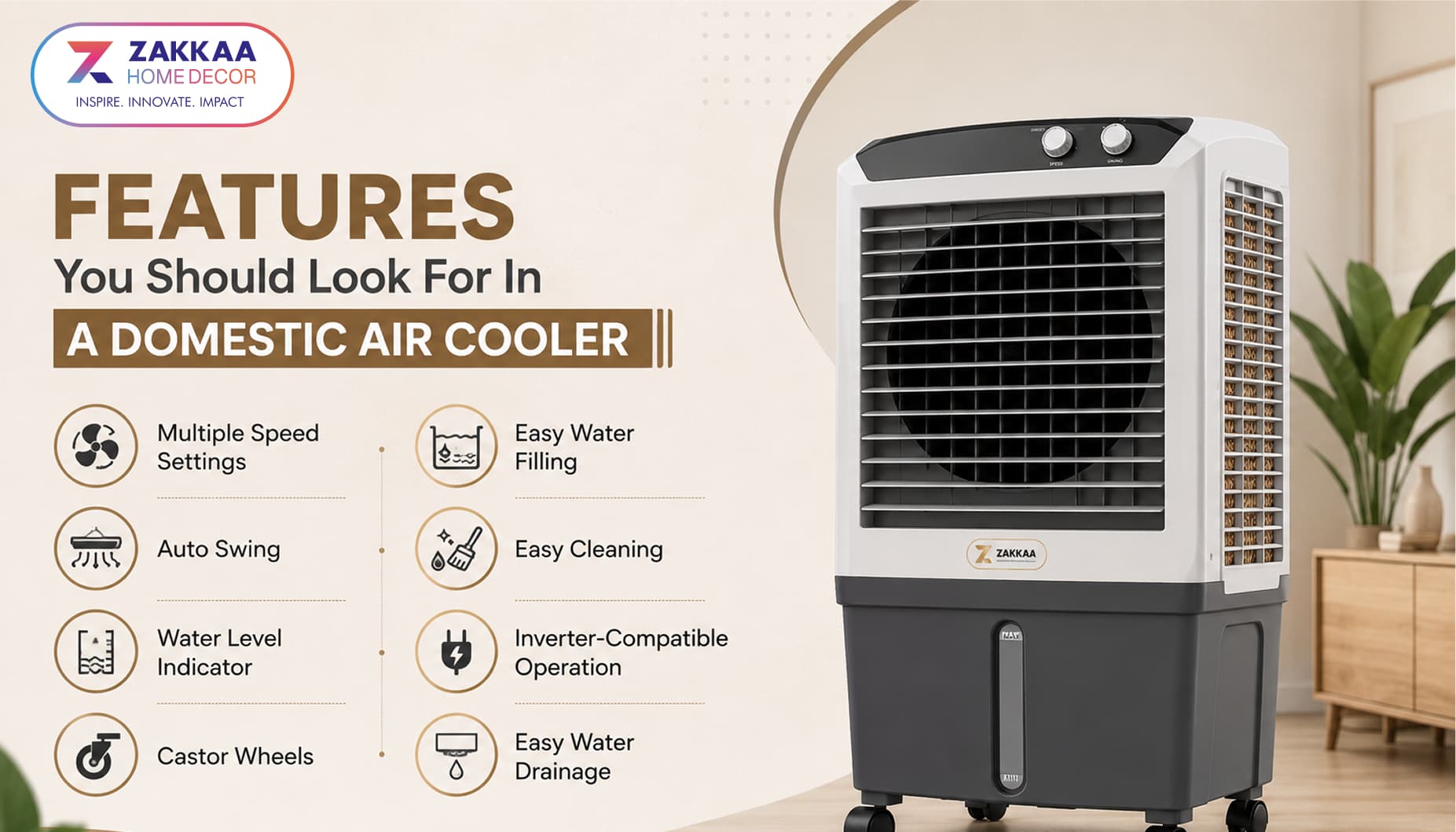
Multiple Speed Settings: Different days and times may require different airflow levels. Multiple speed settings let you adjust the cooling according to your comfort.
Auto Swing: Auto swing moves the airflow from side to side, helping distribute cool air across a wider part of the room.
Water Level Indicator: A visible water level indicator makes it easier to know when the tank needs refilling, especially when the cooler is used for several hours.
Castor Wheels: Wheels make the cooler easier to move between rooms or reposition according to the direction of airflow.
Easy Water Filling: A convenient water-filling design saves time and makes regular use simpler, particularly for larger-capacity models.
Easy Cleaning: The water tank and cooling pads need regular cleaning. A design that provides easy access to these parts makes routine maintenance more convenient.
Inverter-Compatible Operation: If your home has inverter backup, check whether the cooler's power requirements are suitable for your setup. This can be useful during summer power cuts, particularly in areas where backup power is commonly used.
Easy Water Drainage: A convenient water drainage system makes it easier to empty the tank during cleaning or when the cooler is not in use. It also helps simplify regular maintenance and keeps the water tank fresh for everyday cooling.
How Much Should You Spend On A Domestic Air Cooler?
The price of a domestic air cooler depends on its type, capacity, airflow, design, and features. Compact personal coolers generally cost less, while larger desert and feature-rich models are priced higher.
Instead of choosing a cooler only according to your budget, consider what you actually need. Paying extra for a very large model may not make sense if you only need to cool a small bedroom.
A practical approach is to first decide the room and usage requirements, then compare models within your budget.
How To Reduce Air Cooler Electricity Consumption?
An air cooler already uses considerably less electricity than many air conditioners, but the way you operate it can still affect your monthly bill. Use these simple habits to reduce your electricity bill:
Choose a cooler suitable for your room size.
Avoid running it unnecessarily in empty rooms.
Clean cooling pads and filters regularly.
Keep the air outlet free from obstruction.
Maintain suitable ventilation.
Use lower fan speeds when maximum airflow is not required.
Replace stagnant water regularly and maintain the tank.
Take advantage of cooler morning and evening temperatures when possible.
These small steps can help maintain cooling performance while supporting lower household electricity consumption.
Common Mistakes To Avoid When Buying A Domestic Air Cooler
Buying a cooler becomes easier when you know what not to do. Avoid these common mistakes before making your purchase.
Choosing Only By Tank Size: A large tank means fewer refills, but cooling also depends on airflow, cooling pads, room size, and ventilation.
Buying An Oversized Cooler: A very large cooler may occupy unnecessary floor space and may not be practical for a small room. Match the model with the area you actually need to cool.
Ignoring Ventilation: A cooler cannot perform at its best in a completely closed room. Make sure the room has suitable air movement.
Focusing Only On Price: The cheapest model may not always provide the airflow, durability, or features your home needs. Compare overall value instead.
Ignoring Maintenance: Regular cleaning is important for maintaining cooling performance. Choose a cooler that makes cleaning and water drainage convenient.
Why Choose Zakkaa Domestic Air Coolers?
At Zakkaa, we manufacture air coolers designed around the cooling requirements of Indian homes. Our approach focuses on practical designs, reliable airflow, suitable capacities, and features that make everyday summer cooling easier.
Whether you need a compact cooler for a bedroom, a space-saving option for a smaller home, or a higher-capacity model for your living room, choosing the right Zakkaa cooler starts with understanding your room and usage requirements.
As a manufacturer, Zakkaa focuses on product quality and dependable construction to support regular use during India's hot summer months. Our aim is to provide affordable cooling solutions that offer practical performance for everyday Indian households.
Final Thoughts
Choosing a domestic air cooler becomes easier when you consider your room size, climate, ventilation, usage hours, airflow, water capacity, and electricity consumption. The right cooler should provide enough cooling without taking up unnecessary space or increasing your household expenses.
Whether you need a compact bedroom cooler or a powerful model for your living room, focus on your actual requirements before buying. Explore Zakkaa's range of domestic air coolers and find a model suited to your home's space, cooling needs, and summer routine.
Frequently Asked Questions
Which Air Cooler Is Best For Home Use?
The best air cooler depends on your room size, climate, ventilation, and cooling needs. Personal coolers suit small rooms, while desert coolers are better for larger spaces.
How Do I Choose The Right Air Cooler Size For My Room?
Consider the room's area, ceiling height, ventilation, and number of occupants. Larger rooms generally need stronger airflow and higher-capacity coolers.
Is An Air Cooler Suitable For Indian Summers?
Yes. Air coolers can be an effective and affordable cooling option during hot and dry Indian summers, particularly in areas with lower humidity.
Which Is Better For A Bedroom: Personal Or Tower Air Cooler?
Both can work well. A personal cooler is suitable for focused cooling in smaller bedrooms, while a tower cooler can provide airflow while taking up less floor space.
Should I Keep A Window Open When Using An Air Cooler?
Yes. Proper ventilation helps an air cooler work more effectively by allowing warm air to escape and fresh air to circulate.
How Often Should I Clean My Domestic Air Cooler?
The water tank, cooling pads, and filters should be cleaned regularly, with frequency depending on usage, water quality, and local conditions.