Nov 18, 20267 min readBy Aditya Singh
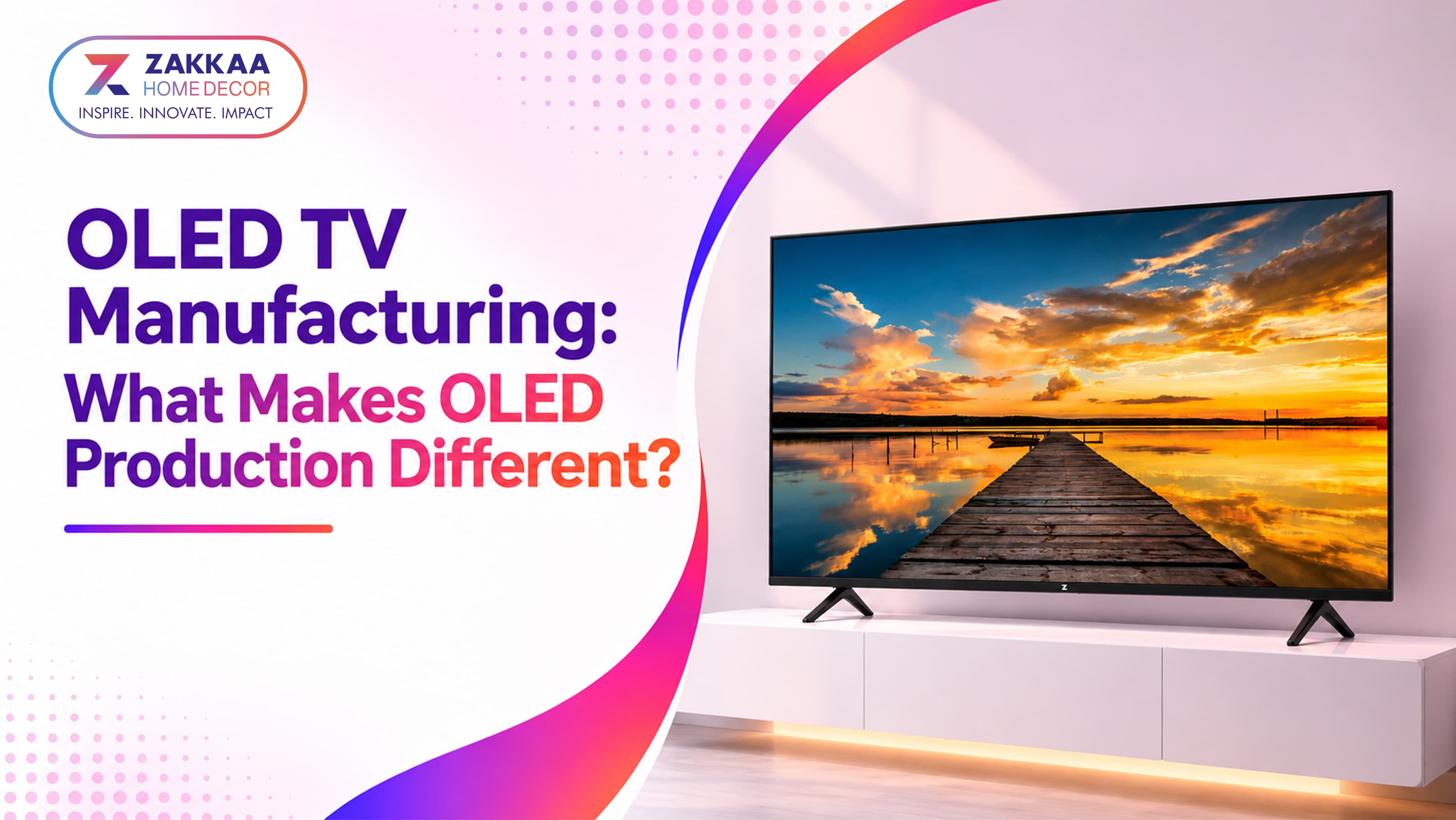
OLED TVs are known for their deep blacks, rich colors, and impressive picture quality, but have you ever wondered what makes them different from regular LED TVs? The biggest difference starts inside the display itself, where OLED technology uses self-emitting pixels instead of a conventional backlight.
This difference changes how OLED TV manufacturers approach the entire production process. From preparing organic materials and depositing thin display layers to building pixel structures and testing each panel, OLED manufacturing requires specialized equipment and precise production conditions.
If you're interested in how these premium televisions are made, it's worth looking beyond the finished screen. Let's explore what makes OLED TV manufacturing different, including its production stages, materials, and technical requirements.
How Does OLED Display Manufacturing Work?
OLED (Organic Light-Emitting Diode) display manufacturing combines semiconductor processing, thin-film deposition, precision patterning, and protective sealing. Although the exact process varies by panel architecture, most production workflows involve the following stages.
1. Substrate Preparation
The process begins with a substrate, commonly a glass base for large television panels. It provides the foundation on which the display's electronic and light-emitting layers are built.
The substrate undergoes cleaning and surface preparation to remove particles and contaminants. Even minor impurities can affect later manufacturing stages, making controlled handling and inspection important.
2. TFT Backplane Formation
Thin-film transistor circuits are formed on the prepared substrate. These circuits control the electrical signals supplied to individual OLED pixels, determining how they operate and produce images.
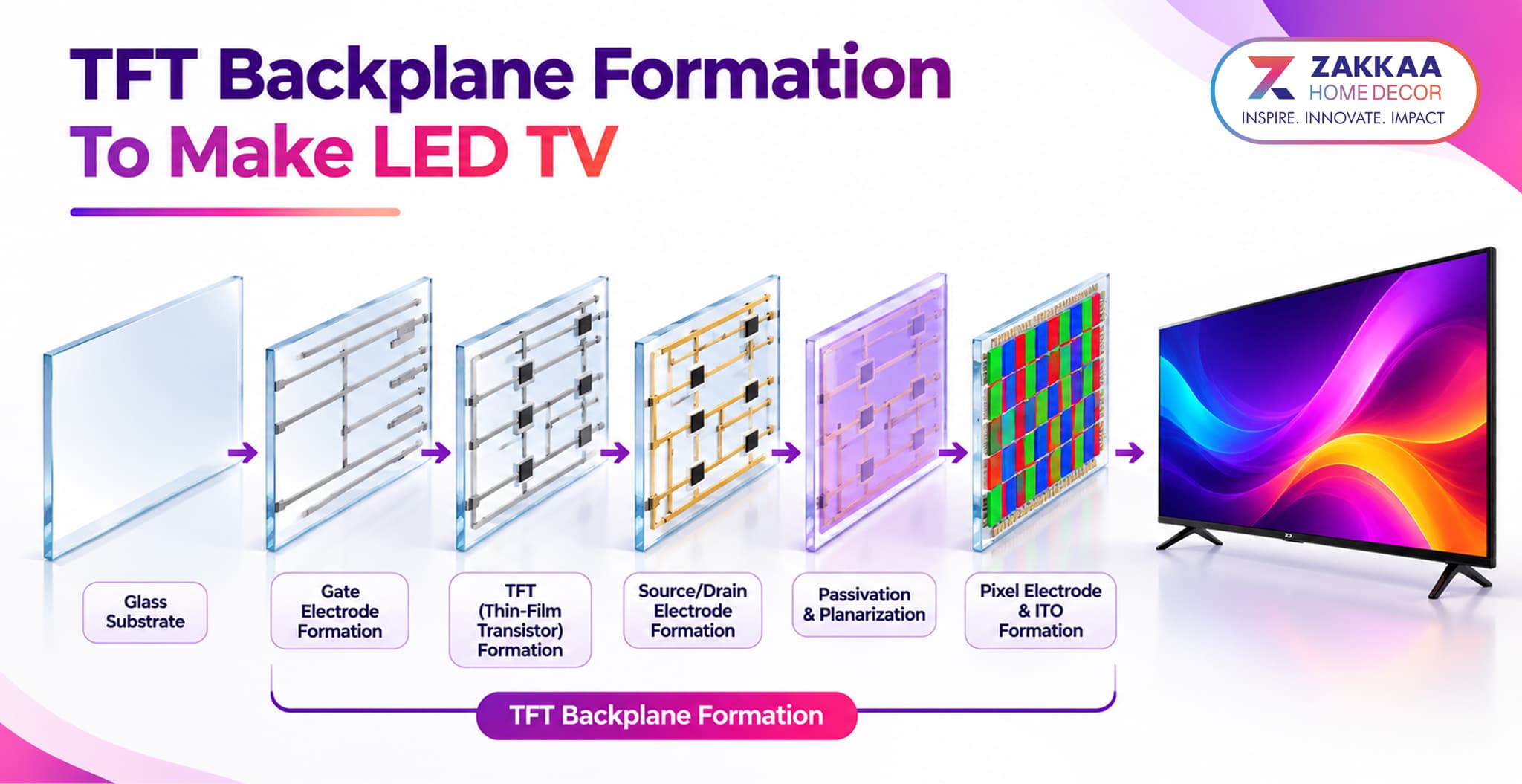
Photolithography, deposition, and etching processes help create the required circuit patterns. The backplane technology and design depend on the panel architecture and performance requirements.
3. Organic Layer Deposition
This is one of the defining stages of OLED production. Multiple thin organic layers are deposited to create the light-emitting structure.
Depending on the display architecture, manufacturers use methods such as vacuum thermal evaporation to deposit organic materials. High-precision equipment and controlled environments help maintain layer thickness, material placement, and display uniformity.
4. Electrode Formation
OLED panels contain electrodes that allow electrical current to pass through the organic layers. A transparent or light-transmitting anode and a cathode form part of the OLED device structure.
The electrode layers are deposited using specialized processes. Their electrical and optical properties influence how the display emits light and performs during operation.
5. Encapsulation And Sealing
Organic materials can deteriorate when exposed to moisture and oxygen. Therefore, the OLED panel needs protective encapsulation to limit environmental exposure.
Depending on the design, manufacturers may use thin-film encapsulation or a sealing structure with a protective cover. Inspection at this stage helps identify sealing defects that could affect panel reliability.
6. Panel Cutting And Module Preparation
After the display structure passes the required inspections, the larger substrate is separated into individual panels. The panels then undergo additional processing, which may include driver IC bonding, flexible circuit attachment, and protective film integration.
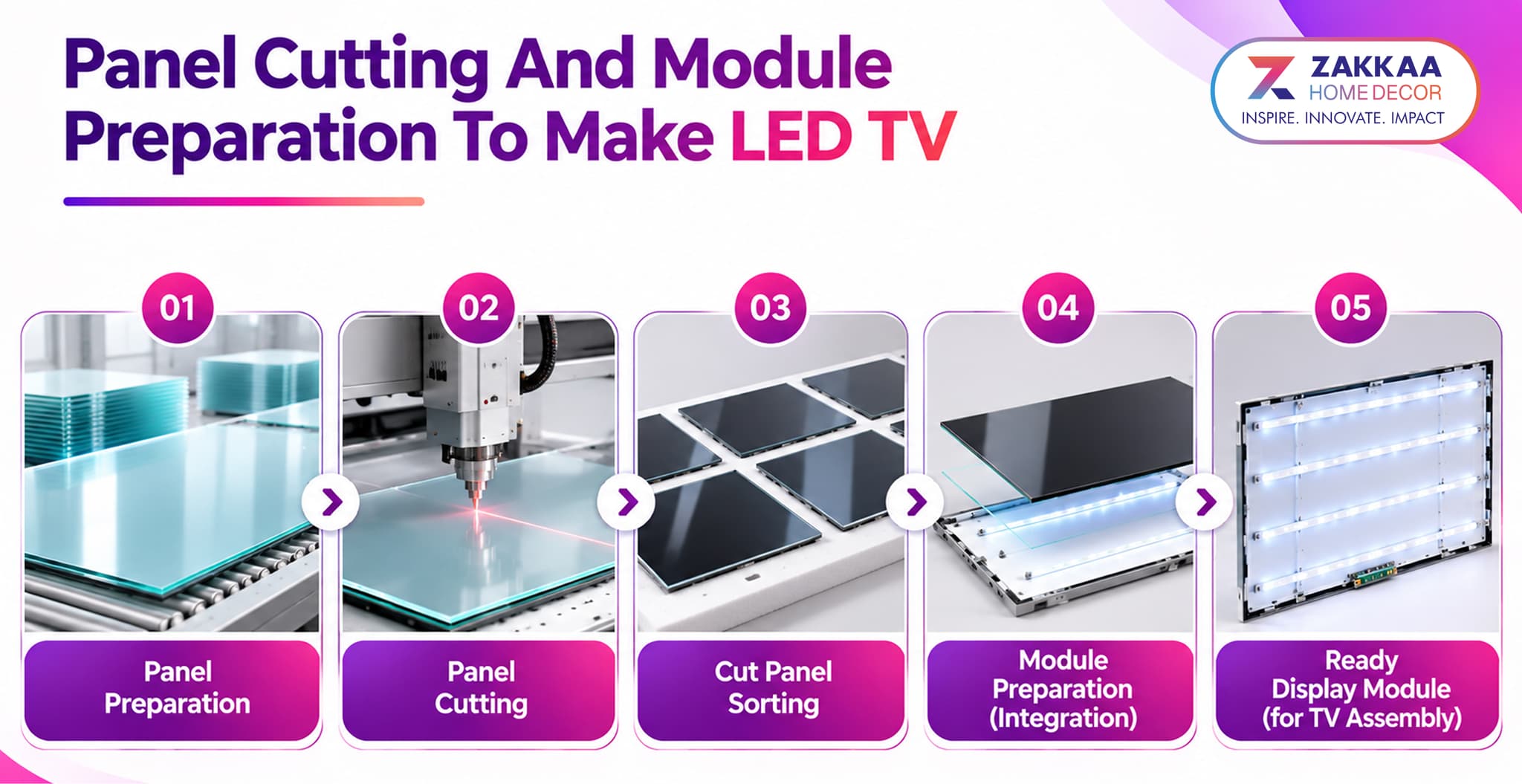
The completed display module is prepared for installation into the television assembly.
Read More: How To Manufacture LED TV: Components, Assembly, & Quality Testing
How Is An OLED TV Assembled After Panel Production?
OLED panel manufacturing and television assembly are separate activities. Once a qualified panel is available, the TV manufacturer integrates it with the remaining hardware and software components.
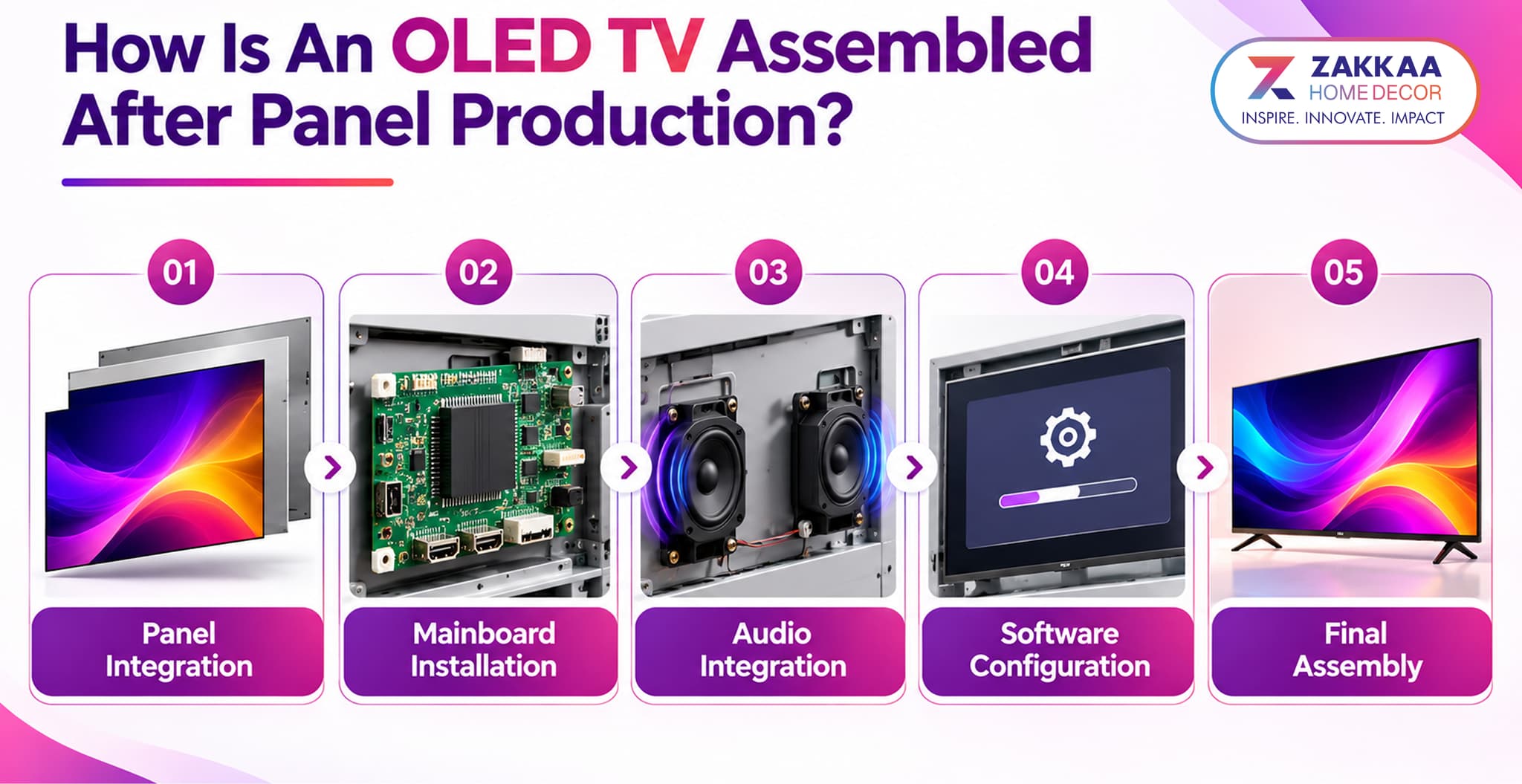
Panel Integration: The OLED module is positioned and secured within the television's structural frame.
Mainboard Installation: The mainboard, power supply, and signal-processing components are fitted and connected.
Audio Integration: Speakers and related audio components are installed and checked.
Software Configuration: The operating system, firmware, connectivity settings, and supported applications are configured.
Final Assembly: The rear cover, stand or mounting components, cables, and other external parts are fitted.
The finished television then moves through functional testing before packaging and dispatch.
Explore More: Google TV Manufacturing & OEM: Technology, Components & Production Process
Different OLED TV Display Technologies Used in Manufacturing TV
OLED television panels are not all manufactured using the same architecture. Two major approaches used in large-screen televisions are white OLED and QD-OLED.
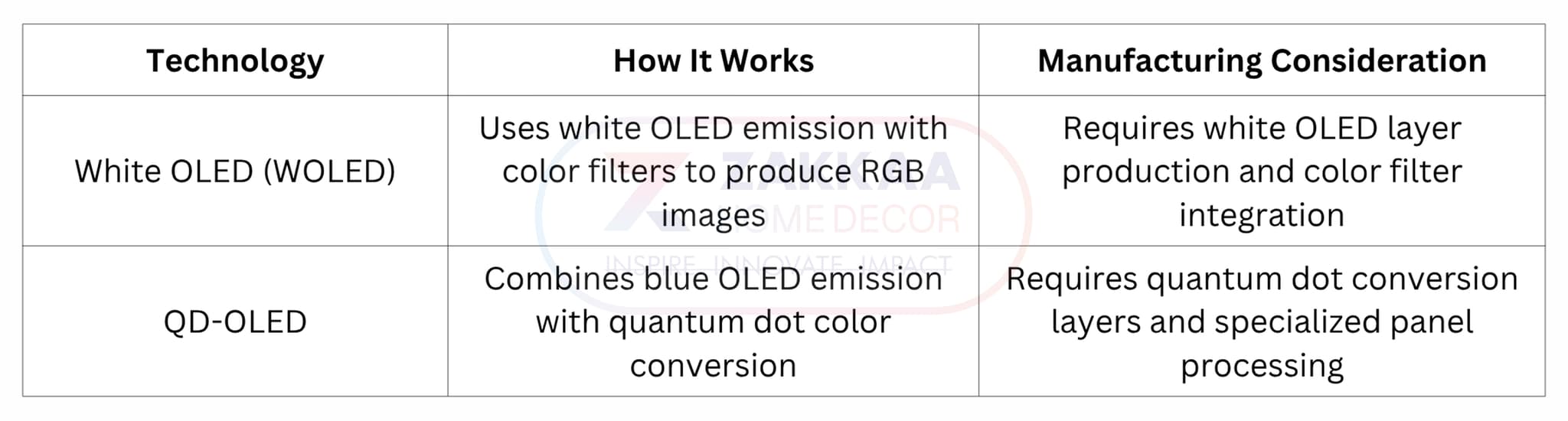
The choice of technology affects panel structure, production equipment, material requirements, and quality-control procedures. Manufacturers and OEM buyers should evaluate the actual panel architecture rather than treating every OLED television as identical.
What Quality Tests Are Required In OLED TV Manufacturing?
OLED televisions require careful inspection because display defects can affect the viewing experience and increase product returns. Quality checks may take place during panel fabrication, module preparation, and final television assembly.
Pixel Inspection: Identifies dead, stuck, or malfunctioning pixels.
Brightness Uniformity Testing: Checks whether the screen displays brightness evenly across different areas.
Color Accuracy Testing: Evaluates color reproduction against the product's defined specifications.
Display Defect Inspection: Detects visible marks, dark spots, scratches, and other panel imperfections.
Electrical Testing: Verifies panel connections, power delivery, and circuit operation.
Audio And Connectivity Testing: Checks speakers, HDMI ports, wireless connections, and other supported functions.
Ageing Screening: Uses defined operating conditions to identify certain early-life failures.
Safety Verification: Confirms that the television meets applicable electrical and product safety requirements.
Testing methods and acceptance limits should be established according to the panel design, product specifications, and applicable regulations.
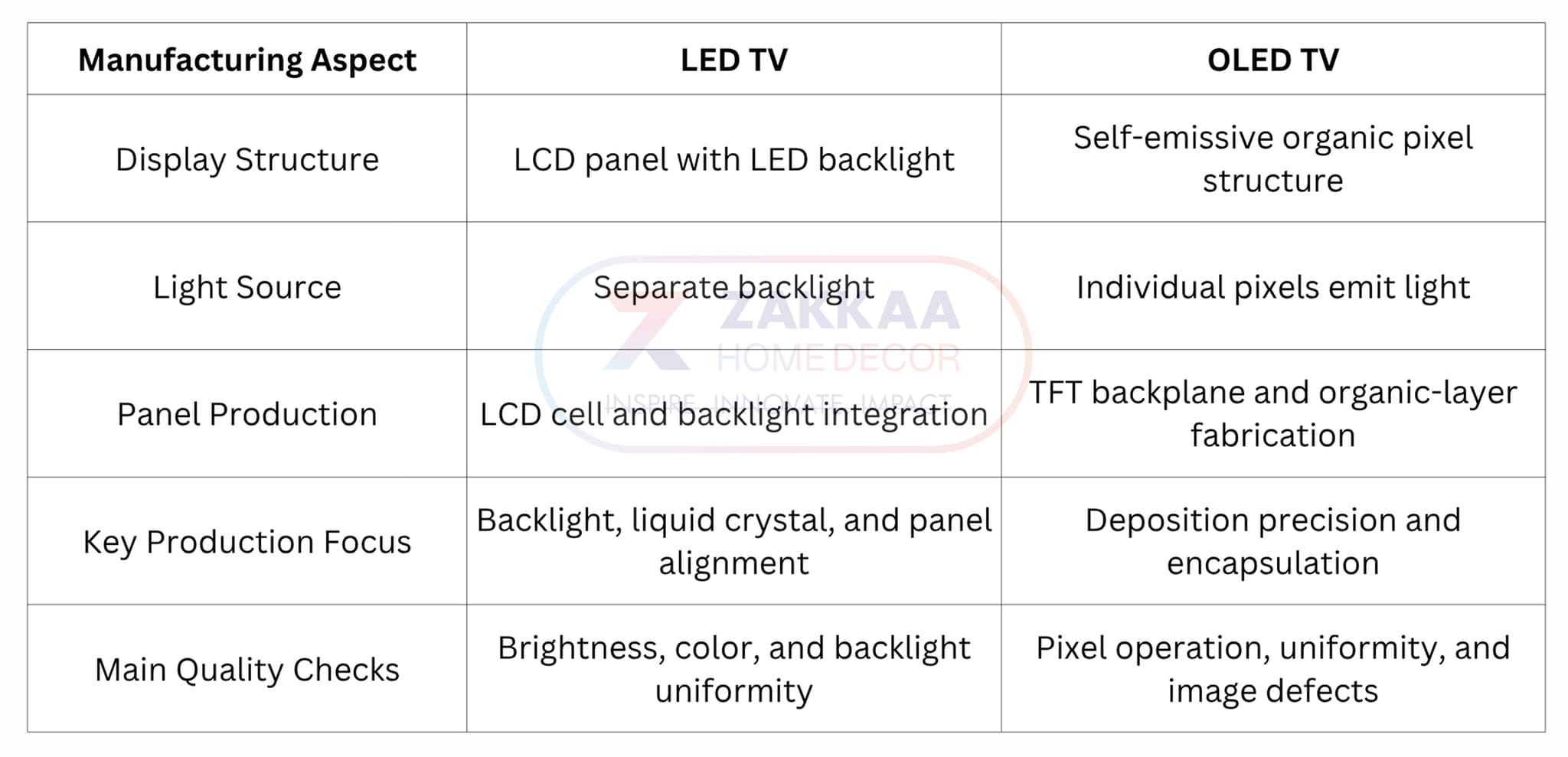
How Is OLED TV Manufacturing Different From LED TV Production?
The main difference begins inside the display panel. Conventional LED TVs generally use LCD panels illuminated by an LED backlight, whereas OLED panels contain light-emitting organic materials that produce light when electrically activated.
This difference changes the panel structure. OLED production does not require a conventional backlight unit, but it involves highly controlled organic-layer deposition and protective encapsulation. Manufacturers must also manage pixel performance, panel uniformity, and sensitivity to environmental exposure.
What Should Businesses Evaluate Before Choosing An OLED TV Manufacturer?
A suitable manufacturing partner should be assessed according to the actual scope of production. Businesses should clarify whether the supplier fabricates OLED panels, sources them from established panel manufacturers, or handles final television assembly.
Consider these points before entering an agreement:
Panel Sourcing: Confirm panel origin, technology, specifications, and supply availability.
Production Scope: Identify whether the partner handles panel fabrication, module integration, or complete TV assembly.
Technical Compatibility: Review screen sizes, resolution, refresh rates, ports, and smart platform requirements.
Quality Procedures: Ask for documented inspection methods, functional tests, and defect-handling processes.
OEM Flexibility: Discuss branding, packaging, software configuration, order quantities, and product customization.
Supply Commitments: Evaluate component availability, production planning, lead times, and after-sales arrangements.
Clear agreements around panel sourcing, product specifications, testing responsibility, and warranty handling can prevent misunderstandings during production.
How Zakkaa Supports Television Manufacturing Requirements
Zakkaa provides OEM manufacturing services across electronics and appliance categories, including LED televisions. Its published TV range also identifies OLED among the available display preferences, making it relevant for businesses exploring advanced television products. Buyers should confirm the specific OLED panel sourcing, assembly scope, and production availability directly with the team.
Smart television manufacturing and assembly support
OEM production for business brand requirements
Display options listed across TV categories
Quality checks across television production stages
Discuss OLED panel sourcing before engagement
Final Thoughts
OLED TV manufacturing stands apart through its self-emissive display structure, specialized organic-layer deposition, protective encapsulation, and demanding panel inspections.
For businesses planning an OLED television range, understanding the difference between panel fabrication and final TV assembly is essential when selecting a production partner.
If you want to launch an advanced television product range, contact a reliable TV manufacturer to discuss your OEM manufacturing requirements and explore suitable TV production options.
Frequently Asked Questions (FAQs)
What Is OLED TV Manufacturing?
OLED TV manufacturing involves producing or sourcing an OLED display panel and integrating it with electronic components, audio systems, software, and the television's outer structure.
What Is The Role Of Deposition In OLED Manufacturing?
Deposition forms the thin organic layers responsible for light emission. Precise material placement and controlled processing help maintain pixel performance and display uniformity.
Why Is Encapsulation Important In OLED Production?
Encapsulation protects sensitive organic layers from moisture and oxygen. Effective protection helps prevent material degradation and supports display reliability.
Can An OLED TV Manufacturer Assemble Panels From Another Supplier?
Yes. A television manufacturer can source OLED panels from a specialized panel supplier and handle module integration, electronics installation, software configuration, testing, and final assembly.
What Should OEM Buyers Check Before Choosing An OLED TV Manufacturing Partner?
OEM buyers should verify panel sourcing, production scope, technical specifications, testing procedures, order capacity, customization options, supply commitments, and warranty responsibilities.