Aug 03, 202612 min readBy Aditya Singh
Buying an air conditioner used to be a simple decision. Earlier, most people mainly looked at the price, cooling power, and brand name before making a purchase. Today, things have changed.
Walk into any electronics store or browse online, and you will find dozens of options: split AC, window AC, inverter AC, energy-efficient models, smart ACs, commercial AC systems, and many more.
With so many choices available, one question naturally comes to mind: Which air conditioner is actually right for your space? The answer depends on more than just the size of your room. Your daily usage, electricity costs, room layout, climate, and cooling expectations all play an important role.
A bedroom may need a different AC compared to a busy office. Similarly, a showroom, restaurant, or commercial space requires a different cooling approach compared to a home.
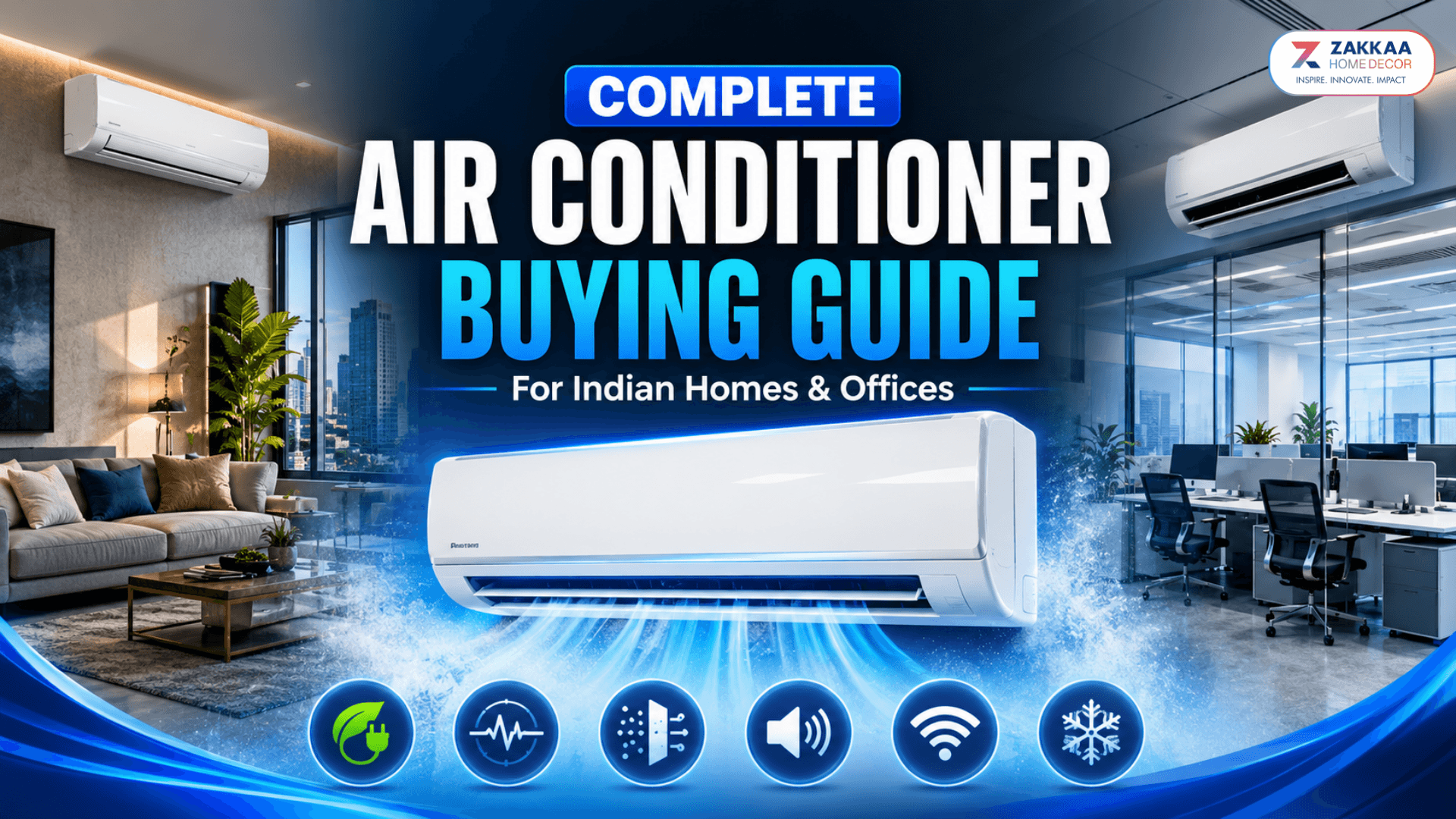
This air conditioner buying guide will help you understand the important factors, types, features, and practical tips you should consider before selecting the right cooling solution for your home or business.

Step 1: Understand Your Cooling Requirement First
Before comparing different AC models, start with the most important question: where will you use it? Many people directly start looking at brands or prices, but understanding your requirement first makes the entire buying process easier.
A bedroom, living room, office cabin, showroom, and industrial workspace all have different cooling needs. For example, a small bedroom used mainly at night may not require the same cooling capacity as a large office where several people work throughout the day. Think about:
Room size
Number of people using the space
Daily operating hours
Sunlight exposure
Location of the room
Cooling comfort you expect
A properly selected air conditioner provides better comfort and avoids unnecessary electricity expenses.
Step 2: Choose The Right Type of Air Conditioner
Not every AC is designed for the same purpose. The right choice depends on your space, budget, and usage pattern.
The most common options available today are Split AC, Window AC, and Inverter AC.
1. Split AC: A Popular Choice For Modern Homes
Split ACs are one of the most preferred options for Indian homes because they offer efficient cooling with quieter operation. They consist of two main units, an indoor unit installed inside the room and an outdoor unit placed outside. Split ACs work well for bedrooms, living rooms, offices, and other spaces where both appearance and comfort matter.
Why Many People Prefer & Buy Split ACs
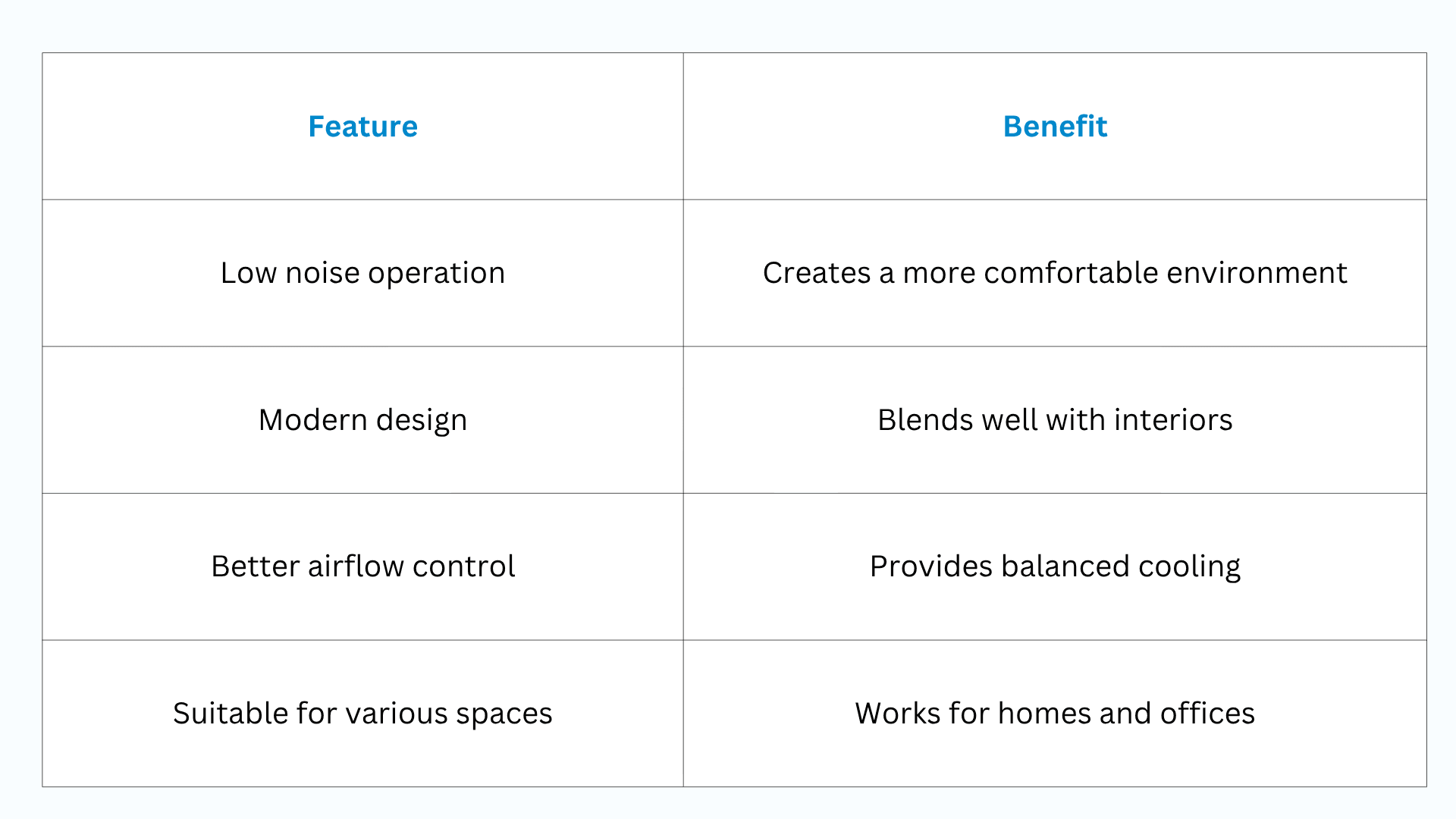
A Split AC is a practical choice when you want effective cooling without much disturbance.
2. Window AC: Simple Cooling For Compact Spaces
Window ACs have been used in Indian homes and offices for many years. They combine the cooling components into a single unit that is installed in a window or wall opening.

They are often considered when budget and installation simplicity are important factors. Window ACs can work well for:
Small bedrooms
Office cabins
Rental properties
Compact commercial spaces
Their design is straightforward, making maintenance easier in many cases. However, they require suitable wall or window space for installation, which may not be possible in every room.
3. Inverter AC: Designed For Efficient Cooling
Electricity bills are a major concern for many Indian households and businesses. This is where Inverter AC technology has gained popularity. Unlike traditional ACs that frequently switch the compressor on and off, Inverter ACs adjust their speed according to cooling requirements. This helps maintain a more consistent temperature and can improve energy efficiency.
Benefits of Inverter AC
Energy-Efficient Performance: Inverter technology can help reduce power consumption during regular use.
Consistent Cooling: The AC adjusts its performance to maintain comfortable temperatures.
Better Long-Term Value: Lower energy usage can make a difference in monthly electricity expenses.
For people who use AC for several hours every day, an Inverter AC can be a practical investment.
Step 3: Select The Right AC Capacity For Your Space
One of the biggest mistakes people make while buying an air conditioner is choosing the wrong capacity. A common thought is, “A higher-capacity AC will cool faster, so why not buy the biggest one?” But that is not always the right approach. An AC with too much capacity may cool the room quickly but may not remove humidity properly. On the other hand, an AC with lower capacity may keep running continuously without providing comfortable cooling. The right AC capacity depends on your room size, ceiling height, sunlight exposure, and usage pattern.
AC Capacity Details For Different Spaces
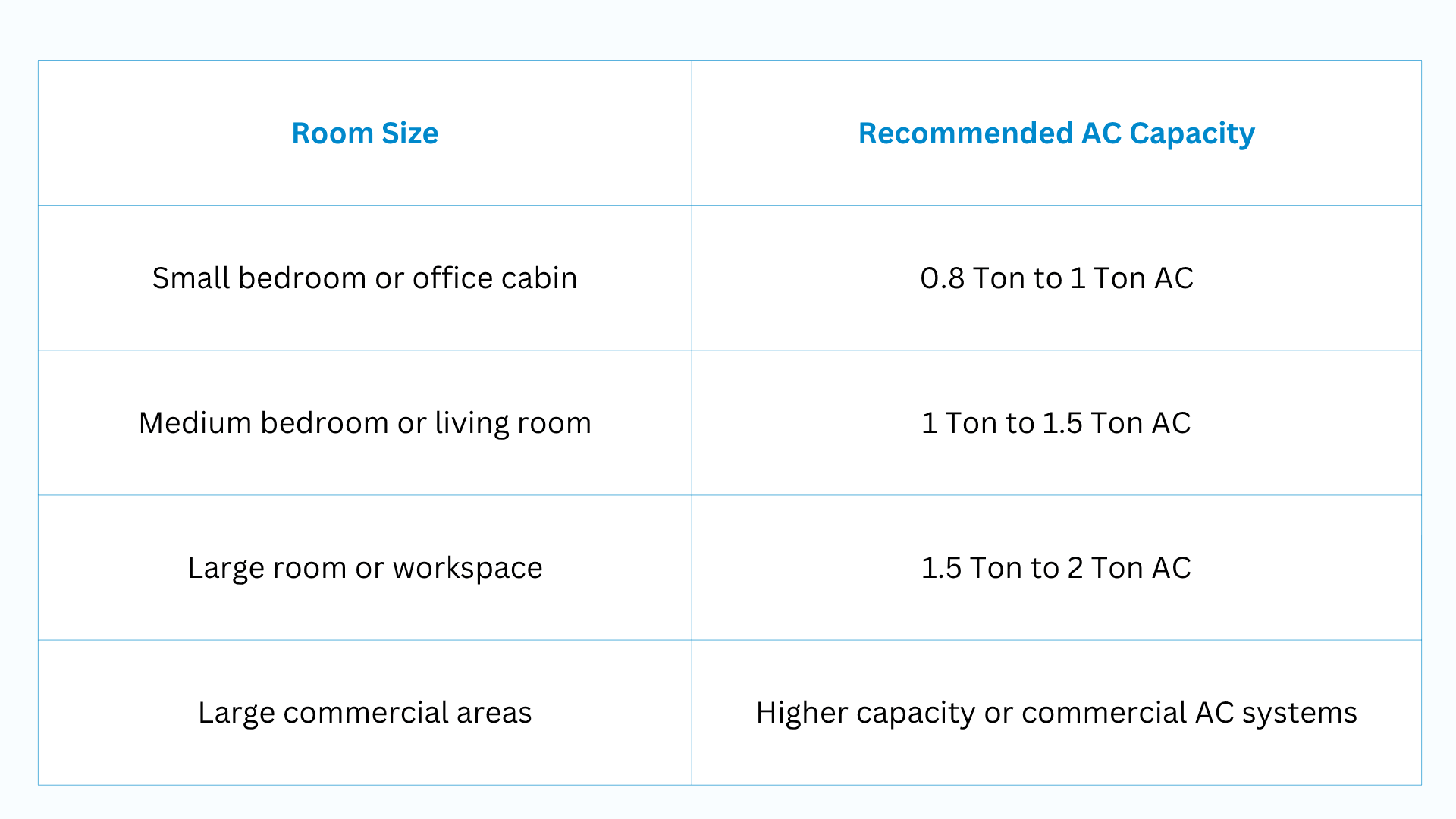
These are general guidelines. A room with direct sunlight, large windows, or more people may require a higher cooling capacity.
For offices and commercial spaces, capacity planning becomes even more important because multiple factors affect cooling performance. A showroom with customers walking in throughout the day will have different requirements compared to a small office.
Choosing the right capacity helps your AC perform efficiently while keeping energy costs under control.
Step 4: Check Important Air Conditioner Features Before Buying
An air conditioner is no longer just about cooling the room. Modern ACs come with several features designed to improve comfort, efficiency, and convenience. However, more features do not always mean a better choice. The important thing is understanding which features actually match your needs.
Energy Efficiency: Electricity consumption is one of the biggest concerns when using an AC regularly. An energy-efficient AC helps maintain comfortable temperatures while managing power usage. Checking the energy rating before purchase can help you understand the expected efficiency of the system. For homes where AC runs for several hours daily, this feature becomes especially important.
Cooling Performance: A good air conditioner should provide consistent cooling even during extremely hot weather. Look for features that support better airflow distribution and faster cooling. This becomes important for larger rooms and commercial spaces where maintaining a comfortable temperature is challenging.
Air Quality Features: Many modern AC models include air filters designed to improve indoor air quality. These features can help reduce dust particles and maintain a cleaner indoor environment, especially in urban areas where air quality is a concern.
Smart Controls: Technology has made AC usage more convenient. Some models offer smart controls that allow users to manage temperature settings through mobile applications or connected devices. These features can be useful for people who want more control over their cooling system.
Step 5: Consider Energy Efficiency of AC Before Making A Purchase
Running an air conditioner during Indian summers can significantly impact electricity bills. This is why energy efficiency should be an important part of your buying decision. An energy-efficient AC does not mean compromising on cooling performance. Instead, it means choosing a system that uses power wisely while maintaining comfort. Before buying, consider:
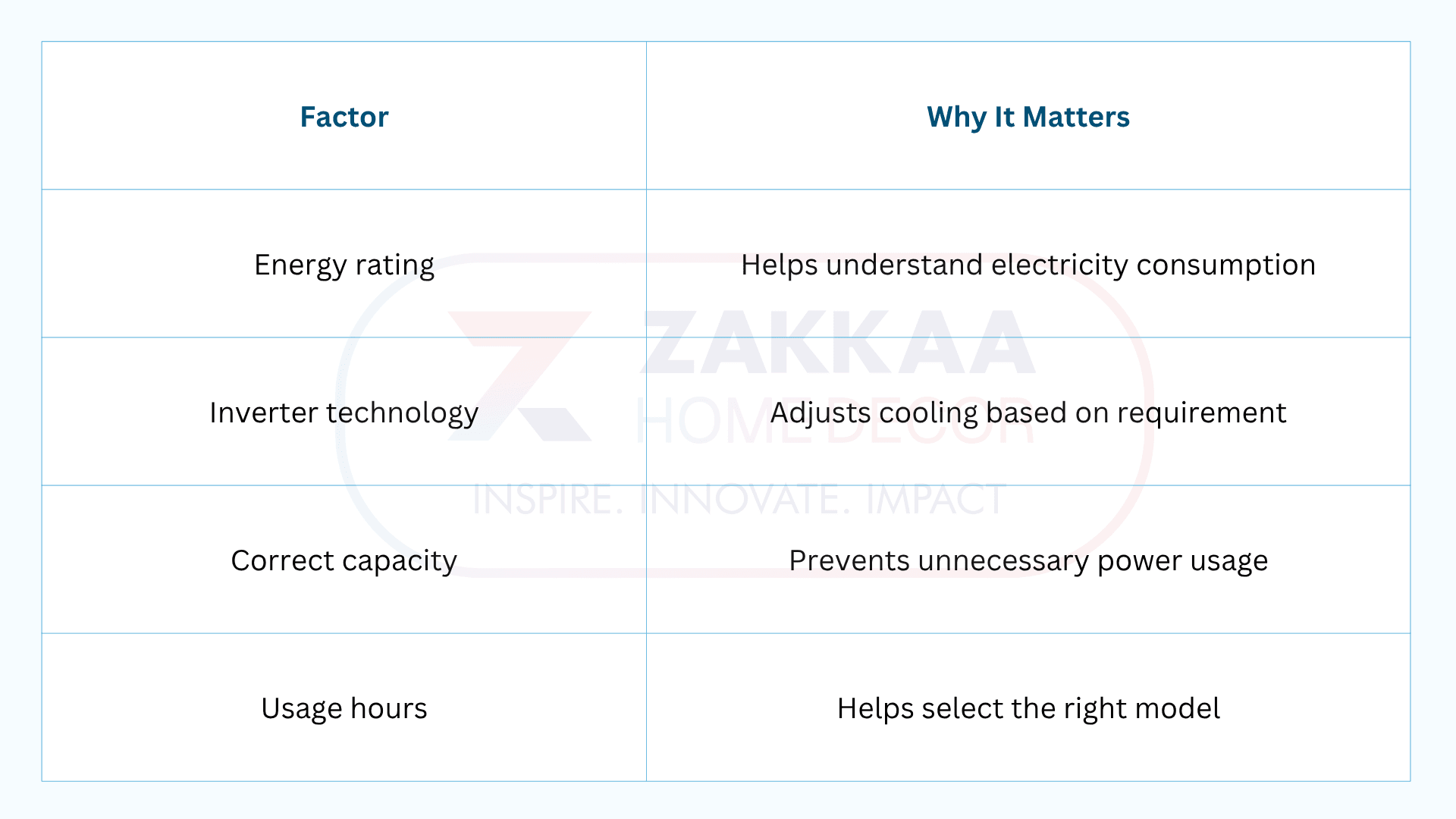
A family that uses AC occasionally may have different requirements compared to an office where cooling runs throughout the working day. The best choice is the one that balances cooling comfort with practical running costs.
Step 6: Choose The Right AC For Commercial Spaces
Cooling requirements change when you move from homes to businesses. A small office cabin and a large showroom cannot rely on the same type of cooling system. Commercial spaces usually need stronger performance, wider coverage, and systems designed for longer operating hours. Commercial AC solutions are commonly used in:
Offices
Retail stores
Showrooms
Restaurants
Hospitals
Educational institutions
Industrial spaces
When selecting a commercial AC system, businesses should consider:
Space Coverage: The system should provide comfortable cooling throughout the area.
Operating Hours: Commercial ACs often run for longer periods, making durability and efficiency important.
Maintenance Support: Easy servicing and reliable support help avoid operational disruptions.
A properly planned air conditioning system creates a comfortable environment for employees, customers, and visitors.
Step 7: Think About Installation And Maintenance
Buying the right AC is only one part of the process. Proper installation and regular maintenance also affect performance. Even the best air conditioner may not deliver expected results if it is installed incorrectly. The placement of indoor and outdoor units, airflow direction, and installation quality all influence cooling efficiency.
Regular maintenance helps keep the system working smoothly. Simple practices like cleaning filters, checking performance, and scheduling professional servicing can improve efficiency and extend the life of your AC. For businesses, timely maintenance becomes even more important because downtime can affect daily operations. A good air conditioning system is not only about the initial purchase. It is about reliable performance throughout its lifespan.
Step 8: Choose The Right Air Conditioning System For Your Space
Every space has its own cooling challenges. A bedroom, office, showroom, hospital, and factory may all need air conditioning, but the solution cannot be the same for everyone. The right air conditioning system depends on how the space is used, how many people occupy it, and how long the system needs to operate each day. For example, a home user may prioritise quiet operation and energy savings, while a business owner may focus more on continuous performance and wider cooling coverage.
Air Conditioners For Different Spaces
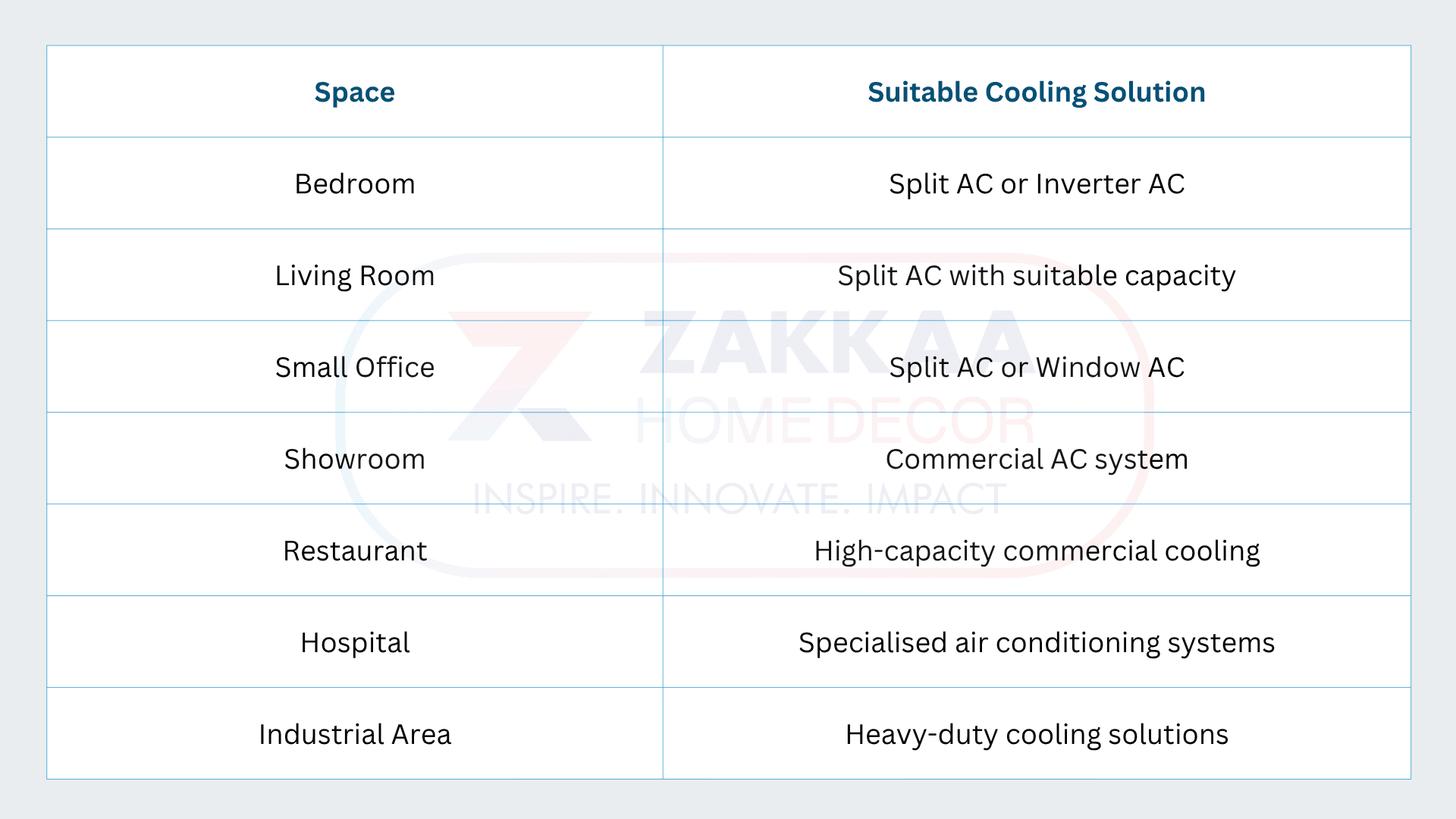
Choosing the right system from the beginning helps avoid problems like uneven cooling, higher electricity costs, and frequent maintenance. A well-planned cooling solution does not just reduce temperature. It creates a more comfortable environment where people can work, relax, and spend time comfortably.
Common Mistakes To Avoid While Buying An Air Conditioner
Buying an AC is a long-term decision, but many buyers make small mistakes that affect their experience later. Knowing these mistakes beforehand can help you make a better purchase.
Choosing AC Capacity Without Checking Room Size: A bigger AC is not always a better AC. Selecting a model without considering room size can lead to inefficient performance. The right capacity ensures better cooling while avoiding unnecessary energy consumption.
Focusing Only On The Price: Everyone wants a good deal, but the cheapest option may not always provide the best value. A slightly higher investment in better efficiency, durability, and features can provide better returns over time.
Ignoring Energy Efficiency: Many buyers check the purchase price but forget about running costs. Since an AC is used regularly during summer, electricity consumption plays an important role in the overall expense.
Overlooking Installation Quality: Even a high-quality AC may not perform properly if installation is not done correctly. Always choose experienced professionals for installation to ensure better airflow and performance.
Buying Without Understanding Usage Needs: A home bedroom, office cabin, and commercial space all have different cooling requirements. Understanding your actual usage helps you select a system that works better for your situation.
Why Businesses Need Reliable AC Manufacturing Partners
The demand for air conditioning solutions continues to grow across residential and commercial markets. For retailers, distributors, and brands, offering the right cooling products requires a dependable manufacturing partner who understands market requirements. OEM manufacturing allows businesses to develop and sell products without managing their own production setup. A reliable manufacturer can support businesses with:
Product development
Bulk production
Quality control
Custom requirements
Consistent supply
This approach helps businesses focus on expanding their market while ensuring customers receive reliable products. For companies entering the cooling appliance market, the right manufacturing partnership can become an important advantage.
Why Choose Zakkaa For Air Conditioner Manufacturing?
At Zakkaa, we understand that cooling requirements are different for every market. A homeowner looks for comfort and energy savings, while retailers and distributors need products that match customer expectations and market demand. Zakkaa provides AC manufacturing support for air coolers and cooling-related product categories, helping businesses develop reliable solutions for residential and commercial requirements.
Our air conditioner manufacturing expertise extends across multiple categories, including air coolers, steel almirahs, home appliances, hospital furniture, educational furniture, laboratory furniture, and corporate furniture. With a focus on practical designs, quality production, and business-friendly support, Zakkaa helps brands and businesses build products that are ready for competitive markets.
Final Thoughts
Buying an air conditioner is not only about finding a machine that cools your room. It is about selecting a solution that matches your lifestyle, space, and long-term requirements. A Split AC can be a great choice for modern homes, a Window AC may work well for compact spaces, and an Inverter AC can provide better efficiency for regular users.
For offices and commercial areas, choosing the right capacity and system design becomes even more important. Take time to understand your requirements, compare features, and select an air conditioning system that provides comfort without creating unnecessary running costs. The right AC does more than reduce heat. It creates a comfortable environment where people can live, work, and perform better.
Frequently Asked Questions (FAQs)
Which type of AC is best for Indian homes?
Split AC and Inverter AC models are popular choices for Indian homes because they provide efficient cooling, quieter operation, and better comfort for daily usage.
What is the difference between Split AC and Window AC?
Split ACs have separate indoor and outdoor units and usually offer quieter operation. Window ACs combine components into one unit and are suitable for compact spaces.
Is an Inverter AC better than a normal AC?
An Inverter AC adjusts compressor speed according to cooling requirements, which can improve energy efficiency and provide more consistent temperature control.
How do I choose the right AC capacity for my room?
AC capacity depends on room size, sunlight exposure, ceiling height, and usage. Selecting the correct capacity helps achieve better cooling performance and efficiency.
Which AC is suitable for offices and commercial spaces?
Commercial AC systems are generally suitable for offices, showrooms, hospitals, and large spaces because they are designed for wider coverage and longer operating hours.
What are the most important air conditioner features to check?
Important features include energy efficiency, cooling capacity, air quality filters, noise level, smart controls, and reliable after-sales support.