Aug 10, 202610 min readBy Aditya Singh
A ₹20,000 cooler and a ₹40,000 air cooler can both be the wrong purchase if neither matches the space you need to cool. For a business owner buying an air cooler, the real cost is not limited to the purchase price. It also includes electricity, water usage, maintenance, floor space, and the cooler's performance during peak summer hours.
Consider a restaurant near a busy market, a garment shop with customers constantly entering, or an office packed with employees and computers. Each space creates a different cooling challenge, which means the buying criteria cannot remain the same.
So before choosing a commercial air cooler in India, look beyond litres and price tags. The factors covered here will help you judge cooling performance, operating costs, and suitability for your particular business environment.
What Is A Commercial Air Cooler?
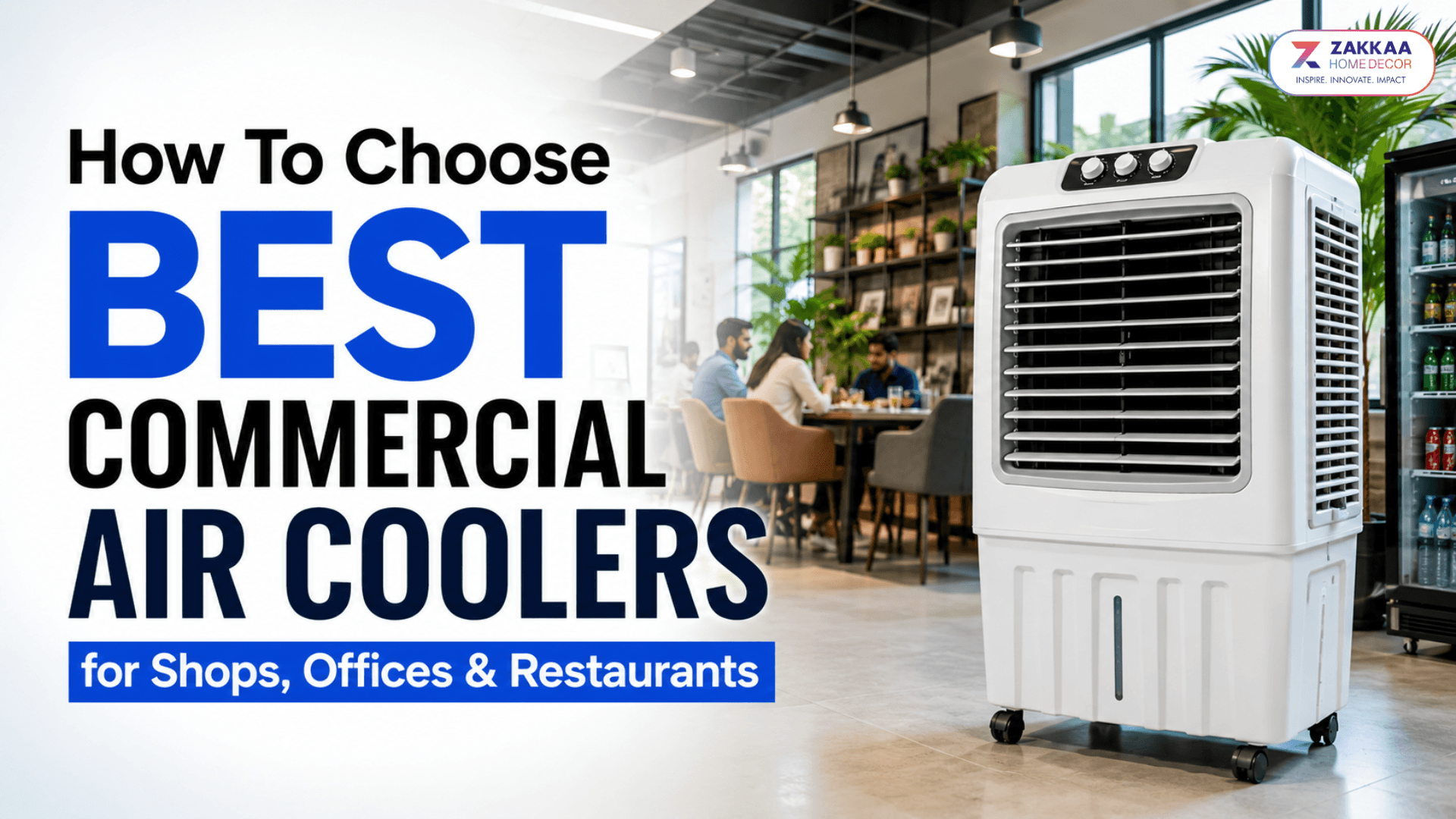
A commercial air cooler is designed to provide cooling across larger spaces than regular personal or home coolers. It uses water and airflow to provide cooling, making it a practical option for shops, offices, restaurants, workshops, warehouses, and other business areas.
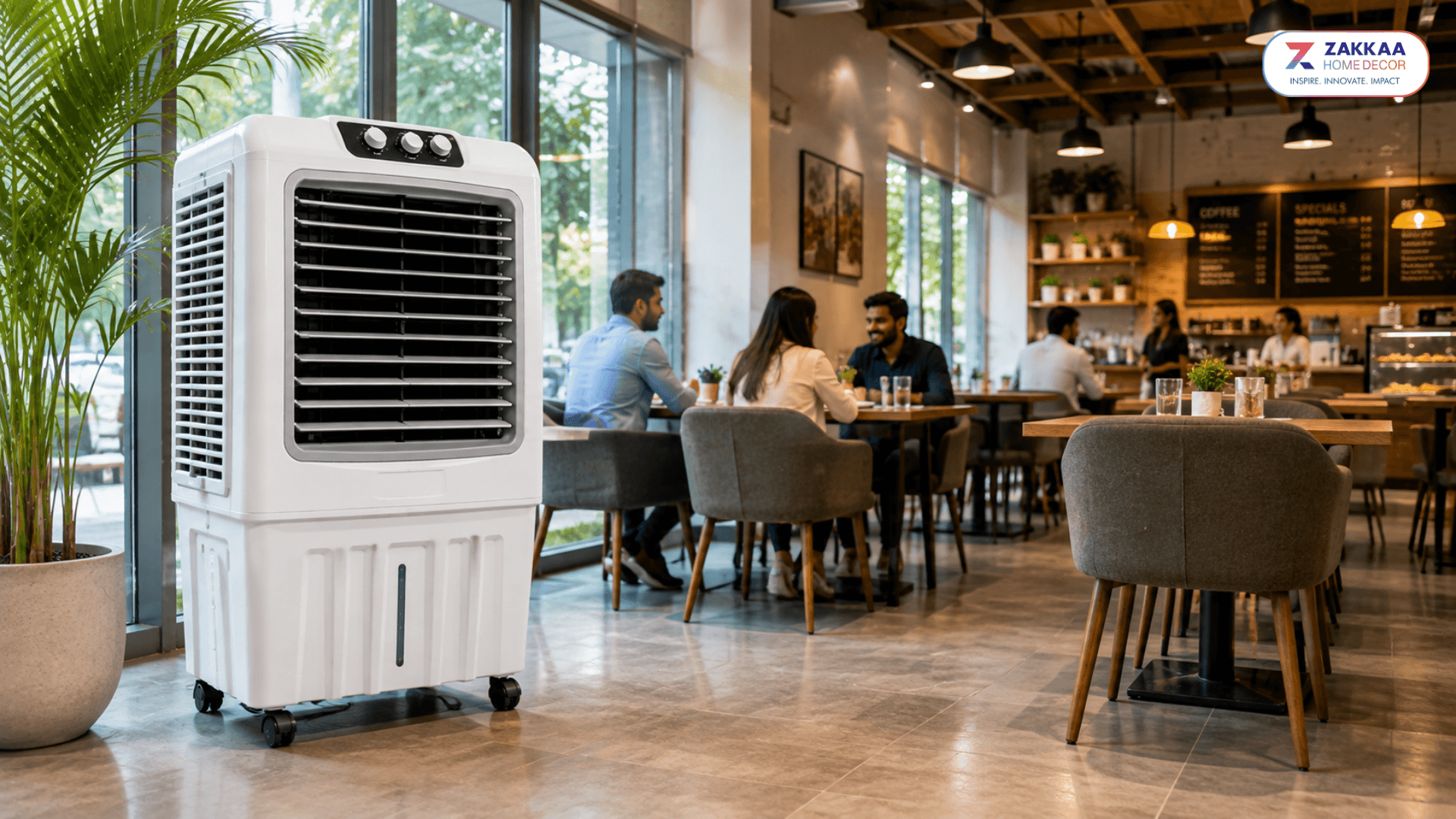
Commercial coolers generally have larger water tanks, stronger airflow, bigger cooling pads, and durable construction. They are especially useful in hot and dry parts of India where evaporative cooling works well.
Unlike air conditioners, commercial air coolers can also be used in semi-open or well-ventilated areas where keeping doors and windows closed may not be practical.
How To Choose The Best Commercial Air Cooler?
Choosing a commercial air cooler is easier when you focus on how your business actually uses the space. A shop, office, and restaurant can have very different cooling requirements, so consider the area, working hours, airflow, ventilation, and electricity usage before making a decision.
1. Check The Area You Need To Cool
Start by looking at the size of your shop, office, restaurant, or workspace. A small retail shop may need a compact cooler, while a larger commercial area will require stronger airflow and wider air coverage.
Also consider the ceiling height, number of people in the space, doors and windows, and whether the area is enclosed or semi-open. Choosing a cooler according to the space helps provide better cooling without putting unnecessary load on the appliance.
2. Look For Strong Airflow
For commercial spaces, good airflow is just as important as cooling. Customers, employees, equipment, and lighting can make a business area feel warmer, especially during peak summer hours.
Look for a cooler that can circulate air across the required area instead of cooling only the space directly in front of it. Shops and restaurants may need stronger airflow, while offices may benefit from steady circulation with comfortable noise levels.
3. Choose The Right Water Tank Capacity
If your business operates for several hours every day, water tank capacity becomes an important consideration. A larger tank means you won't need to refill the cooler frequently during working hours.
However, don't choose a model only because it has a bigger tank. The tank capacity should match the cooler's airflow, cooling area, and expected usage. A small shop may manage with a moderate tank, while a restaurant or larger commercial space may benefit from a higher-capacity model.
4. Consider Your Business Hours
Think about how long the cooler will operate each day. A small shop that remains open for a few hours will have different requirements from a restaurant or office that operates throughout the day.
For longer operating hours, look for a commercial cooler with reliable performance, convenient water filling, simple controls, easy cleaning, and energy-efficient operation. These features can make everyday use easier while helping you manage running costs.
5. Check Electricity Consumption
Electricity is an important business expense, so the cooler's power consumption should be considered before buying. A commercial air cooler generally uses less electricity than an air conditioner, making it a practical choice for businesses looking for energy-efficient commercial cooling.
Check the power consumption of the model and consider how many hours it will run each day. A suitable cooler can provide the required cooling without unnecessarily increasing your electricity bill.
6. Consider Ventilation
Air coolers work best when there is proper ventilation because they use fresh air to provide evaporative cooling. This is especially important for shops and restaurants where doors may remain open throughout the day.
Place the cooler where air can move freely through the space, and ensure warm air has a way to escape. Good ventilation allows the cooler to distribute air and provides better cooling throughout the business area.
Which Commercial Air Cooler Is Best For Your Business?
The right commercial air cooler depends on the type of business, available space, working hours, and the number of people using the area. A cooler for a small shop may not provide enough airflow for a restaurant or large office. Instead of choosing a model only by its size or price, match its cooling capacity and features with your actual business requirements.
Best Commercial Air Cooler For Shops
Shops often have customers moving in and out, open entrances, and limited floor space. A cooler with strong airflow, compact construction, wheels, and a suitable water tank can provide comfortable cooling without taking up too much room.
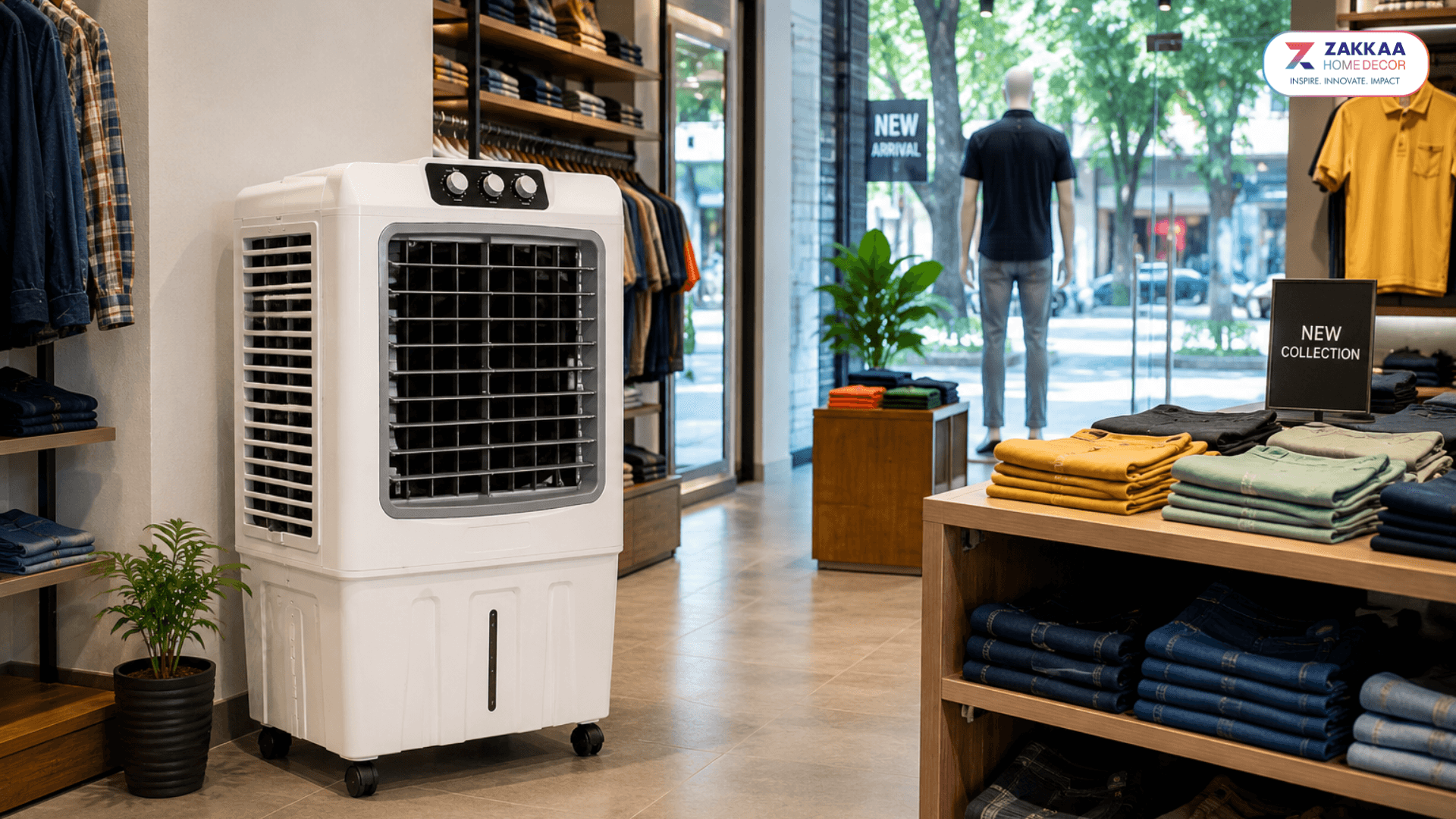
For a retail shop, consider where customers and staff spend most of their time and position the cooler so that air can circulate across the main area.
Commercial Air Cooler For Offices
An office needs comfortable cooling without disturbing employees during work. Look for a model that provides steady airflow, simple controls, low power consumption, and convenient maintenance.
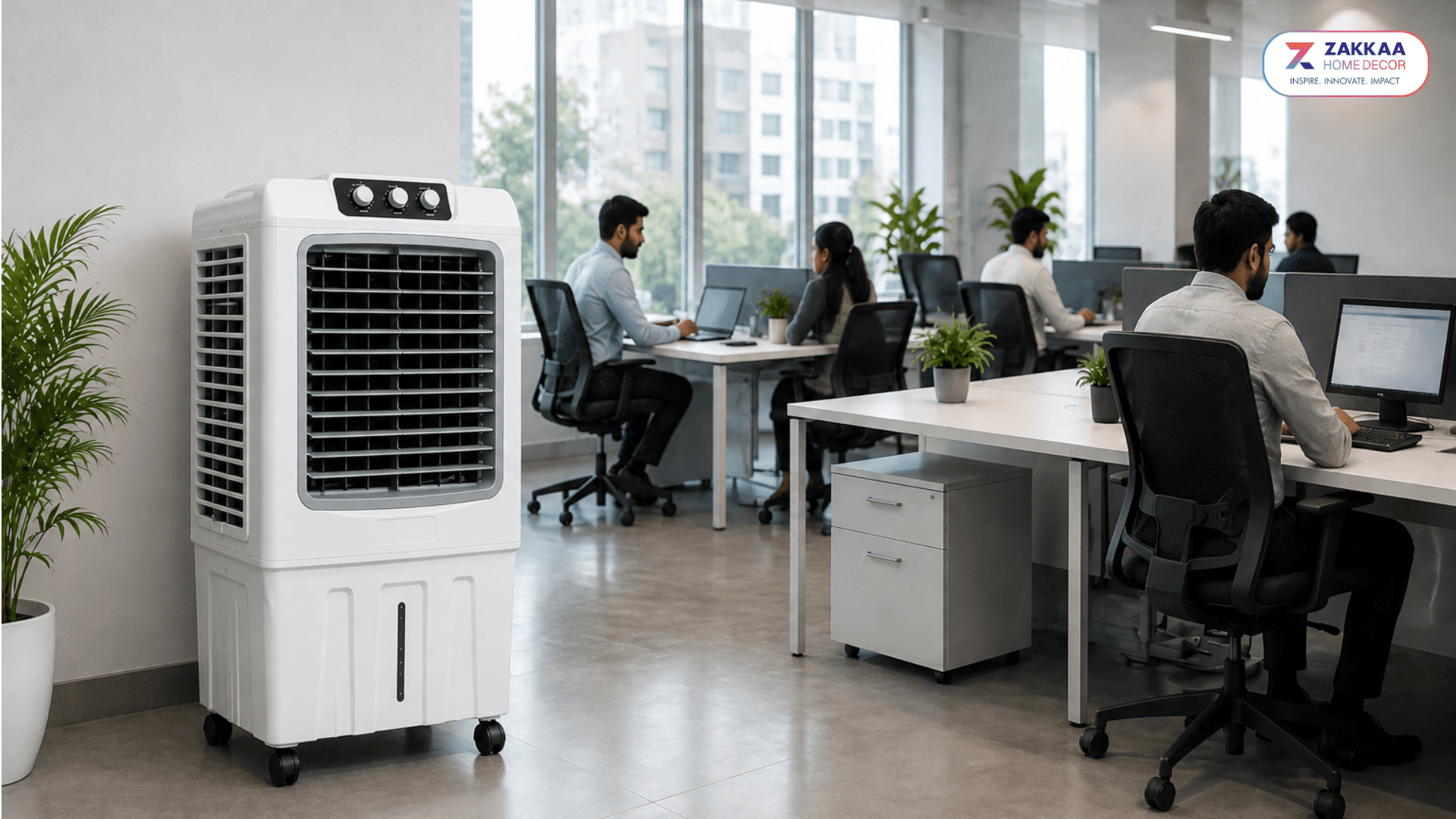
For a larger office, more than one cooler may be a better choice than using a single unit for the entire workspace. This allows cooling to reach different areas more evenly.
Suitable Commercial Air Cooler For Restaurants
Restaurants can become warm because of cooking equipment, customers, lighting, and frequent movement. A restaurant cooler with strong airflow and a larger water tank can be useful, particularly in well-ventilated or semi-open dining areas.
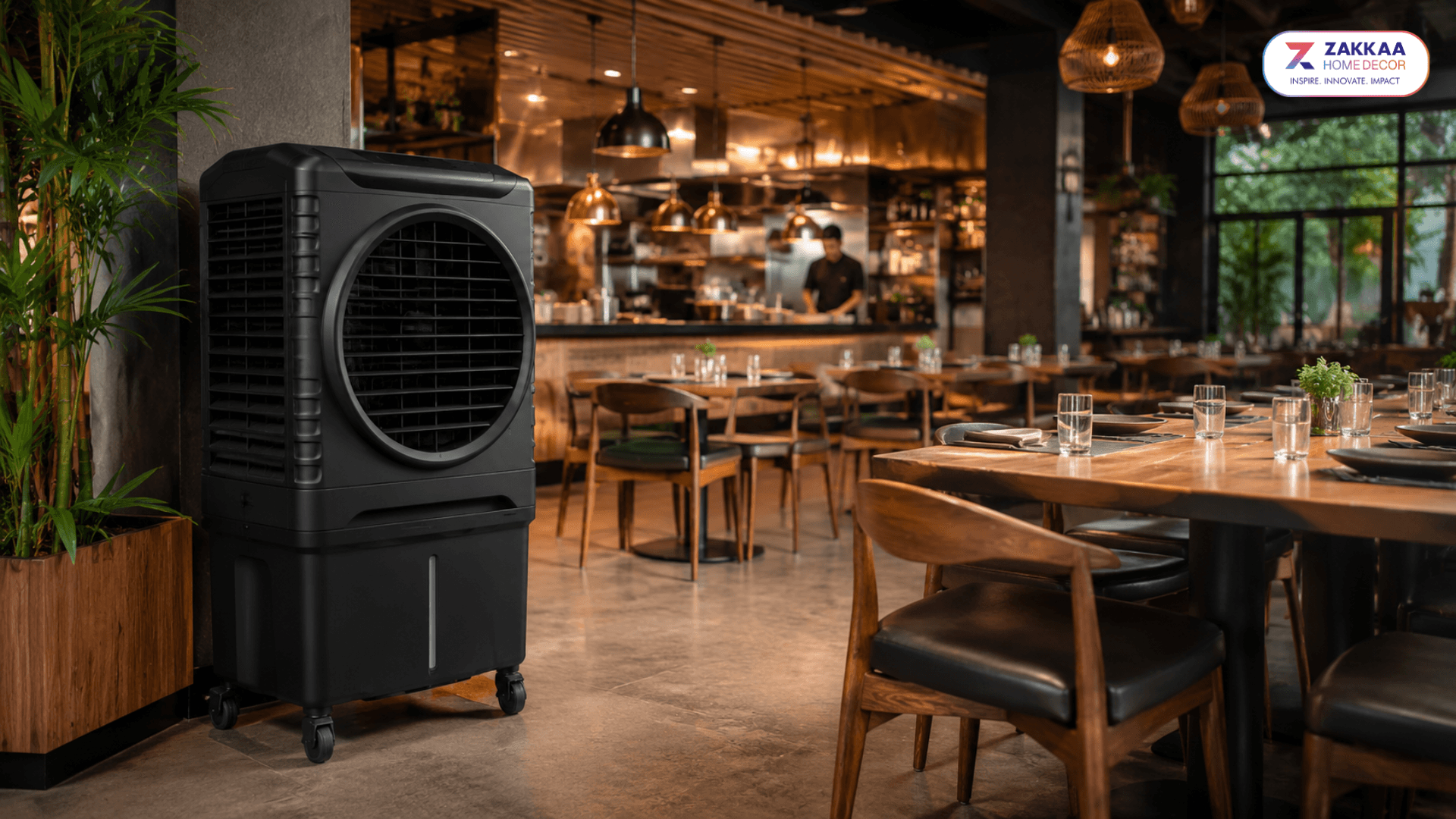
Easy cleaning is also important because commercial spaces require regular maintenance. Choose a model that can be cleaned and drained without making daily operations difficult.
Best Commercial Air Cooler For Large Spaces
Warehouses, workshops, showrooms, and other large areas require wider air circulation. In these spaces, focus on airflow, cooling coverage, tank capacity, and durability rather than choosing a cooler based only on its appearance.
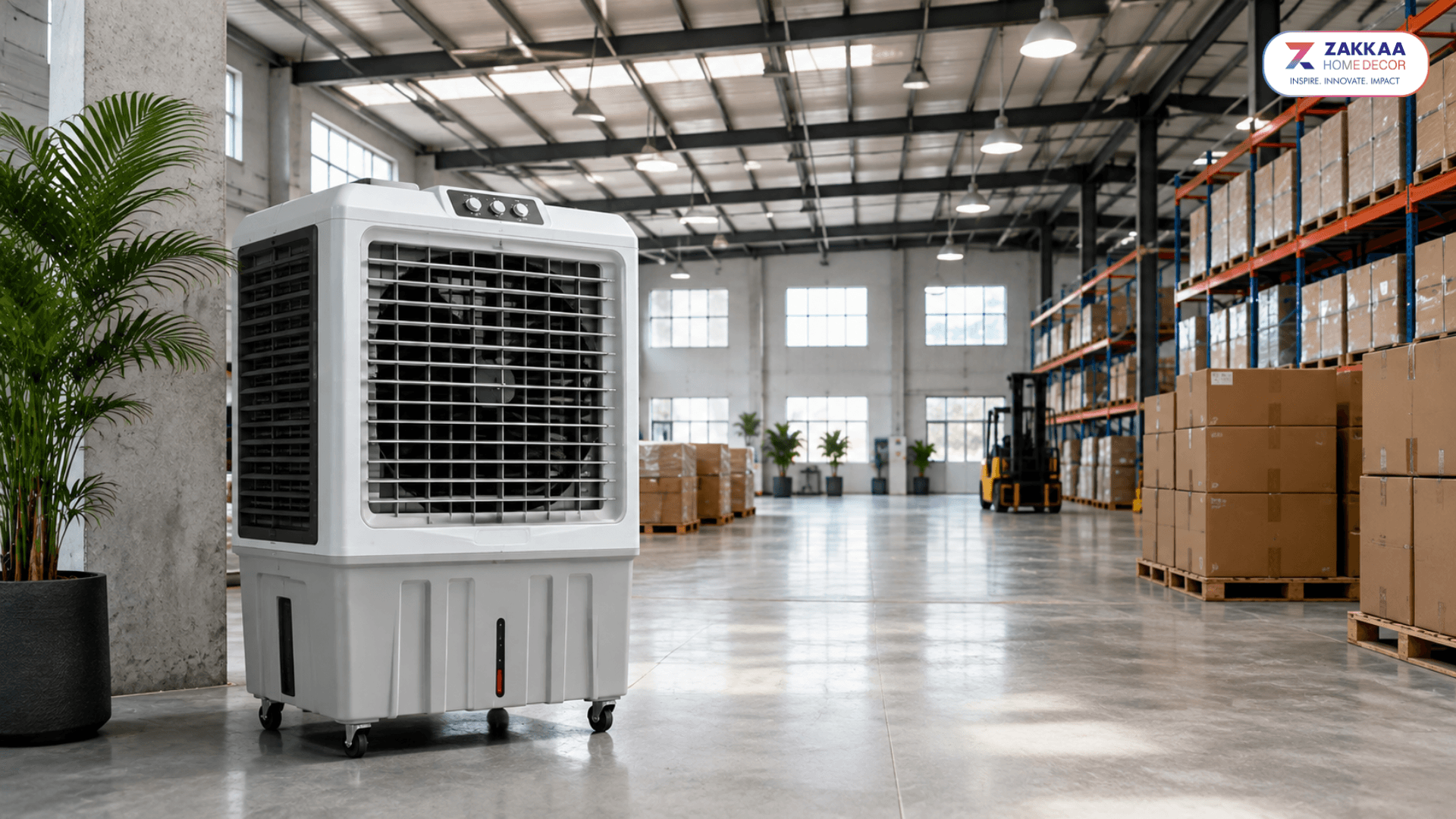
Depending on the layout, using multiple coolers at suitable positions can provide better coverage than relying on one unit.
Best Commercial Air Cooler For Semi-Open Areas
Semi-open spaces such as outdoor seating areas, cafés, shop entrances, and workshops can benefit from air coolers because they do not require a fully enclosed room to operate. However, proper placement and airflow remain important for getting the best cooling from the appliance.
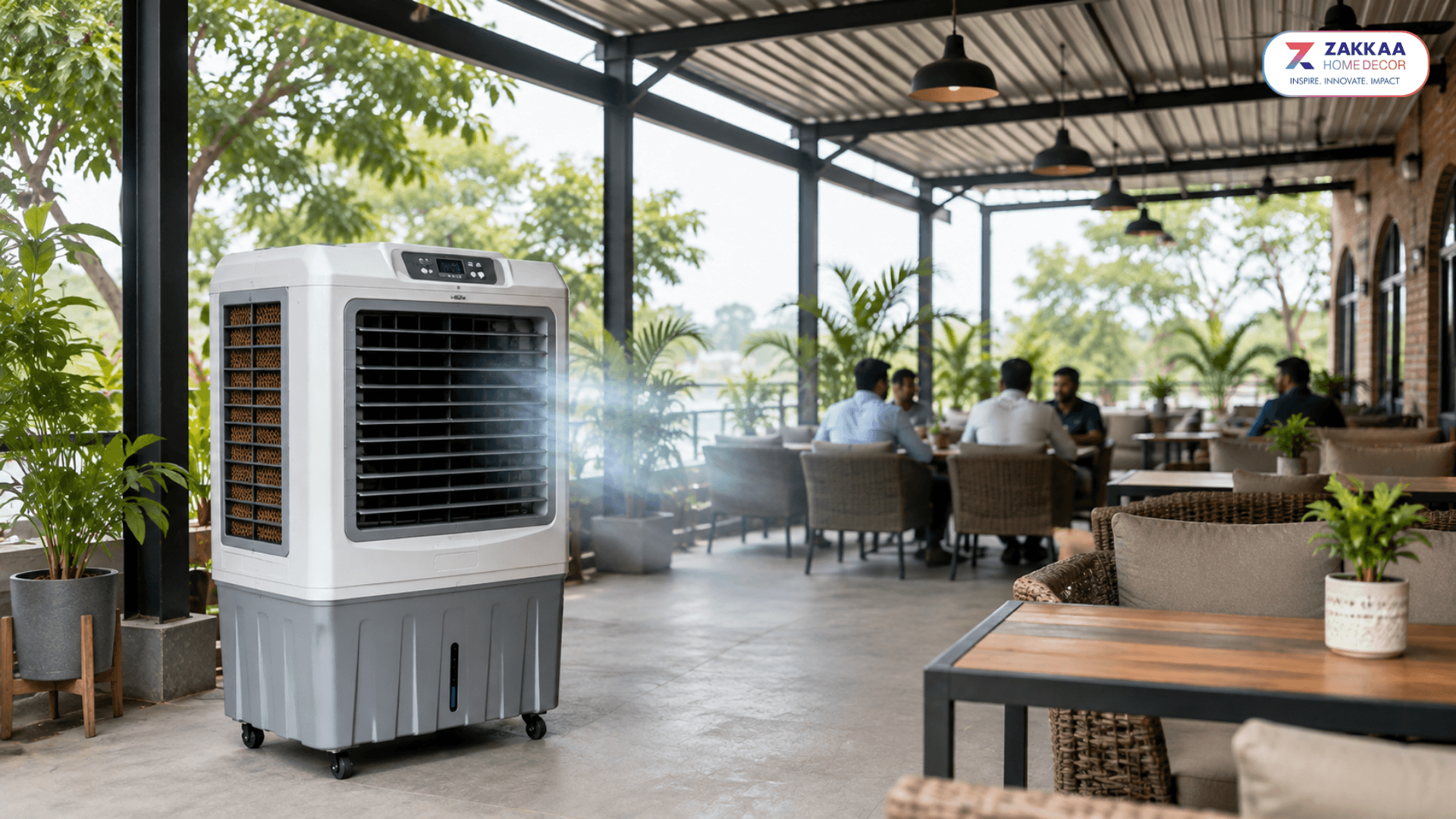
For these areas, choose a cooler that can deliver strong airflow and is easy to move according to changing business requirements.
Important Features To Look For In A Commercial Air Cooler
A commercial air cooler needs to handle longer operating hours and larger spaces than a typical home cooler. However, you don't need to pay for every available feature. Focus on the features that make the cooler practical for your business and easier to operate every day.
Large Water Tank: A larger water tank is useful when the cooler needs to run for several hours. It reduces the need for frequent refilling, which is especially helpful in busy shops, offices, and restaurants.
Powerful Airflow: Strong airflow helps move cool air across a wider area. This is particularly important for larger shops, restaurants, workshops, and other commercial spaces where a single person sitting directly in front of the cooler isn't the only concern.
Multiple Speed Settings: Different weather conditions and business hours may require different airflow levels. Multiple speed settings allow you to increase or reduce airflow according to the comfort of customers and employees.
Auto Swing: Auto swing moves the airflow from side to side, helping distribute cool air across a wider section of the room instead of keeping it focused in one direction.
Durable Cooling Pads: Cooling pads play an important role in evaporative cooling. Durable, good-quality pads can provide reliable cooling while also being easier to maintain with regular cleaning.
Castor Wheels: A commercial cooler with wheels is easier to move around the business premises. This can be useful when you want to change its position during the day or move it for cleaning and storage.
Easy Water Drainage: Regular water replacement and cleaning are important for commercial use. Features such as an accessible drain plug make it easier to empty the tank and maintain the cooler without disrupting business operations.
Easy Controls: Simple controls make the cooler easier for staff to operate. Speed settings, swing controls, and cooling functions should be easy to understand without requiring complicated instructions.
Energy-Efficient Operation: Since commercial coolers may operate for several hours every day, electricity consumption matters. Choosing a model designed for energy-efficient operation can help businesses manage running costs while providing the required cooling.
Commercial Air Cooler Vs Air Conditioner: Which Is Better For Businesses?
Both commercial air coolers and air conditioners can provide comfortable working conditions, but they suit different business environments. An air cooler can be a practical choice for shops, restaurants, workshops, and semi-open areas where lower electricity consumption and easy movement are important. An air conditioner may be more suitable for enclosed offices, showrooms, or commercial rooms where precise temperature control is required.
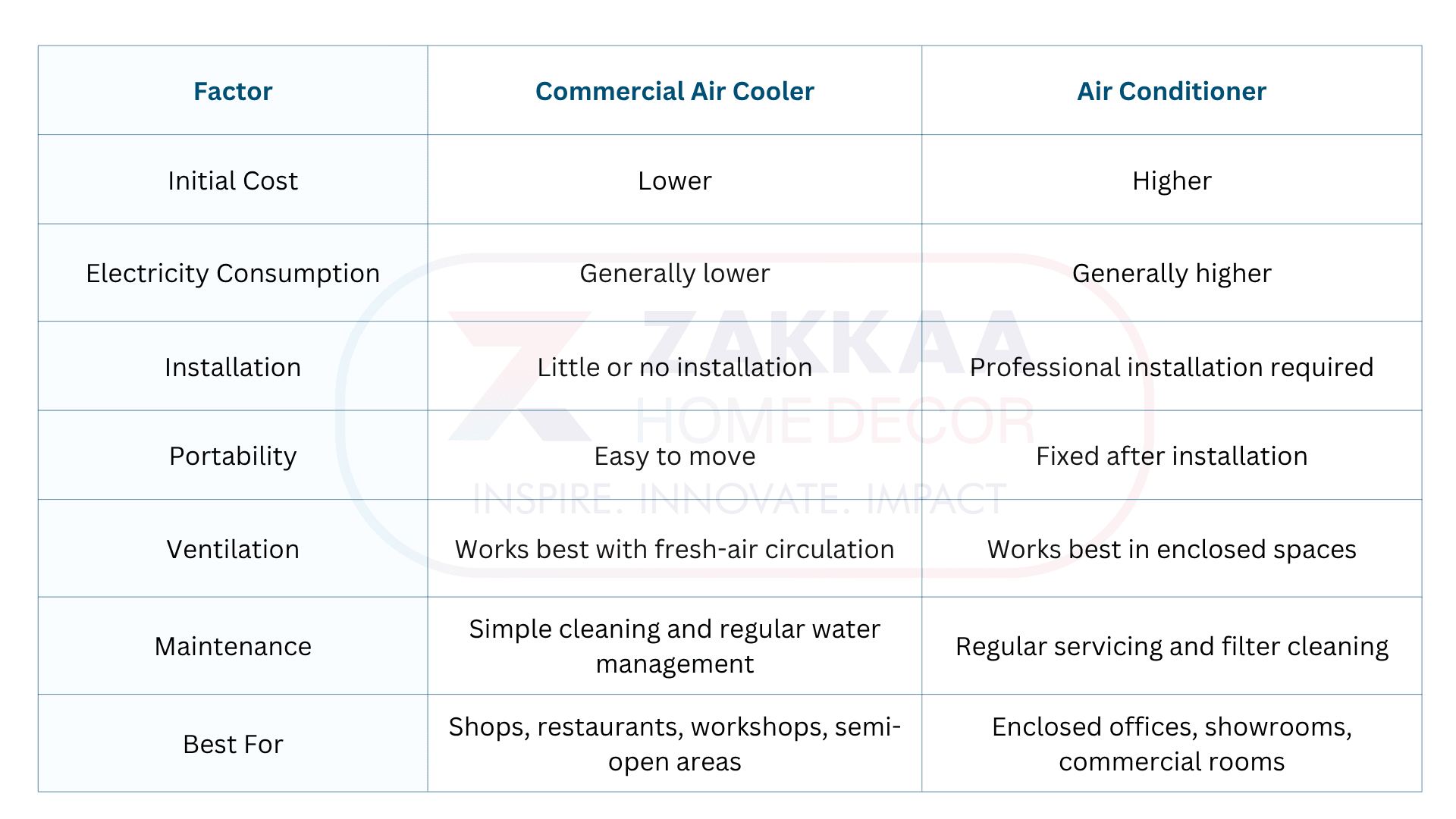
If your business has open doors, good ventilation, or a large area that needs economical cooling, a commercial air cooler can be a suitable option. If the space is enclosed and you need controlled temperature and humidity, an air conditioner may be more appropriate.
Final Remarks
Buying a commercial air cooler comes down to your business space, operating hours, ventilation, airflow needs, and electricity budget. A suitable model can keep shops, offices, restaurants, and other workspaces comfortable without the higher running cost of an AC. Before buying, compare the cooler's airflow, water tank, portability, maintenance, and power consumption rather than focusing only on price. Looking for reliable cooling for your business? Partner with a reliable commercial air cooler manufacturer and find a model suited to your shop, office, restaurant, or commercial space.
Frequently Asked Questions (FAQs)
Which Air Cooler Is Best For A Commercial Shop?
A cooler with strong airflow, suitable water tank capacity, easy movement, and energy-efficient operation is generally suitable for shops. The right model also depends on the shop's size and ventilation.
Is A Commercial Air Cooler Suitable For A Small Shop?
Yes, a compact commercial cooler can work well for small shops. Choose a model with suitable airflow and tank capacity rather than selecting a large unit unnecessarily.
Can I Use A Commercial Air Cooler In A Warehouse?
Yes, commercial air coolers can be useful in warehouses, workshops, and other large, ventilated areas. Choose a model with strong airflow and consider multiple units for wider coverage.
How Often Should A Commercial Air Cooler Be Cleaned?
Regular cleaning helps maintain cooling performance and hygiene. The water tank, cooling pads, filters, and other accessible parts should be checked and cleaned regularly based on usage and water quality.
Does A Commercial Air Cooler Require Professional Installation?
No, most commercial air coolers are designed for easy placement and operation without permanent installation. You generally need a suitable power connection and access to water.
Can A Commercial Air Cooler Reduce Business Electricity Costs?
It can help reduce cooling-related electricity consumption compared with running an air conditioner, particularly when used in suitable hot and dry conditions with proper ventilation.